
Summary Unavailable
This book is not suitable for a summary (it may be a textbook, workbook, cookbook, reference book, or collection). However, you can still explore the FAQs, about author, and other metadata below!
Plot Summary
Small-Town Shadows Gather
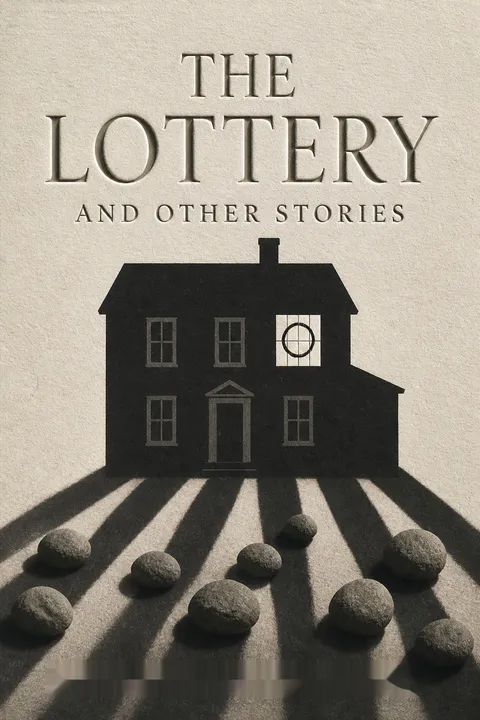
In a seemingly idyllic American village, the townspeople gather for their annual lottery, a tradition shrouded in normalcy and routine. The day is bright and the air is filled with the chatter of neighbors, but beneath the surface, a sense of unease lingers. The children play, the men discuss crops, and the women exchange gossip, all while a black box—worn and splintered—sits at the center of the square, a silent harbinger of what's to come. The community's rituals, from the gathering of stones to the drawing of names, are performed with a mechanical precision that belies the horror at their core. The story's opening sets the tone for the collection: the ordinary is never quite what it seems, and beneath the veneer of civility, something sinister waits.
The Daemon Lover's Absence
A woman prepares for her wedding day, meticulously arranging her apartment and her appearance, only to be stood up by her fiancé, Jamie. As the hours pass, her anxiety grows, and she embarks on a desperate search through the city, following a trail of vague clues and indifferent strangers. Each encounter—landlords, shopkeepers, children—offers only confusion or mockery. The city becomes a labyrinth of disappointment, and the woman's sense of self unravels as she confronts the possibility that Jamie may never have existed at all. Her longing for connection and meaning is met with indifference, leaving her isolated in a world that refuses to acknowledge her pain. The story captures the ache of loneliness and the terror of being unseen.
Domestic Rituals and Disquiet
In stories like "Like Mother Used to Make" and "Trial by Combat," Jackson explores the rituals of domestic life and the quiet battles that simmer beneath the surface. David Turner takes pride in his meticulously arranged apartment and carefully prepared meals, but his sense of order is disrupted by the intrusion of others—Marcia, his neighbor, and Mr. Harris, an unexpected guest. Similarly, Emily Johnson's attempt to confront a neighbor about stolen handkerchiefs devolves into a polite standoff, where truth is obscured by social niceties. These stories reveal how the desire for control and belonging is constantly threatened by the unpredictability of others, and how politeness can become a weapon that maintains the status quo.
Quiet Battles, Quiet Losses
The characters in Jackson's world often find themselves engaged in silent struggles—against neighbors, family, or even themselves. In "The Villager," Miss Clarence, a single woman in Greenwich Village, navigates the world of secondhand furniture and fleeting connections, her dreams of artistic fulfillment quietly eroded by the realities of daily life. In "My Life With R. H. Macy," the narrator's brief stint as a department store clerk becomes a surreal journey through bureaucracy and anonymity. These stories highlight the small, often invisible losses that accumulate over time, shaping the characters' sense of self and their place in the world.
Children and Their Inventions
Jackson's stories frequently center on children, whose innocence is complicated by their keen awareness of adult failings. In "Charles," a mother is both amused and disturbed by her son's tales of a mischievous classmate, only to realize that Charles is a projection of her own child's behavior. "After You, My Dear Alphonse" exposes the casual racism of adults through the eyes of two boys, Johnny and Boyd, whose friendship is untainted by the prejudices that shape their parents' world. These stories suggest that children are both products and critics of their environment, capable of both cruelty and clarity.
Outsiders and Otherness
The arrival of newcomers—whether a widow and her son in "Flower Garden" or a family with unconventional beliefs in "Of Course"—disrupts the fragile equilibrium of small-town life. Initial curiosity and kindness give way to suspicion, gossip, and exclusion, as the community polices its boundaries and punishes those who do not conform. The stories reveal how the fear of otherness is both a source of communal identity and a mechanism of cruelty, as individuals are sacrificed to maintain the illusion of harmony.
The Witching Hour
In "The Witch," a train ride becomes a stage for a chilling encounter between a young boy and a stranger who tells a gruesome story about killing his sister. The mother's attempts to protect her child are undermined by the boy's fascination with the macabre, and the stranger's tale blurs the line between play and threat. The story captures the ways in which violence and superstition are woven into the fabric of everyday life, lurking just beneath the surface of ordinary interactions.
The Renegade's Fate
"The Renegade" follows Mrs. Walpole as she confronts the consequences of her dog's alleged chicken-killing. The community's response—ranging from practical advice to sadistic suggestions—reveals a collective willingness to inflict suffering in the name of order. Mrs. Walpole's attempts to navigate the situation are met with indifference and hostility, and her sense of agency is gradually eroded. The story becomes a meditation on the limits of empathy and the ease with which violence is rationalized.
The Unseen and Unspoken
In "Colloquy" and "Elizabeth," characters struggle to articulate their fears and desires in a world that demands conformity and composure. Mrs. Arnold seeks reassurance from a doctor about her sanity, only to be met with jargon and dismissal. Elizabeth Style, a literary agent, navigates the complexities of professional and personal relationships, her ambitions and disappointments masked by routine. These stories explore the ways in which language can both reveal and obscure truth, and how silence becomes a refuge and a prison.
The Garden Divides
"Flower Garden" traces the friendship between Mrs. Winning and Mrs. MacLane, two women brought together by proximity and shared interests. Their bond is tested when Mrs. MacLane hires a Black gardener, Billy Jones, and the community's latent racism surfaces. Mrs. Winning's loyalty is undermined by her need for acceptance, and the garden—once a symbol of hope and renewal—becomes a site of exclusion and loss. The story exposes the fragility of friendship in the face of social conformity and prejudice.
The Unraveling Mind
In "Pillar of Salt" and "The Tooth," characters experience a gradual disintegration of self in the face of overwhelming external pressures. Margaret, visiting New York, becomes paralyzed by the city's speed and indifference, unable to cross a street or assert her presence. Clara, suffering from a toothache, embarks on a surreal journey through pain, medication, and medical bureaucracy, her sense of reality slipping away. These stories capture the terror of losing one's place in the world, and the thin line between sanity and madness.
The Weight of Tradition
The stories build toward "The Lottery," where the village's annual ritual is revealed to be a public stoning, carried out with the same casual efficiency as any other community event. The black box, the slips of paper, the gathering of stones—all are invested with a significance that transcends reason or morality. The villagers' adherence to tradition is both a source of comfort and a justification for violence, and the story's climax exposes the dangers of unexamined customs.
The Lottery Draws Near
As the lottery begins, the villagers perform their roles with a mixture of nervousness and resignation. The drawing of names is both a communal act and a deeply personal ordeal, as each family faces the possibility of being chosen. The process is marked by small acts of kindness and cruelty, as neighbors reassure and betray one another. The tension builds inexorably, and the ritual's true purpose is revealed only in its final, brutal act.
Stones in the Sunlight
The stoning of Tessie Hutchinson is carried out with a chilling matter-of-factness, as friends and family turn on her without hesitation. The children, who began the day gathering stones in play, become instruments of death. The story's power lies in its refusal to offer explanation or catharsis; the violence is both senseless and inevitable, a product of the community's collective will. The sunlight and flowers of the opening scene are transformed into a backdrop for horror.
The Aftermath of Ritual
After the lottery, the villagers disperse, returning to their daily routines as if nothing has happened. The event is both a rupture and a continuation, a moment of collective violence that reinforces the bonds of the community even as it destroys one of its members. The story ends not with resolution, but with a sense of lingering unease—a reminder that the capacity for cruelty is woven into the fabric of ordinary life.
The Persistence of Cruelty
Throughout the collection, Jackson returns to the theme of everyday cruelty—the petty slights, the whispered gossip, the exclusion of outsiders. Whether in the form of a stolen handkerchief, a child's taunt, or a community's collective violence, these acts accumulate, shaping the lives of individuals and the character of the community. The stories suggest that cruelty is not an aberration, but a constant presence, sustained by habit, fear, and the desire for belonging.
The Ordinary and the Ominous
Jackson's genius lies in her ability to render the ordinary strange, to reveal the darkness that underlies the routines of daily life. Kitchens, gardens, classrooms, and village squares become stages for drama and dread, their familiarity heightening the impact of the uncanny. The stories invite readers to question the assumptions that govern their own lives, and to recognize the potential for horror in the most mundane of settings.
Analysis
Shirley Jackson's The Lottery and Other Stories is a masterful exploration of the darkness that lurks beneath the surface of everyday life. Through a series of interconnected tales, Jackson dissects the rituals, routines, and relationships that define small-town America, exposing the capacity for cruelty, exclusion, and violence that lies at the heart of community. Her stories are marked by a profound psychological realism, capturing the anxieties and desires that drive individuals to conform, to exclude, and to harm. The collection's most famous story, "The Lottery," serves as a microcosm of Jackson's themes: the persistence of tradition, the banality of evil, and the ease with which ordinary people become complicit in atrocity. Yet the horror of Jackson's world is not confined to a single event; it is woven into the fabric of daily life, manifesting in small acts of malice, silent battles, and the quiet erosion of self. Jackson's genius lies in her ability to render the ordinary strange, to reveal the uncanny in the familiar, and to invite readers to question the assumptions that govern their own lives. The lessons of the collection are as relevant today as they were at the time of its publication: the dangers of unexamined tradition, the costs of conformity, and the necessity of empathy and self-awareness in a world that too often rewards their absence.
Last updated:
Report IssueReview Summary
The Lottery and Other Stories is a collection of unsettling short stories by Shirley Jackson. Readers praise Jackson's ability to create subtle horror from everyday situations, exploring themes of human nature, societal norms, and hidden cruelty. The title story "The Lottery" is widely considered a masterpiece, but many reviewers found other stories in the collection equally compelling. Some readers noted that not all stories are equally strong, but overall the collection showcases Jackson's keen observational skills and talent for psychological horror.
People Also Read







Characters
Tessie Hutchinson
Tessie is the central figure in "The Lottery," a housewife who arrives late to the ritual and becomes its chosen victim. Her initial casualness gives way to panic and protest as she realizes her fate, and her cries of "It isn't fair" echo the story's critique of blind conformity. Tessie's relationships—with her husband, children, and neighbors—are marked by the same mixture of affection and competition that characterizes the village as a whole. Her ultimate isolation underscores the community's willingness to sacrifice individuals for the sake of tradition.
Mrs. Winning
In "Flower Garden," Mrs. Winning is a woman caught between her friendship with Mrs. MacLane and her loyalty to the community. She is both sympathetic and complicit, her kindness undermined by her need for acceptance. Mrs. Winning's psychological complexity lies in her ability to rationalize her actions, convincing herself that she is powerless even as she participates in the exclusion of outsiders. Her development is marked by a gradual hardening, as she chooses safety over solidarity.
Mrs. MacLane
Mrs. MacLane is a newcomer to the village, full of hope and enthusiasm for her new home and garden. Her openness and generosity make her an object of suspicion, and her decision to hire Billy Jones as a gardener becomes a catalyst for the community's latent racism. Mrs. MacLane's isolation grows as her friends and neighbors withdraw, and her resilience is tested by the hostility she encounters. Her story is a study in the costs of difference and the limits of individual agency.
Billy Jones
Billy is a young Black boy whose presence in Mrs. MacLane's garden becomes a focal point for the community's anxieties. He is both a helper and a scapegoat, his friendship with Davey MacLane contrasted with the suspicion and hostility of the adults. Billy's role in the story highlights the ways in which children are drawn into the dynamics of prejudice and belonging, and his fate is a measure of the community's capacity for cruelty.
Mrs. Walpole
In "The Renegade," Mrs. Walpole is a city woman struggling to adapt to life in the country. Her attempts to protect her dog and navigate the expectations of her neighbors are met with indifference and hostility. Mrs. Walpole's psychological journey is one of increasing helplessness, as she confronts the limits of her own understanding and the brutality of those around her. Her story is a meditation on the vulnerability of outsiders and the power of collective norms.
David Turner
In "Like Mother Used to Make," David is a man who finds comfort in routine and domestic order. His carefully constructed world is disrupted by the intrusion of others, and his inability to assert himself leaves him isolated and resentful. David's relationships are marked by a longing for connection and a fear of disorder, and his psychological development is shaped by the tension between control and vulnerability.
Laurie
In "Charles," Laurie is a young boy whose stories about a mischievous classmate serve as a projection of his own behavior. His parents' inability to recognize the truth reflects their own denial and complicity. Laurie's character is a study in the ways children absorb and reflect the anxieties of the adult world, and his development is marked by a growing sophistication in deception.
Mrs. Wilson
In "After You, My Dear Alphonse," Mrs. Wilson is a woman whose attempts at kindness are undermined by her unconscious racism. Her interactions with Boyd and Johnny reveal the limits of her empathy and the persistence of prejudice. Mrs. Wilson's psychological complexity lies in her ability to rationalize her actions, convinced of her own benevolence even as she perpetuates harm.
Elizabeth Style
In "Elizabeth," Elizabeth Style is a literary agent navigating the challenges of work, relationships, and self-doubt. Her interactions with colleagues and clients are marked by a mixture of competence and insecurity, and her psychological journey is one of negotiation between ambition and vulnerability. Elizabeth's development is shaped by her efforts to assert herself in a world that often refuses to acknowledge her worth.
Mr. Summers
As the official in charge of the lottery, Mr. Summers embodies the authority and banality of tradition. His jovial demeanor masks the horror of his role, and his relationships with the villagers are marked by a mixture of familiarity and distance. Mr. Summers' psychological complexity lies in his ability to compartmentalize, performing his duties without reflection or remorse.
Plot Devices
Ordinary Settings, Extraordinary Events
Jackson's stories are set in kitchens, gardens, classrooms, and village squares—spaces that are familiar and comforting. By introducing elements of violence, cruelty, or the uncanny into these settings, she heightens the impact of the events and forces readers to question their own assumptions about normalcy. The juxtaposition of the ordinary and the ominous is a hallmark of her narrative style.
Ritual and Repetition
The stories are structured around rituals—meals, lotteries, social visits—that provide a sense of order and continuity. These rituals are both a source of stability and a mechanism for perpetuating harm, as characters become trapped in patterns of behavior that they are unable or unwilling to question. The repetition of actions and phrases reinforces the sense of inevitability and entrapment.
Foreshadowing and Omission
Jackson employs subtle foreshadowing—an offhand remark, a lingering glance, a pile of stones—to create a sense of unease. She withholds key information, allowing the horror to emerge gradually and often leaving crucial questions unanswered. This technique draws readers into the stories, inviting them to participate in the construction of meaning and to confront their own complicity.
Psychological Realism
The stories are marked by a deep attention to the psychological states of the characters—their anxieties, desires, and rationalizations. Jackson's use of free indirect discourse and close third-person narration allows readers to inhabit the minds of her characters, experiencing their confusion, fear, and self-deception. This focus on interiority heightens the emotional impact of the stories and underscores the connection between individual psychology and collective behavior.
Social Satire
Through irony and dark humor, Jackson exposes the absurdities and cruelties of social life. Her stories lampoon the pretensions of respectability, the pettiness of small-town politics, and the persistence of prejudice. The satire is both biting and compassionate, revealing the ways in which individuals are shaped by—and trapped within—their social environments.
About the Author
Shirley Jackson was an influential American author known for her dystopian short story "The Lottery" and novels like "The Haunting of Hill House." Her work often explored the dark undercurrents of small-town America, earning both critical acclaim and controversy. Jackson's writing has influenced numerous authors, including Stephen King and Richard Matheson. Despite her popularity, she avoided public appearances and interviews, preferring to let her work speak for itself. Her husband, literary critic Stanley Edgar Hyman, defended her writing against claims that it stemmed from personal neuroses, arguing that it reflected Cold War-era anxieties. Jackson died in 1965 at the age of 48, leaving behind a legacy of psychological horror and social commentary.
Download PDF
Download EPUB
.epub digital book format is ideal for reading ebooks on phones, tablets, and e-readers.








































