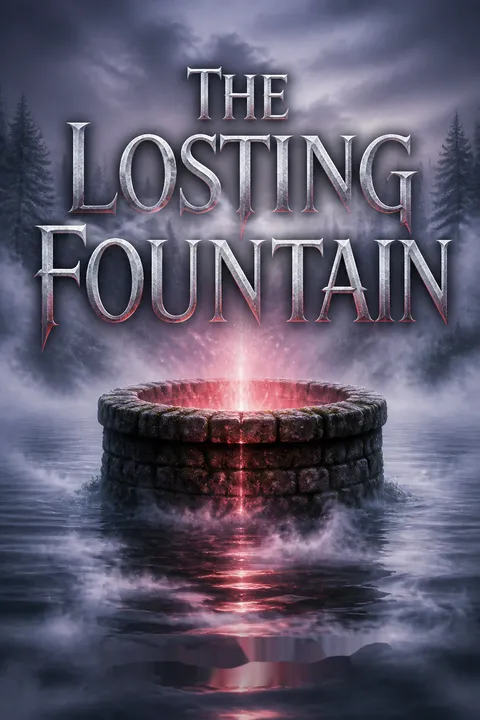

Plot Summary
Fog and Fissures
In a world where fog blurs reality and eldritch things scuttle in the shadows, three teenagers—Ember (1913), Sam (1989), and Miles (present day)—are each haunted by loss and isolation. Each is drawn to a mysterious, shifting place called the Fountain, a liminal realm that appears when and where it is needed, and which collects lost things and lost people. The boundaries between worlds are weakening, and the Fountain's monsters threaten to spill into reality. Each teen, in their own time, is called to the Fountain, their lives shaped by trauma, longing, and the hope of being found.
Gifts from the Deep
After her brother's death, Ember finds solace at a well where a silent, dangerous mermaid appears, gifting her a cold, burgundy stone streaked with silver. The mermaid's music soothes Ember's pain, but the gift is more than comfort—it is a key to the Fountain's mysteries. The stone never warms, and its significance grows as Ember's world becomes more unbearable. The mermaid's presence is both a balm and a warning, hinting at ancient sadness and the dangerous magic that binds the Fountain to Ember's fate.
Caged by Sound
Sam, a boy in 1989, is tormented by overwhelming, supernatural sounds that keep him isolated. His mother, desperate to protect him and others, becomes his jailer. Sam's attempts to escape are met with disaster, and the sounds—sentient, manipulative—become his only companions. When his mother dies, Sam is left alone, his power growing darker. The sounds promise belonging at the Fountain, but their motives are ambiguous. Sam's journey is one of anger, loss, and the dangerous allure of power without empathy.
The Winged Prisoner
Selah, a winged girl from the Fountain's world, is imprisoned in a silo by cruel men. She is not an angel, but a refugee from the Fountain, seeking a lost light she senses in Ember. Their meeting is transformative: Ember, invisible in her own life, finds purpose in Selah's plight. Together, they plan escape, their bond forged in shared pain and the hope of something better. Selah's knowledge of the Fountain and its rules becomes crucial as the boundaries between worlds begin to crack.
Invisible and Unseen
After her brother's suicide, Ember becomes invisible to her grieving, abusive family. Her mother is hollowed by loss, her father is mean and apathetic, and Ember's only solace is in her impossible friends—the mermaid and Selah. When her family threatens Selah, Ember's resolve hardens. She chooses to help Selah escape, even as it means leaving behind the hope of her mother's love. The decision marks Ember's first step toward agency and the Fountain's call.
The Boy Who Kills
Orphaned and unwanted, Sam is taken in by his estranged father but remains isolated. The sounds urge him to the Fountain, promising home. Sam's journey is marked by violence—he discovers he can kill with a thought, first insects, then animals, and finally people. The act is both exhilarating and shameful, a dark mirror of the power the Fountain seeks. Sam's path is one of destruction, his anger and loneliness making him both a threat and a tool for the island's failing balance.
Strangers in the Water
In the present, Miles is targeted by undead strangers—once-human monsters emerging from the water, seeking him. His winged friends, Gabby and Simon, reveal the truth: the boundaries between worlds are breaking, and the monsters are only the beginning. Miles is drawn to the Fountain, the place his birth mother, Ava, once called home. The journey is perilous, as the monsters' attacks escalate, and the fate of his world becomes entwined with the Fountain's survival.
The Losting Fountain
Ember, Sam, and Miles each find their way to the Fountain, crossing lakes, bridges, and boundaries that defy logic and time. The island is a place of beauty and danger, where time moves differently and the lost are both sought and forgotten. The Fountain is tended by winged keepers, ruled by the enigmatic Jury, and protected by monstrous guardians. The teens' arrivals coincide with a crisis: the Jury is missing, the monsters are escaping, and the island's delicate balance is unraveling.
Boundaries and Balance
The Fountain is a borderland, a dam between worlds. Its keepers—Selah, Gabby, Alma, and others—struggle to maintain order as the cracks widen. The Jury, Beatrix, has grown unreliable, her judgments harsh and her mind failing. The Philosophers debate tradition versus change, while Magdalene schemes for power. The monsters in the lake are the souls of those judged unworthy, now breaking free. The teens are drawn into the island's politics, their unique powers and traumas making them both threats and saviors.
The Jury's Boy
Sam is brought before the Philosophers, his power and history revealed. He is the Jury's experiment, groomed to be a weapon, but uncontrollable. Magdalene and Zebedee see him as a tool or a threat, while Alma tries to reach his humanity. Sam's anger boils over—he kills, escapes, and seeks Beatrix for answers. The truth is bitter: he was shaped for the island's needs, but abandoned when he became too dangerous. His rage threatens to destroy the Fountain and all who depend on it.
Monsters in the Lake
With the Jury gone, the monsters in the lake—once guardians, now mindless predators—begin attacking seekers and islanders alike. The boundaries between worlds are breached, and the monsters spill into the real world, bringing death and chaos. The keepers and Groundskeepers fight to protect the vulnerable, especially the Hatchery's children. The cost is high: Simon, Gabby's beloved brother, is killed defending the little ones. The island's heart is wounded, and the need for a new Jury becomes desperate.
The Island's Heart
Ember is shown the island's core: the Hatchery, where winged children are born and cared for, and the Library, where all losting things wait to be found. The island is a place of stories, of beginnings and endings, of hope and regret. Ember's scars and her song mark her as special—she is a counterbalance to Sam's destructive power, a potential new Jury. The choice is hers, but the burden is immense. The island's future depends on her decision.
The Library of Loss
The Library holds not just objects, but the weight of lives changed by loss. Each losting thing is a thread in a tapestry of fate, and the reunion or absence of these things shapes destinies. Ember learns that the island's purpose is not just to return what is lost, but to heal what is broken. The stories of seekers—some redeemed, some punished—echo through the halls, a warning and a promise. The Library is a place of reckoning, where the past is never truly gone.
The Sound of Power
Sam, now fully unleashed, confronts Beatrix in the barren landscape of his mind. She reveals her motives: the Jury must be human, to judge humans, but she has grown cruel and tired. Sam kills her, ending her reign and breaking the last bonds of control. The monsters, now leaderless, return to the Fountain or are destroyed. Sam's power is both a curse and a lesson—the island cannot be ruled by fear and punishment alone. The need for compassion and balance is clear.
The Bridge and the Blood
Miles, Gabby, and Selah risk everything to save each other and the island. Miles dives into the Fountain to rescue Selah, nearly drowning in the process. Ava, now a monster but still a mother, helps him, sacrificing herself to save her son's friend. The bridge between worlds is rebuilt not by force, but by love and sacrifice. The cost is high—lives are lost, wounds are deep—but the possibility of healing emerges. The island's future is uncertain, but hope flickers.
The Hatchery's Song
As monsters attack the Hatchery, Ember discovers her true power: her song, inherited from the mermaid and the Fountain, soothes and protects the children. She becomes a beacon of calm and light, her scars transforming into ghostly wings. In the battle's aftermath, she is offered the role of Jury, the island's judge and protector. The choice is hers—she can stay and heal, or leave and be lost again. The island, and the world, wait for her answer.
The Well and the Wings
Selah's ordeal in the Fountain's cage mirrors the island's crisis. She is saved by Ava's sacrifice and Miles's courage, but not before confronting the darkness at the heart of the Fountain. The well, both a prison and a portal, becomes a symbol of the choices each character faces: to be caged by fear and pain, or to break free and seek connection. The wings—lost, broken, or ghostly—represent the possibility of flight, of rising above the past.
The End of Beatrix
With Beatrix gone, the monsters return to the Fountain, and the island begins to heal. The survivors mourn their dead, honor their heroes, and look to the future. Gabby becomes a Groundskeeper, Selah recovers, and Miles returns home, changed but whole. Ember, offered the role of Jury, chooses to stay and care for the island's children, her scars now a mark of hope. Sam, trapped in his own mind, is left to reckon with his choices. The Fountain endures, collecting stories, waiting for the next losting thing to be found.
Analysis
A modern fable of trauma, belonging, and the cost of traditionThe Losting Fountain is a haunting, multi-layered exploration of what it means to be lost and found. Through its alternating timelines and richly drawn characters, the novel interrogates the nature of trauma, the longing for connection, and the dangers of power without empathy. The Fountain itself is a brilliant metaphor for the liminal spaces we all inhabit—the places between grief and healing, past and future, punishment and redemption. The monsters that escape the Fountain are not just external threats, but the manifestations of wounds left untended, judgments made without compassion, and the refusal to adapt. The novel's greatest strength lies in its refusal to offer easy answers: healing is possible, but it comes at a cost; tradition is valuable, but must be tempered by change; power is seductive, but must be wielded with care. In the end, The Losting Fountain is a story about the courage to choose—whether to be caged by the past or to step into the unknown, to judge or to forgive, to be lost or to be found. Its lessons are as timely as they are timeless, offering hope that even in the darkest places, the possibility of belonging endures.
Review Summary
The Losting Fountain receives mixed reviews averaging 3.72/5 stars. Readers praise the intricate worldbuilding, unique premise involving three teens from different time periods (1913, 1989, present day) converging at a magical fountain, and the dark fantasy atmosphere. The writing quality is consistently noted as well-crafted. However, many criticize the numerous POV switches (approximately six), short chapters that create emotional distance, underdeveloped characters, and unclear worldbuilding despite the interesting concept. Some found the pacing slow and disjointed. Violence and gore are present but no sexual content. Opinions range from "captivating" to "boring," with character attachment being the primary divisive element.
People Also Read

Characters
Ember
Ember is a fourteen-year-old girl from 1913, marked by loss, abuse, and invisibility. After her brother's suicide, she becomes unseen by her family and peers, retreating into herself. Her encounters with the mermaid and Selah awaken her courage and sense of purpose. Ember's journey is one of transformation: from victim to protector, from lost to found. Her scars, both physical and emotional, become a source of power. She is chosen as a counterbalance to Sam's destructive force, her song and compassion offering the island a chance at healing. Ember's development is a testament to resilience, the longing for connection, and the possibility of choosing one's own destiny.
Sam
Sam, a boy from 1989, is haunted by supernatural sounds and a mother who loves him but fears his abilities. Isolated and angry, Sam discovers he can kill with a thought, a power that both terrifies and exhilarates him. Groomed by Beatrix to be the next Jury, Sam is ultimately abandoned when he becomes uncontrollable. His journey is one of escalating violence, self-loathing, and the desperate search for belonging. Sam's psychological complexity lies in his duality: he is both victim and villain, shaped by trauma and the manipulations of others. His final fate—trapped in his own mind, a well of his own making—reflects the dangers of unchecked power and the need for empathy.
Miles
Miles, a present-day teen, is a runner and swimmer haunted by the absence of his birth mother, Ava, and the love of his adoptive parents. Targeted by monsters from the lake, he is drawn to the Fountain, where he confronts the truth about his origins and the island's crisis. Miles's strength lies in his loyalty, compassion, and willingness to sacrifice for others. His journey is one of self-discovery, forgiveness, and the acceptance of both his mothers' choices. Miles's development is marked by grief, courage, and the ultimate decision to return home, changed but whole.
Selah
Selah is a native of the Fountain's world, a winged girl who flees her home in search of a lost light—Ember. Imprisoned and wounded, Selah's resilience and compassion make her both a protector and a catalyst for change. Her relationship with Ember is central, offering both girls a chance at healing and belonging. Selah's struggle with guilt, loss, and the burden of tradition mirrors the island's own crisis. Her willingness to sacrifice for others, even at great personal cost, marks her as a true keeper of the island's heart.
Gabby
Gabby, a winged teen, is Miles's guide and surrogate sister. She is strong, authoritative, and deeply loyal to her brother Simon. Gabby's journey is one of leadership and loss—she becomes a warrior after Simon's death, channeling her grief into the protection of the island. Her relationship with Miles and Selah is marked by both tenderness and pragmatism. Gabby's development reflects the necessity of change, the cost of tradition, and the power of chosen family.
Simon
Simon, Gabby's younger brother, is a childlike, winged boy who befriends Miles. His innocence and kindness are a source of light in the story, and his death defending the Hatchery's children is a devastating loss. Simon's sacrifice galvanizes Gabby and the others, underscoring the stakes of the island's crisis. His memory becomes a touchstone for hope and the need to protect the vulnerable.
Alma
Alma is a blue-winged Philosopher, a mentor to Selah and a caretaker of the island's traditions. She is compassionate, insightful, and committed to balance. Alma's role is to mediate between the old ways and the need for change, guiding Ember and the others through the island's mysteries. Her death at Sam's hands is a profound loss, symbolizing the end of an era and the dangers of unchecked power.
Beatrix (The Jury)
Beatrix, the human Jury, is the island's judge and the voice behind the Sounds that haunt Sam. Once wise and just, she has grown cruel and unstable, her judgments increasingly harsh. Beatrix's manipulation of Sam and her failure to adapt to change precipitate the island's crisis. Her death marks the end of the old order and the possibility of renewal. Beatrix embodies the dangers of tradition without compassion and the need for new voices.
Magdalene
Magdalene is a Philosopher who covets the role of Jury. She is cunning, manipulative, and willing to sacrifice others for her own gain. Magdalene's machinations drive much of the island's internal conflict, and her alliance with Zebedee leads to Selah's near-death. Ultimately, her ambition is exposed as hollow, and she is denied the power she seeks. Magdalene represents the perils of self-interest and the importance of collective wisdom.
Zebedee
Zebedee is a winged man, loyal to Magdalene and the old ways. He is ruthless, orchestrating Selah's imprisonment and nearly causing her death. Zebedee's actions are driven by a belief in tradition and the necessity of harsh judgment. When the old order collapses, he flees to the far side of the lake, seeking to rule among the exiled. Zebedee's fate is a warning against the abuse of power and the refusal to change.
Plot Devices
Alternating Timelines and Perspectives
The novel's structure alternates between the perspectives of Ember, Sam, and Miles, each from a different era. Their stories unfold in parallel, gradually converging as they are drawn to the Fountain. This device allows for a rich exploration of trauma, longing, and the universal search for belonging. The shifting timelines also highlight the cyclical nature of loss and the interconnectedness of all who are drawn to the Fountain.
The Fountain as Liminal Space
The Fountain is both a physical place and a metaphysical boundary between worlds. It collects lost things and lost people, offering the possibility of reunion or punishment. The rules of the Fountain are mutable, its appearance shifting to meet the needs of seekers. The Fountain's monsters are the souls of those judged unworthy, now breaking free as the boundaries weaken. The Fountain's role as both sanctuary and prison is central to the novel's exploration of balance, justice, and the cost of tradition.
Foreshadowing and Symbolism
The novel is rich in foreshadowing: Ember's cold stone, Sam's killing power, Miles's connection to the water, and the recurring motif of music and song. Scars—physical and emotional—mark characters as both wounded and powerful. The mermaid's gift, the well, and the ghostly wings all serve as symbols of transformation, loss, and the possibility of healing. The use of foreshadowing deepens the emotional impact and ties the characters' fates to the island's crisis.
The Library and the Hatchery
The Library, where losting things wait to be found, and the Hatchery, where new life begins, are central plot devices. They represent the island's dual purpose: to remember and to renew. The stories of seekers and losting things echo through the halls, shaping destinies and warning of the dangers of forgetting. The Hatchery's song, inherited by Ember, becomes a weapon against the monsters and a source of hope for the future.
The Jury and the Collective
The role of the Jury—once a single human judge, now threatened by the possibility of a collective—drives much of the island's conflict. The debate between tradition and adaptation is embodied in the struggles of Beatrix, Magdalene, and the Philosophers. The need for a new kind of leadership, one that balances justice with compassion, is a central theme. The choice of the next Jury, and the possibility of a collective, reflects the novel's exploration of power, responsibility, and the dangers of rigidity.
Download PDF
Download EPUB
.epub digital book format is ideal for reading ebooks on phones, tablets, and e-readers.








































