
Plot Summary
Prophecy and Purgatory
Young Elizabeth Barton, exhausted farmhand in early 16th-century Kent, suffers a mysterious fever and endures a vivid vision of purgatory, where the boundaries between holiness and terror entwine. She emerges claiming Jesus's voice has chosen her to liberate souls, her trance foretelling the imminent death of a farmboy—which soon becomes reality. Her prophecy stuns the local priest and word spreads, attracting the attention of Church authorities. Caught between fear and awe, Elizabeth's spiritual awakening propels her into the role of visionary and "Holy Maid," setting the stage for her transformation from marginalized orphan to religious phenomenon. Inside and around her, social hierarchy, gender, and faith begin a collision course that will shape not only her own destiny but the fate of a kingdom.
Manuscript Discovery Unveiled
In 2023, Dr. Alison Sage, historian and mother, prepares nervously to give the biggest keynote of her career—revealing she has found the long-lost, supposedly eradicated book of Elizabeth Barton in a Belgian archive. As modern academics, conferences, and daily distractions swirl, Alison's discovery shocks the manuscript world. This forbidden volume, suppressed for predicting doom for Henry VIII, bridges past and present, igniting old academic rivalries and setting off a wave of modern intrigue. Alison's announcement does more than resurrect a silenced woman's voice; it raises uncomfortable questions about who writes history, whose stories survive, and at what price truth is auctioned in the halls of power—then and now.
Entering the Priory Walls
Following her first vision, Elizabeth is escorted from hard farm life into St. Sepulchre's Priory, shedding her laborer's status for the uncertain elevation of a "living saint." Under the skeptical watch of Prioress Philippa, she is examined by Bishop Fisher, schooled in submission, and admonished with memento mori—skulls and paintings reminding her what awaits the unshriven. As Bocking becomes her confessor and scribe, Elizabeth is thrust into an isolated community where faith, suspicion, and female politics are in tense balance. The priory's peace is threatened by the disruptive potential—and social danger—of a visionary in their midst, her status both shield and liability in turbulent times.
Instruments of Influence
Elizabeth's fame grows, and so does the ambition of those around her. Father Bocking transcribes and embellishes her visions, steering their message for the benefit of entrenched church politics. Pilgrimages to the priory enrich the nuns, but also foster jealousy and fear. Bishop Fisher, keenly aware of looming religious upheaval, views Elizabeth as a pawn in the war against heresy. Her words become weapons wielded by men, even as she, often hungry for approval and protection, begins to echo the phrases they value most. In this swirl, the question of authenticity—whose voice rings through the prophet?—haunts each record and revelation.
Signs, Saints, and Scribes
As Elizabeth's prophecies escalate—naming souls in purgatory and even among the churchly elite—her notoriety transforms her into a reluctant star. Bocking ensures her visions are widely distributed in print, with the financial backing of local patron Lady Vale. Images of Elizabeth as a living saint proliferate, conflating her with the holy women of legend. Yet inside the priory, doubts fester. Is Elizabeth truly chosen, or are these "visions" elaborate fabrications shaped by clerical ambition? The priory's prosperity grows, but so too do the dangers—heroines are easily manipulated, and saints can just as quickly be declared heretics.
Pilgrims, Power, and Printing
Printed pamphlets of Elizabeth's "revelations," sponsored by Lady Agnes Vale, spread across England, each page a flashpoint in the escalating battle between Catholic loyalty and royal ambition. Henry VIII's pursuit of annulment from Catherine of Aragon stirs a religious powder keg; Bocking and Fisher hope Barton's warnings will sway crown and court. The lines between political strategy and pious intent blur. While clergy jockey for position to control the "Holy Maid," her words—shaped for expedience—deepen factions, feed mass hysteria, and tip the precarious scales of power. Faith here is currency, and its spending will have fatal cost.
Courtly Intrigue and Betrayal
Elizabeth is paraded before Henry VIII himself, her prophecies marshaled by both allies and foes in a last-ditch effort to halt England's schism with Rome. She confronts powerful men: Wolsey, Cromwell, More. At first courted, then increasingly seen as a threat, she faces growing isolation as her prophecies sharpen—now predicting ruin if Henry marries Anne Boleyn. When the king dismisses her warning in front of his council, her political backers shrink away, and the machinery of suppression whirs to life. In a world where alliances shift like shadows, the dangerous fate of a "mouthpiece" who outlives her usefulness is brutally laid bare.
Treasures, Traps, and Terrors
In the present day, Alison arrives at Vale House Manor for a select academic consortium, expecting scholarly collegiality but finding moody decay and social maneuvering. The manor, constructed atop priory ruins, hums with layers of hidden history—from priest holes to ancient garden paths. Whispers of a lost treasure tied to Elizabeth Barton and the Vale family swirl; local legends feed speculation about jewels, prophecies, and ancestral curses. Alison's research, and her own emotional entanglements, ensnare her in both professional rivalry and a literal hunt for secrets—danger and intrigue riding beneath every academic exchange.
Ghosts in the Archive
Stories, wills, and artifacts cross centuries: as Elizabeth's book guided "living souls," academic ghosts fuel rivalries, passion, and suspicion among Alison and her colleagues. Old flame Westley emerges as a rival and possible collaborator, blurring lines between friendship, ambition, and desire. Each manuscript, painting, and piece of gossip is imbued with the risk and longing of resurrection. As theoretical debates turn personal and professional, the boundaries between haunting and history collapse—making a space where the dead demand justice, and the living grapple with their own tangled motives.
A Convent Divided
Prioress Philippa struggles to maintain discipline at the priory as rumors, jealousy, and political threats crowd ever closer. Elizabeth's "miracles" bring pilgrims and wealth, but also risk and resentment. The nuns debate—quietly or through refusal—whether the Maid's fame is divine or devilish. Ecclesiastical scrutiny intensifies. Eventually, external danger becomes internal rupture, mirroring the fate of the wider church: unity is shattered by suspicion, and the threshold between prophecy and scandal is fatally thin. Sisterhood offers scant refuge in an age determined to cast out anyone who does not fit the world's order.
Dissolution and Disguise
The Dissolution of the Monasteries sweeps through England, emptying centuries-old religious houses and scattering their treasures and occupants. St. Sepulchre's closes, its sisters sent into a world that never wanted them. Lady Vale and Philippa conspire to save what relics, jewels, and secrets they can, hiding them in myth-laden containers—inside walls, beneath tombs, within riddles. Nicholas Owen carves new priest holes, layering new meaning and risk into every inch of stone. The loss is incalculable: libraries, rites, and whole female communities erased. Only hidden legacies might outlast the violence of reform.
Head and Heart Severed
Arrested, tortured, and publicly accused of fabricating her visions, Elizabeth endures unspeakable suffering. Her head is displayed on London Bridge—an ultimate message against dissent, as even her body is denied holy rest. Those who shaped her words for their own gain vanish from her side; her story is twisted for expedient narratives. Meanwhile, in secret, women like Lady Vale and Philippa take up the real work of memory: preserving, erasing, or disguising legacies depending on which future they fear most. Elizabeth's silencing and iconoclasm are mirrored by erasure of countless witness-women.
Modern Manuscripts and Motives
As the Consortium at Vale House digs into the mysteries of Barton and the priory, Alison navigates academic ambition, gendered power games, and renewed attraction to Westley. Local legends of hidden gems and relics become tangled with personal tensions and betrayals. The atmosphere thickens with suspicion as secrets surface—both literary and flesh-and-blood. When a murder rocks the gathering, the boundaries between detective and scholar, competition and collaboration, dissolve. Alison, once merely researching a lost book, now becomes a protagonist in her own perilous mystery plot.
Conference of Shadows
Alison finds herself ensnared in webs of academic alliances and old romantic wounds, complicated by the competitive, claustrophobic dynamics of the Consortium. Allies turn adversary as ambitions collide. Priest holes—once refuge for hunted priests—become metaphor and reality, mirroring the secrets, betrayals, and pressures lurking beneath gracious scholarly discourse. As discoveries unfold, Alison's suspicions multiply: are the real dangers centuries old, or are they breathing down her neck, disguised as colleagues and supposed friends?
Secrets of the Bell Tower
Following trails through Barton's book, historical riddles, and cryptic paintings, Alison and Marla decode clues pointing toward the ancient bell tower as the hiding place of the true treasure. What began as scholarly curiosity now becomes survival, as threats escalate and trust proves deadly. A midnight confrontation atop the creaking spiral staircase brings centuries of violence to a breaking point: memento mori—the reminder of death—becomes literal as Alison is forced into a fight for her life, secrets spilling out alongside blood and tears.
Poison, Priest Holes, Peril
Alison, drugged and imprisoned in a priest hole, embodies the fate of countless silenced women—trapped by others' ambitions, haunted by loss and longing. Her struggle to escape becomes a test of intellect and endurance. In parallel, the priest holes' history—meant for sacred concealment—inverts, becoming sites of bodily peril and revelation. Alison's emergence is a resurrection of sorts, a refusal to remain buried as another forgotten voice, as she pieces together not just historical mysteries but also her own will to be remembered and to write her own ending.
Confession, Confrontation, Collapse
With trust finally shattered, Alison faces down Marla, discovering the truth behind the Consortium's descent into murder: academic obsession, greed, and historic resentments converging fatally. Knife in hand, Marla pushes Alison to uncover the treasure, a violent recreation of the centuries of women forced to dig their own fate. Yet it is Alison's quick thinking and will to live that, in a climactic struggle atop the bell tower, brings the centuries-long drama to closure. Survival, not sainthood, is the prize for those written out of history.
Hidden Legacies Unearthed
In the aftermath, Alison (and those surviving) finally uncover both treasures: Elizabeth's skull—a relic of a woman erased—and a jeweled chest, encoded with messages from the women who came before. The acrostics, puzzles, and relics tie generations of women—Elizabeth, Philippa, Agnes Vale, Margaret, Alison—in an unbroken chain of resistance, survival, and the longing to be heard across time. In bearing witness, both to the dead and to herself, Alison claims her place as heir, not just to history, but to the charge of keeping history alive for the next "woman sage."
Analysis
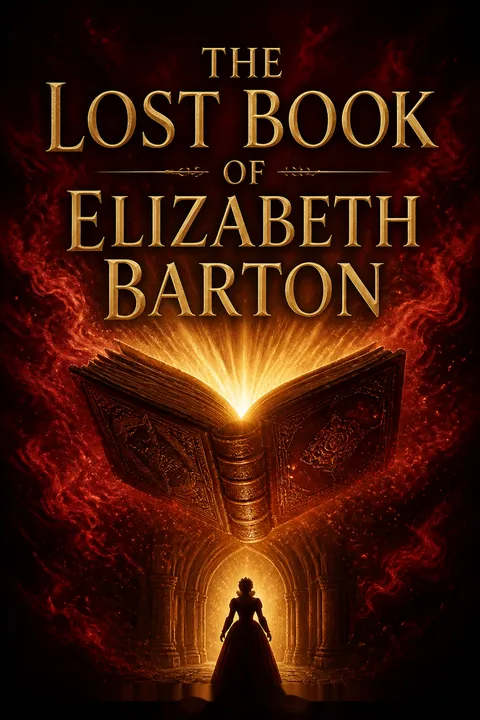
Jennifer N. Brown's The Lost Book of Elizabeth Barton is many things—thriller, academic satire, feminist biography, and gothic mystery—but above all it is a meditation on the silencing (and recovery) of women's voices, both sacred and scholarly, across time. The novel interrogates who gets to record, preserve, and profit from "visions"—and at what cost to the women whose bodies, words, and legacies are always subject to reshaping by others' hands. The interlacing of Tudor and contemporary timelines illustrates the persistence of violence against women deemed too powerful or inconvenient—whether by crown, church, or university. Barton's manipulation and martyrdom reflect the perils facing all "difficult" women, while contemporary Alison's near-lethal entanglement with academic ambition, rivalry, and misogyny reveals those dangers have merely changed their clothing. The motif of hidden spaces and encoded messages signals that true archives often lie where they are least expected—in fiercely guarded, imperfect, fragile hands. Ultimately, the lesson is one of hard-won resilience: the greatest treasures are not jewels or texts, but the sheltering, transmitting, and retelling of stories women made for each other, refusing erasure, demanding witnesses, and—at last—seizing the means to be heard. In a world where history is so often written by and for those in power, Brown insists: sometimes even a "false" or forbidden prophet can illumine the path for the next woman sage.
People Also Read



Characters
Elizabeth Barton
Propelled by a feverish vision in youth, Elizabeth is cast as a holy woman with the power to prophesy the fate of souls—including future kings. Beset on all sides by men who see her as a tool, her role as "Maid" is always deeply ambiguous: is she true prophet, tragic victim, or both? Her visions are real to herself, but also used—and edited—by those around her for political gains, especially in tense times of royal schism. Elizabeth is shaped, isolated, and finally destroyed by the machinations of others; her growing voice, alternately saintly and unruly, becomes a threat to temporal power. In the end, her legacy is buried (literally and figuratively) by violence, but her unresolved story continues to haunt every generation that follows.
Dr. Alison Sage
Talented historian, mother, and recent divorcée, Alison blends intellectual rigor with emotional vulnerability. Her discovery of Elizabeth's forbidden book catapults her into academic limelight—and unexpected peril. While her expertise on women visionaries guides her, she is repeatedly tested: by the institutional misogyny of academia, twisted alliances, and personal betrayals. Alison's navigation of the Consortium's fraught dynamics, her dangerous romance with Westley, and her dogged pursuit of hidden truths parallel the types of erasure and risk faced by the women she studies. Ultimately, Alison's journey becomes one of claiming her own story and refusing to let herself or her forebears be silenced by the ambitions of others.
Agnes Vale
Lady Agnes Vale, the force behind Barton's book and a patron of the priory, is definingly pragmatic and shrewd. She finances, hides, and encodes treasures—both spiritual (books, mysteries) and material (jewels)—aiming to safeguard her family through the religious storm. Her relationships with the prioress and Barton are complex: part benefactor, part co-conspirator, part narrative architect. Agnes's story demonstrates how women, denied open power, deploy cunning, secrecy, and resilience to resist and preserve meaning in a world intent on erasing them. Her choices ripple long after her death, her puzzles surviving as both inheritance and challenge.
Prioress Philippa Jonys
As the prioress of St. Sepulchre's, Philippa is a formidable, literate, and ambivalent figure—tasked with sheltering, shaping, and sometimes suppressing dangerous holiness. She provides necessary structure and sometime skepticism for Elizabeth, again reflecting the novel's attention to female power navigating (and being undermined by) both clerical and patriarchal oversight. Her own fears, hopes, and pragmatic alliances with Agnes Vale lead her to become a secret record-keeper, encoding forbidden wisdom for future generations. Philippa's arc, ending in dispossession and loss, highlights the cost of principled resistance and the fragility—and potency—of women's archives.
Father Edward Bocking
Edward Bocking embodies both belief and calculation—a monk who becomes Elizabeth's interpreter, mentor, and, ultimately, exploiter. Intellectual and political ambition entwine in him; he co-authors, edits, and embellishes her visions, using her for his own campaign against Reform. His faith is profound, but so is his opportunism. When the wheels of religious change turn, he is cast aside, tortured, and executed alongside his protégé—yet, in confession, implicates her and admits manipulation, adding layers of ambiguity to both their stories. Bocking is a cautionary tale of flawed stewardship and the peril of weaponizing the ecstatic.
Roger Shefield
In 2023, Roger is the convenor of the Codex Consortium, a bon vivant living off the history and fading grandeur of Vale House through his wife's inheritance. Ostensibly championing scholarship, his behind-the-scenes maneuvering fans both collegial collaboration and deadly rivalry. Obsessed with uncovering the manor's lost treasure as a means of salvation (personal and historical), Roger's ambition drives much of the book's modern intrigue—ultimately at great cost to his own reputation, relationships, and possibly his freedom. He represents the ongoing temptation to mine the past for present gain, regardless of consequences.
Marla Shultz
Marla projects elegance, authority, and camaraderie, especially toward Alison, masking an ambition and ruthlessness that ultimately turns deadly. Her expertise and confidence mark her as a formidable academic—and the embodiment of the sacrifices and brutalities women sometimes undertake to survive in a male-dominated system. Underneath her collaboration with Alison lies a willingness to betray, blackmail, and even murder those who obstruct her goal. Her character arc displays the corrosive effect of relentless competition—and the tragic, sometimes monstrous, forms that female agency can take when denied affirmation or equal space.
Westley Charney
Westley, a charismatic local scholar and Alison's former flame, returns as both competitor and romantic interest. Behind his affability and intelligence is deep insecurity, family obligation, and susceptibility to empty promises of history or treasure. His collaboration (and conspiracy) with others in pursuit of legend evolves into duplicity—and violence—driven equally by longing for renewed connection and by desperation to matter. Ultimately, he is drawn into forces beyond his control, a casualty (almost literal) of secrets he tries—and fails—to master.
Alex Goode
Alex, the manor's pale and unnerving manservant, initially seems a peripheral oddity: invisible but omnipresent, repelling and ignored. His quiet, watchful role conceals susceptibility to manipulation, greed, and blackmail—the undercurrent of servitude and the legacy of class boundaries feeding resentment. Used as a tool by several major players, Alex is murdered when he becomes both risk and liability. His fate underscores how those thought unimportant often bear the cost of others' ambitions.
Lady Margaret Pitlock (née Vale)
Agnes's granddaughter Margaret inherits both the manor and its burdens. Raised amidst legends, relics, and clandestine worship, she embodies the struggle to maintain continuity amid relentless external change: exile, restoration, renewed persecution, and the daily work of concealment. Her choices, and her memories of her grandmother's resilience, serve as the final link in a chain—forged, again, by women—that preserves secrets, hope, and the hard-earned lessons of centuries-long resistance.
Plot Devices
Dual Timeline Structure
The novel uses intertwined narratives set in the 16th century (Elizabeth Barton's England) and the contemporary world of academic intrigue. Chapters alternate between detailed historical immersion (visions, priory intrigue, Reformation violence), and a modern-day mystery as Alison's professional discovery spirals into personal and physical risk. This narrative braiding produces both dramatic irony and a recursive exploration of how the "present" is always haunted by its archival ghosts. The device lets themes of silencing, testimony, and legacy echo back and forth—what is at stake in the loss (and recovery) of history is made urgent in both eras.
Unreliable Narration & Manuscript as Mystery
The driving force—the lost book—is both literal artifact and metaphor, its survival always imperiled by erasure, revision, and violence. Multiple competing "editions" (printed books, redacted manuscripts, oral legends, encoded acrostics) reinforce how all versions of truth are manipulated by their custodians—be they monks, nuns, patrons, or modern scholars. The narrative is punctuated by moments when key documents are forged, torn, lost, revealed, or willfully misinterpreted. History is never a simple recovery; it is always a dangerous, contested practice.
Hidden Spaces & Symbols
The physical geography of Vale House—priest holes, bell tower, transi tomb, leper's squint, and coded iconography—translates themes of repression, death, and survival into living space. Every hiding place offers concealment for a time, but also becomes a trap; what was secret protection becomes tomb-like imprisonment. Mementos mori (skulls, tombs, wall paintings) recur as meditations on mortality, historical oblivion, and the fragility of memory. Clues (acrostics, symbols) layer meaning, making interpretation itself both thrilling and perilous.
Academic Rivalry as Modern Gothic
The contemporary chapters reimagine the academic conference as a stage for envy, betrayal, and ambition—imbuing the Code Consortium with the claustrophobic dread and secrecy of gothic fiction. Rivalries over discovery, publication, and reputation map directly onto the power struggles of the cloister and court. Toxic competition, sexual tension, and the threat of career erasure prompt violence, emotional breakdown, and murder. The results are at once farcical and deadly serious: the battle for history is as lethal in oak-paneled libraries as in Tudor England.
Historical Resonance and Foreshadowing
The unfolding drama—betrayal, torture, suffocation, execution—of Elizabeth and her circle foreshadows the fate of Alison and her peers, who, whether literally or figuratively, risk silencing, danger, and death in their quest for forbidden knowledge. The inability (and refusal) of male authorities to protect, the co-optation of female visionaries, the cycle of scapegoating, and the traps set by those who claim to "save" are fates that repeat, century after century. Almanacs of violence warn: those who keep secrets, or seek them, risk becoming their next victim.
Download PDF
Download EPUB
.epub digital book format is ideal for reading ebooks on phones, tablets, and e-readers.








































