
Key Takeaways
1. The "Grand Bargain" of White Supremacy Shaped Southern Politics
"No white southerners, rich or poor," says Smith, "ever sat down and wrote out this bargain as a creed to believe and to live by, or ever said aloud or whispered in their own minds all of it at one time, or even faced in their hearts its full implications for people who claim to be Christian and democratic; for it grew on them, little by little."
A silent social contract. Lillian Smith's "grand bargain" describes how Southern white masses traded political power to elites in exchange for maintaining their social status above Black individuals. This unspoken agreement, deeply embedded in Southern white culture, functioned as a political institution, resisting change and preserving a one-party system. V.O. Key Jr.'s data also affirmed the formidable command of Southern white elites in imposing their will.
Unity through hierarchy. This unity allowed elites to control the region internally, despite being outnumbered by poor whites and African Americans. Any political division threatened this deal, as it could introduce competing ideas that might dismantle the racial hierarchy. The bargain was repeatedly reinforced through spectacle, violence, pageantry, statutes, and heritage, ensuring unwavering loyalty.
A new grand bargain. When the Civil Rights Movement threatened this power, Southern white elites struck another "grand bargain," this time with the Republican Party. This new alliance, initiated by figures like Strom Thurmond, aimed to protect their "way of life" by channeling white racial angst into a new partisan alignment, altering American politics far beyond the South.
2. The Long Southern Strategy: A Multi-Decade GOP Pursuit of White Southern Voters
"The Nixon Southern Strategy did not end with his narrow victory in the 1968 presidential election." Rather, they contend, "it became apparent, not just that he [Nixon] wanted to keep his promises to Strom Thurmond and others, but that this was a long-range strategy."
Beyond a single election. The Long Southern Strategy was a sustained, multi-decade effort by the Republican Party to court white Southern voters, extending far beyond the initial "Operation Dixie" of Barry Goldwater in 1964 or Richard Nixon's 1968 campaign. This long-term approach aimed to transform the solidly Democratic South into a Republican stronghold. It was a series of calculated decisions, not just on race, but also on feminism and religion.
Strategic realignment. The GOP capitalized on white racial angst, which intensified after the 1964 Civil Rights Act (CRA) and 1965 Voting Rights Act (VRA). This led to a "two steps forward, one step back" pattern in presidential voting, but a smoother, consistent decline in white Southern Democratic Party identification from 1964 to 2016. The strategy involved continuously reinventing threats to the Southern white way of life.
A triptych of identity. The strategy targeted a complex Southern white identity, viewing it as a "triptych" of white supremacy, religious fundamentalism, and patriarchy. These elements were interconnected, allowing the GOP to appeal to a broad range of anxieties and solidify a new, deeply entrenched partisan allegiance. This comprehensive approach ensured the strategy's longevity and profound impact.
3. Racial Appeals Evolved from Overt to Coded, Perpetuating White Superiority
"The words and deed of the Southern Strategy have hidden meanings to adherents."
From overt to coded. The Long Southern Strategy initially used overt racial appeals, as seen in Goldwater's opposition to the CRA. However, it quickly evolved into coded language, or "dog whistles," to appeal to white racial angst without explicit prejudice. Calls for "law and order" or a "War on Drugs" translated into an end to protests and a return to the racial status quo, driving up incarceration rates for Black Americans.
Masking racial animus. This strategic racism allowed white Southerners to "vote their conscience on defensible grounds while retaining the antiquated and indefensible traditions." The Willie Horton ad, for instance, used fear of a Black criminal to portray Michael Dukakis as soft on crime, effectively activating white solidarity. This masking reinforced white superiority by blaming minorities for societal problems, rather than acknowledging systemic issues.
Persistent white superiority. Despite the waning of "Old-Fashioned Racism" in public discourse, white superiority remained a foundational belief, particularly among white Southerners. Data from 2010-2012 showed white Southerners reporting significantly more positive evaluations of their own racial group and claiming white identity at dramatically higher rates than non-Southern whites. This "not-so-new Southern racism" persisted, fueled by partisan messaging.
4. White Privilege as a "Wage" Fueled Economic Anxiety and Political Mobilization
"Whiteness, is, after all, merely a vantage point, and white superiority exists only in the comparative. Without the legal designation of slave and slave owner, southern whiteness required legal, codified segregation to protect white superiority."
Privilege as an asset. White privilege, understood as unearned advantages, functioned as a "wage" in the South, providing easier access to jobs, promotions, and loans without competition from oppressed populations. The Long Southern Strategy intentionally conflated race and class, framing federal programs aimed at racial uplift as attacks on white economic advantages. This zero-sum game outlook made protecting whiteness synonymous with protecting an investment.
Manufacturing persecution. Powerful rhetoric characterized taxpayers as "makers" and welfare recipients (often implicitly minorities) as "takers," promoting the belief that some deserved privileges while others did not. This narrative, exemplified by Ronald Reagan's "welfare queen" trope, provided deniability for racial bias while fueling a sense of white persecution. White Southerners, conditioned by historical narratives of being "under siege," readily embraced claims of "reverse discrimination."
Economic anxiety weaponized. The "fear of falling" from privilege, exacerbated by economic downturns and the symbolic threat of the Obama administration, made white Southerners vulnerable to identity politics. They often voted against their economic self-interest, prioritizing the defense of whiteness. This strategy ensured that even policies like Obamacare, which would benefit poor whites, were opposed if framed as benefiting "undeserving" minorities or as federal overreach.
5. The Myth of a Post-Racial America: Denial as a Tool to Halt Equality
"The research is clear that colorblindness does not help us overcome racism; on the contrary, colorblindness as a strategy (rather than as a goal) forms part of the problem."
Colorblindness as a strategy. Ronald Reagan's embrace of "colorblindness" provided a "safe route through the minefield of race relations" for white Americans, particularly Southerners. This seemingly anti-racist stance, however, dismissed ongoing racial oppression and rendered federal programs to counteract institutional racism "null and void." It allowed white Southerners to believe the country had moved past race, while simultaneously preserving racial hierarchies.
Gaslighting persistent inequities. This "color denial" functioned as "power denial," attributing persistent racial disparities to a lack of effort by minorities rather than systemic issues. The notion that "racial discrimination is no longer a serious obstacle" became a core belief, especially among white Southerners. This premature declaration of a post-racial America effectively halted racial progress by making conversations about race "obsolete" and efforts for equality seem "unwarranted."
Racial Resentment's enduring power. The Symbolic Racism/Racial Resentment scale, measuring anti-Black affect blended with traditional American moral values, captured this post-racial racism. White Southerners consistently scored higher on this scale, indicating a strong belief that minorities "gotten enough" and that past discrimination no longer mattered. This resentment, fueled by the Long Southern Strategy, became a powerful predictor of opposition to policies like affirmative action and support for "law and order" initiatives.
6. The Not-So-New Southern Sexism: Traditional Gender Roles as a Political Weapon
"The cult of southern white womanhood, the ideal of a pure and fragile southern white woman who must be protected, particularly from African American men, had been preserved since the Antebellum era because it served as the primary, yet false, justification for slavery, lynchings, and white supremacy in general."
The pedestal's political utility. The stereotype of the delicate, sacred Southern white woman, needing constant protection, was a foundational element of Southern white culture. This "cult of Southern white womanhood" justified racial oppression and simultaneously relegated white women to a "moral pedestal," out of public power. The GOP strategically manipulated this image, making appeals to traditional gender roles a critical, yet often overlooked, part of the Long Southern Strategy.
Anti-feminism as a rallying cry. Second-wave feminism, with its challenges to traditional gender roles, was perceived as a direct threat to this established social order. Figures like Phyllis Schlafly, through her STOP ERA movement, successfully politicized anti-feminism by framing women's equality as a threat to "family values" and women's "privileges." This resonated deeply in the South, where gender and racial hierarchies were inextricably linked and enforced socially and religiously.
Modern Sexism's persistence. This "not-so-new Southern sexism" manifested as distrust of ambitious women, demonization of feminism, and resentment toward women's advancement in the workplace. Data from 2012 showed white Southerners, especially women, exhibiting significantly higher "Modern Sexism" scores, indicating a belief that women seek "special favors" or "complain about discrimination" unfairly. This cultural stronghold, reinforced by the GOP, ensured that many Southern white women resisted their own liberation.
7. Southern White Patriarchy: A Defensive, Aggressive Masculinity Resisted Women's Rights
"To stand on his head in a bar, to toss down a pint of raw whiskey in a gulp, to fiddle and dance all night, to bite off the nose or gouge out the eye of a favorite enemy, to fight harder, love harder than the next man, to be known eventually far and wide as a hell of a fellow—such would be his focus."
Masculinity as a malleable identity. Southern white masculinity, like whiteness itself, adapted to perceived threats, evolving from the chivalrous gentleman to the "rebel outlaw" and "good ole boy." This hyper-masculine ideal, often aggressive and dominant, was buttressed by a distorted sense of honor and a penchant for violence. It served as a stopgap against feminist efforts and racial progress, which were seen as direct challenges to male authority and privilege.
The "center stage problem." The influx of women into male-dominated spaces and their successes in education triggered a sense of male endangerment. This "center stage problem" fueled a rhetoric of male victimhood, with men's rights associations (MRAs) co-opting feminist language to claim "reverse discrimination." This anger, stemming from a perceived loss of economic and social power, was easily politicized by the GOP, which championed traditional masculine leadership traits.
Intertwined hierarchies. Southern white men's identity was deeply intertwined with the domination of both women and African Americans. Civil rights victories and the women's movement threatened both power structures, leading to a defensive, often irrational, reassertion of patriarchy. This was evident in Southern white men's significantly higher perception of reverse racial discrimination and their strong opposition to policies like strict immigration laws, reflecting a desire to reassert dominance.
8. The Myth of the Gender Gap: Southern White Women Defied Feminist Expectations
"Southern white women are often overlooked to the point that their level of support for Trump over Hillary Clinton in 2016 and their support for Brian Kemp over Stacey Abrams in the 2018 Georgia gubernatorial election is met with shock."
A regional anomaly. The national "gender gap," which suggested women increasingly favored Democrats due to feminism, was a myth when applied universally. Southern white women, often overlooked in national analyses, consistently defied this trend. Their deep-seated anti-feminism and commitment to traditional gender roles meant they often voted as conservatively as Southern white men, or even more so on certain issues.
Anti-feminism's political power. Phyllis Schlafly's anti-feminist movement, STOP ERA, successfully organized Southern white women by validating their cultural norms and framing women's equality as a threat to their "privileges" and "family values." This movement, fueled by religious moralism, became a powerful force within the GOP, pushing the party rightward on issues like abortion and gay rights.
Deflating the national trend. Data from 2012 and 2016 revealed a "reverse gender gap" in the South, where white women were more conservative than men on issues like abortion and gay marriage. Their support for Donald Trump in 2016, often exceeding that of non-Southern white women, highlighted their distinct political alignment. This demonstrated that Southern white women were not simply passive recipients of patriarchal culture but active participants in its political defense.
9. The "Sacred Canopy" of Southern Religion: An Insulating Force for Conservative Politics
"Its consciousness of its own pains and sorrows, of the gallantry and chivalry of its sons, of its mistakes and sufferings, of its superiority to the worst calamities which came to it, of its ability to build a civilization out of ashes, makes the present South worth far more both to the nation and to itself."
Religion as a cultural system. Southern religion, particularly evangelical Protestantism and fundamentalism, became an all-encompassing "sacred canopy" that defined, organized, and politicized communities. This cultural primacy, rooted in the region's unique history of isolation and a craving for emotional faith, fostered a moral bubble that shielded believers from pluralism and competing ideas. This made Southern white churchgoers particularly susceptible to political appeals.
Moral code and conformity. Southern churches, especially Baptist and Methodist denominations, enforced a strict moral code, policing personal behavior and emphasizing conformity. This created a culture of exclusivity and certainty, where religious discipline reinforced social solidarity and hierarchies. This moralism, coupled with an evangelical mission to convert, became integral to the "Southern way of religion."
Politicizing the sacred. The GOP recognized the immense political power of this religious landscape. Figures like Billy Graham and Richard Nixon forged alliances, with Nixon strategically appearing at religious events and using "us vs. them" rhetoric. This demonstrated how Southern religiosity, with its deep roots in white Southern identity, could be easily politicized, transforming personal faith into a powerful, partisan political force.
10. Southern White Fundamentalism: A Politicized Force for Absolute Values
"When it comes to a woman who has chosen to marry, who is to be a helper to her husband, I cannot say that Scripture allows her, much less encourages her, to become his commander-in-chief."
The fundamentalist takeover. The fundamentalist takeover of the Southern Baptist Convention (SBC) in the late 1970s and 1980s was a pivotal moment. Driven by a sense of alienation from moderates and a belief that America was on a "slippery moral slope," fundamentalists systematically purged dissenting voices and installed reactionary doctrines. This transformed the SBC into a politically active entity, ready to champion Christian morality in government.
Absolutism and partisanship. This new, politicized SBC, with its rigid adherence to biblical inerrancy and traditional gender roles, became a perfect partner for the GOP's Long Southern Strategy. Fundamentalists, who had felt discriminated against, now wielded power, translating their absolute theological beliefs into absolute political stances. This led to a dramatic shift in party affiliation, with Southern white fundamentalists overwhelmingly identifying as Republican and demonstrating fierce party loyalty.
Perceived persecution. The fundamentalist movement was fueled by a deep-seated sense of persecution, merging with existing white racial anxieties. This was evident in their higher rates of perceived "reverse racial discrimination" and their strong opposition to policies like abortion and gay marriage. The GOP capitalized on this, framing issues as a "war on Christmas" or "anti-Christian bias," further solidifying the religious-political bond and ensuring high turnout among this crucial demographic.
11. The Myth of the Social Conservative: Religious Politics Expanded Beyond Moral Issues
"Our culture is superior. Our culture is superior . . . because our religion is Christianity and that is the truth that makes men free. . . . We cannot raise a white flag in the cultural war because that war is who we are."
Beyond "family values." The "myth of social conservatism" is that religious voters are solely engaged due to moral issues like abortion and gay marriage. However, the Christian Right, with its strong Southern white base, expanded its agenda far beyond these traditional concerns. It injected religion into "secular" policy debates on the environment, the economy, immigration, and even foreign policy, transforming them into issues of religious-political concern.
Christian nationalism. This expansion was driven by a "Christian Americanism" that viewed the U.S. as a "redeemer nation" with a divine mission. This messianic worldview, particularly strong among Southern white fundamentalists, justified a hawkish foreign policy and a "war on terror" framed as a Christian crusade against evil. Figures like George W. Bush explicitly merged spiritual autobiography with national policy, using religious rhetoric to justify military action.
Partisanship over piety. The Long Southern Strategy's success meant that political ideology often trumped theological authenticity for GOP candidates. While many fundamentalists knew Mitt Romney was Mormon, and many believed Barack Obama was Muslim, they still overwhelmingly voted Republican if the candidate's policy stances aligned with conservative values. This demonstrated that the GOP label had become more important than strict religious pedigree, effectively making "the Christian right just the right."
12. The Long Southern Strategy Nationalized Southern White Identity and Polarized America
"Let us face the facts. This is a harvest. It is the crop of things sown."
A constant sowing. Phyllis Schlafly's call for a "choice, not an echo" ushered in a new era of partisan polarization, fundamentally reshaping American politics. The Long Southern Strategy, by consistently capitalizing on white racial angst, anti-feminism, and evangelical fervor, sowed seeds that yielded a harvest of deeply entrenched partisan divisions. This was not a one-time event but a continuous process of cultivating specific anxieties.
Nationalizing Southernness. The strategy successfully nationalized Southern white identity, spreading its core tenets—white supremacy, patriarchy, and fundamentalism—across the country. This meant that calls for "states' rights," "law and order," or "family values" resonated far beyond the Mason-Dixon line, activating a broad base of white voters who identified with these culturally conservative positions. The GOP effectively remade itself in the Southern image.
A polarized landscape. The result is a starkly polarized America, where Southern whites are the social group least likely to identify as Democrats, and a significant portion of white Americans hold a trifecta of high racial resentment, modern sexism, and Christian fundamentalism. This ideological alignment, reinforced by a politics of resentment and victimhood, means that the GOP has a vested interest in keeping these emotions high, ensuring that political discourse often feels like a "cultural civil war."
Review Summary
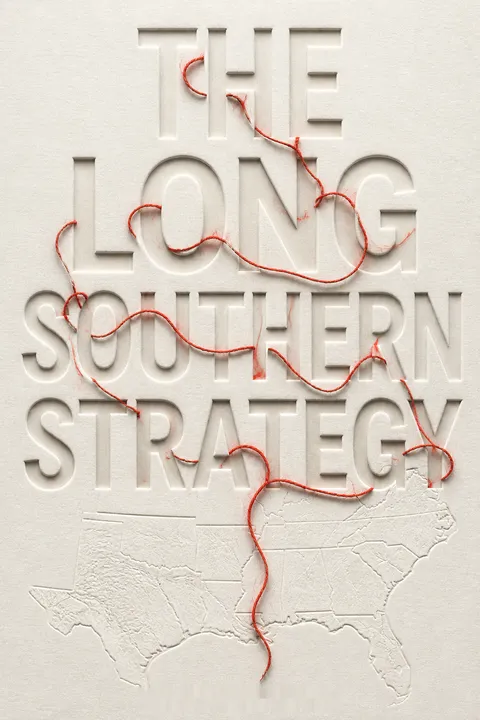
The Long Southern Strategy examines how the Republican Party used appeals to racism, sexism, and religious fundamentalism to shift white Southern voters from Democrat to Republican from the Nixon era onward. Reviews praise the extensive research and statistical data supporting the authors' thesis, though many note the academic, dense writing style makes it challenging for general readers. Critics appreciate how the book contextualizes modern politics and Trump's rise, while some conservative reviewers criticize perceived bias against Southern whites. Most agree it's essential reading for understanding contemporary American political divisions.
People Also Read





About the Author
Other books by Angie Maxwell
Download PDF
Download EPUB
.epub digital book format is ideal for reading ebooks on phones, tablets, and e-readers.








































