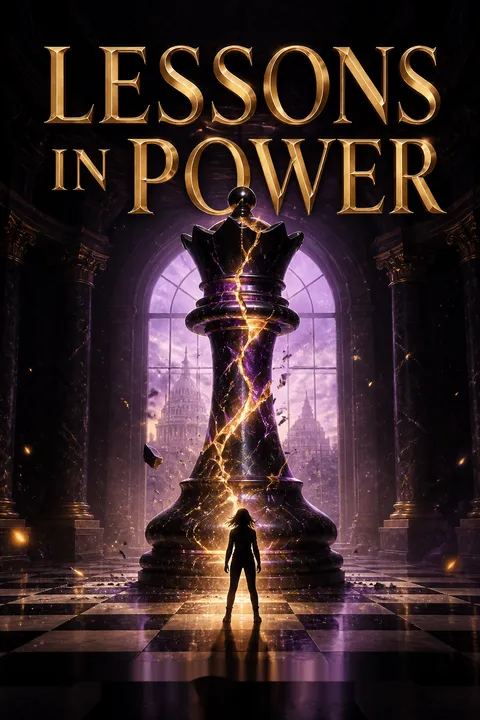

Plot Summary
Fixer's Gambit in D.C.
Tess Kendrick, recently exposed as the granddaughter of power broker William Keyes, accepts her uneasy role as "Fixer" at the elite Hardwicke School in Washington, D.C. When a classmate's father refuses to pay child support, Tess and her crew orchestrate a high-stakes ploy, leveraging secrets for justice—if not legality. This act cements Tess's reputation as more than a student: she's a force in a world where influence, leverage, and secrets are currency. Yet beneath her cold confidence and tactical mind, she struggles with her tangled family—especially her relationship with Ivy, her secret mother and high-profile political fixer. In this world, every move has a consequence, and trust is rare as gold.
Bloodlines and Betrayal
Tess navigates the double life pressed upon her: daughter of the infamous Ivy Kendrick and scion of the iron-willed Keyes. Dinners with her grandfather are strategic duels; every casual conversation is a lesson in power. At school, she wrestles with her fixer label and the push-pull of loyalty to friends and family, haunted by the lie of Ivy's true parentage. The ghosts of Ivy's abandonment—and the lengths their family has gone to preserve appearances—fuel Tess's inner tension and suspicions. Amid the ever-present chess metaphors, Tess is driven to question not just her place in D.C.'s ruling class, but whether she might inherit, or defy, the ruthless streak that forged her bloodline.
Power Plays at Hardwicke
The microcosm of Hardwicke—populated by senators' and tycoons' children—transforms personal drama into high-level political maneuverings. As the student council election becomes the perfect proxy for Washington's power games, Tess bargains her fixer skills: she'll ensure Emilia Rhodes' victory for a favor owed. Rivalries, blackmail, and social sabotage simmer beneath the surface, echoing the real-world stakes their parents face. Every alliance and betrayal among Tess and her friends—Henry, Vivvie, Emilia, and Asher—mirrors the machinations of D.C.: nothing is strictly personal, and every secret has leverage. What's being played is no longer just teenage politics; it's a rehearsal for life in the shadows of the nation's capital.
Secrets Behind Locked Doors
Tess's world divides between those with access and those left in the dark—she's often among the latter, especially concerning Ivy's clandestine operations. When Ivy's involvement in national emergencies seeps too close, Tess faces the emotional ache of familial exclusion, which echoes earlier abandonment. Despite warnings from Uncle Adam and Bodie, her protector, Tess can't resist probing Ivy's secrets, even as a chilling conspiracy—possibly tied to the death of Supreme Court Justice Marquette—unfolds. The allure and pain of locked doors drive Tess to break rules and boundaries, pushing her deeper into a labyrinth where secrets are both shield and weapon.
Campaigns and Collision Courses
Tess, now campaign manager for Emilia's student government run, becomes entangled in D.C. election fever just as a terrorist bombing rocks the capital. Parallel crises—the school's cutthroat election and a real-life threat—force Tess to apply her skills at manipulation and crisis control. Tess must guard national secrets while navigating school scandals and betrayals, highlighting the blurred lines between teenage drama and adult geopolitics. As the bodies and stakes mount, society's top layer is exposed as deeply vulnerable; Tess recognizes that playing the fixer in school is rehearsal for the cruel games played in the world outside.
Bombs, Scandals, and Shadows
When a hospital bombing shakes D.C., Tess suspects dangerous connections: the president's son, Walker Nolan, has secretly sought Ivy's help, and a mysterious medical researcher—Daniela Nicolae—falls under suspicion. As the administration and its children reel, the specter of political conspiracy looms large. Meanwhile, damaging photos and rumors sabotage Emilia's campaign, weaponizing shame and double standards against female ambition. Tess responds by orchestrating a viral protest, leveraging sisterhood to counteract cruelty. But as external threats grow and school alliances fracture, Tess feels the ground shifting: the power plays have life-or-death stakes, and trust is growing fatally scarce.
Corruption's Veil Lifted
As midterm elections near, school and state are wracked by sabotage, leaks, and smear campaigns. Tess's protest against Emilia's shaming exposes the ease with which institutions protect abusers and punish survivors, mirroring broader themes of corruption. The national scandal—presidential son in love with a suspected terrorist, leaked, then twisted for political gain—pushes loyalty among friends and family to a breaking point. Tess must choose when to keep secrets and when to weaponize them, knowing each move can bring safety or destruction. The lines between right and expedient options blur, threatening to unravel the bonds holding her world together.
Fractured Friendships Unravel
After public exposures and private betrayals, Tess finds her fixer persona both a shield and a curse. John Thomas Wilcox's relentless harassment culminates in tragedy, and Tess's friends—Emilia, Vivvie, Henry—are forced to confront hidden wounds and the cost of keeping secrets. Meanwhile, national trauma ricochets into every conversation and choice at Hardwicke, echoing Tess's personal battles with trust, self-doubt, and inherited pain. Tess risks everything to protect her friends, but as events spiral, she must reckon with those who cannot be saved, and the darkness that can't be undone.
Viral Leaks, Personal Costs
Leaked photos, videos, and files become weapons—not just emotionally, but mortally. When John Thomas is murdered in the school library, Tess becomes both a suspect and a witness, forced to navigate police suspicion, her own guilt, and the knowledge that secrets can kill. Asher, Henry, and Tess herself are all potential scapegoats, and Tess uses her skills to shift blame—but every intervention has consequences. Those with resources weaponize them; those without are left exposed. When betrayal surfaces even among friends, Tess must decide what price to pay to save the ones she loves—and if she can live with the aftermath.
The Cost of Protection
The cost of keeping others safe becomes clear as Tess makes escalating sacrifices. When students are abducted and violence comes literally to school doors, Tess navigates between law and morality—making deals with her grandfather, blackmailing school officials, leveraging friendships and loyalties for outcomes that never come without cost. The mounting danger tests the boundaries of what Tess, Ivy, and even powerful William Keyes are willing to do for family—and how trauma and secrecy are passed from generation to generation. Each act of protection reverberates: every "saving" leaves invisible scars.
The Queenmaker's Shadow
In the wake of violence, revelations about the true balance of power emerge. William Keyes—kingmaker of D.C.—is revealed to have deeper ties than suspected, including a secret parentage connecting him to the president's family. Tess realizes she's not just a player but a piece on the board, pushed by forces who move unseen. When terrorists take over Hardwicke itself—students held hostage, executions threatened—moral courage becomes Tess's only weapon. But even then, every hostage negotiation is tangled with shadow players and invisible purposes, showing that even the most "dangerous piece" can be outmaneuvered by the real queen behind the king.
Double Standards Exposed
As girls at Hardwicke are targeted for exploitative, shameful photos, Tess confronts the gendered double standard. Her viral protest, "I Stand With Emilia," galvanizes the community and unmasks the institution's hypocrisy, while refusing to let the narrative focus only on "bad apples." Yet, the campaign's victories come at personal cost; victims and avengers both pay steep emotional tolls for challenging the status quo. Tess's fight is never just about justice for one friend; it's a battle against a rigged system that threatens to consume them all.
Sacrifice for Survival
Tess learns firsthand that survival often comes at the price of innocence or trust. When terrorists infiltrate the school, merging personal and political violence, students become pawns in a larger game. Negotiating with hostage-takers, Tess must weigh one life against another, choosing which secrets to reveal and which to keep—knowing that some sacrifices can't be undone. The cost of leadership—the burden of carrying others' fates—changes Tess, marking the limits of youthful idealism when pitted against terror and betrayal.
Terrorists Among Us
As the Hardwicke siege unfolds, Tess discovers the true terrorists are embedded in the community: beloved teachers, trusted staff, and even classmates. Betrayals are intimate, the violence deeply personal. The line between right and wrong is blurred by ideology, manipulation, and coerced loyalty. As hostages are murdered to enforce deadlines, Tess faces a merciless calculus: do the unthinkable, or everyone pays. Her deepest relationships—especially with Henry—are gutted, revealing how easy it is to mistake shepherds for wolves in disguise.
Choices in Darkness
In the face of terror, Tess is forced into the darkest corners of her psyche. Alone, hunted, and desperate, she makes impossible decisions: risking her own life, conscripting allies with questionable motives, rallying traitors, and cutting deals under duress. The horror of watching friends murdered, of sacrificing others for a greater good, and of recognizing her own capacity for ruthlessness, leave Tess forever altered—a leader forged in fire, but also haunted by what she has chosen, and lost.
Traps, Pawns, and Saviors
Ultimately, only Tess's skills in manipulation, negotiation, and strategic thinking offer paths to survival. She becomes both bait and savior, orchestrating faked deaths, shifting alliances, and using trauma as leverage. Allies emerge in unlikely places, but intentions are always murky. In the end, the only path to liberation requires Tess to play their game better than the enemy—accepting that even victory will taste of defeat and guilt, as blood and secrets mingle on her hands.
The World Watches, Tess Acts
National media, law enforcement, and parents watch as Tess becomes the face of the hostages' fate, negotiations, and rescue. She is battered by public scrutiny and personal agony, required to keep secrets that could destroy or redeem the powerful. With every negotiation, each ransom note, she learns that appearances—of surrender, of victory, of villainy—are as much performance as reality. And sometimes, survival means letting the world believe a carefully crafted lie.
Betrayal Wears Familiar Faces
Tess faces the ultimate betrayal as Henry—her closest confidant, protector, and possibly love—reveals himself as a pawn of the terrorists, manipulated by personal grief and righteous anger. Tess is forced to decide: protect whom she loves, or the truth? The full cycle of betrayal underscores the book's question: Do we become the thing we hate by fighting against it—or can we transform pain into something redemptive, even if it means giving up on those we love most?
Blood on Clean Hands
In the aftermath, blood—both literal and metaphoric—marks every survivor. Tess mourns friends and innocence lost, refuses to forgive those who betrayed her, and shoulders the weight of secrets that cannot be shared. All appearances of justice, victory, and safety are purchased at the price of silence and suppressed truths. No one walks out clean, and in Tess's hands, the costs of fixing become wounds for which there is no easy salve.
Heroes, Villains, and Fakes
The public narrative offers easy heroes and villains, as the White House, Ivy, and the press spin the aftermath. Tess, traumatized and angry, recognizes that all victories are partial, and that sometimes the "saviors" of history are themselves corrupted. When she fears the president staged his own shooting, she is forced to admit that good and evil are rarely divided by clean lines. Tess herself is both hero and accomplice, fixer and wound-bearer, her own hands as dirty as anyone's.
Sins of the Powerful
As she navigates the aftermath, Tess unearths deeper truths: that the ultimate puppetmaster may not be a man, but a woman—the First Lady, the "queen" of D.C. power. The cycle of silence, cover-up, and strategic violence predates Tess and will likely continue after. The only difference is that now she sees it. The personal and the political remain inextricably intertwined, and those capable of wielding power and secrets are the ones who survive.
Aftermath, Alliances, Reckonings
The survivors of the siege at Hardwicke move on, but none are unchanged. New alliances are forged, old relationships broken, and Tess finds the traditional definitions of heroism and villainy insufficient for the world as it is. She sees herself as both scarred and steel-hard, ready to fight another day. Power is not a crown; it's the willingness to play the long game—no matter the sacrifices demanded.
Analysis
Barnes's The Long Game is a tour-de-force of moral complexity, trauma, and the poisonous inheritance of power. Through Tess, we see how systems—familial, institutional, political—co-opt and break the young, teaching them the art of the "fix" rather than healing or justice. The book's greatest strength lies in its refusal to grant its heroes clean hands: every rescue is pyrrhic, every secret a kind of violence. The institutional rot at Hardwicke mirrors that of the nation; the narrative's darkest revelation is that survivors become the next generation of manipulators. The story is a meditation on the cycles of trauma, the price of truth, and the unreliable nature of "justice" in a world where even "terrorists" and "saviors" are defined not by morality, but by leverage. Ultimately, the novel is both a coming-of-age and a reckoning: a warning that power's lessons begin at home, and that the only way to survive the long game is to play—brilliantly, but never without cost.
Review Summary
Readers largely adore The Long Game, praising its intense political thriller plot, shocking twists, and well-developed characters. Many consider it superior to the first book, highlighting the fast-paced action, complex relationships, and emotional depth. Tess is celebrated as a fierce, relatable heroine, while secondary characters like Asher bring humor and heart. Common criticisms include a rushed ending, stakes feeling occasionally too high, and Henry's betrayal feeling out of character. Most readers desperately want a third book, lamenting the open-ended conclusion of what was marketed as a duology.
Characters
Tess Kendrick
Tess is at once a magnetic outsider and the emotional heart of the novel—a girl marked by abandonment and lies, whose inheritance is both pain and power. As Ivy's secret daughter and Keyes's granddaughter, she is bred for games of leverage yet afraid of who she might become. Tess's relationships—fierce loyalty to her friends, desperate need for her mother's love, complicated bond with Henry—drive her to both strategic brilliance and emotional risk. Psychoanalytically, Tess wrestles with inherited trauma, the costs of responsibility, and the price of survival in a world that destroys innocence but demands courage. By the end, she is not unscathed, but she is unbroken—willing to sacrifice, to forgive, and to pick up the burdens her elders have left.
Ivy Kendrick
Ivy, D.C.'s legendary fixer, is both model and cautionary tale for Tess. Psychoanalytically, Ivy is torn between maternal instincts and the pragmatic coldness the world requires. Her greatest flaw is her belief that secrets can protect, when they so often destroy. Her relationship with Tess is defined by abandonment, guilt, and efforts at reconciliation, but also by mirroring: Ivy sees in Tess the daughter she can't shelter, and so is forced to reckon with her own choices, failures, and the boundaries of power. Ivy's journey is one of learning when to wield control and when to let Tess claim both agency and pain.
Henry Marquette
Henry is the archetypal "good son," marked by loss—his father's suicide, his grandfather's murder—and carrying the burden of rectifying the sins of his bloodline. Driven to protect, he is an easy mark for those who offer him justice or revenge. His psychoanalytic profile is marked by suppressed trauma, desperate search for purpose, and the destruction that follows misplaced trust. His relationship with Tess is layered: mutual attraction, confidences, and ultimately, betrayal. Through Henry, the novel explores the dangers of radicalization, how grief is weaponized, and whether forgiveness is ever possible.
Emilia Rhodes
Emilia is both the archetypal overachiever and the victim of gendered double standards. Fiercely intelligent but guarded, she trusts few, carries her wounds as armor, and, when wronged, fights back not with vengeance but strategic fury. Her journey is one of refusing to be shamed or silenced, and her bond with Tess passes from rivalry to alliance. Emilia's relationship with Asher, her twin, is tender but fraught, and she exemplifies the long-term cost and necessity of girl solidarity in patriarchal systems.
Asher Rhodes
Asher's irrepressible humor cloaks insecurity and fear. He is the glue among his friends, often overlooked for pain he cannot express except through jokes or impulsivity. Asher's love for Emilia is fierce—protective to a fault. His physical lashing out at John Thomas reveals how far he'll go for his sister, while his helplessness in the crisis reveals the limits of cheerfulness as survival. He demonstrates the psychological need for levity as both coping and defense.
Vivvie Bharani
Vivvie is the emotional anchor for Tess, grounded by her own trauma—her father's complicity in murder, her struggle with depression. Anxiously eager to help, Vivvie is rarely the center of conflict but often the emotional barometer, her anxieties echoing the book's broader uncertainties. Her bond with Tess is tested by secrets and by her own need for reassurance, encapsulating the cost (and healing) of real friendship for the traumatized.
William Keyes
The "kingmaker," Keyes is D.C.'s shadow ruler, calculating and cold, but not inhuman. His psychoanalytic complexity lies in guilt over past alienation with his children, a desperate need to protect his bloodline, and the cold logic of strategy. His secret paternity of Walker Nolan connects power, illegitimacy, and the cycles of inheritance that Tess must navigate. Keyes is both archetype and subversion of the patriarch: worshipping power but wounded by love withheld and lost.
Dr. Clark
Initially a trusted teacher, Dr. Clark's revelation as a Senza Nome operative is both shocking and inevitable; her zeal for the "greater good" makes her both more sinister and more human than an ordinary villain. Her psychoanalysis reveals idealism curdled into terrorism, driven by the desire to fix what she sees as a broken world. Even her ultimate surrender is strategic, her emotions and intellect perpetually at war.
Mrs. Perkins
The secretary weaponizes warmth to obscure her true agenda as a terror cell leader. Psychoanalytically, she is the integration of banality and ruthlessness: she manipulates others' vulnerabilities, delights in catastrophe, and embodies the terrifying potential for violence in safe-seeming spaces.
Daniela Nicolae
Daniela is many things simultaneously: an infiltrator, a lover, a mother, a liability, a survivor. Her willingness to betray or save hinges less on ideology than on bonds of blood and self-preservation. Daniela's arc embodies the themes of manipulation, loyalty, and the question of whether a person can ever truly walk away from what they've become.
Plot Devices
Political Microcosm as School
By setting much of the action in an elite school, the narrative efficiently encapsulates adult stakes—elections, betrayals, power grabs—into micro-dramas that feel immediate and high-stakes for the characters, but ripple outward to the wider world. The school becomes a crucible for learning the language of secrets, shame, and survival.
Dual Narrative Structures and Foreshadowing
Multiple plot lines—school election drama, national terrorism, familial secrets—are developed in tandem, each echoing and heightening the consequences of secrets and ambition. Chess metaphors and explicit references to "the long game" foreshadow the depth of manipulation present in every circumstance.
The Hidden Enemy Within
Rather than a faceless or foreign enemy, the real threats are embedded in the community: favorite teachers, best friends, and family members. This device amps up tension and showcases psychological depth, as betrayal fractures every alliance.
Viral Media and Information Cascades
The strategic use of social media, viral protests, and digital leaks reflects the contemporary realities of weaponized embarrassment, shame, and leverage. Who controls information, and who is destroyed by it, become as important as physical threats.
Sacrifice, Moral Dilemmas, and Pyrrhic Victories
Every success costs a sacrifice, usually of trust or innocence. Major characters are forced to choose whom to save and whom to sacrifice, and even heroic actions leave lasting wounds.
Twists, Red Herrings, and Identity Reversals
Suspects become victims, and heroes are revealed as pawns or villains. Relationships are pierced by lies; dangerous secrets force Tess to act as both fixer and destroyer. The ultimate reversal comes in the realization that the most dangerous player—the queen—is hiding in plain sight.
Download PDF
Download EPUB
.epub digital book format is ideal for reading ebooks on phones, tablets, and e-readers.








































