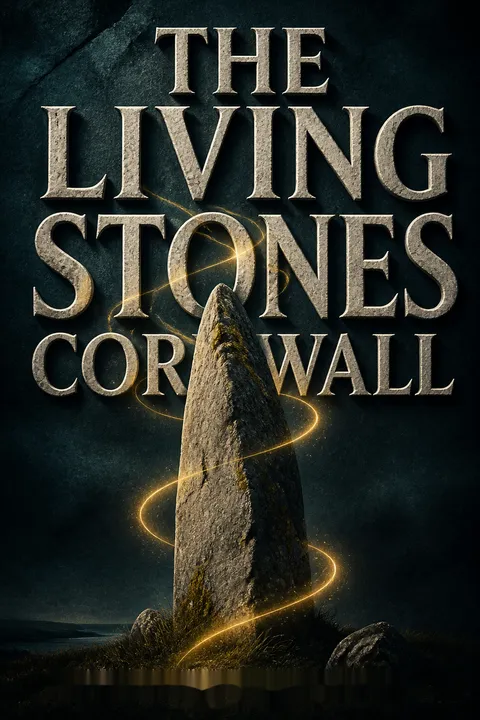

Key Takeaways
1. Cornwall's Ancient, Mystical Spirit Shapes Its Enduring Character
West Penwith is granite, one of the oldest rocks, a byword for hardness, endurance, inflexibility.
Geological foundation. Cornwall, particularly West Penwith, possesses a profound, almost primeval character deeply rooted in its ancient granite geology. This fundamental hardness and endurance are not merely physical attributes but permeate the very psychic life of the land, influencing its streams, vegetation, and the people it attracts. The air itself holds a "balsamic quality" that brings healing and a sense of timelessness.
Echoes of Atlantis. The region is imbued with a sense of an "unattained past," hinting at connections to sunken lands like Lyonesse and Atlantis. This deep history manifests in the unique light that bathes the peninsula, often described as reflected from the surrounding seas onto low-sailing clouds. For those sensitive to these ancient emanations, Cornwall offers a profound feeling of belonging.
Animistic connection. The land calls to an animist, not just a pantheist, where every leaf and pebble holds significance. This deep identification with the wilderness means any threat to the valley feels like a personal violation. The enduring presence of ancient stones and the pervasive sense of history make it a place where one can truly feel "at home" if attuned to its granite essence.
2. The Quest for a Personal Sanctuary Amidst Nature's Embrace
After years of blitz I felt that here I could find some humble refuge from the claustrophobic fright of cities.
Escape from urban chaos. The author, Ithell Colquhoun, sought refuge in Cornwall after enduring the London Blitz, yearning for an escape from the "claustrophobic fright of cities." Her search for a country retreat led her to the Lamorna Valley, a place of "leafy, water-loud charm" that promised peace and healing. This quest was not merely for a house but for a spiritual haven.
Vow Cave's transformation. She discovered a dilapidated corrugated-iron shack, which she named Vow Cave (tautologically meaning "cave cave" in Cornish), and envisioned its transformation. Despite its "mouldy little place" appearance and lack of modern amenities like electricity or piped water, she saw its potential as a studio and bolthole. The process of securing a fifty-year lease from the elusive Colonel Paynter and undertaking repairs was a testament to her determination.
Unmechanized existence. Life at Vow Cave embraced a deliberately unmechanized existence, relying on stream water and Calor Gas rather than electricity. Colquhoun pondered whether the absence of electric current was a "blessing in disguise," believing that dwellings without it "breathe more freely" and allow for deeper relaxation, undisturbed by the "pulsations of electricity" that disrupt the subtle body.
3. Nature's Rhythms and Wildlife Offer Profound Connection
Cornwall never lets one down, whatever it may seem to be doing; Lamorna can do anything to me, and I will not only put up with it but enjoy it.
Seasonal immersion. The author's life at Vow Cave was deeply intertwined with the valley's natural rhythms, observing the procession of blossoms and the changing seasons. She found joy in sunbathing naked by the stream, watching dragonflies, and appreciating the unique flora like the navelwort, which she considered the badge-flower of the region, embodying the entire season of bloom.
Wildlife encounters. The valley was a vibrant habitat for various creatures, from owls whose "exulting cries" filled moonlit nights to bullfinches and buzzards. Colquhoun recounts intimate observations, such as a young tawny owl's helplessness and the persistent attempts of blue tits to nest in her stove chimney. These interactions highlight a close, often challenging, coexistence with nature.
The gift of 'kaif'. The intense awareness of weather and the natural world fostered a state of "kaif," an Arabic term for a timeless, purposeless reverie. This creative trance, akin to stages of artistic creation, allowed her to dwell on simple phenomena like a flickering fire or a cloud's shape. She questioned why society, particularly for women, often discourages such introverted, self-absorbed indulgence.
4. Modernity's Noise and Tourism Threaten Rural Quietude
The Lamorna that inspired artists is now fast vanishing.
Invasion of noise. A "tragedy of an insidious kind" has befallen Lamorna, primarily through the sense of hearing, as the "age of mechanization and profit-making" has launched its chief assault. The once tranquil valley, where only birdsong and the brook were heard, is now plagued by incessant noise, from roaring motor cycles to grinding brakes and changing gears.
Erosion of charm. The influx of tourists and heavy traffic has transformed the landscape and local life. Narrow lanes, never built for such volume, are now dangerous for pedestrians, who are "squashed against the bank" by lorries and motor-coaches. The natural beauty is sacrificed for wider, macadamized tracks, with overhanging boughs "rigorously lopped" and wild flower banks destroyed.
Loss of authenticity. This "development" paradoxically destroys the very peace and charm that initially attracted visitors. Tourists, rushing through "beauty spots" to say they have "done" them, miss the true essence of the place. The author laments that the Lamorna which inspired artists is "fast vanishing," forcing her to consider leaving her beloved Vow Cave in search of undisturbed quietude.
5. Living Stones Hold Ancient Power and Earth's Magnetic Secrets
Not only the tors but also the ‘rude stone monuments’, the more widely acknowledged relics of an unimagined age, are repositories still of ancient power, are the living stones.
Granite's enduring power. Cornwall's granite landscape is not merely geological but deeply spiritual, with its tors and ancient stone monuments serving as "living stones" that retain powerful psychic forces. Unlike modern landmarks, these prehistoric relics emanate a palpable magnetic field, a residue of subtle force stored by ancient colonists from Atlantis.
Sacred sites. Many of these sites, whether tors or stone circles, were historically used for stone-worshipping rites, some even until recently. The author notes that granite, more than other rocks, seems to retain these forces for aeons. Even old stone crosses, some predating Christianity, are full of psychic life, often being sanctified menhirs before their carving.
Divination and healing. Stone circles, whose original purpose is unknown beyond being temples, may have been used for divination, with their orientation linked to solar or stellar events. Holy wells, often guarded by ancient stones, possess healing properties and are considered part of an animist's trinity alongside rocks and trees, perpetuating lore that predates formal religions.
6. Pagan Deities Endure, Disguised as Christian Saints
From this point of view, each saint is a present-day avatar of some nature deity or guardian spirit, and observances connected with him often retain, even now, a trace of their original intention.
Saints with pagan roots. Cornwall boasts an extraordinary number of saints, many with obscure or uncertain histories, suggesting a deep pagan substratum beneath their Christian veneer. Dr. T.F.G. Dexter's research links parish feasts to ancient sun or moon festivals, revealing these saints as avatars of nature deities. For example, the Anthonys, Anns, and Agneses are seen as disguised fire deities.
Intuitive apprehension. The author advocates for a "first-hand apprehension" of these elusive beings, visiting places bearing their names to intuitively grasp their character. St. Uny, for instance, is perceived not merely as a monk but as a "nymph of wells and springs," her presence revealing itself in specific conditions of light and air, particularly around sites like Chapel Uny near Sancreed.
Enduring traditions. Despite Christianization, many observances retain traces of their original pagan intent. The Helston Furry Dance, for example, is seen as a spring rite, possibly an imitation of fairies or a dance to the sun god, with its date linked to ancient festivals. Even the names of villages, often dropping the "St" prefix, hint at an "equivocal" personage who gave the site its name, suggesting a deeper, pre-Christian identity.
7. Alternative Lifestyles Flourish, Challenging Convention
Compared to the life of the Woodcutters in its most primitive phase, mine at Vow Cave was almost bourgeois in its comfort and amenity...
Post-war idealism. In the late summer of 1945, a group of pacifist "Woodcutters," inspired by Thoreau and Tolstoy, arrived in Lamorna, seeking an alternative, communal life after the war. They embraced a defiant, nomadic existence, working as tree-fellers and living rough, often sleeping outdoors or in tents, with minimal possessions.
Unconventional living. Their lifestyle was characterized by a rejection of conventional norms:
- They worked only when inclined, spending free time roaming, bathing, and sunbathing.
- Their clothes were minimal, often going barefoot, with hair and beards grown long.
- They were visited by a psychotherapist, Walt, who used manual labor and mountain-climbing as unorthodox cures for neurosis.
This attracted both delight and scandal from local farmers, who sometimes spied on their naked sunbathing.
Challenges of domesticity. The "Venus-influence" of the valley led to marriages and families, but the "ideological weakness" of reconciling "freedom" with family life eventually caused the group to disintegrate. Despite their eventual dispersal, the Woodcutters left a legacy of quietude and a deep connection to nature, with some members, like Morwenna and Alec, possessing a unique faculty for silent, intuitive communication.
8. Folklore and Occultism Remain a Living Force
As perhaps i have shown, folklore in Cornwall is not a thing of the past only but a living activity.
Mythopoeic landscape. Folklore in Cornwall is not merely historical but a vibrant, living activity, with the collective unconscious constantly weaving new "atavistic yarns." This mythopoeic faculty readily attaches sinister legends to figures whose personalities promise to sustain them, as exemplified by the sensational stories surrounding Aleister Crowley's visit.
Crowley's Cornish sojourn. The "wickedest man in the world," Aleister Crowley, made a brief visit to Mousehole in 1938, which became a fertile ground for local gossip. Rumors proliferated, accusing him of dancing naked at stone circles, performing human sacrifices, and reviving Druidic cults, despite a lack of factual evidence.
Fact versus fiction. The author, having studied Crowley's diaries, provides a factual counter-narrative: his visit was a plain holiday of sunbathing, walking, and socializing, with no recorded magical ceremonies in Cornwall. She critiques the sensationalism and loose use of "black magic," emphasizing that true black magic involves malicious intent, criminal means, or commerce with malefic entities, rather than merely unconventional practices.
9. Quietude and Introversion are Essential for Creative Life
Why should a woman not enjoy kaif also? Is there something in feminine psychology which neither needs nor understands this purposeless timeless reverie?
The need for inner stillness. Colquhoun deeply values quietude, seeing it as indispensable for creative work and personal well-being. She explores the concept of "kaif," a state of purposeless, timeless musing, which she finds essential for her artistic process. This state allows for a direct experience of the moment, a "wordless, thoughtless vacuum" that fosters profound insight.
Defying societal norms. She challenges the societal expectation for women to be extroverted, contrasting it with the tolerated introversion of male "geniuses." Colquhoun asserts her right to this self-absorbed, creative trance, suggesting a "conspiracy to beguile women into being less self-absorbed" than nature intended, often at the cost of their self-development.
Valley's acoustic mysteries. The Lamorna Valley itself possesses peculiar acoustic properties, sometimes revealing "a flutter of notes in an unfamiliar mode" or "strange voices in the air," which sensitive individuals perceive as "the atmosphere singing." These experiences confirm what folk tales have long known, hinting at a deeper, unseen reality that is often shut out by "closed rationalism."
10. Cornwall: A Magnetic Haven for Seekers and the Dissatisfied
Cornwall has an attraction for the seeker, bearing as it does traces of those sunken countries Lyonesse and Atlantis, which are lost in the depths of every mind.
A magnet for seekers. Cornwall exerts a powerful magnetic pull on those dissatisfied with their lives or environments, promising "something other than a mere humdrum existence." This draws many to settle there, seeking not just a living but a life worth living, often jettisoning conventional prospects to embrace the region's unique allure.
Esoteric communities. The region attracts various esoteric groups and individuals, such as M.E. Williams's "Thought Bricks" mind-training system and Barney Camfield's Society for the Promotion of Optimism, which offers psychological and practical support. John Müller's Biological Dynamic Research Station on the Lizard, cultivating land with "Elemental Powers," further exemplifies this draw.
Earth's energetic currents. The belief in earth's magnetic currents, flowing from places like Blythborough to Land's End and beyond, suggests that these "unburdened" points where land meets ocean create whirlpools that stimulate health and visionary capacity. Cornwall, with its deep connection to these forces, becomes a potent landscape for spiritual and personal transformation, a place where the "lost soul" can find its bearings.
Review Summary
The Living Stones receives an average rating of 3.99/5, with readers praising its evocative portrayal of Cornwall's landscape, folklore, and occult traditions. Many appreciate Colquhoun's lyrical, idiosyncratic writing style and her deep engagement with Cornish customs, standing stones, and local history. Some find the book meandering and unfocused, better suited to those with prior interest in Cornwall or the occult. Recurring themes include nostalgia for a vanishing way of life, the encroachment of modernity, and a profound sensitivity to place and its hidden energies.
People Also Read
Download PDF
Download EPUB
.epub digital book format is ideal for reading ebooks on phones, tablets, and e-readers.








































