
Plot Summary
Hexagons Without End
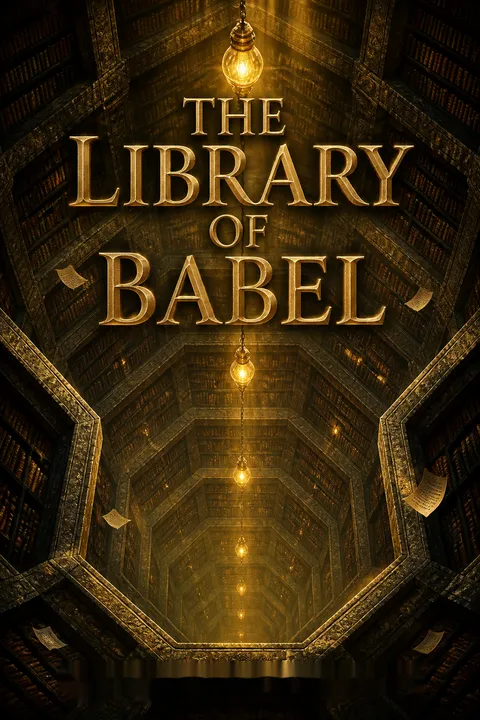
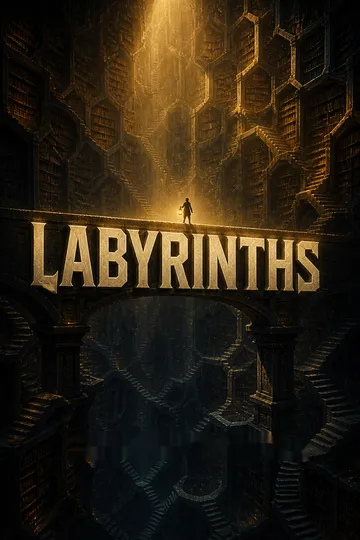
The universe is a vast, possibly infinite library, composed of countless hexagonal galleries, each identical in structure. These galleries are connected by narrow hallways, spiral stairways, and are illuminated by dim, fruit-like lamps. Every wall but two is lined with shelves, each holding uniform books filled with seemingly random letters. The narrator, an aging librarian, describes this endless expanse as both his world and his prison. The architecture itself is a metaphor for the infinite possibilities and the unknowable totality of existence. The sense of scale is overwhelming, and the narrator's own life is but a fleeting moment within the eternal, unchanging labyrinth. The Library's structure is both a comfort and a source of existential dread, as it suggests both order and chaos without end.
The Mirror's Infinite Promise
In each hexagon, a mirror stands in the hallway, duplicating appearances and raising questions about the nature of reality. Some believe the mirror proves the Library is not infinite, as it offers only an illusion of endlessness. Others, like the narrator, dream that the mirror's reflection is a promise of the infinite, a symbol of hope and boundless potential. The mirror becomes a philosophical device, blurring the line between reality and illusion, and suggesting that every perception is itself a kind of infinite regression. The mirror's presence is a subtle reminder that the Library's mysteries are as much about perception as about physical space, and that the search for meaning may be as endless as the Library itself.
The Law of Letters
The Library's books are constructed from a fixed set of twenty-five orthographical symbols: twenty-two letters, the space, the comma, and the period. This discovery led to the realization that the Library contains every possible combination of these symbols, and thus, every possible book. The implications are staggering: the Library holds not only all coherent works, but also endless volumes of gibberish, falsehoods, and near-duplicates. The narrator marvels at the perfection of the printed letters compared to his own crude handwriting, seeing in this the distance between the divine and the human. The Law of Combinatorics is both a source of hope—everything can be found—and despair—almost nothing is meaningful.
The Search for Meaning
For generations, librarians have wandered the endless galleries, searching for books that contain meaning, truth, or personal vindication. Some believe that the incomprehensible books are written in lost or foreign languages, while others suspect cryptographic secrets. The narrator recounts the futile efforts to decode these texts, and the growing realization that most books are simply random. The search for meaning becomes a metaphor for the human condition: a desperate, often hopeless quest for order in a universe of chaos. The Library's totality ensures that every answer exists somewhere, but the odds of finding it are infinitesimal.
The Catalog of Catalogs
Many librarians dream of finding a catalog of catalogs—a book that would index all other books, making the Library's vastness navigable. This hope drives endless journeys and fruitless searches, as each catalog found is inevitably incomplete, false, or itself indexed by another, in an infinite regress. The narrator reflects on the tragic irony that the very abundance of information renders it inaccessible. The dream of a perfect catalog is both a symbol of hope and a source of despair, as it promises order but delivers only further complexity and confusion.
The Vindication Pilgrims
When it was proclaimed that the Library contains all books, people were seized by extravagant happiness, believing that somewhere their personal vindication—proof of their worth, justification of their actions—existed. Thousands abandoned their homes to search for these books, becoming pilgrims in the labyrinth. The corridors filled with disputes, violence, and madness as hope turned to obsession. The narrator notes that while such books do exist, the chance of finding one's own is effectively zero. The quest for vindication becomes a tragic parable of human longing and the futility of seeking external validation in an indifferent universe.
Madness in the Corridors
The initial hope of finding meaning gives way to despair as the impossibility of the task becomes clear. Some librarians go mad, others turn to violence, and many die in the endless corridors. Epidemics, heresies, and banditry decimate the population. The Library, once a symbol of infinite possibility, becomes a place of suffering and loss. The narrator's tone is mournful, reflecting on the cost of the search for meaning and the fragility of the human spirit in the face of overwhelming chaos.
The Purifiers' Fury
In response to the chaos, a sect of Purifiers arises, determined to eliminate useless books and impose order on the Library. They destroy countless volumes, convinced that they are purging falsehood and preserving truth. Yet their efforts are ultimately futile: the Library is so vast that their destruction is insignificant, and every book destroyed has countless near-duplicates. The Purifiers' zeal is both tragic and absurd, a reflection of humanity's desperate need for control in a world that defies it. Their actions only add to the Library's legacy of loss and futility.
The Man of the Book
Another legend arises: somewhere in the Library is a Man of the Book, who has read the perfect compendium—a book that contains the key to all others. This figure becomes an object of worship and obsession, as seekers hope to find him or the book itself. The narrator admits to having wasted years in this pursuit, driven by the hope that someone, somewhere, has found meaning. The Man of the Book is a symbol of ultimate knowledge, but also of the unattainable, a godlike figure whose existence is both necessary and impossible.
The Tyranny of Chance
The narrator reflects on the role of chance in the Library: every book exists because it is possible, but the arrangement is arbitrary. The overwhelming majority of books are nonsense, and coherence is a miraculous exception. The Library's order is thus a tyranny of randomness, where meaning is rare and fleeting. The narrator's own attempts to find sense are mirrored by the Library's endless production of meaningless combinations. The tyranny of chance becomes a metaphor for the human struggle to find purpose in a universe governed by indifferent laws.
The Blasphemous Sects
In the face of despair, some form blasphemous sects that reject the search for meaning altogether. They advocate for the random construction of books, hoping that chance will produce the canonical texts. Others believe in the futility of all effort, embracing nihilism. The authorities suppress these sects, but their influence lingers. The narrator recalls old men secretly mimicking the divine disorder, a quiet rebellion against the tyranny of meaninglessness. These sects embody the tension between hope and resignation, creativity and futility.
The Crimson Hexagon
Among the many legends, the Crimson Hexagon stands out as a place where magical, all-powerful books are said to exist. The Purifiers and other seekers are drawn to it, hoping to find texts of ultimate power or wisdom. The narrator treats these stories with skepticism, seeing them as expressions of longing for certainty and control. The Crimson Hexagon is a symbol of the unattainable, a mirage that drives people to madness and destruction. Its allure is a testament to the enduring power of myth in a world of uncertainty.
The Language of Babel
The Library's books are written in every possible language, dialect, and code, making communication and understanding nearly impossible. Even the word "library" can mean anything in different contexts. The narrator muses on the impossibility of true understanding, as every attempt at communication is undermined by ambiguity and multiplicity. The Language of Babel is both a curse and a blessing: it ensures that every idea can be expressed, but also that every idea is lost in a sea of confusion. The Library becomes a metaphor for the limits of language and the impossibility of perfect knowledge.
The Weight of Despair
As the years pass, despair becomes the dominant emotion among the librarians. Suicides increase, and the population dwindles. The narrator fears that humanity itself may be nearing extinction, while the Library endures, indifferent and eternal. The sense of futility is overwhelming: every effort to find meaning, order, or connection is ultimately defeated by the Library's vastness and indifference. The narrator's melancholy is profound, a reflection on the tragedy of human existence in a universe that offers no answers.
The Cyclical Order
Despite the apparent chaos, the narrator suggests that the Library may be both unlimited and cyclical. If one were to travel endlessly, the same volumes would eventually reappear, and the disorder would become a kind of order. This idea offers a glimmer of hope: that meaning may emerge from repetition, and that the Library's infinite variety is itself a form of structure. The cyclical order is an elegant solution to the paradox of infinity, suggesting that even in chaos, patterns can be found.
The Solitude of the Librarian
The narrator's own life is marked by solitude, as he prepares to die near the hexagon of his birth. He reflects on the loneliness of the librarians, scattered and isolated in the endless galleries. The search for meaning is a solitary endeavor, and the Library's vastness only deepens the sense of isolation. Yet there is also a quiet dignity in the narrator's acceptance of his fate, a recognition that his life is part of a larger, unknowable whole. The solitude of the librarian is both a tragedy and a testament to the resilience of the human spirit.
The Library's Eternal Silence
As humanity fades, the Library remains: illuminated, incorruptible, and secret. The narrator imagines his own death as a descent into the fathomless air, his body dissolving in the infinite wind. The Library's silence is both comforting and terrifying, a reminder that the universe will persist long after human concerns have vanished. The eternal silence is the final answer to all questions, the ultimate reality that lies beyond hope and despair.
Hope in Repetition
In the end, the narrator finds solace in the idea that the Library's infinite repetition may justify its existence. Even if he never finds meaning, perhaps someone else will. The hope that the Library is justified, that order and happiness are possible for someone, somewhere, sustains him. This hope is fragile but enduring, a testament to the human capacity for faith in the face of overwhelming odds. The story closes on this note of tentative optimism, suggesting that even in an indifferent universe, hope persists.
Analysis
Borges's "The Library of Babel" is a profound meditation on the human search for meaning in an infinite, indifferent universe. The Library, with its endless galleries and incomprehensible books, is a metaphor for existence itself: vast, mysterious, and ultimately unknowable. The story explores the paradoxes of totality and randomness, showing how the abundance of information can lead to both hope and despair. The characters' quests for order, vindication, and ultimate knowledge reflect universal human desires, but their failures highlight the limits of understanding and the dangers of obsession. Borges uses the Library's structure and the Law of Combinatorics to question the very possibility of meaning, suggesting that every answer exists but is lost in a sea of noise. Yet, amid the chaos, the story offers a fragile hope: that meaning may emerge from repetition, that order may be found in chaos, and that the search itself is a form of justification. In our modern world, overwhelmed by information and uncertainty, Borges's vision remains as relevant and unsettling as ever.
Review Summary
The Library of Babel is a profound short story exploring infinity, knowledge, and human existence through an infinite library metaphor. Readers praise its mind-bending concepts, philosophical depth, and thought-provoking nature. Many find it challenging but rewarding, appreciating Borges' ability to pack complex ideas into a brief work. The story's influence on literature and its relevance to modern information overload are noted. Some readers struggle with its density, while others see it as a masterpiece of speculative fiction that fires the imagination and invites multiple interpretations.
People Also Read
Characters
The Narrator
The narrator is an old librarian who has spent his life wandering the endless galleries of the Library, searching for meaning, order, and personal vindication. He is introspective, melancholic, and philosophical, haunted by the futility of his quest but unable to abandon hope entirely. His reflections reveal a deep awareness of the limits of human understanding and the tragedy of existence in a universe that offers no easy answers. The narrator's journey is both literal and metaphorical, representing the universal human search for purpose in a world of chaos. His acceptance of solitude and mortality is tinged with both resignation and quiet dignity.
The Librarians
The librarians are the inhabitants of the Library, each isolated in their own hexagons, driven by the hope of finding meaning or vindication. They are a diverse group, ranging from hopeful seekers to despairing nihilists, from zealous Purifiers to blasphemous rebels. Their relationships are marked by competition, violence, and occasional camaraderie, as the pressures of the Library's vastness drive them to both madness and solidarity. Psychologically, the librarians embody the full spectrum of human responses to uncertainty: hope, despair, fanaticism, resignation, and creativity. Their collective fate is a meditation on the fragility and resilience of the human spirit.
The Purifiers
The Purifiers are a sect of librarians who believe that the Library's chaos can be tamed by destroying useless books. Their zeal is both tragic and absurd, as their efforts are ultimately insignificant in the face of the Library's immensity. Psychologically, the Purifiers represent the human need for control and the dangers of fanaticism. Their actions are driven by a desperate hope for order, but they only succeed in adding to the Library's legacy of loss and futility. The Purifiers' story is a cautionary tale about the perils of imposing order on a fundamentally chaotic world.
The Vindication Pilgrims
The Vindication Pilgrims are those who abandon their homes to search for books that justify their existence. Their quest is driven by hope, but quickly turns to obsession, violence, and madness. Psychologically, they represent the universal human longing for validation and the dangers of seeking it in external sources. Their journey is a tragic parable of the futility of seeking meaning in an indifferent universe, and their fate is a warning about the costs of obsession and the limits of hope.
The Man of the Book
The Man of the Book is a legendary figure said to have read the perfect compendium—a book that contains the key to all others. He is both a symbol of ultimate knowledge and an unattainable ideal, worshipped and sought after by countless librarians. Psychologically, he represents the human longing for certainty and the allure of the unattainable. The Man of the Book is a godlike figure, embodying both hope and despair, and his legend is a testament to the enduring power of myth in a world of uncertainty.
The Blasphemous Sects
The Blasphemous Sects are groups that reject the search for meaning, advocating for randomness or nihilism. They are suppressed by the authorities, but their influence persists as a quiet rebellion against the tyranny of meaninglessness. Psychologically, they represent the tension between hope and resignation, creativity and futility. Their existence is a reminder that even in the face of overwhelming chaos, some will choose to embrace disorder rather than submit to despair.
The Inquisitors
The Inquisitors are librarians tasked with searching for infamous or heretical books. They are weary, driven by duty rather than hope, and their efforts are marked by exhaustion and futility. Psychologically, they represent the dangers of institutionalized control and the limits of authority in the face of the unknown. Their presence adds a layer of tension and conflict to the Library's already fraught atmosphere.
The Mystics
The Mystics are those who claim to have glimpsed a higher order in the Library, often through ecstatic visions of circular chambers or divine books. Their testimony is suspect and their words obscure, but they represent the enduring human hope for transcendence and meaning beyond the material world. Psychologically, the Mystics embody the tension between faith and skepticism, and their visions are both a source of hope and a reminder of the limits of human understanding.
The Old Men
The Old Men are remnants of the blasphemous sects, hiding in latrines and mimicking the divine disorder with dice and metal disks. They are figures of quiet rebellion, holding onto hope in the face of despair. Psychologically, they represent the persistence of creativity and resistance, even in the most hopeless circumstances. Their actions are a testament to the enduring power of ritual and the human need for meaning, however fleeting.
The Crimson Hexagon Seekers
The Crimson Hexagon Seekers are those who pursue the legendary magical books said to reside in the Crimson Hexagon. Their quest is driven by longing for certainty and control, but leads only to madness and destruction. Psychologically, they represent the dangers of obsession and the allure of the unattainable. Their fate is a warning about the costs of pursuing myths in a world that offers no guarantees.
Plot Devices
Infinite Library as Universe
The central plot device is the Library itself: an endless, labyrinthine structure that serves as a metaphor for the universe, knowledge, and the human search for meaning. Its infinite galleries, identical hexagons, and endless books create a sense of overwhelming possibility and futility. The Library's architecture is both a physical setting and a philosophical concept, shaping the characters' actions and emotions. The device allows Borges to explore themes of infinity, randomness, and the limits of human understanding.
The Law of Combinatorics
The realization that the Library contains every possible combination of letters is a key plot device, driving the search for meaning and the despair that follows. This device allows Borges to explore the paradoxes of totality: the idea that having access to all information renders it inaccessible, and that meaning is both everywhere and nowhere. The Law of Combinatorics is both a source of hope and a cause of existential crisis.
Foreshadowing and Circularity
Throughout the story, Borges uses foreshadowing and circular narrative structures to suggest that the Library's chaos may conceal a hidden order. The idea that the Library is both infinite and cyclical offers a glimmer of hope, and the repetition of themes and motifs reinforces the sense of eternal recurrence. This device allows Borges to explore the possibility that meaning may emerge from chaos, and that the search for order is itself a form of hope.
Myth and Legend
The myths of the Man of the Book, the Crimson Hexagon, and the Vindication Pilgrims serve as plot devices that motivate the characters and shape their actions. These legends embody the human longing for certainty, order, and transcendence, and their ultimate futility underscores the story's themes of ambiguity and uncertainty. The use of myth allows Borges to explore the power of narrative and the limits of belief.
About the Author
Other books by Jorge Luis Borges
Download PDF
Download EPUB
.epub digital book format is ideal for reading ebooks on phones, tablets, and e-readers.








































