
Plot Summary
Blood-Red Fairy Tale
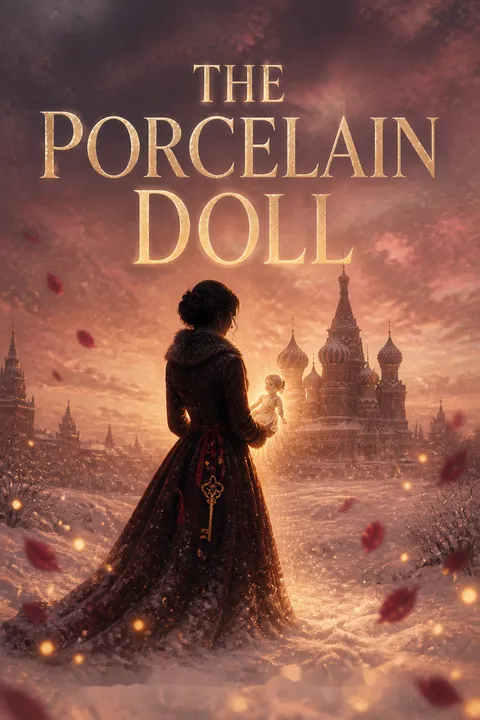
In a dusky-pink house by a river, a mother tells fairy tales to her many children, but one night, soldiers arrive. The mother is taken, the siblings are killed, and only a girl survives, clutching her porcelain doll. The trauma of this blood-red night becomes a mythic origin, echoing through time. The girl flees, carrying her doll so long she can no longer tell herself from it. This fairy tale, both literal and metaphorical, sets the tone for the novel: the violence of history, the confusion of identity, and the way stories—true or invented—shape the survivors. The legacy of this night will ripple through generations, as the boundaries between reality and story, self and other, are blurred by trauma and memory.
Keys and Porcelain Secrets
In 1991 London, Rosie (born Raisa) cares for her dying, alcoholic mother, who clings to her collection of eerie porcelain dolls. After her mother's death, Rosie discovers a hidden key inside a doll's head, leading her to a locked drawer and a map of Russia. Haunted by her family's unsolved murder in Moscow—her father and sister killed, her mother and she fleeing to England—Rosie is compelled to return. She takes a job with Alexey Ivanov, a legendary Russian dissident writer, who hires her as a research assistant in Moscow. Rosie's journey is both literal and psychological: she seeks the truth about her family's past, the meaning behind her mother's cryptic stories, and her own fractured identity, all while the ghosts of trauma and history press in.
Revolution's Lovers Collide
In 1916 Petrograd, Antonina ("Tonya"), a young aristocratic wife, is drawn to Valentin, a passionate Bolshevik orator and factory worker. Their affair is charged with longing and danger, set against the backdrop of a city on the brink of revolution. Tonya's marriage to Dmitry, a benevolent but possessive factory owner, traps her in a gilded cage, while Valentin's revolutionary zeal and poverty offer both escape and risk. Their love is a collision of classes, ideals, and personal histories, each seeking in the other a way out of their prescribed roles. As the revolution erupts, their choices—between safety and freedom, loyalty and desire—will have consequences that echo through generations.
Exile, Escape, and Return
After the revolution, violence and betrayal scatter families. Tonya's world collapses as her husband is murdered and she flees to the countryside, pregnant and alone. Valentin, swept up in the revolution and later the civil war, is exiled to the brutal labor camps of the White Sea Canal. Decades later, Rosie returns to Moscow, seeking the truth about her family's murder and her own origins. The novel weaves together these journeys of exile and return, showing how trauma, memory, and longing for home shape each character. The past is never truly left behind; it resurfaces in dreams, stories, and the objects—like dolls and keys—that survivors carry with them.
Dolls, Ghosts, and Guilt
Porcelain dolls, hidden keys, and cryptic maps become vessels for secrets and guilt. Rosie is haunted by her mother's dolls, each containing clues to the past. She is also haunted by literal and figurative ghosts: her dead sister Zoya, her mother's unspoken pain, and the unresolved violence that shattered her family. In Russia, she encounters Lev, a bodyguard with his own scars, and Alexey, whose motives are increasingly mysterious. The dolls, both as physical objects and as metaphors, represent the ways trauma is preserved, hidden, and passed down. The search for answers becomes a confrontation with the ghosts of history and the self.
The White Sea Canal
Valentin's years in the labor camps of the White Sea Canal are a crucible of suffering and transformation. He survives by telling stories—his own and others'—and by clinging to memories of Tonya. The canal, built by forced labor, becomes a symbol of the Soviet regime's brutality and the resilience of those it tried to break. Valentin's experience in the gulag shapes him into a different man, one who will later become the celebrated writer Alexey Ivanov. The act of writing, of turning pain into narrative, is both a survival strategy and a way to bear witness to history's atrocities.
Betrayals and Broken Families
The Soviet era brings new dangers: purges, betrayals, and the constant threat of arrest. Tonya, Valentin, and their children live under false names, always at risk. Friends and family members denounce each other to survive. Tonya is forced to betray her benefactor, Pavel, to save Valentin. Their daughter Lena dies during the siege of Leningrad, a loss that devastates the family. The cycle of trauma continues: Katya, their surviving daughter, is haunted by guilt and the belief that she is unforgivable. The novel explores how survival often requires impossible choices, and how the wounds of betrayal and loss are inherited by the next generation.
The Siege and the Storyteller
During the siege of Leningrad, Tonya's family endures unimaginable hardship. Food runs out, and the city is gripped by cold and death. Tonya tells stories to her children to keep hope alive, even as she contemplates the unthinkable to save them. The act of storytelling becomes a lifeline, a way to make sense of suffering and to preserve humanity in the face of horror. The siege is both a historical event and a metaphor for the endurance of the human spirit, the necessity of imagination, and the cost of survival.
Haunted by the Past
In 1991, as the Soviet Union collapses, Rosie's investigation leads her to the truth about her family's murder and her own identity. She discovers that Alexey is actually Valentin, her great-grandfather, and that the stories, dolls, and secrets have all been ways of preserving and transmitting trauma. The ghosts that haunt her—her sister, her mother, the unresolved violence—are finally confronted. Rosie must choose between clinging to the past and embracing the possibility of a new life. The process of uncovering the truth is painful, but it allows for the possibility of forgiveness and healing.
The Doll Maker's Truth
Alexey/Valentin reveals his true identity and the purpose behind the dolls: each one is a memorial, a way of capturing a moment, a person, a history. Rosie learns that her mother, Katya, was raised by Alexey and his brother after being orphaned by the purges. The truth about the family's past is both more mundane and more tragic than the fairy tales suggested. Rosie rejects the role of the passive doll, choosing instead to break the cycle of silence and secrecy. She smashes the final doll, symbolically freeing herself from the weight of inherited trauma.
Unforgivable Daughters
Katya, haunted by the belief that she caused her mother's arrest and her family's dissolution, struggles with the idea of being unforgivable. The novel explores the complex relationships between mothers and daughters, the ways guilt and love are intertwined, and the difficulty of breaking free from the patterns of the past. Rosie, too, must come to terms with her mother's flaws and her own. The act of forgiveness—of oneself and others—becomes the only way to move forward.
The End of Fairy Tales
As the Soviet Union ends, so too do the fairy tales that have sustained and haunted the characters. Rosie finds her grandmother, Tonya, and together they confront the past. The stories that once served as a refuge and a means of survival are now understood as both a gift and a burden. The novel ends with the recognition that the final story is only the beginning: the future is unwritten, and the act of telling one's own story is an act of liberation.
Home Is Not a Place
Rosie realizes that home is not a physical place, but a state of being, a sense of belonging that comes from accepting one's history and choosing one's future. She decides to stay in Russia, to build a life with Lev, and to embrace both her English and Russian selves. The journey that began with a search for answers ends with the acceptance of uncertainty and the courage to live in the present.
The Final Story Begins
In the novel's closing, Tonya and Valentin are reunited in old age, their memories fragmented but their love enduring. Rosie, having found her place in the world, is able to let go of the ghosts that haunted her. The cycle of trauma is not erased, but it is transformed by the act of storytelling, by the willingness to forgive, and by the choice to begin anew. The final story is not an ending, but a beginning—a testament to the resilience of the human spirit and the enduring power of love.
Review Summary
The Last Russian Doll receives mixed reviews averaging 3.78 stars. Readers praise the dual-timeline structure following Rosie in 1991 and Tonya from 1915 through Russian history, including the revolution, siege of Leningrad, and Stalin's purges. Many appreciate the incorporation of fairy tales and porcelain dolls as narrative devices. Positive reviews highlight the compelling family saga, strong character development, and atmospheric writing. Critical reviews cite confusion with the complex plot, multiple character identities, unresolved mysteries, and an unsatisfying ending. Several note the romance overshadows historical detail. Bulgarian readers particularly embraced the book enthusiastically.
People Also Read



Characters
Rosie (Raisa) White
Rosie, born Raisa in Moscow, is the novel's contemporary protagonist. Scarred by the childhood trauma of her father and sister's murder and her mother's subsequent decline, Rosie is driven by a need to understand her past and reclaim her identity. Her relationship with her mother is fraught with guilt, resentment, and longing for connection. Rosie's journey to Russia is both a quest for answers and a confrontation with the ghosts—literal and metaphorical—that haunt her. Her psychological arc is one of moving from victimhood and obsession with the past to acceptance, forgiveness, and the courage to build a new life. Her relationships with Lev and Alexey force her to confront the complexities of love, loyalty, and the inheritance of trauma.
Antonina ("Tonya") Nikolayevna
Tonya is the central figure of the historical narrative, a woman whose life is shaped by revolution, love, loss, and survival. Born into privilege, she is drawn to Valentin, a Bolshevik, and their forbidden love becomes the axis around which her life turns. Tonya endures betrayal, exile, the siege of Leningrad, and the loss of her daughter Lena. Her gift for storytelling is both a means of survival and a way of preserving memory. Tonya's psychological complexity lies in her ability to adapt, to find meaning in suffering, and to forgive—others and herself. Her relationship with her children, especially Katya, is marked by guilt and the struggle to break the cycle of trauma.
Valentin Andreyev / Alexey Ivanov
Valentin is a passionate Bolshevik whose idealism is tested by love, war, and the brutality of the Soviet regime. His affair with Tonya is both a source of joy and a catalyst for tragedy. Exiled to the gulag, Valentin survives by telling stories and eventually reinvents himself as Alexey Ivanov, a celebrated dissident writer. His psychological journey is one of transformation: from revolutionary zealot to traumatized survivor to mythic figure. Valentin/Alexey is haunted by guilt, loss, and the knowledge that survival often comes at the cost of others. His relationship with Rosie is both paternal and manipulative, as he seeks to shape her story as he once shaped his own.
Katya (Katerina) Simonova
Katya, Tonya and Valentin's daughter, is raised in the shadow of her sister Lena's death and her parents' traumas. She is sensitive, imaginative, and burdened by guilt—believing she caused her mother's arrest and her family's dissolution. Katya's attachment to dolls and stories is both a comfort and a symptom of her inability to process loss. Her psychological arc is one of seeking forgiveness, both from others and herself, and struggling to find her own identity apart from her family's legacy. As Rosie's mother, her silence and pain are passed down, shaping Rosie's own struggles.
Lena
Lena, Tonya's first daughter, is the golden child whose death during the siege of Leningrad becomes a defining trauma for the family. She is remembered as determined, self-sacrificing, and beloved. Lena's absence haunts Katya, who feels she can never measure up, and Tonya, who is consumed by guilt. Lena represents the irretrievable loss of innocence and the impossibility of returning to a pre-traumatic state. Her memory is both a source of pain and a touchstone for the family's longing for wholeness.
Lev
Lev is Rosie's bodyguard in Moscow, a former OMON officer with a military family background. He is stoic, scarred, and initially emotionally distant, but his own experiences of violence and disillusionment mirror Rosie's. Lev's presence forces Rosie to confront her fears and vulnerabilities, and their relationship becomes a space for mutual healing. Lev's psychological complexity lies in his struggle to reconcile loyalty to his family and country with his own moral compass. He represents the possibility of love and safety after trauma.
Dmitry Lulikov
Dmitry is Tonya's first husband, a factory owner who embodies the contradictions of the old order: benevolent yet controlling, generous yet possessive. His murder is both a personal and political turning point, setting Tonya on a path of exile and survival. Dmitry's legacy is one of both protection and imprisonment, and his presence lingers in the form of the porcelain dolls he commissions—objects that become vessels for memory, guilt, and the persistence of the past.
Natalya Burtsinova
Natalya is Tonya's socialite friend and rival, a woman whose own losses and betrayals mirror Tonya's. Her memoir becomes a key to unlocking the family's history, and her relationship with Tonya is marked by competition, resentment, and a grudging respect. Natalya's survival through the purges and her eventual isolation reflect the fate of the old aristocracy. Her psychological arc is one of adaptation, regret, and the search for meaning in a world that has left her behind.
Zoya
Zoya, Rosie's older sister, is murdered in childhood, becoming a ghostly presence in Rosie's life. She represents the unresolved trauma that haunts survivors, the longing for what might have been, and the difficulty of moving on. Zoya's appearances—real or imagined—force Rosie to confront her own pain and the necessity of letting go. She is both a symbol of the past's grip and a catalyst for Rosie's eventual healing.
Eduard Rayevsky
Eduard is Alexey's brother and the creator of many of the porcelain dolls that haunt the family. His affair with Katya and involvement in the family's tragedy reveal the ways in which personal and historical violence intertwine. Eduard's role as doll maker is both literal and symbolic: he preserves the past, but also perpetuates its pain. His psychological complexity lies in his complicity, his longing for connection, and his inability to escape the consequences of his actions.
Plot Devices
Interwoven Timelines and Generational Trauma
The novel's structure alternates between early 20th-century Russia and 1991, showing how trauma, secrets, and patterns of behavior are transmitted across generations. Rosie's contemporary search for truth mirrors Tonya's historical struggles, revealing how the past shapes the present. This device allows the reader to see the full scope of the family's history and understand how generational trauma operates—not as a linear progression, but as a web of connections, repetitions, and echoes. The interwoven timelines create suspense, as revelations in one era illuminate mysteries in another, and demonstrate how the act of uncovering the past can be both healing and painful.
Download PDF
Download EPUB
.epub digital book format is ideal for reading ebooks on phones, tablets, and e-readers.








































