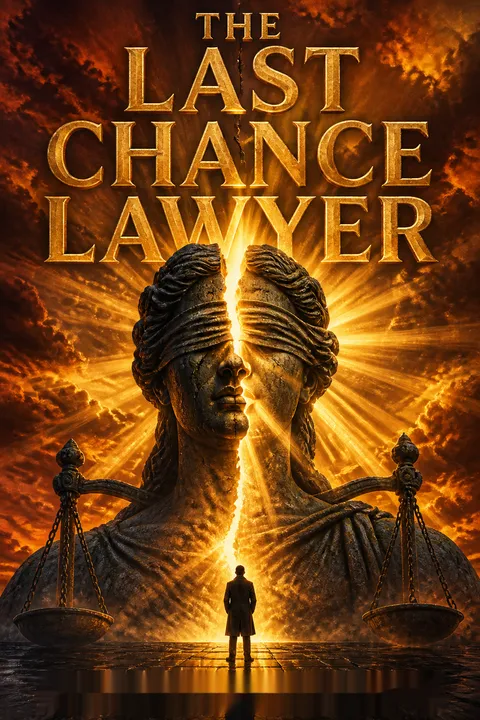

Plot Summary
Midnight Escape and Pursuit
Luciana, battered and traumatized, races barefoot through the night, desperate to escape her captors and the life of forced servitude she's endured. Her mind, clouded by drugs and fear, flashes with memories of her mother's advice to fight, but guilt and exhaustion threaten to overwhelm her. As she collapses near a hotel fountain, her pursuers catch up, inject her with a sedative, and drag her back to captivity. The scene is a harrowing introduction to the world of human trafficking and the desperate struggle for freedom, setting the emotional stakes for the story's central conflict: the fight against systemic evil and the hope for rescue.
Miracle Worker in Court
Daniel Pike, a sharp, unconventional defense attorney, dismantles the prosecution's case against his client, Emilio López, by exposing the unreliability of the key eyewitness. Using keen observation and a flair for theatrics, Dan demonstrates that the witness's poor eyesight makes his identification worthless. The charges are dismissed, and Dan's reputation as a "miracle worker" is cemented. Yet, beneath the bravado, Dan's commitment to justice and his skepticism of the system's fairness are clear. His victory, however, is tinged with the knowledge that the law's technicalities can free the guilty as easily as the innocent, foreshadowing the moral ambiguities to come.
Consequences of Victory
Dan's triumph is short-lived. While he celebrates, he's approached by desperate people seeking help, and he brushes them off, focused on profit and efficiency. His banter with prosecutor Jazlyn Prentice reveals the deep philosophical divide between defense and prosecution, and the personal cost of their adversarial roles. The next day, Dan is blindsided: his law firm fires him after Emilio, newly freed, is implicated in a deadly gang shootout that injures a prominent client's daughter. The partners, fearing for the firm's reputation, make Dan the scapegoat. Cast out, Dan faces the harsh reality that legal victories can have devastating real-world consequences.
The Mysterious Mr. K
Reeling from his dismissal, Dan drowns his sorrows at a bar, where he's approached by Maria, a poised and enigmatic woman. She delivers an invitation from "Mr. K," a mysterious benefactor who has been watching Dan's career. The next morning, Dan, hungover and curious, visits a luxurious house on Snell Isle, where he meets the eclectic team of the Last-Chance Law Firm. Mr. K, never seen in person, offers Dan a place in a unique practice: one case at a time, no billing, all administrative burdens handled, and a focus on clients with nowhere else to turn. The offer is strange, but the promise of meaningful work and camaraderie is irresistible.
The Last-Chance Law Firm
Dan joins the Last-Chance Law Firm, meeting his new colleagues: Maria, the strategic trial lawyer; Garrett, the research wizard; and Jimmy, the networker and legal writer. The firm's ethos is clear—fight for those the system has failed, work as a team, and always aim for justice over profit. Mr. K's philosophy is that the law should serve the powerless, and he's willing to bankroll the operation to make it happen. Dan is assigned his first case: help a nine-year-old orphan, Esperanza Coto, avoid deportation and possible trafficking. The team's dynamic is playful yet purposeful, and Dan, for the first time, feels the pull of belonging.
Esperanza's Desperate Case
Dan, Maria, and Jimmy visit Esperanza and her guardian, Gabriella, in a rundown neighborhood. Esperanza's parents, Salvadoran refugees, died in an accident, and with her protected status revoked, she faces deportation to relatives involved in sex trafficking. Gabriella, a distant cousin and her would-be adoptive mother, is poor, has a criminal record, and is now the only barrier between Esperanza and a horrific fate. The legal odds are grim, but Dan promises to fight for her as if she were his own. The emotional bond between Dan and Esperanza is immediate, and the case's urgency is palpable.
Adoption and Accusation
The team races to file adoption papers, leveraging Jimmy's connections to get a sympathetic judge. For a moment, hope flickers: a stay of deportation is granted, and a hearing is set. But disaster strikes—Gabriella is arrested for murder, accused of killing Jorge Sanchez, a notorious sex trafficker and Esperanza's relative. The evidence is damning: her gun is the murder weapon, her prints are on it, and the police claim she was at the scene. The adoption is thrown into chaos, Esperanza is placed in detention, and Dan's team is thrust into a high-stakes criminal defense with a child's future on the line.
Gabriella on Trial
Gabriella, despondent and resigned, insists she's innocent but admits to working for Emilio and being present at the shootout. The prosecution, led by Jazlyn, builds a "rock-solid" case: motive, opportunity, and physical evidence. Dan and his team scramble to challenge the evidence, suggesting the gun was planted and the investigation was biased. The trial is a media spectacle, with the prosecution's narrative bolstered by public outrage and political pressure. The team's only hope is to sow reasonable doubt by exposing alternative suspects and the system's flaws, but the odds are stacked against them.
The Web of Motives
Dan investigates the tangled relationships among the city's power players: Emilio, now seeking immunity; Luis González, Emilio's ambitious lieutenant; the mayor, eager to distance herself from scandal; and Dr. Kazan, the park architect with shadowy donors. Each has motive and opportunity, and Dan's cross-examinations reveal a city where legitimate business, politics, and organized crime are deeply intertwined. The team uncovers evidence of manipulation, corruption, and hidden agendas, but every revelation seems to implicate Gabriella further. Meanwhile, threats escalate—a bloody doll is sent as a warning, and Esperanza's safety is in jeopardy.
The Mayor and the Architect
Dan confronts Mayor Perez and Dr. Kazan, exposing their financial ties to Emilio and their willingness to accept tainted money for public projects. Both deflect responsibility, insisting their actions serve the greater good. The mayor's political survival depends on appearing tough on crime, while Kazan rationalizes his choices as necessary for progress. Their evasions highlight the moral compromises that pervade the city's leadership. Dan's questioning plants seeds of doubt about who truly benefits from the city's "war on crime" and whether justice is possible in a system built on expediency and self-interest.
The Trap at the Trademark
Testimony reveals the shootout was a carefully orchestrated trap, with both Emilio and Sanchez lured to the scene under false pretenses. Gabriella's presence, her gun, and her connection to both men make her the perfect scapegoat. Eyewitnesses, including a tourist and a jilted suitor, testify to seeing Gabriella with a gun and hearing her say she "took care of everything." Emilio, granted immunity, pins the murder on her, claiming she acted to protect Esperanza and avenge her sister Luciana. The prosecution's narrative is airtight, and the defense is left scrambling to counter damning testimony.
The Bloody Doll Threat
As the trial intensifies, the team receives a gruesome package: a mutilated doll resembling Esperanza, splattered with real blood, and a shredded photograph of the lawyers. The message is clear—back off, or the child will suffer. The threat rattles the team, forcing them to confront the real dangers of their work and the stakes for their client. Security is tightened, but the sense of vulnerability lingers. The episode underscores the ruthlessness of those invested in Gabriella's conviction and the lengths to which they'll go to protect their interests.
Trial by Fire
Dan and Maria debate whether to put Gabriella on the stand, knowing it could backfire. Ultimately, they decide it's their only chance to counter the prosecution's narrative. Gabriella testifies, recounting her struggles, her love for Esperanza, and her actions the night of the murder. She admits to firing her gun in self-defense but denies killing Sanchez. Under cross-examination, her motives and credibility are attacked, and her admission of relief at Sanchez's death is used against her. The jury is left with a complex portrait: a flawed woman, driven by desperation, but not necessarily a killer.
The Immunity Bargain
Emilio's immunity deal is revealed to be the linchpin of the prosecution's case. His testimony, self-serving and plausible, paints Gabriella as the avenger and himself as a reformed businessman. Dan exposes the transactional nature of such deals, questioning their reliability and the ethics of trading truth for freedom. Meanwhile, the defense calls alternative suspects, including Luis, the mayor, and Kazan, each with motive and opportunity. The web of alliances and betrayals grows denser, but the jury's belief in Gabriella's guilt remains strong.
The Eyes of ICE
A breakthrough comes when Dan realizes that Jack Crenshaw, the ICE agent overseeing Esperanza's case, is the missing link. Through a combination of intuition and last-minute evidence, Dan exposes Crenshaw as the architect of the trap: he facilitated Sanchez's entry into the country, orchestrated the meeting, planted the gun, and manipulated the investigation to frame Gabriella. Crenshaw's motive is greed—he's been working with the cartel, using his position to profit from trafficking. When confronted in court, Crenshaw snaps, pulls a gun, and is subdued only by the quick action of Dan's teammate Garrett.
The Courtroom Showdown
The courtroom erupts in chaos as Crenshaw's crimes are revealed and he is arrested. The judge, recognizing Gabriella as a victim rather than a perpetrator, dismisses the charges. The team, battered but triumphant, embraces as Gabriella is freed. The ordeal exposes the rot at the heart of the system but also the power of determined advocacy. The victory is bittersweet—Esperanza's adoption is still denied, and her future remains uncertain, but the immediate threat has passed.
Justice for the Weak
With Gabriella cleared but barred from adopting, Esperanza faces imminent deportation. The team, refusing to give up, files a last-ditch petition for political asylum, arguing that returning her to El Salvador would mean certain exploitation. The judge, moved by the evidence and the extraordinary circumstances, grants asylum and a restraining order against deportation. Esperanza is safe, and the team's mission—to deliver justice to the weak and needy—is fulfilled. The emotional toll is immense, but the sense of purpose and solidarity is stronger than ever.
A New Beginning
In the aftermath, the team gathers to celebrate, reflecting on their journey and the meaning of justice. Dan, once a lone wolf, embraces his role as part of a team and surrogate family. Esperanza, now safe and surrounded by people who care, looks to the future with hope. The Last-Chance Law Firm stands ready for its next battle, united by the conviction that justice is a choice—and that, together, they can make a difference for those who have nowhere else to turn.
Analysis
William Bernhardt's The Last Chance Lawyer is a contemporary legal thriller that transcends genre conventions by foregrounding the human cost of justice and the systemic failures that endanger the vulnerable. At its core, the novel is a meditation on the meaning of justice in a world where the law is often wielded as a tool of power rather than protection. Through the lens of Dan Pike's journey—from cynical lone wolf to committed team player—the story interrogates the limits of individual heroism and the necessity of collective action. The narrative's focus on immigration, trafficking, and institutional corruption is both timely and urgent, reflecting real-world anxieties about who is protected and who is expendable. The novel's structure—alternating between courtroom drama, investigative thriller, and found-family saga—mirrors the complexity of its themes. Ultimately, The Last Chance Lawyer argues that justice is not a given, but a choice: it must be fought for, case by case, by those willing to stand with the weak and the needy, even at great personal cost. The story's resolution, with Esperanza's asylum and the team's renewed purpose, offers a hard-won hope that, together, we can make a difference for those who have nowhere else to turn.
Review Summary
The Last Chance Lawyer receives mixed reviews with an overall 4.27 rating. Readers praise the fast-paced plot, courtroom drama, and engaging characters, though many criticize the heavy-handed political commentary on immigration policy. Several reviewers found the dialogue clunky and unrealistic. The mysterious "Charlie's Angels"-style setup with an unknown boss struck some as implausible. While fans of legal thrillers appreciated the twists and Daniel Pike's character development, others felt the plot was unrealistic and too preachy. Some longtime Bernhardt fans noted similarities to his previous Ben Kincaid series, finding it derivative.
Characters
Daniel Pike
Dan is a fiercely independent, sharp-witted defense attorney with a reputation for courtroom miracles and a deep skepticism of authority. Scarred by his father's wrongful conviction, Dan is driven by a personal crusade to protect the innocent and challenge systemic injustice. His psychological armor—sarcasm, bravado, and a lone-wolf persona—masks a profound empathy for the vulnerable. Over the course of the story, Dan is forced to confront the limits of individual heroism and the necessity of teamwork. His journey is one of reluctant transformation: from a self-interested maverick to a leader who finds meaning and connection in fighting for others, especially the powerless.
Gabriella Valdez
Gabriella is a resilient, resourceful woman who has endured poverty, discrimination, and exploitation. As Esperanza's guardian, she is fiercely protective, willing to risk everything to save the child from a fate she knows too well. Her past—working for Emilio, minor criminal offenses, and connections to the underworld—makes her an easy target for the system's suspicion. Psychologically, Gabriella is marked by trauma and guilt, but also by an unbreakable will to do right by Esperanza. Her stoicism masks deep vulnerability, and her trial becomes a crucible that tests her faith in justice and her own worthiness.
Esperanza Coto
Esperanza is a nine-year-old orphan, bright, observant, and remarkably resilient. Her parents' deaths and the threat of deportation to a life of trafficking have forced her to grow up quickly. She forms a deep bond with Dan, recognizing in him a rare adult who listens and cares. Esperanza's presence is a constant reminder of what's at stake: the human cost of legal and political decisions. Her psychological arc is one of hope battered by fear, but ultimately restored by the team's unwavering commitment to her safety.
Maria Morales
Maria is a sharp, stylish, and strategic lawyer who serves as Dan's main partner and foil. She is pragmatic, detail-oriented, and unafraid to challenge Dan's impulsiveness. Her own background as a child of immigrants informs her empathy and her drive to make the system work for the marginalized. Maria's psychological complexity lies in her balance of professional detachment and personal investment—she is both a voice of reason and, ultimately, a source of emotional support for Dan and the team.
Jimmy Armstrong
Jimmy is the firm's networker and legal writer, known for his warmth, humor, and encyclopedic knowledge of the local legal landscape. Openly gay and married, Jimmy brings a sense of inclusivity and camaraderie to the group. His psychological resilience is rooted in his ability to find joy and connection even in adversity. Jimmy's role as the "heart" of the team is crucial—he keeps spirits high, smooths over conflicts, and ensures that the firm's idealism is grounded in practical action.
Garrett Wainwright
Garrett is the team's researcher, a quiet, methodical presence with a background in government and a more traditional worldview. His skepticism about some of the team's tactics provides a counterbalance to Dan's radicalism. Psychologically, Garrett is driven by a desire for order and fairness, but he is also capable of decisive action when it matters most—ultimately saving Dan's life in the courtroom. His development reflects the story's theme of unlikely alliances and the power of diverse perspectives.
Jazlyn Prentice
Jazlyn is a talented, ambitious prosecutor who serves as both adversary and potential ally to Dan. Her commitment to justice is genuine, but she is also constrained by political pressures and the demands of her office. Psychologically, Jazlyn is torn between her professional role and her personal conscience, especially as the case against Gabriella becomes more fraught. Her evolving respect for Dan and her willingness to admit mistakes mark her as a complex, multidimensional character.
Emilio López
Emilio is a street-smart, charming gang leader who straddles the line between legitimate business and organized crime. His testimony is pivotal, and his willingness to betray former associates for immunity reveals his core motivation: self-preservation. Psychologically, Emilio is a survivor, adept at manipulating systems and people to his advantage. His interactions with Dan and the court expose the moral ambiguities of the criminal justice system.
Jack Crenshaw
Crenshaw is the story's secret villain, an immigration officer who uses his position to profit from trafficking and manipulate the legal process. Outwardly affable and helpful, he is in fact the architect of the trap that ensnares Gabriella. Psychologically, Crenshaw is driven by greed, resentment, and a sense of entitlement. His eventual unmasking and violent breakdown in court serve as a cathartic climax, exposing the dangers of unchecked power and the vulnerability of the system to corruption.
Luciana
Luciana, Gabriella's sister, is a tragic figure—her mind shattered by years of abuse and exploitation. Her fragmented testimony, haunted by references to "the eyes man" (ICE), provides the key to unraveling the conspiracy. Psychologically, Luciana embodies the long-term consequences of trauma and the failure of institutions to protect the vulnerable. Her presence in the story is a constant reminder of what is at stake and what is lost when justice fails.
Plot Devices
The Last-Chance Law Firm
The firm itself is a narrative device—a found family of misfits united by a shared mission. Its structure (one case at a time, no billing, full support) allows the story to focus on the human stakes of each case, rather than the grind of legal bureaucracy. The team dynamic enables multiple perspectives, skill sets, and emotional arcs to intersect, creating a rich tapestry of collaboration and conflict. The mysterious Mr. K, always offstage, serves as a guiding hand and a symbol of the possibility of justice outside traditional institutions.
Foreshadowing and Red Herrings
The novel employs classic courtroom drama techniques: foreshadowing (the opening escape, the bloody doll), red herrings (multiple suspects with plausible motives), and misdirection (the focus on Gabriella's guilt). The narrative structure mirrors a legal case—evidence is presented, challenged, and reinterpreted, keeping both characters and readers off-balance. The use of anonymous tips, planted evidence, and surprise witnesses heightens the sense of conspiracy and the difficulty of discerning truth.
Thematic Motifs
Recurring motifs—parental loss, found family, the struggle for belonging, and the tension between law and justice—anchor the story's emotional arc. The motif of "the last chance" recurs at every level: for Dan's career, for Gabriella's freedom, for Esperanza's future. The courtroom becomes a crucible where personal histories, systemic failures, and moral choices collide.
Psychological Realism
The novel delves deeply into the psychological impact of trauma—on victims like Luciana and Esperanza, on survivors like Gabriella, and on advocates like Dan. The characters' development is driven by their responses to adversity: some are broken, some are hardened, and some are transformed. The story's resolution is not a simple triumph, but a hard-won, bittersweet victory that acknowledges the scars left by the fight.
Download PDF
Download EPUB
.epub digital book format is ideal for reading ebooks on phones, tablets, and e-readers.








































