
Key Takeaways
1. Art as the Pursuit of Liberty
For Le Guin, “the pursuit of art… by artist or audience, is the pursuit of liberty.”
Defying trivialization. Art, particularly fantasy and science fiction, is fundamentally about liberty—a profound freedom that challenges the mundane and the oppressive. This liberty is not mere license to create anything, but a serious, demanding pursuit that resists the trivialization of art into mere self-expression or commodity. Trivialization, Le Guin argues, can be even more damaging than outright oppression, as it strips art of its moral significance.
Escape to reality. True fantasy offers an "escape" not from reality, but to a more intense, primary reality where joy, tragedy, and morality exist. This defiant escape reveals the "Real World" as a construct of "anti-imagination," freeing both artist and audience from the shackles of conventional thought. It is a journey to somewhere "more desirable, more true, more fun," dismantling the false dichotomy between "fun" and "Art."
Revolutionary potential. When art is taken seriously by its creators and consumers, its "total permissiveness disappears, and the possibility of the truly revolutionary reappears." This serious liberty demands that artists push their capacities and audiences be discriminating, refusing to settle for recycled adventures or bad art. The quest for perfection, though it often fails, is the only path worth taking, as "the Search for Garbage never fails."
2. Aesthetics is Ethics: The Standard of Art
For Le Guin, aesthetics is ethics.
Inseparable values. For Ursula K. Le Guin, the aesthetic quality of art is intrinsically linked to its ethical dimension; art, to be truly free, must be moral. This conviction drives her insistence on high standards for both artists and audiences, rejecting the notion that art can be divorced from its moral imperative. She champions a constant revolution in art, pushing boundaries and challenging complacency.
Rejecting mediocrity. Le Guin has no patience for "cowardly audiences who refuse to take responsibility for tolerating bad art" or artists who "sit back and emit garbage." She transforms Sturgeon's law (95% of anything is trash) into a rallying cry for renewed artistic commitment, asserting that "the best is the standard." This uncompromising stance applies equally to fantasy and science fiction, genres often dismissed as puerile.
The artist's duty. Artists have a duty to explore beyond known boundaries and strive for excellence, not merely "try" their best, but "do" their best. This commitment to quality ensures that art remains a powerful force for change and understanding, rather than devolving into mere entertainment. The pursuit of beauty, for Le Guin, is a moral act.
3. Market Censorship: The Invisible Threat to Art
This form of censorship is particularly dangerous to artists in a democracy because it’s invisible and never talked about.
The market's silent hand. Le Guin astutely observes that the market's relentless pressure—the question "Will this sell?"—constitutes a subtle yet pervasive form of censorship in capitalist democracies. Unlike overt totalitarian suppression, this market-driven censorship is "unusually fluid and changeable," operating "behind one’s eyes" and making artists believe they are freely choosing to be "professional" by commoditizing their work.
The price of acceptance. Artists who succumb to market values, prioritizing riches, fame, or commercial success, risk never writing their greatest work, leading to a life of "farce" rather than tragedy. This "unquestioning acceptance" of societal values results in silence, as genuine originality and newness are deemed "unsafe" unless trivial or cynical. The market demands safety, not thought, from its consumers.
Debasing art and audience. The commodification of art debases both creators and consumers. Writers boast of "productivity" in words, and success is measured by advances or sales, not artistic worth. This leads to a perverse claim that "selling out is ennobling because we have captured the taste of an equally debased audience," fostering low expectations for art and perpetuating mediocrity.
4. Fantasy as the Language of the Night: A Deeper Reality
The great fantasies, myths, and tales are indeed like dreams: they speak from the unconscious to the unconscious, in the language of the unconscious—symbol and archetype.
Beyond verbal reasoning. Fantasy, like poetry and music, operates on a deeper, non-rational level, short-circuiting verbal reasoning to access "thoughts that lie too deep to utter." It is the "language of the night," a shared idiom of symbol and archetype that transcends cultural and linguistic barriers, connecting individuals through a collective unconscious. This makes it a powerful tool for understanding universal human experiences.
Mythic escape. Le Guin, drawing on Tolkien, champions fantasy as a glorious "escape" from the "moneylenders, the know-nothings, the authoritarians" who imprison the mind and soul. This escape is not a retreat into triviality, but a defiant assertion of a "primary, vivid world, an intenser reality where joy, tragedy, and morality exist," revealing the "Real World" as a mere mental construct.
The artist's harrowing journey. To speak this language, artists must embark on a "harrowing journey toward the interior," where wordless dreams and voiceless music reign. This exploration of the shared inner world allows them to "paint that which cannot be caught with pigments, to sing that which cannot be confined by words," and to guide others toward a profound, mythic escape.
5. Confronting the Shadow: The Journey to Self-Knowledge
The less you look at it, in other words, the stronger it grows, until it can become a menace, an intolerable load, a threat within the soul.
Integrating the dark self. Drawing on Jungian psychology, Le Guin emphasizes that true self-knowledge and maturity require confronting and integrating one's "shadow"—the repressed, denied, or unused qualities within the psyche. Denying this dark side leads to projecting evil onto others, fostering isolation and hindering creativity. The shadow, though primitive and awkward, is also powerful, vital, and spontaneous, serving as a guide inward.
Fantasy's moral dialectic. Great fantasies, like fairy tales, are uniquely suited to describing this journey into the unconscious, with its perils and rewards. They present a "strong, striking moral dialectic," often as a struggle between darkness and light, but in a complex, paradoxical way, not as simplistic good versus evil. The hero's task is to discern what is "appropriate," seeing the whole beyond conventional morality.
The animal guide. In folktales, the helpful animal often represents the "animal within us, the primitive, the dark brother, the shadow soul, who is the guide." This instinctual wisdom leads the way home, and its eventual sacrifice symbolizes the emergence of the true, whole self. Fantasy, by speaking this symbolic language, allows children and adults alike to grapple with the irreducible complexity of good and evil, fostering growth and reality.
6. The Primacy of Style: The Book Is the Writer's Vision
The style, of course, is the book.
Beyond ingredients. Le Guin asserts that style is not merely an ingredient or an adornment of a book, but its very essence. "If you remove the style, all you have left is a synopsis of the plot." From the writer's perspective, "the style is the writer"—their unique vision, understanding of the world, and voice. This is especially true in fantasy, where the writer constructs an entire "secondary universe" from scratch.
The Elfland accent. In fantasy, every word counts because the writer is creating a world where "no voice has ever spoken before." Le Guin critiques "Poughkeepsie style" fantasy, which uses journalistic, flat, and inexact prose, rendering the remote and elemental trivial. She champions authors like Eddison, Morris, and Tolkien, whose distinct, powerful styles—their "genuine Elfland accent"—invest even trivial acts with vitality and emotion.
An awful responsibility. Creating a new world in fantasy is an "awful responsibility," as every joint, seam, and nail of the construct is exposed. The writer must learn to see their own world and speak their own words, a discipline that requires constant learning and refinement. Readers, too, have a responsibility to reject "shoddy work" and save their praise for "the real thing," because "when fantasy is the real thing, nothing, after all, is realer."
7. Science Fiction as Modern Mythology and Thought Experiment
Science fiction is not predictive; it is descriptive.
Mythology of the modern world. Le Guin posits that science fiction serves as "one of [the] mythologies of the modern world," using the mythmaking faculty to apprehend a world profoundly shaped by science and technology. It employs new metaphors drawn from contemporary life—science, technology, and the future itself—to explore human reality, rather than merely explaining scientific facts or predicting future events.
The thought experiment. SF functions as a "thought experiment," akin to those in physics, asking "what if?" to describe the present world, not to predict the future. This approach allows for free movement of thought and intuition within broad experimental bounds, preserving the moral complexity of the modern novel. A novelist's business, she provocatively states, is "lying" to tell a deeper truth.
Metaphor for reality. All fiction is metaphor, and science fiction uses new metaphors like space travel, alternative societies, or future timelines to explore "what's going on—what the weather is now, today, this moment." These elaborate circumstantial lies aim to describe "certain aspects of psychological reality," changing the reader subtly, like meeting a new face or crossing an unfamiliar street.
8. The "Mrs. Brown" Imperative: Character at the Core of the Novel
I believe that all novels, that is to say, deal with character, and that it is to express character… that the form of the novel… has been evolved.
The elusive individual. Drawing on Virginia Woolf's "Mrs. Brown," Le Guin argues that the novel's core subject is character—the unique, complex individual. She challenges science fiction to make room for "Mrs. Brown" in its spaceships, asserting that without fully realized people, SF risks becoming mere "signs, symbols, statements, effigies, allegories," rather than true novels.
Beyond stereotypes. Early SF often presented characters as "Humanity," "captains and troopers," or "aliens and maidens"—all archetypes or stereotypes, but not "Mrs. Brown." Le Guin praises authors like Philip K. Dick and Austin Tappan Wright for creating "round, solid, knobby" human beings, whose struggles illuminate modern moral pressures. The invention of gadgets or alternate histories becomes a metaphor for exploring "what goes on inside Mrs. Brown."
The subject, not the object. For Le Guin, the true interest of these novelists is "not in what things do, but in how things are." Their subject is "the subject, that which cannot be other than subject: ourselves. Human beings." If Mrs. Brown is dead, if there is no subject, then all the galaxies and technological marvels are meaningless. The novel, in its stubborn assertion of human personality, offers hope.
9. Breaking SF's Ghetto Walls: Embracing Criticism and Responsibility
The walls are down, we’re free at last. And you know what? It’s a big cold world outside there.
Beyond the ghetto. Le Guin celebrates the breakdown of the "SF ghetto" walls, welcoming the influx of serious criticism from outside the field. This "miscegenation" is crucial for SF to be recognized as a "powerful and responsible art form," demanding that writers and readers alike step beyond defensive insularity. She urges SF to continue rebelling, not against those who despise it, but against its own past limitations.
New standards for a new art. The integration of SF into academic study necessitates a new critical apparatus, acknowledging that some criteria for conventional novels apply, while others do not. SF has established its own standards of "intellectual coherence and scientific plausibility," demanding consistent working out of ideas. Stylistic competence is also paramount, rejecting the "schlock" prose of the "Golden Age."
Rejecting false escapism. Le Guin distinguishes between true escapism (Tolkien's "duty to escape" from oppression to a richer reality) and false escapism (retreating into simplistic, problem-solving narratives or nihilistic despair). She criticizes "savagely self-righteous" or "chic nihilism" in SF as evasions of "the weight and pain and complexity" of real questions. True SF offers "the capacity to face an open universe," embracing its complexity without easy answers.
10. The Artist's Solitary Responsibility: Freedom and Truth
Absolute freedom is absolute responsibility.
The solitary path. Writing is an inherently solitary act, a journey into an unexplored country where the artist alone makes the rules and builds the cities. This "absolute freedom" comes with "absolute responsibility" to tell one's own truth, uncompromised by external pressures or the desire for easy answers. There are "no free rides, baby," only the machete in hand and the fear of God in the heart.
Truth from within. Artists are not cameras or mirrors; they are not interested in mere facts, but in "the truth," which is found "from inside." This requires immense courage and intelligence to explore the "landscape of their own being" and describe it honestly. The process is painful and never perfect, but the commitment to continually strive for a "more truthfully" map of the inmost mind is the essence of the craft.
Beyond rules and markets. Le Guin dismisses rigid writing rules, asserting that if a rule doesn't work, "kick it in the teeth, break it, fold staple mutilate and destroy it." She also critiques the self-censorship inherent in "writing for a market," which prioritizes sales over integrity. The artist's true competition is with themselves and God, striving to do "the best you can do—or trash."
11. Gender and the Imagination: Exploring Human Potential
I eliminated gender to find out what was left. Whatever was left would be, presumably, simply human.
A heuristic device. Le Guin describes her creation of the ambisexual Gethenians in The Left Hand of Darkness as a "heuristic device, a thought experiment" to explore what truly differentiates men and women beyond physiological form. By eliminating gender roles, she sought to define the "area that is shared by men and women alike," revealing what is "simply human."
Unforeseen implications. The experiment yielded interesting, though messy, results: the absence of war and exploitation on Gethen, and a different social integration of sexuality. Le Guin reflects on her own "timidities" in portraying Gethenian characters, acknowledging that her choice of the generic "he" and the focus on "male"-coded roles (prime minister, fugitive) inadvertently made them seem more masculine to readers.
Beyond dualism. Le Guin later regretted not more fully exploring the "female" component of her Gethenian characters and the implications of their physiology for diverse sexual practices. She sees the "curse" of our world as "alienation, the separation of yang from yin," and the "struggle for dominance." Her work, particularly Left Hand, strives for a "modality of integration and integrity," suggesting that if men and women were genuinely equal, society would be profoundly different, moving beyond exploitation.
Review Summary
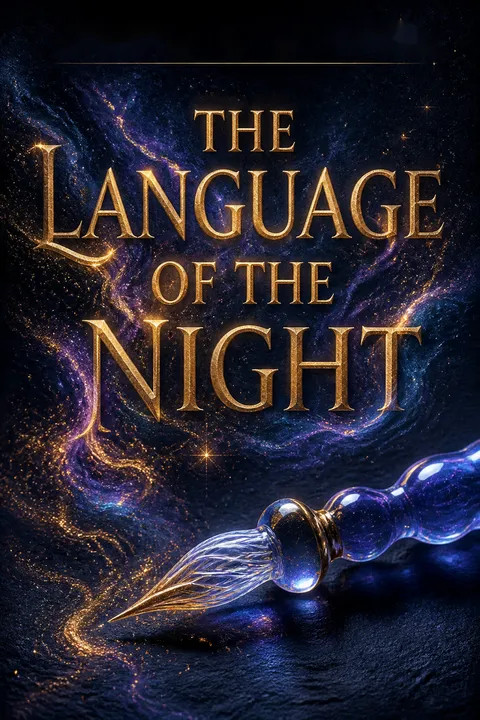
The Language of the Night is a collection of essays by Ursula K. Le Guin from the 1960s-1980s, exploring science fiction and fantasy as serious literature. Readers praise Le Guin's wit, erudition, and passionate defense of the genres against literary snobbery. The essays address writing craft, gender, feminism, Tolkien, and ethical storytelling. Standout pieces include "From Elfland to Poughkeepsie" on fantasy style and discussions of characterization and censorship. While some Jungian philosophy and 1970s perspectives feel dated, most themes remain relevant today. Fans appreciate Le Guin's willingness to critique her own work and evolving views, particularly on gender in The Left Hand of Darkness.
About the Author
Other books by Ursula K. Le Guin
Download PDF
Download EPUB
.epub digital book format is ideal for reading ebooks on phones, tablets, and e-readers.








































