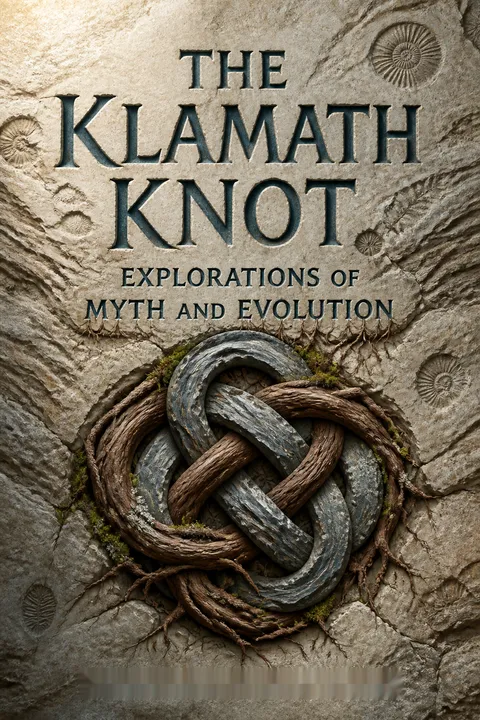

Key Takeaways
1. Wilderness Awakens Deep Time and Myth
Vast as the spaces of my dreams had been, I felt I was glimpsing much greater spaces, which my dreams had only reflected.
Beyond perception. The author's initial encounters with the Klamath Mountains revealed a landscape imbued with a profound sense of mystery and ancient presence. A simple pile of bear scat triggered a "dizzying" realization that bears precede human perception and constructs, emerging from "millions of forested years." This experience offered a glimpse into a "fourth dimension of life," where time stretches back imperceptibly.
Mythological thinking. Wilderness, especially when confronting one's own vulnerability, generates a deep, mythological way of thinking. It leads the mind back to stories of origins and meanings, to imagining the world's creation. Major belief systems, from ancient animism to modern science (like Darwin's theory), have roots in crucial encounters with wild places, suggesting an innate human predilection for the mysterious.
Expanding wilderness. As physical wilderness shrinks, its mythic counterpart expands. Evolution, as a modern myth, offers a creation story spanning billions of years, far grander than older narratives. This deep resonance with wilderness, even for those who encounter it later in life, suggests a "genetic circuit that lights up when a suburban animal is set down before a virgin forest."
2. The Klamath Knot: An Ancient Evolutionary Refuge
The Klamath Mountains are an exceptionally rich storehouse of evolutionary stories, one of the rare places where past and present have not been severed as sharply as in most of North America.
Geological anomaly. The Klamath Mountains are a unique geological "knot" of intricately folded, faulted, and upthrust rocks, older and more tortuous than neighboring ranges. This rugged terrain, combined with a relatively benign climate, has created a refuge where ancient flora and fauna persist, making it a "grandparent" to the younger Sierra and Cascades.
Living fossils. The region harbors a botanical diversity unmatched in the West, a rare remnant of a 40-million-year-old Eocene temperate forest that once covered much of North America. Species that elsewhere are segregated by altitude or latitude grow together here, forming a rich gene pool from which less varied modern forests have emerged.
Time's depths. From the ancient lichens devouring rock to the towering Douglas firs, the Klamaths offer a tangible connection to deep time. The mountains themselves, though ancient in their rock, are geologically young in their present jagged form, having been shaped by tectonic forces and glaciation over the last few million years, making them a dynamic stage for ongoing evolution.
3. Evolution's Hidden Engines: Symbiosis, Preadaptation, Neoteny
Evolution has evolved, as all myths must.
Beyond natural selection. While Darwin's natural selection explains how evolution occurs, it doesn't fully account for the "great leaps that life has taken." The book highlights other crucial, often mysterious, mechanisms that drive evolutionary change:
- Symbiosis: Cooperation between different life forms, like fungi and algae forming lichens, or fungi living in tree roots, enabling plants to colonize land.
- Preadaptation: When a trait evolved for one environment suddenly provides an advantage in a changed environment, like lobe-finned fish's lungs and flippers allowing them to move onto land.
- Neoteny: When an organism's immature form takes over the reproductive role of the adult, leading to new species (e.g., some salamanders, and arguably, humanity itself).
Challenging linearity. These mechanisms demonstrate that evolution is not a tidy, linear progression but a chaotic, devious, and often cyclical process. Organisms don't always "progress" to higher forms; they can simplify, revert, or merge, challenging the "evolution-as-hierarchy" myth.
Unpredictable outcomes. Preadaptation and neoteny are described as "gigantic single accidents" or "evolutionary jackpots" that have disproportionately influenced life on Earth. They underscore the unpredictable volatility of evolution, where seemingly backward steps can lead to significant new evolutionary potential.
4. Life's Unbroken Link to Primal Waters
Life has never really emerged from ooze, it has merely put an arm and leg out.
Water as genesis. Evolution posits water, not mud, as the fundamental source of life, a concept alien to ancient myths. Klamath Mountain lakes, with their methane bubbles and teeming microbial life, offer a glimpse into this primordial past, where anaerobic bacteria and bluegreen algae (the first photosynthetic organisms) laid the foundation for Earth's oxygen atmosphere.
Ancient swimmers. These waters are home to "remote descendants" of the first many-celled animals, such as sponges, hydras, and flatworms, whose lineages stretch back hundreds of millions of years. The abundance of tiny crustaceans like ostracods and copepods in these relatively young glacial lakes demonstrates life's remarkable ability to colonize new waters.
Riverine pathways. Rivers act as vital links, connecting the primal ooze of lakes and seas to the land. They are volatile, destructive, and creative, harboring a unique evolutionary paradigm. Anadromous fish like salmon and lampreys, which migrate between the rich ocean and sparse mountain rivers, exemplify life's ingenious strategies for balancing diverse environments.
5. The Forest's Labyrinthine Wisdom and Hidden Giants
The human mind is much more a product of forest shadows than of water's glitter.
Forest as maturity. Forests, with their dry complexity and deep interconnectedness, reflect a sense of maturity, in contrast to the "youthful" waterways. They are secretive and labyrinthine, evoking archetypal fears of getting lost, yet also a profound sense of being "caught in the fabric of life."
The "Omah" mystery. The Klamath forests are steeped in the mythology of "Omah" or Bigfoot—eight-foot-tall, hairy, human-like creatures. These reports, consistent across cultures globally, suggest a physical basis in surviving hominid species. These beings are imagined as having "emotionally outgrown Homo sapiens," understanding forests in ways humans cannot, and living in harmony with nature.
Hidden symbioses. The evergreen forest is a "venerable unity," where species like redwoods reproduce clonally, and fungi form indispensable symbiotic relationships with tree roots, enabling plant colonization of land. This deep interconnectedness blurs distinctions between tree and fungus, suggesting a "superconsciousness" that challenges human-centric views of intelligence and life.
6. The Snow Forest: A Vibrant, Challenging New World
The Ice Age hasn't really ended in the snow forest, and things have a kind of boreal vitality.
Glacial legacy. Above 4,000 feet, the Klamath landscape transforms into a "snow forest," a product of glacial conditions that have prevailed for only a million years. Here, broadleaf trees are stunted or absent, and conifers like red fir and mountain hemlock thrive, displaying a "boreal vitality" reminiscent of the Ice Age.
Rugged individualism. Snow-forest wildflowers are bright and tough, and its mammals—chipmunks, ground squirrels, black bears, martens, wolverines—are vociferous and energetically individualistic. This competitive spirit is attributed to the "newness" of this world, offering more space for species to corner food supplies and fewer parasites.
Giants in the snow. The snow forest is the primary habitat for the legendary giants, whose reported traits (surviving subarctic winters unclothed, nocturnal activity, glowing eyes) defy known primate biology. These creatures, if real, represent an extraordinary adaptation to a harsh environment, embodying a powerful, wild branch of the evolutionary tree.
7. Red-Rock Barrens: Where Plants Defy the Infernal
This apparent semidesert that often is as soggy as a sponge is scattered throughout the Klamaths, and it is pretty much the same whether it grows near sea level or on high ridgetops.
Infernal landscape. The red-rock forest, growing on peridotite and serpentine bedrock from the Earth's mantle, presents a "seared and blasted aspect" despite ample rainfall. The rocks' chemical composition, poor in calcium and rich in heavy metals, creates a "hellish" environment where only calcium-resistant plants can thrive.
Refuge for flora. This landscape acts as a refuge for species like Jeffrey pine and native bunch grasses, which have adapted to calcium starvation, escaping competition from more common flora. It is a "progressive" landscape where plants are dealing with the fundamental evolutionary problem of turning rock into green growth, often leaving animals behind in their specialization.
Cobra plant's defiance. The most striking inhabitant is the cobra plant, a carnivorous flowering plant that rears "snakelike" from red-rock swamps to devour insects. This plant, with its "vegetable vitality" and unique adaptations, embodies a "living embodiment of basic fertility," demonstrating how life can transform and simplify to thrive in extreme adversity.
8. Grasslands: Earth's Youngest Revolution, Humanity's Cradle
A mountain meadow, however small, is part of a botanical revolution that has changed the face of the earth in the past thirty million years.
Botanical revolution. Grass, the most simplified and reduced flowering plant, represents a major evolutionary culmination. As the Earth became drier and cooler, grasslands replaced forests across continents, driven by fire and freezing winds. This "unprecedented world" had profound effects on animals, leading to the explosion of grassland adaptations like hooves and grinding molars.
Humanity's landscape. Grasslands deeply shaped human evolution, fostering traits like erect gait, long legs, and binocular vision for efficient movement across open horizons. They are the "cradle" of much human mythology, with associations of sun-worship, fire, and great herds, and continue to be reproduced in our lawns and parks.
Hidden vitality. Despite their apparent simplicity, meadows are teeming with life, especially underground. Rodents like voles and pocket gophers tirelessly cultivate the soil, creating a "honeycomb" of life. Grasslands also host specialized predators like badgers and are crucial for seed-eating birds, demonstrating a dense packing of energy and life in a seemingly sparse environment.
9. The Paradox of Adaptation: Durability in the Unspecialized
If, however, an organism adapts too well to its environment, if there is very little conflict between it and the environment, and thus little pressure for it to change, the organism becomes increasingly vulnerable to changes in the environment.
Vulnerability of specialization. Evolution often favors organisms that are not "too exquisitely adapted" to their environment. While specialization can lead to immediate success, it can also make a species highly vulnerable to environmental changes. The tailed frog, perfectly adapted to icy mountain torrents, would be destroyed if its streams warmed, unlike more generalized species.
Persistence of the primitive. The long-term survival of "less ingenious designs" like western pond turtles (little changed from dinosaur-era ancestors) or myriapods (unchanged for 300 million years) demonstrates that less precise adaptation can lead to greater durability. These organisms persist by fitting into stable, often overlooked, niches.
Evolution's balance. The author suggests that evolution plays between competitive and cooperative poles. While natural selection drives adaptation, symbiosis and cloning allow for stability and persistence over vast timescales. Organisms like lungless salamanders, deeply integrated into the forest ecosystem, find strength in their interconnectedness rather than individual prowess.
10. Humanity's Choice: Navigating Evolution's Open Future
If the four billion years of evolution demonstrate one thing, it is that humanity is not destined for anything.
No predetermined destiny. Evolution reveals that humanity is not destined for godlike triumph or demonic holocaust; we are simply animals, intricately dependent on the biosphere. Our unique ability to consciously confront evolutionary choices, having "eaten of the tree of knowledge," places us in a perilous position, where pride can turn virtue into destructive plundering.
The Gordian Knot. Civilization's relentless drive to "cut the Klamath knot"—damming rivers, logging forests, plowing meadows—risks erasing evolutionary futures. This destructive path, driven by acquisitive desires, mirrors Alexander's cutting of the Gordian Knot, a triumph that led to his early demise.
New myths for survival. To survive, humanity must undergo cultural evolution and create new myths. Instead of projecting human consciousness onto nature, we must "let the trees into our minds," imagining the existence of other beings and recognizing our shared origins. This shift from intellectual arrogance to emotional knowledge is crucial for sustaining life on a planet that has proven "much deeper than we ever had imagined."
Review Summary
The Klamath Knot receives an overall rating of 4.2/5, with readers praising its elegant exploration of evolution, ecology, and philosophy through the lens of the biologically diverse Klamath Mountains. Many appreciate Wallace's lyrical writing style and his ability to blend hard science with mythology. Common criticisms include excessive speculation about Bigfoot/Sasquatch, too much focus on myth over physical science, and some outdated scientific information. Readers familiar with the region tend to connect more deeply with the material.
People Also Read








Download PDF
Download EPUB
.epub digital book format is ideal for reading ebooks on phones, tablets, and e-readers.








































