
Plot Summary
Night of Ghosts and Violence
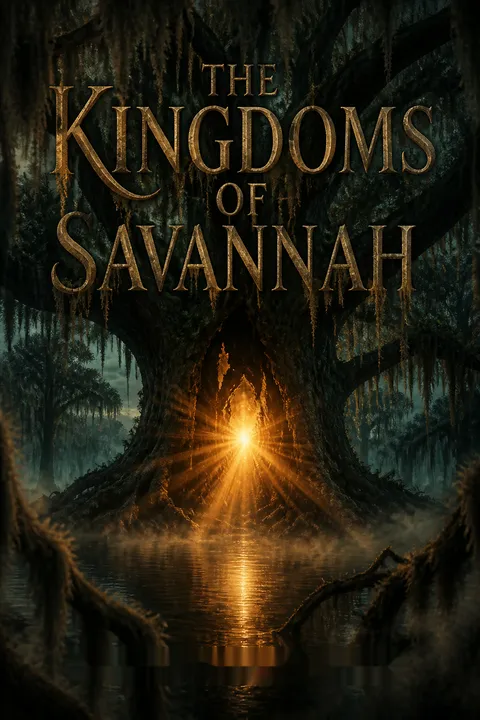
Stony and Luke, two friends from Savannah's margins, walk through the city's fragrant squares, their camaraderie briefly interrupted by a raucous ghost tour. The city's haunted past and present collide in the bar Peep's, where Stony's crush on bartender Jaq is evident. But the night's peace shatters: Stony is lured away by a stranger, drugged, and abducted, while Luke is stabbed and left for dead. The violence is swift, senseless, and rooted in the city's underbelly, setting off a chain of grief and suspicion. The city's divisions—race, class, and history—are palpable, and the murder of Luke, a gentle soul, becomes the catalyst for unraveling Savannah's darkest secrets.
The Musgrove Family Summoned
Ransom Musgrove, once a lawyer, now homeless, is summoned to the family's imposing mansion by his mother, Morgana. The Musgroves are Savannah royalty, but their wealth is fading and their relationships are fraught. Morgana, sharp and manipulative, wants Ransom's help with a lucrative new case: investigating the murder for the despised developer Archie "the Gooze" Guzman. The family's dysfunction is on full display—old resentments, class anxieties, and the burden of legacy. Morgana's offer is both a bribe and a test, and Ransom's reluctant involvement draws the entire Musgrove clan into a web of intrigue, forcing them to confront their own complicity in Savannah's injustices.
Luke's Death and Aftermath
Luke's murder reverberates through Savannah's marginalized communities. Jaq, devastated by the loss of her friend, becomes obsessed with the case, frustrated by the police's indifference and the city's eagerness to move on. The Gooze is arrested, but the evidence is shaky, and rumors swirl about Luke's character. Jaq's grief turns to anger as she sees how quickly the city forgets its victims, especially those without power. The memorial for Luke is bittersweet, a rare moment of solidarity among the city's outcasts. But beneath the mourning, a deeper rot is exposed: the machinery of Savannah's justice system, its appetite for scapegoats, and its indifference to the truth.
The Gooze's Desperate Plea
Archie Guzman, the city's most hated developer, sits in jail, accused of arson and murder. He hires the Musgrove family's detective agency, offering a fortune for his exoneration. Morgana and Ransom visit him, probing for the truth. Guzman is evasive, hinting at a conspiracy and a mysterious "Stone Kings Treasure." He claims innocence, blaming shadowy enemies, but his story is riddled with self-pity and manipulation. The meeting leaves Morgana intrigued and Ransom disgusted. The Gooze's desperation is both a symptom and a cause of the city's corruption, and his case becomes the Musgroves' entry point into a labyrinth of secrets, betrayals, and historical crimes.
Jaq's Outrage and Investigation
Jaq, fueled by rage and a sense of justice, launches her own investigation into Luke's death. She confronts the police, who dismiss her concerns and perpetuate lies about Luke's drug use. She records her encounters, determined to document the truth. Her activism draws the attention of Detective Galatas, a seemingly sympathetic cop, but also puts her in danger. Jaq's quest is both personal and political—a fight against the city's erasure of its most vulnerable. Her efforts inspire others but also make her a target for those who want the past to stay buried. The city's fabled beauty is revealed as a mask for its violence and hypocrisy.
The Kingdom's Hidden History
Jaq's research leads her to the story of the "King's soldiers"—Black men who fought for the British in the Revolutionary War and, after the British defeat, founded a secret, free community in the swamps outside Savannah. This "Kingdom" was a rare experiment in Black autonomy, destroyed by betrayal and violence but never entirely forgotten. Stony, an archaeologist, has been searching for evidence of the Kingdom, believing it holds the key to understanding Savannah's true history. The discovery of the Kingdom's remains threatens powerful interests, who fear the disruption of the city's sanitized narrative. The past becomes a battleground for the present.
Stony Disappears
As the investigation deepens, Stony—who holds crucial knowledge about both the Kingdom and Luke's death—disappears. Her absence is suspicious, and rumors swirl about her fate. The Musgroves, Jaq, and their allies realize that Stony is being held somewhere against her will, likely by those who want to suppress the truth about the Kingdom and the Gooze's crimes. The search for Stony becomes a race against time, complicated by betrayals, threats, and the city's indifference. Her captivity is both literal and symbolic—a testament to the ways Savannah's history is hidden, denied, and violently enforced.
The Family Detective Agency
The Musgrove family, fractured by old wounds, is forced to work together. Morgana orchestrates the investigation with her characteristic cunning, assigning tasks to her children and grandchildren. Ransom, Jaq, and others follow leads through Savannah's underworld, from homeless camps to elite soirees. They encounter a cast of vivid characters—bartenders, judges, artists, and criminals—each with their own stake in the city's secrets. The family's privilege both aids and hinders them, as they navigate the city's social hierarchies and their own moral ambiguities. The search for Stony and the Kingdom's treasure becomes a test of loyalty, courage, and conscience.
The Web of Power
The investigation reveals a network of powerful figures—developers, politicians, police—united by greed and fear. The "treasure" of the Kingdom is not gold, but the historical evidence of a free Black community, which threatens the city's myth of innocence. Detective Galatas, once an ally, is unmasked as a key conspirator, using violence and manipulation to protect the interests of Savannah's elite. The Musgroves realize that justice is not just a matter of solving a crime, but of confronting the city's foundational lies. The cost of truth is high, and the forces arrayed against them are formidable.
The Treasure of the Kingdom
Through Stony's research and Jaq's persistence, the evidence of the Kingdom is finally revealed: LiDAR scans, artifacts, and oral histories that prove the existence of a thriving, free Black settlement. The "treasure" is the story itself—a narrative of resistance, autonomy, and hope. But bringing this truth to light is dangerous. The city's power brokers will do anything to suppress it, fearing the loss of control, profit, and reputation. The Musgroves and their allies must decide whether to compromise, to protect themselves, or to risk everything for justice. The past and present converge in a final confrontation.
Betrayal in the Storm Drains
Ransom, seeking Stony, is betrayed by a supposed ally and captured. He is imprisoned with Stony in the city's storm drains, where they face rising floodwaters and the threat of death. Jaq, refusing to give up, tracks them down, braving the labyrinthine tunnels and confronting Galatas in a deadly showdown. The rescue is harrowing, a test of endurance and faith. The storm drains become a metaphor for Savannah's hidden history—dark, dangerous, and full of secrets. The escape is both a literal and symbolic emergence into the light, but not without cost.
The Deal and Its Price
With the evidence in hand and the conspirators exposed, Morgana negotiates a deal with the city's elite: the truth about the Kingdom will be acknowledged, the site preserved, and the family spared further retribution. But the price is silence about the full extent of the crimes—no one is truly punished, and the city's power structure remains intact. The Musgroves are left to grapple with the moral ambiguity of their victory. The deal is a compromise, a reflection of the city's enduring capacity for self-preservation and denial. The cost of survival is the perpetuation of injustice.
The Kingdom Revealed
The Kingdom of Montmillan is finally recognized as a historic site. Archaeologists, activists, and descendants gather to celebrate its legacy. The story of the King's soldiers becomes part of Savannah's official history, a small but significant step toward reckoning with the past. The ceremony is joyful but bittersweet, marked by the absence of those lost and the knowledge of what was sacrificed. The city's ghosts are not exorcised, but their stories are given space to breathe. The future is uncertain, but the act of remembrance is an act of hope.
The Cost of Silence
The Musgroves and their allies are changed by their ordeal. Jaq, traumatized by violence and betrayal, leaves Savannah for New York, unable to reconcile her ideals with the city's compromises. Ransom, haunted by guilt and loss, remains, searching for meaning in the aftermath. Morgana, ever the survivor, reflects on the price of her choices. The city moves on, its power structures largely unshaken, but the memory of the Kingdom lingers. The cost of silence is borne by those who dared to speak, and by those who could not.
The Next Generation's Burden
Jaq, in exile, struggles with her identity and the legacy of Savannah. She is both proud of what was accomplished and burdened by what was left undone. The story of the Kingdom becomes a touchstone for a new generation, a reminder that history is not fixed but contested. The fight for justice is ongoing, and the wounds of the past are not easily healed. The next generation must decide whether to accept the city's compromises or to keep pushing for truth and change. The burden is heavy, but so is the hope.
The Fox and the Future
At the dedication of the Kingdom's historic site, a fox chased by dogs disrupts the ceremony, a symbol of survival, cunning, and the unpredictability of history. The moment is captured on video and sent to Jaq in New York, a reminder of home, loss, and the possibility of joy amid sorrow. The story ends with Jaq, far from Savannah, still wrestling with the city's ghosts but determined to keep telling its stories. The future is uncertain, but the act of bearing witness endures.
Analysis
A Southern gothic reckoning with history and powerThe Kingdoms of Savannah is a layered, emotionally charged exploration of how the past haunts the present, and how the stories we tell—or refuse to tell—shape our lives and our communities. Through the lens of a dysfunctional but resourceful family, George Dawes Green exposes the ways in which privilege, racism, and violence are woven into the fabric of Savannah, and by extension, the American South. The novel's central mystery—the murder of Luke and the disappearance of Stony—serves as a vehicle for uncovering the city's buried truths: the existence of a free Black community, the complicity of the elite in its erasure, and the ongoing struggle for justice. The book refuses easy answers or happy endings; instead, it offers a meditation on the cost of compromise, the persistence of trauma, and the necessity of bearing witness. The act of remembering, of telling the true story of the Kingdom, becomes both a form of resistance and a source of hope. In the end, the novel suggests that while the machinery of power may endure, the stories of the marginalized—if told and retold—can change the world, one generation at a time.
Review Summary
The Kingdoms of Savannah receives mixed reviews averaging 3.69/5 stars. Readers praise the atmospheric Southern Gothic setting, complex historical elements about Savannah's dark past, and memorable characters like matriarch Morgana Musgrove investigating a murder through her inherited detective agency. Many appreciate the weaving of true history and dysfunctional family dynamics. Critics note too many characters, long chapters with few breaks, slow pacing, and confusing structure. The audiobook receives particular acclaim. Comparisons to Midnight in the Garden of Good and Evil and Flannery O'Connor are common, with Southern fiction fans responding most positively.
People Also Read


Characters
Morgana Musgrove
Morgana is the formidable head of the Musgrove family, a woman of sharp intelligence, social cunning, and deep contradictions. She is both a product and a critic of Savannah's elite, wielding her fading privilege as both shield and weapon. Morgana's love for her children is real but often expressed through manipulation and emotional games. Her decision to take on the Gooze's case is driven by a mix of greed, curiosity, and a desire to prove her relevance. Over the course of the story, Morgana is forced to confront the limits of her power and the moral cost of compromise. Her arc is one of reluctant reckoning, as she navigates the line between self-preservation and justice.
Ransom Musgrove
Ransom, once a promising lawyer, now lives among Savannah's homeless, estranged from his family and haunted by past betrayals. Sensitive, intelligent, and self-destructive, he is both a victim and a critic of his family's legacy. Ransom's journey is one of reluctant heroism: drawn back into the family's affairs, he becomes the moral center of the investigation, risking his life to find Stony and expose the truth. His relationships—with his mother, his niece Jaq, and the memory of lost love—are fraught with longing and regret. Ransom's arc is a struggle for redemption, dignity, and a sense of belonging in a city that has cast him out.
Jaqueline "Jaq" Walker
Jaq is Morgana's biracial granddaughter, a documentary filmmaker and bartender whose fierce intelligence and sense of justice drive much of the plot. Grieving the loss of her friend Luke, Jaq becomes obsessed with uncovering the truth, even as it puts her in danger. She is both an insider and outsider in Savannah's social world, able to move between its elite and its margins. Jaq's arc is one of awakening and disillusionment: she discovers the power and limits of activism, the cost of bearing witness, and the pain of exile. Her relationship with Stony is a source of hope and heartbreak, and her ultimate decision to leave Savannah is both a loss and an act of self-preservation.
Matilda "Stony" Stone
Stony is a Black archaeologist and friend to Savannah's homeless, haunted by trauma and driven by a quest to uncover the Kingdom's lost history. She is both vulnerable and resilient, her eccentricities masking a deep well of courage and insight. Stony's knowledge makes her a target for those who want to suppress the truth, and her captivity is a central ordeal of the novel. Her relationship with Jaq is tender and unfulfilled, a rare source of joy in a harsh world. Stony's arc is one of endurance and revelation: she survives violence and betrayal to become the voice of the Kingdom, ensuring its story is finally told.
Archie "the Gooze" Guzman
The Gooze is Savannah's most reviled developer, a man whose greed and callousness have made him many enemies. Accused of arson and murder, he is both a perpetrator and a pawn in a larger conspiracy. Guzman's desperation leads him to hire the Musgroves, but his evasions and self-pity make him an unreliable client. His death—staged as a suicide—serves to protect more powerful interests, highlighting the city's capacity for scapegoating and denial. The Gooze is a symbol of Savannah's corruption, but also of its ability to consume its own.
Detective Nick Galatas
Galatas is a complex figure: outwardly sympathetic, he befriends Jaq and appears to aid the investigation, but is ultimately revealed as a key conspirator, willing to use violence and manipulation to protect the city's elite. His psychological need to be seen as "good" is twisted into self-justification for cruelty. Galatas's betrayal is a central shock of the novel, forcing the protagonists to confront the depth of Savannah's rot. His arc is a study in the banality of evil, as he moves from ally to tormentor, ultimately undone by his own hubris.
Willou Musgrove Lutinger
Willou is Morgana's eldest daughter, a county judge with a reputation for toughness and a deep ambivalence about her family's legacy. She is both a critic and a participant in Savannah's power structures, using her position to protect her loved ones but also to enforce the city's compromises. Willou's arc is one of reluctant complicity: she is drawn into the investigation, forced to confront her own privilege and the limits of justice. Her relationship with her siblings and her mother is fraught, marked by rivalry, resentment, and a shared sense of duty.
Betty
Betty is the Musgrove family's longtime housekeeper, a woman of humble origins and quiet strength. She is both a witness to and a victim of the family's dramas, offering moments of kindness and comic relief. Betty's loyalty is genuine, but she is not blind to the family's flaws. Her relationship with Gracie the dog is a source of comfort, and her presence in the story is a reminder of the city's working-class resilience. Betty's arc is one of endurance and quiet agency, as she navigates the shifting tides of power with grace and humor.
Rayford Porter
Rayford is a wealthy, charming figure from Morgana's past, a man whose affections and ambitions have shaped the city's history. He is both a confidant and a conspirator, ultimately revealed to be complicit in the plot to suppress the Kingdom's story. Rayford's arc is one of tragic compromise: his desire for influence leads him to betray his principles, and his relationship with Morgana is marked by both love and disappointment. He embodies the city's capacity for both generosity and self-interest.
Luke Kitchens
Luke is a gentle, troubled man whose murder sets the plot in motion. His life and death are emblematic of Savannah's forgotten and dispossessed, and his memory haunts the protagonists throughout the novel. Luke's relationships—with Stony, Jaq, and the city's outcasts—are marked by kindness and vulnerability. His fate is a reminder of the city's capacity for both cruelty and indifference, and his story becomes a rallying point for those seeking justice.
Plot Devices
Intertwined Family and City Histories
The novel uses the Musgrove family's internal conflicts as a lens for exploring the city's broader social and historical dynamics. The family's privilege, secrets, and betrayals mirror Savannah's own, allowing the personal and political to reflect and amplify each other. The detective agency plot device provides a structure for the investigation, while the family's dysfunction adds emotional depth and complexity.
Hidden History as Treasure
The search for the "treasure of the Kingdom" is both literal and metaphorical: it is the evidence of a lost Black utopia, a story that threatens the city's self-image and power structures. The use of archaeological methods, oral histories, and digital technology (LiDAR, websites) foregrounds the importance of historical memory and the struggle to reclaim suppressed narratives. The treasure is not gold, but truth—a truth that is dangerous, contested, and ultimately transformative.
Duality of Savannah
The novel's structure and imagery constantly juxtapose Savannah's celebrated beauty—its squares, gardens, and social rituals—with its hidden violence, poverty, and corruption. The storm drains, homeless camps, and ghost tours serve as metaphors for the city's buried traumas and the ways in which history is both remembered and denied. The narrative uses foreshadowing and parallelism to highlight the persistence of injustice beneath the city's genteel facade.
Shifting Perspectives and Testimonies
The story is told through a chorus of perspectives—Morgana, Ransom, Jaq, Stony, and others—each with their own biases, wounds, and insights. The use of video recordings, oral histories, and social media posts blurs the line between documentation and storytelling, emphasizing the difficulty of establishing a single, authoritative truth. The narrative structure allows for both suspense and reflection, as the characters' investigations reveal as much about themselves as about the city.
Compromise and Moral Ambiguity
The plot is driven by a series of compromises—personal, familial, and political. The Musgroves must choose between justice and survival, truth and safety. The final "deal" that preserves the Kingdom's story but leaves the city's power structure intact is emblematic of Savannah's enduring capacity for self-preservation. The novel uses foreshadowing and irony to underscore the costs of silence and the difficulty of real change.
Download PDF
Download EPUB
.epub digital book format is ideal for reading ebooks on phones, tablets, and e-readers.








































