
Plot Summary
The Curse Is Cast
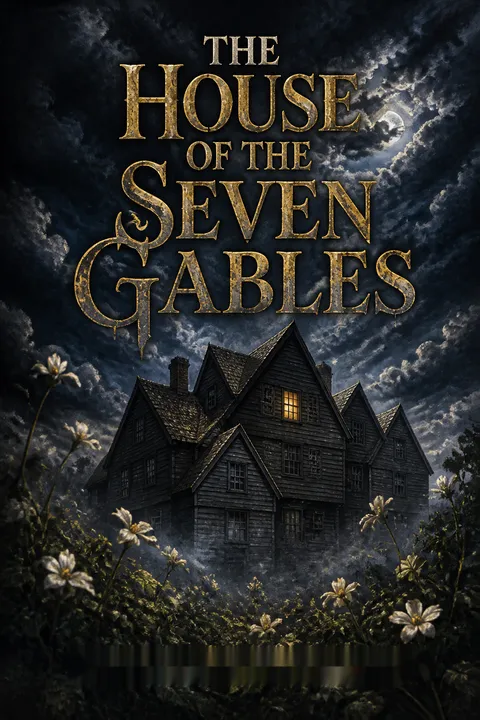
In colonial New England, Colonel Pyncheon covets land owned by Matthew Maule, a humble carpenter. Accusing Maule of witchcraft, Pyncheon ensures his execution and seizes the property, building the grand House of the Seven Gables atop Maule's well. As Maule is hanged, he curses Pyncheon: "God will give him blood to drink!" On the day of the house's grand opening, Colonel Pyncheon is found dead, blood on his beard, echoing the curse. The Pyncheon family's fortunes are forever tainted by this act, and rumors of a hidden deed to vast eastern lands, as well as the curse, haunt the generations. The house itself becomes a brooding symbol of guilt, pride, and the inescapable consequences of ancestral sin.
Hepzibah's Humble Shop
Centuries later, the once-proud Pyncheon family has dwindled to Hepzibah, an aging, near-sighted spinster living alone in the decaying mansion. Reduced to poverty, she reluctantly opens a tiny cent-shop in the house's front gable, selling gingerbread, thread, and trifles to the neighborhood. Her scowl, a result of poor eyesight, is mistaken for bitterness, and her first day is a trial of humiliation and awkwardness. Yet, beneath her stern exterior, Hepzibah is gentle and loving, especially toward her long-imprisoned brother Clifford, whose return she anxiously awaits. The shop's opening marks the collapse of old gentility and the beginning of a new, humbler era for the Pyncheons.
The Return of Clifford
Clifford Pyncheon, Hepzibah's beloved brother, returns after thirty years in prison for the alleged murder of their uncle. Once beautiful and sensitive, Clifford is now frail, childlike, and haunted by trauma. Hepzibah's life revolves around caring for him, but her efforts to amuse and comfort him often fail. Clifford is repelled by her appearance and the gloom of the house, longing for beauty and light. The house's oppressive atmosphere and the ever-present portrait of their ancestor deepen his melancholy. Clifford's innocence is suspected by Hepzibah, but the shadow of the past and the family curse seem inescapable.
Phoebe's Arrival and Light
Phoebe, a young, cheerful relative from the country, arrives unexpectedly, bringing warmth and vitality to the gloomy house. Her practical skills, kindness, and natural beauty quickly endear her to Hepzibah and Clifford. Phoebe revitalizes the shop, tends the neglected garden, and becomes the emotional center of the household. Her presence soothes Clifford, who finds comfort in her songs and gentle companionship. Phoebe's lightness contrasts with the house's darkness, and she forms a subtle bond with Holgrave, the mysterious young daguerreotypist renting a gable. Her arrival marks the beginning of healing and the possibility of renewal for the Pyncheons.
The Garden's Secret Life
Phoebe discovers the overgrown garden behind the house, where ancient flowers, vegetables, and a family of decrepit hens survive amid neglect. She befriends Holgrave, who tends the vegetables and studies the house's history. The garden becomes a sanctuary for Clifford, who delights in its beauty and the simple pleasures of nature. Bees, birds, and the legendary "Alice's Posies"—flowers said to have been planted by a tragic ancestor—thrive despite the house's gloom. The garden symbolizes hope, continuity, and the possibility of redemption, even as the curse and family secrets linger.
Judge Pyncheon's Shadow
Judge Jaffrey Pyncheon, a wealthy, respected cousin, visits the house, ostensibly offering help but truly seeking a hidden deed to the eastern lands. His genial exterior masks a cold, manipulative nature, and his presence terrifies Clifford, who sees in him the image of their ancestor and his own persecutor. Judge Pyncheon's power in the community contrasts with the Pyncheons' decline, and his relentless pursuit of the family's secret wealth drives the story's central conflict. His interactions with Hepzibah and Clifford reveal the destructive legacy of pride, greed, and hypocrisy.
Clifford and Phoebe's Bond
Phoebe's gentle care and Clifford's childlike sensibility create a unique, healing relationship. She becomes his anchor, drawing him out of despair with music, conversation, and the simple joys of the garden. Clifford, in turn, is enchanted by her presence, finding in her the beauty and innocence he craves. Their bond is non-romantic but deeply affectionate, offering both a measure of happiness amid sorrow. Phoebe's influence also softens Hepzibah, who comes to rely on her for emotional support and practical help. Together, they form a fragile but hopeful family.
The Daguerreotypist's Gaze
Holgrave, the young daguerreotypist, observes the Pyncheons with keen interest, befriending Phoebe and sharing with her his radical ideas about progress and the tyranny of the past. He reveals a story about Alice Pyncheon, a beautiful ancestor mesmerized and destroyed by a Maule—Holgrave's own forebear. Holgrave's art, which captures the true character beneath appearances, exposes Judge Pyncheon's hidden malice. His growing affection for Phoebe is tempered by his awareness of the family's tragic history and his own connection to the curse. Holgrave represents the possibility of breaking free from ancestral chains.
Alice's Tragic Enchantment
Holgrave recounts the legend of Alice Pyncheon, who was mesmerized by Matthew Maule's grandson to reveal the secret of the lost deed. Alice, proud and beautiful, becomes the victim of Maule's power, forced to obey his will and ultimately dying of shame and heartbreak. Her ghost is said to haunt the house, and her flowers bloom on the roof. The story illustrates the destructive consequences of pride, the abuse of power, and the intertwining fates of the Pyncheons and Maules. It serves as a warning and a key to understanding the present generation's struggles.
Storm, Flight, and Revelation
A violent storm coincides with Judge Pyncheon's return, demanding Clifford reveal the secret of the lost deed. When Clifford refuses, the Judge threatens to have him committed as insane. Hepzibah, desperate and powerless, finds Clifford missing from his room. In the parlor, Judge Pyncheon sits dead, struck down by apoplexy—fulfilling the family curse. Clifford and Hepzibah, in a state of shock and confusion, flee the house, wandering the city in the rain. Their flight is both literal and symbolic, representing the breaking of old patterns and the beginning of liberation from the curse.
Death in the Parlor
Judge Pyncheon's corpse sits undiscovered in the parlor as the world goes on outside. The house is beset by rumors, and the absence of Hepzibah and Clifford arouses suspicion. Holgrave and Phoebe return, discover the Judge's death, and realize the opportunity to clear Clifford's name. The Judge's demise, so similar to the original Pyncheon's, exposes the futility of his schemes and the emptiness of his respectability. The curse is finally spent, and the house, long a prison of guilt and sorrow, is poised for renewal.
The House Set Free
With the Judge's death revealed and Clifford's innocence established, the Pyncheon family is freed from the shadow of the past. The hidden deed is discovered behind the ancestral portrait, but its value is now moot. Clifford, Hepzibah, and Phoebe inherit the Judge's wealth and move to the country, leaving the old house behind. Holgrave and Phoebe confess their love, uniting the lines of Pyncheon and Maule and symbolically ending the feud. Uncle Venner, the humble philosopher, joins them, and the house of the seven gables is left to peace and memory.
The Flower of Eden
In the aftermath, Phoebe and Holgrave's love flourishes, representing hope, reconciliation, and the triumph of life over death. The garden, once neglected, blooms anew, and the "flower of Eden"—innocence, forgiveness, and renewal—takes root in the hearts of the survivors. The curse is broken, the sins of the past are forgiven, and the future is open. The story ends with a sense of peace, fulfillment, and the promise that even the darkest legacies can be redeemed by love and compassion.
The Departure and Renewal
The Pyncheons, now united and restored, depart the house of the seven gables for a new life in the country. The old house, once a symbol of pride, guilt, and suffering, is left behind, its secrets revealed and its curse lifted. The union of Phoebe and Holgrave, the last Pyncheon and the last Maule, signifies the healing of old wounds and the possibility of happiness. The story closes with the image of Alice's Posies blooming, Uncle Venner's wisdom, and the sense that the cycle of retribution has ended, replaced by hope and renewal.
Analysis
Nathaniel Hawthorne's The House of the Seven Gables is a profound meditation on the enduring consequences of ancestral sin, the possibility of redemption, and the struggle between the dead weight of the past and the hope of renewal. Through the intertwined fates of the Pyncheon and Maule families, Hawthorne explores how pride, greed, and injustice can poison generations, manifesting in both material decay and psychological torment. The house itself becomes a living symbol of this legacy, its oppressive atmosphere reflecting the characters' inner turmoil. Yet, the novel is ultimately optimistic: the arrival of Phoebe, the healing power of love, and the union of old enemies in Holgrave and Phoebe's marriage suggest that the cycle of retribution can be broken. Hawthorne warns against the dangers of clinging to the past—whether in the form of family pride, hidden wealth, or unresolved guilt—and advocates for humility, compassion, and the courage to embrace change. The story's blend of gothic suspense, psychological insight, and social critique makes it a timeless exploration of the human condition, reminding us that the sins of the fathers need not be the fate of the children, and that even the darkest houses can be filled with light.
Review Summary
People Also Read




Characters
Hepzibah Pyncheon
Hepzibah is the last spinster of the Pyncheon line, clinging to the decaying grandeur of her ancestral home. Her near-sighted scowl and awkward manner mask a deeply affectionate, self-sacrificing nature, especially toward her brother Clifford. Forced by poverty to open a shop, she endures humiliation and the collapse of her pride. Hepzibah's life is defined by duty, loneliness, and the burden of family guilt. Her relationship with Clifford is maternal and redemptive, but she is also softened and revitalized by Phoebe's presence. Hepzibah's journey is one of humility, endurance, and, ultimately, release from the past's grip.
Clifford Pyncheon
Clifford, once a beautiful, sensitive youth, is shattered by thirty years of wrongful imprisonment for murder. He returns to the house as a frail, childlike man, haunted by trauma and incapable of coping with reality. Clifford's soul craves beauty, innocence, and escape from the oppressive legacy of the Pyncheons. His relationship with Hepzibah is one of dependence and mutual devotion, while Phoebe's presence brings him fleeting happiness. Clifford's innocence is eventually revealed, and his liberation from the house and the Judge's shadow allows him a measure of peace. He embodies the cost of ancestral sin and the possibility of healing.
Phoebe Pyncheon
Phoebe is a young, practical, and cheerful country cousin who brings vitality and hope to the decaying Pyncheon household. Her warmth, competence, and beauty transform the lives of Hepzibah and Clifford, and she quickly becomes the emotional center of the family. Phoebe's innocence and goodness are a counterpoint to the house's gloom, and her relationship with Holgrave represents the union of past and future, tradition and progress. She is both a nurturer and a catalyst for change, embodying the story's faith in renewal and the redemptive power of love.
Judge Jaffrey Pyncheon
Judge Pyncheon is the wealthy, respected cousin whose genial exterior conceals a ruthless, manipulative nature. He is the living image of the original Colonel Pyncheon, perpetuating the family's pride, greed, and capacity for cruelty. The Judge's pursuit of the lost deed and his persecution of Clifford drive the story's central conflict. His sudden death, echoing the family curse, exposes the emptiness of his respectability and the futility of his ambitions. Judge Pyncheon is both villain and victim, destroyed by the very legacy he sought to control.
Holgrave (Matthew Maule)
Holgrave is a young daguerreotypist, tenant of the house, and secret descendant of the Maule family. Intelligent, idealistic, and skeptical of tradition, he observes the Pyncheons with both sympathy and critical distance. Holgrave's art reveals hidden truths, and his retelling of Alice Pyncheon's story connects past and present. His love for Phoebe and his decision to renounce his power over her mark his own liberation from the cycle of vengeance. Holgrave's union with Phoebe symbolizes reconciliation and the possibility of a new, unburdened future.
Alice Pyncheon
Alice is a beautiful, proud ancestor whose life is destroyed by the mesmerism of Matthew Maule's grandson. Forced to reveal family secrets and humiliated, she dies of heartbreak, her ghost said to haunt the house. Alice's story is a parable of the dangers of pride, the abuse of power, and the intertwining fates of the Pyncheons and Maules. Her flowers, "Alice's Posies," symbolize both the persistence of the past and the hope of renewal.
Uncle Venner
Uncle Venner is an aged, cheerful neighbor who performs odd jobs and dispenses homespun wisdom. He represents the resilience and decency of ordinary people, untouched by the pride and tragedy of the Pyncheons. Uncle Venner's optimism, humility, and acceptance of life's hardships provide a counterpoint to the family's gloom. He is a stabilizing presence and, in the end, is welcomed into the new household as a beloved companion.
Matthew Maule (the elder)
Matthew Maule is the original owner of the land, executed for witchcraft at Colonel Pyncheon's instigation. His dying curse—"God will give him blood to drink!"—haunts the Pyncheon family for generations. Maule's legacy is one of injustice, vengeance, and the enduring power of the past. His descendants, especially Holgrave, struggle to break free from the cycle of retribution and find peace.
The House of the Seven Gables
The house itself is a character, embodying the weight of ancestral sin, pride, and suffering. Its seven gables, secret passages, and haunted atmosphere reflect the psychological and moral state of its inhabitants. The house is both prison and sanctuary, a place of decay and, ultimately, renewal. Its transformation mirrors the journey of the Pyncheon family from guilt and isolation to forgiveness and hope.
The Community
The townspeople, customers, and neighbors serve as a chorus, reflecting and amplifying the Pyncheons' fortunes and misfortunes. Their gossip, curiosity, and occasional kindness highlight the family's isolation and the shifting values of society. The community's eventual acceptance of Clifford's innocence and the family's renewal signal the possibility of reconciliation between individual and society.
Plot Devices
The Family Curse
The curse pronounced by Matthew Maule—"God will give him blood to drink!"—serves as the novel's central plot device, linking the Pyncheons' misfortunes across centuries. It is both literal and symbolic, manifesting in sudden deaths, lost fortunes, and psychological torment. The curse embodies the theme of inherited guilt and the inescapability of the past, driving the characters' actions and shaping the house's oppressive atmosphere. Its eventual lifting, through love, truth, and reconciliation, marks the story's resolution.
The House as Symbol
The House of the Seven Gables is more than a setting; it is a living symbol of the Pyncheon family's pride, secrets, and suffering. Its decaying structure, hidden passages, and haunted rooms reflect the psychological state of its inhabitants. The house's transformation—from prison to sanctuary, from site of tragedy to place of renewal—mirrors the characters' journeys and the novel's central message of hope.
Doubling and Ancestral Echoes
The novel employs doubling—most notably in the resemblance between Judge Pyncheon and Colonel Pyncheon, and between Holgrave and his Maule ancestors—to illustrate the persistence of character traits and the cyclical nature of history. The repetition of events (sudden deaths, lost deeds, family feuds) reinforces the idea that the past is never truly past until its lessons are learned and its wrongs are righted.
Foreshadowing and Suspense
Hawthorne uses foreshadowing—through dreams, legends, and the house's atmosphere—to build suspense and a sense of inevitable tragedy. The recurring motif of blood, the portrait's ominous presence, and the legend of Alice Pyncheon all hint at the story's climactic revelations. The suspense is resolved not through violence, but through the quiet, redemptive acts of love and truth.
The Daguerreotype and Mesmerism
Holgrave's daguerreotypes, which reveal the true character beneath appearances, serve as a metaphor for the novel's exploration of hidden motives and the need for self-knowledge. The story of Alice Pyncheon's mesmerism illustrates the dangers of power and the vulnerability of innocence. Both devices underscore the importance of seeing beyond surface respectability to the deeper realities of the human heart.
Narrative Structure and Shifting Perspectives
The novel's structure—moving between past and present, legend and reality, multiple points of view—creates a sense of moral ambiguity and complexity. The use of stories within stories (such as Holgrave's tale of Alice) and the gradual revelation of secrets invite readers to question appearances and seek deeper truths. The narrative's blend of romance, gothic, and social commentary enriches its emotional and intellectual impact.
Download PDF
Download EPUB
.epub digital book format is ideal for reading ebooks on phones, tablets, and e-readers.








































