
Plot Summary
Gilded Cages and Masks
Lily Bart, a beautiful and charming woman of New York's elite, is introduced as a figure both admired and scrutinized. She moves through the city's glittering social world, always conscious of the expectations and judgments that surround her. Her beauty is her greatest asset, but also her prison, as she must constantly maintain appearances to secure her place. Lily's encounter with Lawrence Selden, a perceptive and independent-minded lawyer, hints at a deeper longing for freedom and authenticity. Yet, even in moments of intimacy, Lily is aware of the invisible bars of her social cage, and the masks she must wear to survive.
The Price of Beauty
Lily's life is a delicate balancing act between her desire for luxury and the financial insecurity that haunts her. Raised to expect comfort but left with little inheritance, she is dependent on the hospitality of wealthy friends and the hope of a lucrative marriage. The pressure to marry well is relentless, and Lily's every move is calculated to attract a suitable husband. Yet, her taste for beauty and pleasure leads her into debt, and her pride prevents her from seeking help. The cost of maintaining her image grows heavier, and the cracks in her façade begin to show.
Games of Chance
At country house parties and glittering gatherings, Lily navigates a world where every relationship is a transaction and every gesture a move in a high-stakes game. She flirts with Percy Gryce, a wealthy but dull suitor, hoping to secure her future, but her heart is not in it. The arrival of Bertha Dorset, a manipulative socialite, and the presence of Selden complicate Lily's plans. A moment's distraction, a careless word, or a lost opportunity can change everything. The games of cards played at night mirror the larger games of chance and strategy that define Lily's existence.
The Art of Survival
Lily's upbringing has taught her to be charming, adaptable, and resourceful, but these skills are double-edged. She is both a product and a victim of her environment, forced to rely on her beauty and wit to secure her place. As debts mount and prospects dwindle, Lily is drawn into risky alliances and questionable situations. Her friendship with Judy Trenor and her interactions with Gus Trenor, who offers financial help with strings attached, reveal the dangers lurking beneath the surface of polite society. Lily's efforts to survive become increasingly desperate, and her sense of self begins to erode.
Temptations and Traps
Lily faces a series of temptations and moral dilemmas as she tries to extricate herself from financial and social peril. Gus Trenor's "help" turns into a trap, and Lily is forced to confront the reality of her dependence on men's generosity. Bertha Dorset, sensing Lily's vulnerability, manipulates events to her own advantage, spreading rumors and sowing discord. Lily's reputation is increasingly at risk, and she must choose between compromising her integrity or facing social ruin. The world she once navigated with ease becomes a minefield of hidden dangers and betrayals.
The Fall from Grace
A single misstep—being seen in the wrong place, at the wrong time—leads to Lily's social downfall. Bertha Dorset, threatened by Lily's presence, orchestrates her exclusion from the inner circle, using gossip and innuendo to destroy her reputation. Friends turn away, invitations dry up, and Lily finds herself isolated and powerless. The very qualities that once made her desirable—her beauty, her charm, her independence—are now used against her. Lily's fall is swift and merciless, exposing the fragility of the social order and the cruelty of those who enforce it.
Exile and Reinvention
Cast out from her former world, Lily is forced to seek refuge among those she once looked down upon. She becomes the guest of the Gormers, a nouveau riche family on the fringes of society, and later attempts to earn her living as a milliner's assistant. The work is exhausting and humiliating, and Lily's lack of practical skills makes her struggle all the more painful. Yet, in exile, she glimpses a different kind of life—one marked by solidarity, resilience, and small acts of kindness. The experience changes her, but the past is never far behind.
The Cost of Independence
Lily's efforts to support herself are met with frustration and disappointment. The world of work is harsh and unforgiving, and her pride makes it difficult to accept help from friends like Gerty Farish or to consider marriage as a means of escape. Offers of assistance from men like Simon Rosedale come with conditions she cannot accept. As her resources dwindle, Lily is haunted by memories of lost opportunities and the knowledge that her beauty, once her greatest asset, is fading. The price of independence is steep, and Lily is left to wonder if it is worth paying.
The Shadow of Scandal
Lily's possession of incriminating letters—evidence of Bertha Dorset's infidelities—gives her a weapon she could use to restore her reputation or secure her future. Yet, she recoils from the idea of blackmail, unwilling to stoop to the level of those who have wronged her. The letters become a symbol of her moral struggle, a reminder of the choices she has made and the lines she will not cross. Meanwhile, the rumors about her continue to spread, and the shadow of scandal darkens her prospects. Lily's isolation deepens, and the world grows colder.
The Limits of Friendship
Gerty Farish, Lily's steadfast friend, offers support and compassion, but even her loyalty has limits. Gerty's own feelings for Selden complicate her relationship with Lily, and the two women are separated by differences in temperament, experience, and social standing. Lily's pride and sense of shame prevent her from fully accepting Gerty's help, and she is left to face her troubles alone. The bonds of friendship, though strong, are not enough to save her from the consequences of her choices or the indifference of the world.
The Last Refuge
In her darkest hour, Lily finds solace in an unexpected encounter with Nettie Struther, a working-class woman she once helped. Nettie's gratitude and the sight of her happy family offer Lily a fleeting sense of purpose and connection. For a moment, she feels the warmth of human kindness and the possibility of redemption. Yet, the visit also underscores the gulf between Lily's world and Nettie's, and the limits of charity and good intentions. The encounter is both a comfort and a reminder of all that Lily has lost.
Reckoning and Release
With her inheritance finally paid, Lily settles her debts and prepares to face the future. She resists the temptation to use the letters against Bertha Dorset, choosing instead to destroy them and preserve her integrity. Exhausted by her struggles and unable to see a way forward, Lily turns to the solace of sleep, seeking escape from the pain and uncertainty of her life. Her final acts are marked by a sense of resignation and release, as she lets go of the dreams and illusions that have sustained her.
The End of Illusions
Lily's death, the result of an overdose of sleeping medication, is discovered by Gerty Farish and Lawrence Selden. The news shocks and saddens those who once knew her, but the world quickly moves on. Selden, filled with regret and longing, realizes too late the depth of his feelings for Lily and the tragedy of their missed connection. In her final moments, Lily achieves a kind of peace, free from the burdens of expectation and desire. Her story ends not with triumph or reconciliation, but with a quiet fading away.
A Quiet Redemption
In the aftermath of Lily's death, Selden reflects on her life and the choices that led to her downfall. He discovers evidence of her integrity and self-sacrifice, and comes to understand the true nature of her struggle. Lily's refusal to compromise her principles, even in the face of poverty and disgrace, redeems her in Selden's eyes. Her memory becomes a source of inspiration and sorrow, a reminder of the cost of beauty and the cruelty of a world that values appearance over substance. In the end, Lily's legacy is one of quiet dignity and unfulfilled promise.
The Word Unspoken
The novel closes with Selden's silent communion with Lily's memory, a wordless exchange that transcends the misunderstandings and missed opportunities of their lives. The love that could not be spoken or realized in life becomes, in death, a source of consolation and meaning. The barriers that kept them apart—pride, fear, circumstance—are dissolved, and what remains is a sense of connection that endures beyond loss. The story ends not with resolution, but with the lingering ache of what might have been, and the hope that, in some way, love endures.
Analysis
The House of Mirth is a searing critique of a society that prizes beauty, wealth, and status above all else, and a poignant exploration of the individual's struggle for authenticity and meaning within such a world. Through the tragic figure of Lily Bart, Edith Wharton exposes the moral and emotional costs of a system that reduces women to ornamental objects and leaves them vulnerable to the whims of fortune and the judgments of others. The novel's enduring power lies in its psychological depth and its refusal to offer easy answers or tidy resolutions. Lily's downfall is not the result of a single flaw or mistake, but of a complex interplay of personal choices, social pressures, and structural inequalities. Her refusal to compromise her integrity, even at the cost of her happiness and survival, is both her greatest strength and her undoing. The House of Mirth remains a timeless meditation on the dangers of conformity, the limits of friendship and love, and the possibility of redemption in a world that is often indifferent to suffering. Wharton's incisive prose and keen social observation invite readers to reflect on the values that shape our lives and the ways in which we, too, are complicit in the creation and maintenance of gilded cages.
Review Summary
The House of Mirth is a tragic tale of Lily Bart, a beautiful socialite navigating New York's high society in the early 1900s. Readers praise Wharton's insightful critique of upper-class life, her elegant prose, and complex character development. The novel explores themes of social expectations, wealth, and women's limited options. Many find Lily's story heartbreaking yet compelling, appreciating Wharton's realistic portrayal of societal constraints. While some readers struggle with Lily's choices, most agree the novel offers a powerful commentary on class, materialism, and the human condition.
People Also Read










Characters
Lily Bart
Lily Bart is the novel's protagonist, a woman of extraordinary beauty and charm, raised to expect a life of luxury but left with little means to secure it. Intelligent, sensitive, and proud, Lily is both a product and a victim of her social environment. She is skilled in the art of pleasing others, but her inability to compromise her integrity or marry without love leads to her downfall. Lily's relationships—with men, with her friends, and with society at large—are marked by a tension between desire and self-respect. As she faces financial ruin and social ostracism, Lily's resilience and dignity are tested to the limit. Her journey is one of gradual disillusionment, culminating in a tragic end that is both a surrender and a quiet act of self-assertion.
Lawrence Selden
Lawrence Selden is a lawyer and Lily's confidant, a man who moves on the fringes of society, observing its rituals with a mixture of amusement and skepticism. Intelligent, cultured, and independent, Selden is drawn to Lily's beauty and spirit, but his own fears and hesitations prevent him from fully committing to her. He values personal freedom and integrity, and is wary of the compromises required by marriage and social ambition. Selden's relationship with Lily is marked by missed opportunities and unspoken feelings, and his eventual realization of his love for her comes too late. In the end, Selden serves as both a witness to Lily's tragedy and a symbol of the possibilities and limitations of love.
Bertha Dorset
Bertha Dorset is Lily's chief antagonist, a woman of charm and cunning who wields her social power with ruthless skill. Insecure and possessive, Bertha is quick to perceive threats to her position and is unhesitating in her efforts to eliminate them. Her friendship with Lily is marked by rivalry and betrayal, and she is instrumental in orchestrating Lily's social downfall. Bertha's actions are driven by a mixture of self-interest, jealousy, and a need for control. She embodies the darker side of the social world, where appearances are everything and loyalty is easily sacrificed.
Gerty Farish
Gerty Farish is Lily's cousin and steadfast supporter, a woman of modest means and unassuming character. Compassionate, practical, and self-sacrificing, Gerty represents the virtues of kindness and loyalty in a world obsessed with status and appearance. Her love for Selden and her devotion to Lily are sources of both strength and pain. Gerty's efforts to help Lily are often frustrated by Lily's pride and the limitations of her own resources, but her friendship endures to the end. Gerty serves as a moral anchor in the novel, a reminder of the value of genuine connection and selfless love.
Simon Rosedale
Simon Rosedale is a wealthy Jewish businessman seeking acceptance in New York's elite society. Shrewd, persistent, and self-aware, Rosedale recognizes the power of social connections and is willing to do whatever it takes to secure his place. His interest in Lily is both romantic and strategic, and he offers her a chance at security and influence—at a price. Rosedale's outsider status makes him both a figure of sympathy and a symbol of the transactional nature of the social world. His relationship with Lily is complex, marked by moments of genuine feeling and mutual respect, but ultimately constrained by the very system he seeks to master.
Judy Trenor
Judy Trenor is one of Lily's early patrons, a woman of wealth and influence who presides over a lively social circle. Outgoing, practical, and sometimes thoughtless, Judy is both a friend and a source of danger to Lily. Her marriage to Gus Trenor is strained, and her tolerance for Lily's presence wanes as rumors and suspicions mount. Judy's loyalty is conditional, and her eventual withdrawal of support contributes to Lily's isolation. She embodies the capriciousness of social favor and the precariousness of female friendship in a competitive world.
Gus Trenor
Gus Trenor is Judy's husband, a man of wealth and limited scruples who becomes infatuated with Lily. He offers her financial assistance, but his help comes with expectations and hidden costs. Trenor's pursuit of Lily is both a symptom of his own dissatisfaction and a reflection of the dangers faced by women who lack independent means. His actions set in motion a chain of events that lead to Lily's disgrace and downfall. Trenor represents the predatory side of male power in a society that leaves women vulnerable.
Mrs. Peniston
Mrs. Peniston is Lily's aunt and guardian, a woman of rigid propriety and limited imagination. She provides Lily with a home and occasional financial support, but her affection is conditional and her understanding of Lily's needs is minimal. Mrs. Peniston's death and the meager inheritance she leaves Lily precipitate the final crisis of the novel. She embodies the limitations of family loyalty and the failure of the older generation to protect or understand the younger.
Carry Fisher
Carry Fisher is a divorced woman who moves easily between social circles, using her wit and connections to secure her place. Practical, humorous, and resilient, Carry is both a friend and a foil to Lily. She offers advice, assistance, and occasional refuge, but her help is often limited by her own precarious position. Carry's ability to adapt and survive contrasts with Lily's rigidity and pride, highlighting the different strategies available to women in a changing world.
Nettie Struther
Nettie Struther is a working-class woman whom Lily once helped through charity. Their encounter late in the novel provides Lily with a glimpse of genuine happiness and the possibility of redemption. Nettie's gratitude and the warmth of her family offer a stark contrast to the coldness and isolation of Lily's world. She represents the resilience of the human spirit and the power of kindness to create meaning in even the most difficult circumstances.
Plot Devices
Social Satire and Irony
Wharton employs sharp social satire and irony to reveal the superficiality, cruelty, and moral ambiguity of New York's elite. The novel's settings—opulent drawing rooms, country estates, and fashionable restaurants—serve as stages for the performance of social rituals, where appearances are everything and genuine emotion is suspect. The contrast between public display and private reality is a recurring motif, highlighting the gap between what is seen and what is true. Irony is used to underscore the tragic consequences of a system that values beauty and status over character and compassion.
Foreshadowing and Symbolism
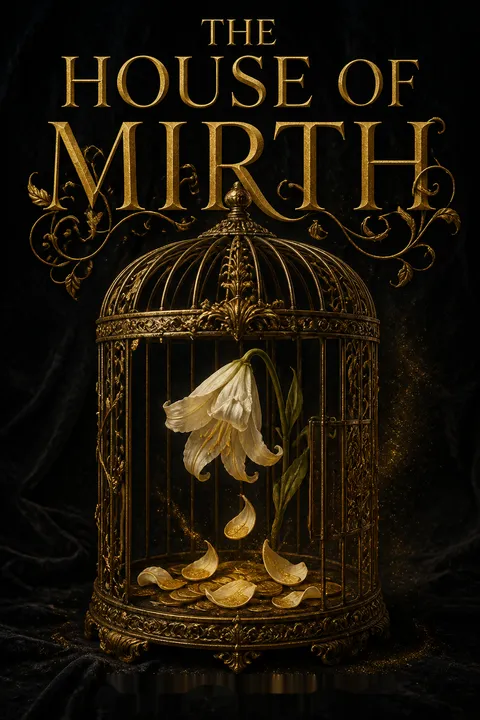
Throughout the novel, Wharton uses foreshadowing and symbolism to suggest Lily's eventual downfall and the forces arrayed against her. The recurring imagery of cages, masks, and mirrors reflects Lily's sense of entrapment and her struggle to maintain her identity. The motif of games—both literal and metaphorical—underscores the element of chance and the precariousness of Lily's position. The letters Lily acquires become a symbol of her moral dilemma and the choices she must make. The changing seasons and the contrast between light and darkness mirror Lily's emotional journey and the narrowing of her options.
Third-Person Limited Perspective
The novel is told from a third-person limited perspective, closely aligned with Lily's point of view. This narrative structure allows readers to experience the world as Lily does, sharing her hopes, fears, and disappointments. The limited perspective also creates dramatic irony, as readers are aware of the misunderstandings and misjudgments that shape Lily's fate. The focus on Lily's inner life deepens the emotional impact of her story and invites empathy for her struggles.
Social Ostracism and Reputation
The fear of scandal and the importance of reputation are central plot devices in the novel. Lily's every action is scrutinized, and a single rumor or misstep can lead to social ruin. The mechanisms of ostracism—gossip, exclusion, and the withdrawal of support—are depicted with chilling accuracy. The power of reputation shapes Lily's decisions and limits her options, ultimately contributing to her downfall. The novel explores the ways in which social norms and expectations can be both protective and destructive.
Moral Ambiguity and Ethical Dilemmas
Lily's journey is marked by a series of ethical dilemmas and moments of moral ambiguity. She is repeatedly faced with choices that test her integrity, from accepting financial help with hidden costs to using incriminating letters for personal gain. The novel resists easy judgments, portraying Lily's actions as the result of complex motivations and external pressures. The tension between survival and self-respect, compromise and principle, is a driving force in the narrative, and the consequences of Lily's choices are both personal and social.
About the Author
Other books by Edith Wharton




Download PDF
Download EPUB
.epub digital book format is ideal for reading ebooks on phones, tablets, and e-readers.








































