
Plot Summary
Jury Duty Summons
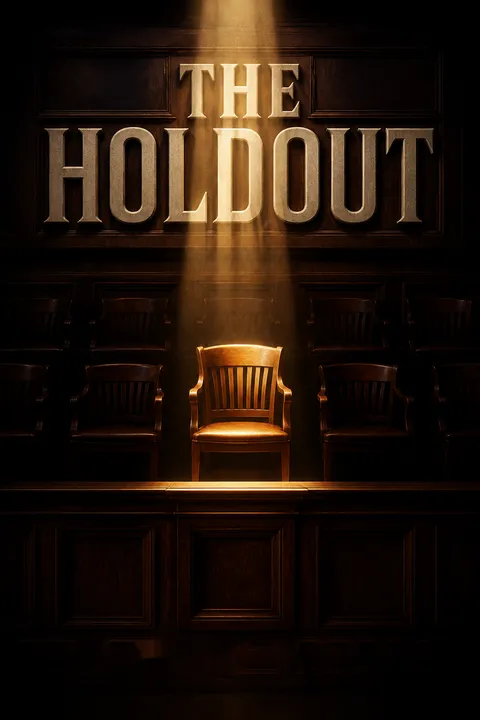
Maya Seale, a young woman new to Los Angeles, is summoned for jury duty in a high-profile murder case: the disappearance and presumed murder of Jessica Silver, the teenage daughter of a billionaire. Alongside eleven other jurors, Maya is swept into a months-long trial that will upend her life. The case is a media sensation, and the evidence against the accused, Bobby Nock, a young Black teacher, seems damning. Yet, as the trial unfolds, Maya and her fellow jurors are forced to confront their own biases, secrets, and the immense responsibility of deciding a man's fate. The experience forges strange bonds and deep divisions among the group, setting the stage for a verdict that will haunt them all.
The Notorious Verdict
After weeks of testimony and heated deliberation, the jury is deadlocked—until Maya, the lone holdout for acquittal, persuades the others that the evidence against Bobby is not beyond reasonable doubt. The verdict of "not guilty" shocks the nation, sparking outrage and suspicion. The jurors are thrust into the public eye, their lives forever marked by the controversial decision. Some, like Rick Leonard, recant and blame Maya for the outcome, while others retreat into anonymity. The trial's aftermath leaves Maya both infamous and isolated, her sense of justice forever complicated by the knowledge that truth and certainty are not always the same.
Ten Years Later Reunion
Ten years after the verdict, Maya is now a successful defense attorney, still shadowed by her past. She is approached by Rick, who has become obsessed with the idea that they let a killer go free. He invites her to a reunion of the original jurors, organized for a true-crime docuseries. Reluctantly, Maya agrees to attend, pressured by her law firm and her own unresolved doubts. The reunion, held at the same hotel where they were sequestered, brings together the surviving jurors, each carrying scars from the trial. Old alliances and resentments quickly reemerge, and the group is forced to confront the choices they made and the lives they've led since.
Old Wounds Reopened
As the jurors gather, tensions simmer beneath the surface. Rick claims to have discovered new evidence that will finally prove Bobby's guilt, but refuses to reveal it until the cameras are rolling. Maya and Rick's personal history—an affair during the trial—adds another layer of complexity and pain. The group's conversations are fraught with guilt, anger, and the desire for closure. Each juror's life has been shaped, for better or worse, by their role in the verdict. The reunion becomes a crucible, forcing them to relive the trial and question what justice truly means.
A Murder in the Night
The night before Rick's big reveal, Maya finds him dead in her hotel room, his head bashed in. The murder throws the reunion into chaos and immediately casts suspicion on Maya, who was the last to see him alive. The police descend, and the jurors are once again sequestered—this time as potential suspects. The media frenzy reignites, and Maya's past is dredged up for public consumption. The group is forced to reckon with the possibility that one of their own is a killer, and Maya must fight to prove her innocence while grappling with the trauma of reliving the worst chapter of her life.
Maya Under Suspicion
Maya is arrested and interrogated, her every move scrutinized by detectives and the press. Her legal expertise becomes both a shield and a weapon as she navigates the investigation. With the help of her mentor, Craig, she begins to piece together what happened the night of Rick's death. The evidence against her is circumstantial but damning: her DNA is on Rick, and she has a clear motive. As the police dig deeper, Maya realizes that the only way to save herself is to uncover the real killer—before she is tried and convicted in both the court of law and public opinion.
Secrets and Dossiers
Maya discovers that Rick had spent the past decade compiling exhaustive dossiers on each juror, uncovering their secrets, lies, and potential biases. These files, intended to prove jury misconduct and overturn the verdict, instead reveal a web of hidden connections and past transgressions. From undisclosed criminal records to personal betrayals, the dossiers expose the flawed humanity of the group. Maya realizes that Rick's obsession with the case—and with exposing the truth about his fellow jurors—may have given someone a powerful motive to silence him. The search for Rick's killer becomes a journey into the dark heart of the jury itself.
The Jury's Hidden Lives
As Maya and her allies dig into the jurors' backgrounds, they uncover a series of buried scandals: affairs, assaults, lies on juror questionnaires, and more. Each revelation adds a new layer of suspicion and guilt. The group's unity fractures as old wounds are reopened and new accusations fly. Maya must navigate a minefield of shifting alliances and hidden agendas, all while trying to protect herself and those she cares about. The investigation becomes a reckoning—not just for Rick's murder, but for the original verdict and the lives it destroyed.
The Search for Truth
Determined to clear her name, Maya follows the trail of Rick's supposed new evidence. She tracks down Bobby Nock, now living in exile under an assumed name, and confronts him about the past. Their conversation reveals painful truths about the original case, the abuse Jessica suffered, and the limits of the justice system. Meanwhile, Maya uncovers the real reason Rick was killed: a secret involving another juror, Lila, and her son, Aaron, who is revealed to be Bobby's child. The revelation that Rick was blackmailing Bobby with this knowledge provides a new motive—and a new suspect.
Bobby Nock's Exile
Bobby, once acquitted but never truly free, has spent years on the run, haunted by the trial and the public's belief in his guilt. His life is a testament to the enduring power of suspicion and the impossibility of escape from a notorious past. When Rick's blackmail drives him to disappear again, Bobby's story becomes a tragic counterpoint to Maya's quest for justice. His eventual suicide, staged to look like a confession, is orchestrated by those seeking closure at any cost. The locket, a key piece of evidence, is planted to finally "prove" his guilt, but the truth remains elusive.
The Locket's Return
The sudden appearance of Jessica's locket with Bobby's body is hailed as the final proof of his guilt. The media and public seize on the narrative, eager for resolution. But Maya, ever the skeptic, notices inconsistencies and begins to suspect that the locket was planted by someone with a vested interest in closing the case. Her investigation leads her to the Silver family, where she uncovers a deeper conspiracy involving Jessica's mother, Elaine, and the lengths to which people will go to protect their own. The locket becomes a symbol of the lies and manipulations at the heart of the case.
The Real Motive Revealed
The true motive for Rick's murder is revealed: he was blackmailing Bobby, threatening to expose his relationship with Lila and the existence of their son unless Bobby confessed to Jessica's murder. Lila, desperate to protect her child, confronts Rick, and in a moment of panic and struggle, accidentally kills him. The tragedy is compounded by the realization that everyone involved was acting out of love, fear, or a misguided sense of justice. The cycle of accusation, suspicion, and violence continues, leaving no one truly innocent.
A Second Deliberation
Faced with the truth about Rick's death, the surviving jurors gather in secret to decide Lila's fate. They weigh the evidence, their own complicity, and the consequences of exposing the truth. In a mirror of their original deliberation, they vote—this time to protect Lila and Aaron, to shield themselves from further ruin, and to preserve what little good they can salvage from the wreckage. Their decision to lie to the authorities and provide Maya with an alibi is an act of collective self-preservation, a final, ambiguous verdict on justice and truth.
Justice, Lies, and Silence
The jurors' pact ensures Maya's freedom and Lila's safety, but at the cost of honesty and accountability. The truth about Rick's death, Bobby's innocence or guilt, and the Silver family's secrets remains buried. Maya confronts Elaine Silver, who reveals that Jessica is still alive, having faked her own death to escape her father's abuse. The revelation is both a relief and a new burden, as Maya is forced to keep yet another secret. The cycle of lies continues, and the possibility of true justice slips further away.
The Price of Doubt
In the aftermath, Maya reflects on the cost of doubt, the impossibility of certainty, and the ways in which the pursuit of truth can destroy as much as it saves. The jurors go their separate ways, forever changed by their experiences. Some find peace, others are haunted by guilt, and all are marked by the knowledge that justice is rarely simple or pure. The story ends not with resolution, but with the acceptance that some mysteries are better left unsolved, and that sometimes, the best we can do is protect the innocent and live with our doubts.
The Unsolved and the Unsaid
The final chapter lingers on the unresolved questions and the silences that bind the survivors. Maya, now free but forever altered, resumes her life as a defense attorney, carrying the weight of what she knows and what she can never reveal. The Silver family remains shrouded in secrets, and the world moves on, content with a convenient narrative. The story closes on the image of two children—Aaron and Jessica's daughter—growing up unaware of the crimes and sacrifices that shaped their lives. In the end, The Holdout is a meditation on the limits of justice, the power of secrets, and the enduring human need for answers, even when none can be found.
Analysis
The Holdout is a masterful meditation on the nature of justice, the fallibility of human judgment, and the corrosive power of secrets. By weaving together a legal thriller, a locked-room mystery, and a psychological drama, Graham Moore exposes the limitations of the jury system and the impossibility of ever truly knowing the truth. The novel interrogates the idea that justice is a simple matter of facts and evidence, revealing instead a world where doubt, bias, and self-interest shape every decision. The characters' willingness to lie, protect, and even kill for the sake of their own survival and the well-being of those they love speaks to the complexity of human morality. In an era obsessed with true crime and the search for closure, The Holdout offers a sobering reminder that some mysteries are unsolvable, and that the pursuit of certainty can be as destructive as the crimes it seeks to avenge. The book's ultimate lesson is that justice is not a destination, but a process—one that demands humility, empathy, and the courage to live with uncertainty.
Review Summary
The Holdout by Graham Moore receives mostly positive reviews, averaging 3.83 stars. Readers praise this legal thriller's dual-timeline structure, following a controversial 2009 murder trial and a present-day murder. Maya Seale, the lone holdout juror who convinced others to acquit Black teacher Bobby Nock of killing white student Jessica Silver, becomes a suspect when a fellow juror dies. Reviewers appreciate the exploration of racism, justice system flaws, and jury dynamics. Common criticisms include unlikeable characters, far-fetched plot elements, preachy commentary, and convoluted endings. Most agree it's fast-paced and entertaining, perfect for screen adaptation, though some found it implausible.
People Also Read
Characters
Maya Seale
Maya is the central figure of the story—a principled, intelligent woman whose sense of justice is both her strength and her curse. As the lone holdout on the original jury, she persuades the others to acquit Bobby Nock, a decision that defines her life. Her affair with Rick during the trial adds layers of guilt and complexity to her character. Now a defense attorney, Maya is both empowered and imprisoned by her past. She is analytical, empathetic, and fiercely determined, but also deeply scarred by the knowledge that her choices have had unintended, tragic consequences. Her journey is one of self-discovery, as she grapples with the limits of certainty and the cost of doing what she believes is right.
Rick Leonard
Rick is Maya's intellectual equal and emotional opposite—a man driven by the need for certainty and absolution. Once a fellow juror and lover, he becomes Maya's fiercest critic and, ultimately, her accuser. His obsession with proving Bobby's guilt consumes him, leading him to compile damaging dossiers on the other jurors and to blackmail Bobby. Rick's inability to let go of the past and his willingness to sacrifice others for the sake of truth make him both sympathetic and infuriating. His death is the catalyst for the novel's central mystery, and his legacy is one of unresolved questions and collateral damage.
Bobby Nock
Bobby is the enigmatic center of the original trial—a young Black teacher accused of murdering his white student. His acquittal does not free him; instead, he becomes a pariah, hunted and haunted by suspicion. Bobby's life is a study in the destructive power of prejudice and the impossibility of escaping a notorious past. His relationship with Lila and the existence of their son add depth and tragedy to his character. Bobby's ultimate fate—suicide, staged as a confession—underscores the novel's themes of injustice, sacrifice, and the corrosive effects of doubt.
Lila Rosales
Lila is the youngest juror, initially idealistic and easily influenced. Her post-trial relationship with Bobby and the birth of their son, Aaron, become the novel's most closely guarded secret. Lila's actions—killing Rick in a moment of panic to protect her child—are driven by love and fear. She is both a victim and a perpetrator, her innocence forever compromised by the choices she is forced to make. Lila's story is a poignant exploration of the lengths to which a mother will go to shield her child from harm.
Craig Rogers
Craig is Maya's boss and legal mentor, a brilliant and pragmatic defense attorney. He is a voice of reason and strategy, guiding Maya through the legal and ethical minefields of her predicament. Craig's perspective is shaped by his own experiences as a Black man in the justice system, and he is both supportive and unsentimental. He represents the hard truths of the law: that justice is often a matter of narrative and negotiation, not absolute truth.
Elaine Silver
Elaine is Jessica's mother, a woman who has survived both abuse and loss. Her role in helping Jessica escape and in covering up the truth about her husband's crimes is both sympathetic and chilling. Elaine's actions are motivated by a desperate need to protect her daughter, even at the cost of others' lives. She is a study in the moral ambiguities of survival and the burdens of silence.
Lou Silver
Lou is Jessica's billionaire father, whose grief and rage drive much of the novel's action. His obsession with punishing Bobby leads him to orchestrate a campaign of harassment, manipulation, and ultimately murder. Lou is both a victim and a villain, his need for closure blinding him to the suffering he inflicts on others. He embodies the dangers of unchecked power and the human desire for retribution.
Peter Wilkie
Peter is one of the original jurors, outwardly charming but secretly predatory. His assault on a hotel maid during the trial is one of the many secrets uncovered in Rick's dossiers. Peter's willingness to do whatever it takes to protect himself, including paying off his victims, makes him a symbol of the story's moral decay. He is a reminder that evil often hides in plain sight.
Fran Goldenberg
Fran is the maternal figure among the jurors, a woman who tries to hold the group together and provide comfort in times of crisis. Her compassion is both her strength and her vulnerability, as she becomes complicit in the group's final act of deception. Fran's journey is one of reluctant acceptance of the world's imperfections and the necessity of compromise.
Wayne Russel
Wayne is a juror with a troubled past, suffering from PTSD and emotional instability. His actions are often impulsive and driven by fear, making him both a suspect and a red herring in the investigation. Wayne's presence is a constant reminder of the psychological toll the trial has taken on all involved, and his ultimate decision to protect the group reflects the complex loyalties and moral ambiguities at play.
Plot Devices
Dual Timelines and Unreliable Narration
The novel's structure alternates between the original trial and the present-day reunion, allowing the reader to see how the past informs the present and how memory can be both selective and deceptive. The use of multiple perspectives and the gradual revelation of secrets create a sense of uncertainty and suspense. The unreliable narration—each character's version of events colored by their own biases and motivations—underscores the central theme that truth is subjective and often unattainable.
The Locked Room Mystery
The murder of Rick Leonard in a hotel room full of potential suspects is a classic locked room mystery, forcing the characters (and the reader) to question everyone's motives and alibis. The device serves to mirror the original trial, with the jurors now both investigators and suspects. The tension is heightened by the knowledge that the group's survival depends on their ability to keep secrets and protect one another.
Dossiers and Blackmail
Rick's exhaustive dossiers on the jurors function as both a plot device and a symbol of the corrosive effects of suspicion. The threat of exposure and blackmail drives much of the action, revealing how easily trust can be destroyed and how the pursuit of truth can become a weapon. The dossiers also serve as a commentary on the impossibility of impartiality and the dangers of digging too deeply into others' lives.
Foreshadowing and Red Herrings
The novel is rich with foreshadowing and red herrings, keeping the reader guessing about the true nature of the crime and the motivations of the characters. The planted locket, the hidden affair, and the various secrets uncovered all serve to misdirect and complicate the search for justice. The ultimate revelation—that the truth is both more mundane and more tragic than anyone suspected—reinforces the novel's themes of ambiguity and doubt.
Moral Ambiguity and Group Decision
The final act, in which the jurors reconvene to decide Lila's fate, is a powerful exploration of moral ambiguity and the limits of justice. The group's decision to lie and protect one of their own is both a betrayal of the legal system and an act of compassion. The device of the second deliberation mirrors the original trial, highlighting the ways in which justice is often a matter of negotiation, compromise, and self-preservation.

Download PDF
Download EPUB
.epub digital book format is ideal for reading ebooks on phones, tablets, and e-readers.








































