
Key Takeaways
1. The Declaration: A Blueprint for an Activist Government
My contention, then, is that the Declaration of Independence is—and should remain—“American Scripture” precisely because its authors were the first to seek to address these quintessential issues of the modern era.
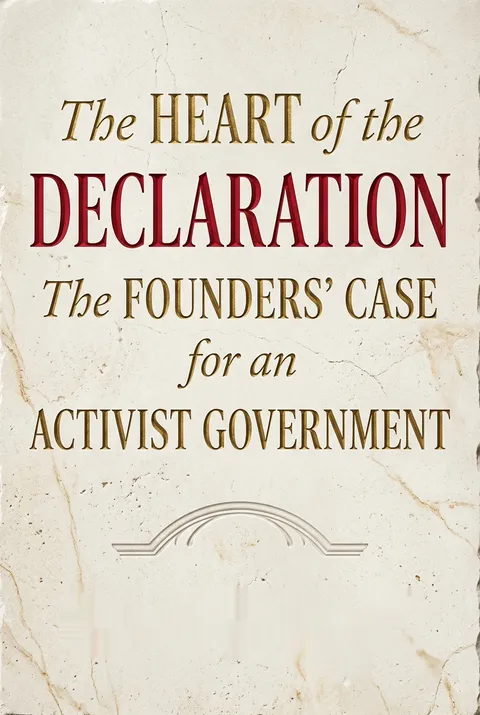
Reinterpreting history. Contrary to popular belief, the Declaration of Independence was not primarily a call for limited government, but rather a sophisticated promise to create a modern, activist state. George Washington and his contemporaries understood it as a document defending the "British constitution" – not a written text, but a way of governing committed to both rights and governmental support for economic development. This perspective challenges the common twentieth and twenty-first-century view that the Declaration's authors celebrated minimal state intervention.
Debt crisis catalyst. The political crisis leading to independence stemmed from Britain's massive national debt following the Seven Years' War. Two opposing factions emerged:
- Grenville's approach: Austerity measures and compelling colonies to share the tax burden.
- Patriot approach: Encouraging economic development in all colonies, especially through North American consumers.
The Declaration's authors, aligned with the Patriot Party, sought to address these fundamental issues of modern governance and economic policy.
State formation. The Declaration was less about abolishing authority and more about establishing a new, energetic government. Washington believed he was fighting to defend the Patriot interpretation of the British constitution, which before 1760, had been a benevolent force promoting colonial welfare and happiness. When imperial reform proved impossible, the Founders aimed to construct a state that would actively promote American development, reflecting a century-long debate on the aims and purpose of government.
2. Patriotism Redefined: Economic Growth Through Consumption
The Patriots believed that the constitution had been debased by a series of inept and possibly corrupt British politicians ever since King George III’s accession to the throne in October 1760.
Vernon's vision. Admiral Edward Vernon, the namesake of George Washington's estate, symbolized a new kind of imperial politics focused on the well-being and happiness of all subjects. Patriots, including Vernon, believed economic growth depended on the dynamic interplay of human production and consumption, advocating for an active state role in fostering prosperity. This contrasted sharply with Prime Minister Sir Robert Walpole's focus on maximizing labor productivity and low-cost production, particularly in slave-based sugar colonies.
Consumption as engine. Patriot economic principles prioritized consumption, leading to several key conclusions:
- Denounced regressive taxation: Argued that wealth needed to be evenly distributed to maximize purchasing power among lower and middle classes.
- Rejected sugar prioritization: Valued free labor in colonies for creating consumer demand for British manufactured goods, seeing North America as Britain's most dynamic market.
- Critiqued slavery: Slaves were poor consumers, and slavery led to unhealthy concentrations of wealth, hindering a vibrant consumer society.
Georgia experiment. The founding of Georgia exemplified Patriot ideals, aiming to create a consumer-driven economy through state support. This included:
- Transforming the British underclass into active economic participants.
- Subsidizing immigration to augment the consumer base.
- Outlawing slavery, believing it fostered oligarchy and hindered broad-based consumption.
This state-supported development, rather than mere extraction, was the "Patriot imperial constitution" that Americans celebrated.
3. Grenville's Austerity: A Continental Shift in Imperial Policy
Grenville and his political allies demanded that Britain adopt a coherent colonial system, a system geared to extracting as much revenue as possible from Britain’s colonies, a colonial system modeled on that of other European imperial powers.
Post-war debt. Following the Seven Years' War, Britain faced unprecedented sovereign debt. George Grenville, appointed first lord of the treasury in 1763, adopted a radically different approach from his predecessors, choosing to lower the debt through cost-cutting and revenue extraction from the colonies. His "system" was based on French models of centralized, disciplined imperial governance, contrasting with the previous Patriot emphasis on colonial development.
Grenville's program. Grenville's multifaceted plan for imperial consolidation and revenue generation included:
- Frugality and enforcement: Strict adherence to Navigation Acts and tightening regulations on trade.
- Currency Act of 1764: Banning paper currency in colonies south of New England, fearing irresponsible emissions and claims of autonomy.
- Standing army: Imposing a military presence in America, ostensibly for defense but also as a "rod and check" over colonists.
- Proclamation Line of 1763: Limiting westward expansion to control migration and maintain colonial dependence.
- Stamp Act of 1765: Taxing various transactions to provide guaranteed revenue and implicitly limit colonial economic growth.
Global application. Grenville's vision extended beyond North America, influencing policy in India. He supported Robert Clive's strategy of extracting vast wealth from Bengal, rather than Laurence Sulivan's commercial development approach. This mirrored Grenville's belief that colonies existed primarily to generate revenue for the metropole, a stark reversal of the Patriot political economy that had previously guided British imperial policy.
4. Transatlantic Outcry: Resistance to Extractive Governance
Ministerial attempts to cut government spending and raise more revenue spawned popular anger in the Spanish, French, and British Empires.
Widespread discontent. The 1760s witnessed a global pattern of popular resistance to imperial austerity and extractive policies. Spanish, French, and British empires, all burdened by war debt, implemented reforms that provoked widespread and often violent protests. This context reveals that American discontent was not unique but part of a larger transimperial phenomenon.
Examples of resistance:
- Spanish Empire: Reforms in Cuba led to military mutinies and protests against new tobacco duties. In Mexico, fiscal reforms sparked "a great insurrection" destroying customs houses. Quito saw a remarkable coalition of "natives of Spain" and "Indians" rebelling against "heavy taxes."
- French Empire: Choiseul's reforms in Saint Domingue and Martinique provoked "insurrection" and outrage among planters due to new taxes and militia demands. In France, "almost all the Parlements" protested new taxes and streamlined debt repayment, a level of domestic conflict unseen in over a century.
- British Empire: Grenville's policies caused "unprecedented economic hardship" in North America and Britain. The Stamp Act riots were paralleled by protests in England from weavers and manufacturers, badly hurt by French competition and declining colonial demand.
Patriot counter-narrative. British and American Patriots articulated a coherent alternative to Grenville's extractive policies. Figures like John Huske, Samuel Garbett, William Bollan, and John Dickinson argued that colonial consumption of British goods was the true engine of imperial prosperity. They insisted that taxing America was counterproductive, diminishing colonial purchasing power and ultimately harming British manufacturers. This transatlantic coordination of resistance and critique ultimately led to the repeal of the Stamp Act and a brief return to Patriot-inspired policies under the Rockingham ministry.
5. Economic Grievances: The Core of the Declaration's Case
The Committee of Five drew up a list of grievances against George III and Lord North’s ministry that relied heavily on the economic principles Patriots had been defending at least since the 1730s.
Historical context. The Declaration's grievances, often viewed through a constitutional lens, were deeply rooted in Patriot economic principles. The Founders dated their misery to George III's accession in 1760, marking a reversal of imperial policies that had previously fostered colonial development. They saw a "long train of usurpations and abuses" constituting a "systematical plan" to reduce them to "slavery" – an economic, not just political, subjugation.
Key economic complaints:
- "Cutting off our trade with all parts of the world": This referred to the suppression of vital illicit trade with Spanish America, which deprived colonies of hard currency and hindered economic lubrication. Patriots advocated for free trade, not as an absence of government, but as state-protected commerce against hostile foreign governments and British restrictions.
- "Prevent the population of these States": George III's obstruction of naturalization laws, raising conditions for land appropriations, and refusal to encourage migration directly countered Patriot beliefs that immigration provided necessary labor, skills, and a growing consumer base, ultimately strengthening the empire.
- Implicit anti-slavery stance: Though the explicit clause condemning slavery was removed for unanimity, the Declaration's complaint that George III "refused to assent to laws, the most wholesome and necessary for the public good" was understood by Patriots to refer to colonial anti-slave trade laws. They believed slavery was economically inefficient and morally inconsistent with a modern commercial society.
Taxation without representation. The famous grievance of "imposing taxes on us without our consent" was not an antipathy to taxation itself, but a critique of its economic consequences. Patriots argued that an unrepresented population could not provide essential economic information or press for the removal of "grievous exactions." Without representation, Parliament had every incentive to shift tax burdens onto the colonies, leading to "bad economic policies" that suppressed American consumption and prosperity.
6. Immigration and Slavery: Debates on a Developing Economy
Patriots, like most in the eighteenth century, divided human history in stages of sociocultural development.
Developmental stages. Patriots believed British America was transitioning from a primitive agrarian stage to a modern, civilized society, a process that required specific government policies. This developmental framework informed their views on immigration and slavery, seeing both as crucial for fostering a broad-based consumer society. They argued that further commercial development necessitated the elimination of slavery and the encouragement of migration.
Immigration as boon:
- Economic necessity: Migrants provided essential labor and skills, especially for opening new lands.
- Consumer growth: New settlers, achieving greater prosperity, would become more prolific consumers of British manufactured goods, thereby strengthening the empire's economy.
- Reversal of policy: The British ministry's post-1760 efforts to limit migration, reversing decades of state support, infuriated Patriots who saw it as an unjust and economically illogical move to "check" colonial prosperity.
Anti-slavery movement. Patriots viewed slavery as inconsistent with a modern commercial society, leading to:
- Wealth concentration: Slave societies fostered oligarchies focused on single-crop exploitation, hindering the development of broad-based consumer markets.
- Economic inefficiency: Slaves lacked incentives to consume or exert vigor, making their labor "dearer than that of a freeman."
- Moral and political concerns: Slavery was seen as a "crime" and a "shocking violation of the law of nature," weakening the province and posing a threat of rebellion.
Colonial assemblies, often led by Patriots, actively sought to ban the slave trade and even abolish slavery, only to be vetoed by the Crown, reinforcing the Declaration's grievance about rejected "wholesome and necessary" laws.
7. "Pursuit of Happiness": A Mandate for Public Welfare
That governments were “instituted among men” to protect not only life and liberty, but “the pursuit of happiness” as well, had become a commonplace in eighteenth-century political argument.
Beyond security. The Declaration's iconic phrase, "the pursuit of Happiness," held a specific and powerful meaning for Patriots: the active promotion of the public good or welfare. For them, governments were far more than a "necessary evil" merely providing security; they had a positive responsibility to foster the well-being and prosperity of their populations. This conviction was deeply rooted in Enlightenment thought and Patriot political philosophy.
Philosophical underpinnings:
- Enlightenment ideals: Thinkers like Joseph Priestley and Richard Price asserted that "the happiness of the whole community is the ultimate end of government."
- Patriot consensus: Figures like John Adams believed the "form of government which communicates ease, comfort, security, or in one word happiness to the greatest number of persons and in the greatest degree... is the best."
- Vattel's influence: Emmerich de Vattel, whose writings were beloved by Congress members, argued that a "happy" and "admirable" constitution encouraged labor, industry, and abilities to promote "the public welfare."
State-building imperative. The Declaration, therefore, was a call for the creation of a powerful state actively committed to its citizens' welfare. The "Declaration of the Causes and Necessity for Taking up Arms" (1775), co-authored by Jefferson and Franklin, explicitly stated that "Government... was instituted to promote the welfare of mankind and ought to be administered for the attainment of that end." This demonstrates a consistent Patriot vision for a government that would intervene positively in the economy and society.
8. The Articles of Confederation: An Ambitious Attempt at Union
The Articles were from the first conceived as part of a “revolutionary portfolio” of state formation—along with the Declaration, the state constitutions, and the Model Commercial Treaty of July 1776—with the intention of demonstrating to foreign imperial governments other than Britain that the new American republic had the strength not only to conduct a war against the world’s strongest imperial power but also to raise money to pay back loans.
Beyond wartime necessity. The Articles of Confederation, often criticized as a weak first attempt at national government, were in fact designed by the Continental Congress to create a confederation stronger than any seen before. They were part of a comprehensive "revolutionary portfolio" aimed at establishing a credible, unified American republic capable of both waging war and securing international recognition and credit. The goal was to demonstrate that the new American state was a lasting entity, not merely a temporary defensive alliance.
Patriot vision for union:
- "Firm league of friendship": The Articles emphasized a deep, indissoluble bond between states for "common defense," "security of their liberties," and "mutual and general welfare."
- Economic stability: Congress hoped the Articles would "support our public credit, restore the value of our money," and enable the maintenance of fleets and armies.
- International standing: A strong confederation was crucial for gaining respect in foreign councils and securing treaties, especially for trade.
Lessons from history. American Patriots drew heavily on European discussions of confederation, particularly the Dutch Republic and Swiss Confederation. While admiring the Dutch success in achieving independence and economic dynamism, they also noted its later political impotence and relative economic decline due to decentralized sovereignty. This informed their desire to create a more coordinated and effective central government than previous models.
9. Compromise and Imperfection: The Early American State
While the final document was not to prove lasting, the members of the Continental Congress did succeed in creating a confederation that was stronger than any heretofore created.
Challenges of creation. Crafting the Articles of Confederation was a difficult task, marked by "jarring claims and interests" among states regarding Indian relations, land limits, representation, and taxation. These internal divisions, coupled with the urgent demands of the war effort, delayed the finalization of the Articles for over a year. Despite these challenges, the delegates ultimately prioritized union, recognizing its necessity for survival.
Key compromises:
- Taxation: The most contentious issue. New England states favored population-based taxes, but Southern states, with large slave populations, resisted. The compromise settled on land-based taxation, effectively granting slavery a reprieve by excluding enslaved people from the tax base.
- Sovereignty: While Thomas Burke's amendment asserted state sovereignty, the Articles still granted Congress significant powers over:
- Foreign affairs and treaties.
- Coinage, weights, and measures.
- Indian trade.
- Naval force.
- Borrowing money and emitting bills.
These powers, though not as centralized as some desired, were far more extensive than those of previous confederations like the Dutch States General.
A necessary step. Despite its imperfections and eventual failure, the Articles represented a significant step towards a stronger central government. The urgency of the military and economic situation, particularly runaway inflation and depreciating currency, compelled a "very great majority of Congress" to accept an "imperfect and somewhat unequal confederacy" as better than none. The framers believed they were creating the "best confederacy that could be formed" given the diverse interests of the states, laying the groundwork for future constitutional development.
10. Washington's Legacy: An Enduring Call for Energetic Governance
Washington reaffirmed the Patriot commitment to an energetic government that would simultaneously protect its citizens and actively promote their welfare.
Post-war crisis. Even after victory, George Washington warned in his 1783 "Circular to the States" of a national "crisis" due to the "impotence of Congress under the former confederation." He emphasized the need for a federal government capable of "answer[ing] the ends of its institution," not just repaying debt, but actively promoting long-term prosperity and protecting citizens. This echoed his long-held Patriot views on state-supported development.
Vision for prosperity. Washington's undelivered first inaugural address (1789) further articulated this Patriot blueprint for an energetic American government:
- Economic infrastructure: Called for canals, improved roads, and efficient postal services to facilitate transportation and commerce.
- Domestic manufacturing: Advocated for "encouragement" (financial and legislative) for home fabrication of goods like wool, flax, cotton, iron, and wood.
- "General welfare": Emphasized Congress's duty to "take measures for promoting the general welfare," reflecting the Declaration's "pursuit of Happiness" mandate.
Continuity of ideals. From his youth at Mount Vernon, named after the Patriot Admiral Edward Vernon, Washington consistently championed a government that actively promoted the happiness and privileges of its subjects. The Declaration of Independence, for him, embodied this Patriot support for a constitution that both protected rights and guaranteed welfare through state intervention. His post-revolutionary calls for a strong federal government were a direct continuation of these ideals, aiming to create a powerful, responsive state that would foster a dynamic consumer economy, support immigration, and eventually eliminate slavery to advance American civilization.
Download PDF
Download EPUB
.epub digital book format is ideal for reading ebooks on phones, tablets, and e-readers.








































