
Plot Summary
Factory of Silks and Lies
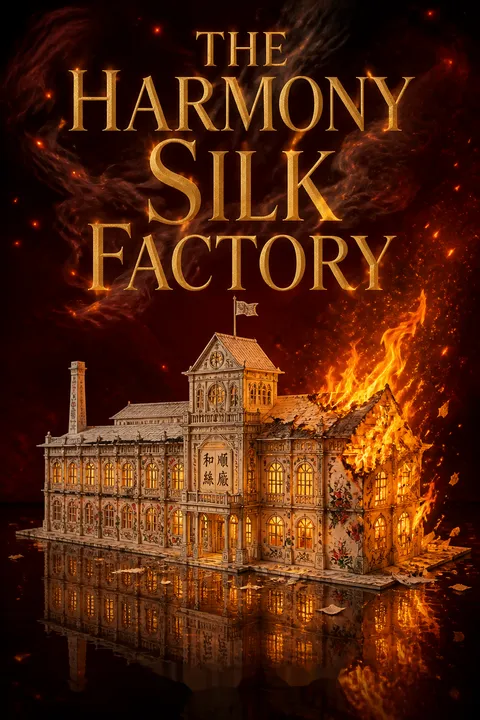
Jasper Lim reflects on his father Johnny's notorious past, centering on the Harmony Silk Factory, a building representing both commercial ambition and moral decay. Jasper, living in the shadow of Johnny's successes and crimes, sifts through decades of myth and secrecy to piece together a personal and historical truth. From smuggling to clandestine dealings, the factory is a physical manifestation of Johnny's capacity for deception and adaptability. It serves as the crossroads where malice, ambition, and survival intersect, creating a storied reputation in the Kinta Valley. Jasper's narration is haunted by longing to understand Johnny, his sense of alienation, and the ache for a clear lineage. This quest is fraught with the realization that all that is tangible—factories, reputations, lives—can be erased, leaving his father a vast, ungraspable absence after death.
Johnny's Shadowed Origins
Johnny Lim, born with no clear parentage into Malaysia's prewar poverty, survives by his wits and adaptability. Early life is marked by hardship in the peasant villages, where class, language, and survival instincts intertwine. Childhood toughness is bred by malnutrition, labor, and a constant awareness of social outsiders and Chinese clan rivalries. Johnny is a cipher; even his new, Westernized name conceals and reinvents him, speaking volumes about the aspirations and self-invention of men at the bottom. The darkness of his inner life is established early, foreshadowing the future dualities—between assimilation and alienation, loyalty and betrayal—that will guide his choices. Jasper, trying to reconstruct these years, is acutely aware of the fractures and silences in the official and family record.
Kinta's Treasures, Kinta's Traps
Kinta Valley, both lush and haunted, is depicted as the heart of Malaysia's tin wealth and an engine of exploitation. The landscape is one of violent colonial extraction, migrant dreams, ancient pirates, and drowned potential. The Valley's rivers, jungle paths, and ancient caves abound with mystery but also with the scars of colonial ambition and local legend. Johnny's affinity with this place is visceral, yet there is a sense of being trapped by geography and history. The rise and fall of lives tied to the land's riches are reflected in stories of drowned friends and fabled outsiders, suggesting that every ascent is built on a foundation of loss, division, and buried violence.
Communism and First Blood
As a young man, Johnny demonstrates mechanical genius and a capacity for violence, killing a man in circumstances forever debatable. His trajectory from exploited youth to Communist sympathizer is less about doctrine than survival and social mobility. The Communist promise gives him a structure and community, yet his embrace is practical and cold. In the undercurrent of this ascent, Johnny's detachment becomes apparent—he can commit violence and detach from remorse, shaping himself as both agent and victim of oppression. Each elevation in fortune is shadowed by ambiguous motivations, mistaken heroism, and unresolved guilt.
Tiger Tan's Apprenticeship
Johnny's rise accelerates under the tutelage of Tiger Tan, a shopkeeper with clandestine revolutionary leanings. Tiger's mentorship is both a shield and a burden, instilling in Johnny both business shrewdness and revolutionary cunning. The shop is a hub for goods and ideology, but as Tiger weakens into despair, Johnny's ambition sharpens into predation. The sudden, suspicious murder of Tiger leaves a vacuum Johnny quickly fills, arousing public suspicion but also respect. This inheritance—both of shop and outlaw legacy—cements Johnny's status as a man to be feared and admired, a chameleon ready to play many sides.
The Dangerous Ascent
After Tiger's death, Johnny adapts the business and networks, shifting seamlessly from assistant to autocrat. He capitalizes on both legitimate trade and the covert Communist cause, relying on his literacy and uncanny ability to navigate danger. His popularity grows among the Valley's poor, while whispers about his involvement in Tiger's demise multiply. Amid festivals, lectures, and deals, Johnny nurtures a mythic status built as much on rumor as on action—the seeds for his later deification and mistrust. The scene is set for Johnny's entrance into higher echelons, for both opportunity and the seeds of his future ruin.
Snow: Porcelain and Iron
Snow Soong enters as the dazzling, fragile daughter of privilege, her life mapped out by the ambitions and anxieties of her parents. Her marriage to Johnny is a transaction—wealth and Western taste matched with Johnny's rising fame. Yet Snow brings her own intelligence, pride, and wistfulness, becoming a subtle force within the household. The mismatch in class, temperament, and secret ambition creates a marriage full of polite estrangement and failed attempts at intimacy. Snow's inner life—her confusion, desires, and sorrows—becomes a silent counterpoint to the drama of fortune and fame that defines Johnny's public self.
Arranged Meetings and Invisible Love
Courtship and marriage rituals play out amidst gossip and suspicion. Snow's parents view Johnny as a pragmatic match, not a romantic ideal, and the newlyweds' isolation reveals their deep mutual incomprehension. Snow's reflections are haunted by societal expectations and her own ambivalence—on duty, self-sacrifice, and the limits of her autonomy. Behind family gatherings and lavish parties, genuine connection is absent. The presence of outsiders—Englishmen like Peter, enigmatic Japanese guests—places Snow and Johnny in a vortex of foreign influence, desire, and judgment. The cracks in their union signal disaster to come.
The Journey: Islands of Secrets
A fateful group trip to the legendary Seven Maidens islands is meant to be a celebratory honeymoon, but instead reveals each traveler's strengths and fixations. The cast—including Johnny, Snow, Peter, and the mysterious Kunichika—drifts toward a collision of ambitions and desires. Beauty of landscape contrasts with mounting psychological and sexual tension: Snow's fascination with Kunichika, Peter's envy and longing, Johnny's isolation. The sea journey and the approaching storm become metaphors for the instability of alliances and the looming calamity ahead. Schemes, betrayals, and hidden motives accumulate beneath the surface.
The Ruin and the Storm
Stranded by a mechanical breakdown and storm, the party endures hardship and revelation on one of the islands. Old resentments are inflamed—Peter's envy, Honey's prurience, Johnny's feverish withdrawal, and Snow's longing for escape. The discovery of a ruined, antler-filled house sets the mood of haunting and decay. Amid the heat, wine, and isolation, relationships reach breaking point: violence erupts, alliances shift, and acts of brutality—both sexual and literal—irrevocably scar the group. The island episode unmasks everyone, fusing beauty and ruin in one fevered episode, foreshadowing disaster on return to the mainland.
Friendships, Betrayals, Lost Gardens
As they return, friendships are shattered: betrayals—both personal and political—surface. Peter, beset by guilt and haunted by love and violence, drifts into isolation. Snow, more alone than ever, is pursued by secrets and the violation of her privacy. Johnny's loyalties fray; the Harmony Silk Factory's future is clouded by rumors and his ambiguous ties to both Communist and Japanese powers. The post-storm malaise brings on a sense of unreality; memory and truth become unreliable. The group's paradise is lost, their relationships left in irreparable tatters, and the past can never be reconstructed fully by any of them.
Chosen Sides, Shifting Allegiances
The Japanese occupation tests every character's loyalties and courage. Johnny, pressed by the occupying Kempeitai and haunted by his Communist ties, must decide whom to serve to survive—and whom to sacrifice. As he leverages his connections and influence, his ambiguous choices make him both a collaborator and a survivor. Friends become informers; all relationships are suspect. Sacrifices are made not for ideology, but for survival and gain. The lines between victim and perpetrator, hero and traitor, blur dangerously, making any fixed judgment impossible.
Occupation's Price: Surviving the Japanese
Johnny prospers materially during the Occupation, building relationships with the Japanese rulers and collecting taxes at their behest. His capacity to thrive while others perish breeds resentment and mythic fear. His former Party comrades are hunted, and he's suspected of complicity in their deaths. Snow's privileged world collapses, subjecting her to new vulnerabilities, while Peter and other colonial figures are pushed out or reduced to shadows of their former selves. Kunichika emerges as both executioner and sophisticated mirror to Johnny's amorality, binding the fates of all. Survival becomes indistinguishable from treachery.
The Caves: Treachery Unveiled
The narrative climax is a massacre: Communist leaders lured to a cavern for supposed negotiations fall into a Japanese-orchestrated trap, likely facilitated by Johnny for his own gain. This single act destroys the anti-Japanese movement in the Valley, dooming scores of his countrymen and cementing Johnny's mythic reputation as survivor and opportunist. Rumors and competing versions of the event flourish; only Jasper, later, will learn and shoulder the full truth. From this moment, Johnny enters the pantheon of local legend—as savior to some, devil to others.
Postwar Gods and Scarred Men
With peacetime comes reinvention: Johnny, with wealth and notoriety, becomes nearly untouchable. The rebuilt Harmony Silk Factory is a palace of pleasures and secrets—a site of awe, envy, and moral suspicion. Yet Johnny's charisma and aura of invincibility are increasingly built on fear and absence rather than substance. Snow, forever marked by violence and alienation, dies giving birth to Jasper, her voice almost lost to the record. The men are scarred, physically and spiritually, left to inhabit a diminished world. Power persists, but the old moral framework is shattered.
The Diary, the Legacy
Jasper, adult and orphaned, scours the detritus of the past for answers. Through diaries, interviews, and fragmentary relics, he assembles a mosaic of competing accounts: his own, Snow's, Peter's, and the community's. Each narrative is riddled with gaps, distortions, and self-justifications. The few physical reminders—the battered photograph, the destroyed Harmony Silk Factory, old letters—fail to yield clarity. Snow's hidden diary offers only ambiguous solace, while Peter's own legacy is one of loss, bitterness, and regret. The next generation is left holding the ashes of myth.
Memories, Myths, and Oblivion
In the end, death erases all traces. Myth, rumor, and selective memory replace fact—especially in the hands of those left behind. At Johnny's funeral, people project onto him whatever they need: heroism, monstrosity, opportunism. Jasper receives a box of relics from Peter, a passing of broken legacies. The Harmony Silk Factory, once a nexus of ambition and sin, burns in memory as a paper effigy. As Jasper looks back one final time, he recognizes that history—the truth of lives lived—cannot be reconstructed, only mourned for having slipped away, irretrievable as silk through the fingers.
Analysis
A masterpiece of uncertainty and fractured identity, Tash Aw's The Harmony Silk Factory is a haunting meditation on postcolonial memory, familial legacy, and the search for a stable self in a world built on shifting ground
The novel's ingenious structure—three overlapping and contradicting first-person accounts—mimics the futility of attaining historical truth. Set during the turbulence of pre- and postwar Malaysia, the book uses its central mystery—who was Johnny Lim, really?—to dramatize how power, love, and trauma shape both individuals and nations. The characters' private desires and betrayals echo larger patterns of colonial violence, revolution, and collaboration. Aw is unsparing in his depiction of how myth, rumor, and selective memory replace fact, and how personal and national pasts are always contested, never whole. At the core is a poignant lesson: physical monuments, relationships, even memories are all subject to erasure, and the desire for clarity must coexist with an acceptance of ambiguity. The novel urges us to recognize that history—and family—is always provisional, always being remade.
Review Summary
Reviews of The Harmony Silk Factory are mixed, averaging 3.47/5. Praised for its ambitious multi-narrator structure, atmospheric pre-WWII Malaysian setting, and elegant prose, many readers appreciate how three unreliable perspectives create a deliberately elusive portrait of the enigmatic Johnny Lim. The novel's exploration of memory, betrayal, and historical uncertainty drew comparisons to Conrad and Faulkner. Critics found the pacing slow, particularly in the third section, and some questioned narrative credibility. Overall, readers valued its thematic complexity, though accessibility and character engagement divided opinion.
People Also Read

Characters
Johnny Lim
Johnny Lim is the novel's central riddle: a self-made man emerging from poverty, shaped as much by violence and cunning as by talent and opportunistic adaptability. Named for a Western matinee idol, Johnny invents himself to survive under the shifting pressures of colonialism, revolution, and occupation. His affections are muted, his conscience elusive—capable of both kindness and cold betrayal, violence and loyalty. He is a mirror for others' projections: celebrated hero, Communist zealot, traitor, or passive tool. Johnny's relationships are transactional—mentor to Tiger Tan, husband to Snow, friend and rival to Peter—with each seeing a different version of him. His success, symbolic and literal, is haunted by the moral void at his core. Psychological analysis reveals a man with deep inner wounds, unable or unwilling to belong, always a little bit apart—even from those who love him.
Snow Soong
Snow, the only beloved daughter of the patrician Soong family, is prized for her looks but underestimated for her intelligence and self-will. Bound by filial piety and community expectations, she moves through life as precious commodity and reluctant rebel—selected as wife for Johnny primarily to preserve her parents' legacy. She shares with Johnny an essential isolation, but her attempts at self-expression—through diary, flirtation, and eventual erotic transgression—are stymied by cultural constraint and marital disappointment. Snow's world is one of suffocated potential, and she is ultimately overwhelmed, dying in childbirth before she can claim agency. Psychologically, Snow is torn between longing and resignation, self-assertion and fatalism; her biography is as much a record of things unsaid as of deeds performed.
Jasper Lim
Jasper, Johnny and Snow's son, is born into the void left by both parents' emotional inaccessibility and early deaths. Educated by the wealth and crime Johnny bequeathed, Jasper is introspective, skeptical, and forever on the margins of both family and history. His quest—haunted by myth—remains incomplete: his research into his father's life yields only more confusion and alienation, never closure. Jasper's development is marked by a sense of detachment and melancholy, his adult voice shadowed by loss and the awareness that family, as much as national history, is always unreliable. He epitomizes the tragic observer, unable to escape the burdens of legacy, yet doubting there is ever any whole truth to find.
Peter Wormwood
An English expatriate with artistic inclinations, Peter is an outsider twice over: never fully at home in his own culture, unable to claim belonging in Malaya. Psychologically restless and emotionally volatile, Peter forms intense attachments—to Johnny, to Snow, to lost ideals—but is doomed to disappointment and self-reproach. His affection for Johnny is colored by possible longing and envy; his attraction to Snow by both genuine feeling and self-dramatization. Betrayals—his own and others'—harden into bitterness as he ages, wormwood's bitterness becoming his signature. He is a vivid lens on the events, but unreliable: his memory is colored by jealousy, aesthetic obsession, and self-justification. In the end, Peter is a relic—possibly the last witness, yet unable to resolve his own part in the tragedies that unfolded.
Tiger Tan
A Communist leader and respected merchant, Tiger is Johnny's formative mentor: he offers knowledge, protection, and ideological structure. However, his vulnerabilities—personal loss, world-weariness, and the burdens of age—render him susceptible to betrayal. His apparent murder at Johnny's hand marks the passing of one era and the unceremonious rise of the next, symbolizing the perpetual cycle of teacher supplanted by student. Tiger's legacy haunts Johnny: part fatherly model, part ghost to be banished so Johnny can inherit power.
T.K. Soong
T.K. is Snow's father, the stern Confucian scholar and industrialist whose aspirations for his family are conservative and status-obsessed. He is emotionally remote yet shapes the destinies of those around him through matchmaking and paternalism. His pride and confidence in his own continuity are hollowed by Johnny's manipulations, the advent of war, and the collapse of old certainties. His decline mirrors that of the colonial establishment. T.K. is not a villain, but represents the brittle power of the past failing to prepare its heirs for the storms ahead.
Mamoru Kunichika
The Japanese academic-turned-Kempeitai officer operates both as a catalyst in plot and as an emblem of ambiguous modernity. Cultured, enigmatic, and morally opaque, Kunichika is simultaneously captor and confidant, courted by local elites but also their destroyer. He is the sophisticated double to Johnny, tempting, threatening, and ultimately fatefully entwined in decisions of life and death. His relationships—with Snow, with Peter, with Johnny—are freighted with intimacy and threat. Psychologically, he symbolizes the colonial anxiety: what happens when the sophisticated outsider becomes the agent of violence?
Frederick Honey
Honey, an English tin-mine administrator, personifies the brittle, anxious confidence of British rule in its twilight. Outwardly jovial and insistent on rules, he brims with resentment, racial anxieties, and repressed violence. His presence on the excursion and in the Soong household complicates and destabilizes group dynamics. His fate is one of both victimhood and complicity, his murder both a personal and a broader historical reckoning.
Patti Soong
Snow's mother, Patti, is both arbiter and enforcer of tradition, seeking control through arranged marriage, etiquette, and hidden alliances. Her range is limited by gendered expectation, yet she exerts subtle power in shaping family destiny, punishing deviation. Her psychological profile is one of control, pride, and fear of social dissipation.
The Valley and Factory (Sites as characters)
Both the Kinta Valley and the Harmony Silk Factory act as living presences through their layered memories, histories of violence, and shifting ownerships. They bear witness to ambition, betrayal, and erasure, their physical transformations paralleling the destabilizations of the characters' inner lives.
Plot Devices
Multiple, Conflicting Perspectives
The novel is structured as three interwoven, subjective accounts—Jasper's reconstruction, Snow's diary, and Peter's memoir—each revealing but also distorting the reality of Johnny Lim and their shared world. This device highlights the elusiveness of historical truth and the inescapability of personal bias. Each narrator's limited perspective renders the "truth" ambiguous, mirroring the complexities of postcolonial identity and familial legacy.
Unreliable Narration and Missing Information
By letting different narrators contradict each other—and sometimes themselves—the book enacts doubt as a central function. Missing artifacts (the diary, torn photographs), lost memories, and repressed events create silences and mysteries that can never be fully recovered. The absence itself becomes more eloquent than the details that remain, fueling both intrigue and melancholy.
Foreshadowing and Repetition
Key motifs recur—erasure, betrayal, the futility of rebuilding, gardens and ruins, the phrase "death erases all traces." Such repetition tells the reader from the outset that the world will not end in knowledge or catharsis, but in forgetting. The future is always stalked by the ghosts of the past, and each generation's attempts to revise or redeem can only partially succeed.
Symbolic Geography and Architecture
The Kinta Valley, caves, islands, factories, ruins, and gardens are not only settings; they externalize the baroque layers of history and memory. Landscapes and buildings are repeatedly destroyed, rebuilt, or left to rot, paralleling the characters' inward transformations, ambitions, and failures. These sites store trauma and promise, and their physical evolution stands in for changes in the human soul.
Artefacts and Documents
Letters, diaries, photographs, and relics are central to how characters seek meaning or closure—often without success. Peter's bequest to Jasper, Snow's diary, Johnny's collection of weapons: all these promise access to secret knowledge but ultimately reinforce how much remains lost or unknowable. These plot devices remind the reader that storytelling is as much about hiding as revealing.

Download PDF
Download EPUB
.epub digital book format is ideal for reading ebooks on phones, tablets, and e-readers.








































