
Key Takeaways
1. Integrate Hard and Soft Sides for Successful Change
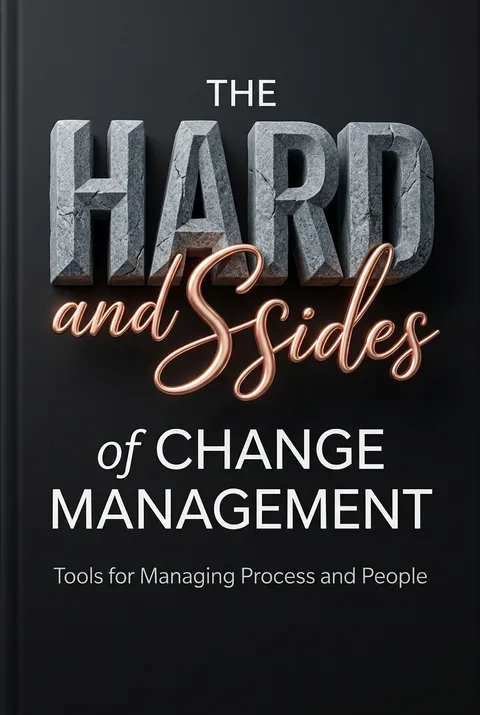
Change management, done effectively, requires us to integrate the hard and the soft.
The Dual Challenge. Organizations constantly face change, driven by external factors like market shifts or internal needs like new technology. However, a high percentage of change initiatives fail, often because leaders either focus too much on the "hard", process-oriented aspects or neglect the "soft," people-focused elements. True success lies in a balanced approach.
Hard Side Focus. The "hard side" of change management involves disciplined project management principles. This includes clearly defining deliverables, setting timelines, securing resources, assigning roles, and monitoring progress. Without this, initiatives lack direction and accountability, leading to missed objectives and wasted effort.
Soft Side Focus. The "soft side" addresses the human element: the emotions, perceptions, and behaviors of people affected by change. It involves creating psychological safety, building trust, fostering open communication, and acknowledging potential feelings of loss or uncertainty. Neglecting this can lead to resistance, disengagement, and ultimately, project failure, even if the technical execution is flawless.
2. Define the Change and Chart the Course Clearly
The project charter provides you with a vehicle for answering these critically important questions.
Motivate Action. A project charter formally documents the objectives, scope, and rationale for a change initiative. It clarifies what needs to be accomplished and why it's important, preventing the "flavor of the month" syndrome and inspiring commitment from all involved. This upfront clarity is crucial for motivating action, especially when the changes are challenging.
Shared Understanding. The charter defines what is "in scope" and "out of scope," preventing misunderstandings and managing expectations. For instance, in the DBZ case, Max realized the project was broader (job redesign) but also narrower (US only) than anticipated, allowing him to communicate accurately and build trust. This clarity helps avoid scope creep and ensures everyone is working towards the same defined goal.
Structured Path. A detailed project plan, built upon the charter, serves as a roadmap, outlining tasks, milestones, timeframes, and ownership. It ensures a disciplined approach to execution, tracks progress, and identifies where adjustments are needed. Integrating "soft side" elements like short-term wins and stakeholder input into the plan ensures it's both realistic and fosters buy-in.
3. Build Diverse Teams to Lead and Manage Change
Establishing a strong partnership between project leaders and change management leaders is key.
Core Project Team. This team focuses on the "hard side" of change, driving project planning and execution. It includes a Project Leader (overseeing day-to-day activities), a Project Sponsor (setting vision, securing resources, championing the change), and Project Team Members (executing tasks). Competencies needed span both functional/technical expertise and crucial interpersonal/leadership skills.
Change Management Team. This team focuses on the "soft side," ensuring stakeholders understand, accept, and adopt the change. Responsibilities include stakeholder engagement, communication, training, and resistance management. Members typically possess expertise in communication, learning & development, and coaching. Their role is to advocate for the people affected by the change.
Essential Collaboration. The success of any change initiative hinges on the seamless collaboration between these two teams. The core project team needs the change management team's insights into human impact to make informed decisions, while the change management team relies on the core team for project details to tailor their engagement strategies. This partnership ensures both the "what" and the "how" of change are addressed.
4. Engage Stakeholders Actively for Input and Advocacy
The stakeholder analysis is your anchor. You need this for your change to succeed.
Identify All Affected. A comprehensive stakeholder analysis identifies every person or group impacted by the change, regardless of the perceived level of impact. This prevents critical omissions that can derail a project later. It's an evolving document, continuously updated as new information emerges.
Assess Impact and Influence. For each stakeholder, the analysis determines:
- Level of Impact: How significantly will the change affect their day-to-day work, responsibilities, or sense of loss?
- Level of Influence: How much can they affect the success or failure of the change initiative?
Mapping these on a grid helps tailor engagement strategies, prioritizing high-impact, high-influence groups for deeper involvement.
Leverage Diverse Perspectives. Tools like the Transition-Monitoring Team and the Red Team are crucial for active engagement.
- Transition-Monitoring Team: Composed of trusted employees "on the ground," they act as a two-way communication channel, advocating for the change while relaying peer concerns and feedback to the project team.
- Red Team: An independent group tasked with critically challenging plans and decisions, identifying flaws and blind spots. This creates a safe space for dissent, ensuring potential problems are surfaced and addressed before implementation.
5. Clarify Roles and Responsibilities to Avoid Chaos
A RACI matrix is the simplest, most effective means for defining and documenting project roles and responsibilities.
Define Accountability. The RACI matrix clearly designates who is:
- Responsible (R): The person(s) who complete the task or make the decision.
- Accountable (A): The one person who approves the work or decision, where the buck stops.
- Consulted (C): Those whose input is sought before a decision or action.
- Informed (I): Those who are kept updated on progress or decisions.
This structure prevents confusion, ensures tasks are owned, and avoids decision-making bottlenecks.
Prevent Overload and Conflict. By mapping out responsibilities for each major task or decision, the RACI matrix helps identify if any single stakeholder is over-assigned or if there are gaps in ownership. It also proactively addresses potential conflicts by clarifying who has the final say, reducing friction and delays.
Foster Participation. While a "hard side" tool, the RACI matrix also supports the "soft side" by ensuring appropriate stakeholder involvement. It communicates to everyone their specific role in the change, whether it's direct responsibility, approval, providing input, or simply staying informed. This transparency builds trust and reduces resistance by making the process clear and inclusive.
6. Communicate Truthfully and Strategically
I never assume I know what someone else has heard or understands about a change that’s forthcoming.
Honesty Builds Trust. Effective communication during change must be truthful, transparent, and balanced. Organizations often err by sugarcoating bad news or withholding information, which erodes trust and fuels cynicism. Leaders must convey the "whole truth"—the good, the bad, and the uncertain—to maintain credibility.
Tailored Messaging. Communication should be tailored to each stakeholder group, addressing their specific "What's In It For Me" (WIIFM). Messages should appeal to the "heart" (emotions), "head" (rationale), and "hands" (actions). Storytelling can make abstract concepts tangible and relatable, helping employees envision the change.
Multi-Channel Approach. Relying on a single communication channel is insufficient. Messages need to be repeated often and delivered through a variety of vehicles:
- Leaders: Share vision, rationale, and listen actively.
- Frontline Managers: Translate broad goals into specific departmental impacts and expectations.
- Peers: Reinforce messages, correct misinformation, and provide informal support.
- Formal/Informal Channels: Use meetings, emails, social media, visual reminders, and surveys, always ensuring opportunities for two-way dialogue.
7. Empower Employees with Essential Knowledge and Skills
Employees need the right knowledge and skills to do what’s expected of them.
Address Competence Loss. Change often leaves employees feeling incompetent or disoriented as they adapt to new processes or technologies. Training is crucial not only for imparting new skills (hard side) but also for rebuilding confidence and mitigating the fear of incompetence (soft side). It helps employees navigate the discomfort of learning new ways of working.
Proactive and Integrated Training. Training should not be an afterthought. It must be integrated into the project plan from the start, with the training lead actively participating in the core project team. This ensures training aligns with project goals, addresses actual needs, and is delivered at appropriate times. Early involvement prevents costly rework and delays, as seen in the HR policy example.
Diverse Learning Approaches. Effective training extends beyond traditional classroom or online modules. It includes:
- Accelerated Learning: Embedding training in status meetings, delivering it at milestones, and using quality assurance testing as learning opportunities.
- Ongoing Support: Providing job aids, tip sheets, drop-in clinics, and training "super users" to offer continuous assistance.
- Reinforcement: Embedding learning in staff meetings, offering "booster shot" microlearning, and planning for long-term training maintenance.
8. Anticipate and Leverage Resistance for Better Outcomes
Resistance is something you can harness and put to work to help your change initiative produce even better results than you might have otherwise achieved.
Understand the Roots. Resistance is inevitable and often stems from valid concerns, not just stubbornness. Reasons can include fear of incompetence, increased workload, loss of status, change fatigue, or genuine belief that the change is misguided. It manifests as barriers, non-compliance, workarounds, avoidance, or disengagement.
Proactive Planning. A formal resistance management plan identifies who is likely to resist and why. It outlines proactive actions to mitigate opposition:
- Involve Resisters: Offer opportunities for participation (e.g., Red Team, review committees).
- Provide Options: Give choices to foster a sense of control.
- Compensate for Losses: Address tangible or intangible losses (e.g., flexible hours, recognition).
This proactive approach can prevent resistance from escalating.
Address Directly and Learn. When resistance emerges, don't ignore, punish, or get defensive. Instead, engage directly, often through a two-conversation approach:
- Listen: Hear their concerns, acknowledge emotions, and ask for ideas.
- Respond: Explain what can or cannot be done, and why.
Assume positive intent; resisters often highlight flaws that can strengthen the project. Leveraging their insights can lead to better decisions and a more robust change initiative.
9. Continuously Learn and Adapt Through Action Reviews
An action review forces you and your project team to take that pause, even momentarily, to reflect on the objectives you’re trying to reach and the results you’re getting, so you can make course corrections if needed.
Structured Reflection. An action review is a facilitated meeting where key players openly discuss:
- What was supposed to happen (objectives)?
- What actually happened and why (successes, failures, root causes)?
- What should we do about it (actions, lessons learned)?
This process, adapted from military "after action reviews," fosters continuous improvement by comparing intentions with reality.
Prevent Blame, Foster Learning. Unlike the dysfunctional TCW relocation postmortem, effective action reviews focus on learning, not blame. A skilled facilitator ensures honest, respectful dialogue, drawing out diverse perspectives and identifying actionable insights. This helps teams understand why things occurred, not just who made a mistake.
Timely Intervention. Action reviews should be conducted not just at the end of a project, but also at the beginning (before action reviews) and periodically throughout (during action reviews). This allows for timely course corrections, preventing small issues from becoming major disasters. By documenting lessons learned, organizations build institutional knowledge, improving future change initiatives and fostering a culture of continuous learning.
10. Address Thorny Issues Proactively to Stay on Track
When challenges arise, you can coach project team members and the project leader on steps they can take to make things better.
Acknowledge the Problem. The first step to resolving any thorny issue is honest acknowledgment, both within the project team and to sponsors, leaders, and stakeholders. Hiding problems erodes trust and prevents timely intervention. Leaders must create a safe environment where team members feel comfortable admitting difficulties without fear of blame.
Systematic Assessment. Once acknowledged, thoroughly assess the root causes of the problem. This involves:
- Revisiting Objectives: Are the goals still valid? Has scope crept?
- Challenging Assumptions: Which initial assumptions proved false?
- Reviewing Plans: Are communication, training, and resistance management plans effective?
- Gathering Input: Consult with all relevant stakeholders, including Red Teams, to gain diverse perspectives and potential solutions.
Implement and Reassess. Based on the assessment, decide on corrective actions, ensuring necessary approvals (RACI matrix) and communicating transparently with all stakeholders. Then, continuously reassess the impact of these solutions through ongoing action reviews. This iterative process ensures the project stays on track, or gets back on track, by adapting to challenges and learning from every setback.
Download PDF
Download EPUB
.epub digital book format is ideal for reading ebooks on phones, tablets, and e-readers.








































