
Plot Summary
Digging in the Dark
Tess, haunted by her sister Rosie's death, is introduced as she digs in the earth, reflecting on the sun's changing light and the secrets buried beneath the surface. The narrative is immediately steeped in grief and obsession, as Tess's thoughts spiral around the loss of her sister, the unanswered questions, and the sense of fate's cruelty. The act of digging becomes a metaphor for Tess's relentless search for meaning and closure, her fingers literally and figuratively in the dirt of the past. The mood is heavy, the imagery tactile and raw, setting the emotional tone for the story: a woman unable to let go, compelled to seek answers in the shadows, even as she warns herself—careful what you look for.
Ghosts in the Guest Room
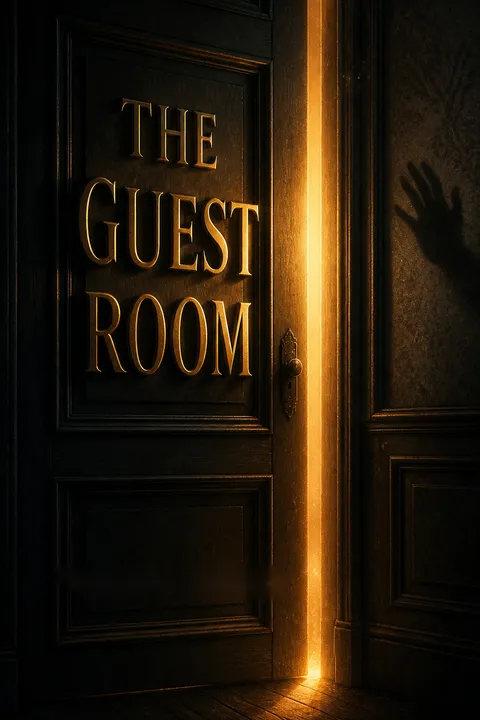
Tess has moved into Rosie's flat, unable to sell it or let go, and is forced by financial necessity to rent out her sister's old room as a guest room. The presence of strangers in Rosie's most intimate space is both a violation and a lifeline, allowing Tess to stay close to her sister's memory while keeping the investigation alive. Tess's relationship with the guest room is fraught—she cannot sleep there herself, yet she cannot leave it untouched. The room becomes a stage for Tess's compulsive snooping, as she rifles through guests' belongings, searching for clues, comfort, or distraction. The flat is a mausoleum and a trap, every object a potential key to Rosie's secrets, every guest a fleeting ghost.
Stranger at the Door
Arran Cole, a new guest, arrives for a month-long stay, breaking Tess's rule of keeping guests temporary and distant. Arran is charming, observant, and oddly familiar, quickly unsettling Tess's routines and boundaries. Their initial interactions are laced with tension and curiosity, as Arran's presence in Rosie's room and his subtle probing questions unsettle Tess. The dynamic between host and guest is charged, with Tess both drawn to and wary of Arran. His attention to detail, his gentle humor, and his willingness to engage with Tess's world—her art, her family history—hint at deeper layers. The stage is set for intimacy, suspicion, and the blurring of lines between guest and host, past and present.
Shadows of the Past
Tess's grief is omnipresent, coloring her work at the Barbican gallery, her friendships, and her daily routines. Flashbacks reveal the closeness and complexity of her relationship with Rosie, the gradual unraveling of Rosie's mental health, and the family's fractured response to her death. Tess's parents have retreated to Spain, unable to face London or their surviving daughter, leaving Tess isolated and burdened with responsibility. The police investigation, led by Detective Pettiford, is stalled, and Tess's frustration mounts as she clings to every possible lead, no matter how tenuous. The past is never far away, and Tess's inability to move on is mirrored in her compulsive need to revisit memories, places, and objects associated with Rosie.
The Art of Obsession
Tess's fixation on her guests' belongings escalates, especially with Arran. She searches his bags, finds odd objects—a wire cutter, a notebook—and becomes obsessed with the secrets they might hold. The act of snooping is both a violation and a compulsion, a way for Tess to feel in control and connected. Arran's diary, once discovered, becomes a forbidden text, its poetic, second-person entries describing an unnamed woman who may or may not be Tess. The ambiguity fuels Tess's paranoia and desire, as she projects herself into the diary's narrative, unsure whether she is the object of Arran's obsession or merely a stand-in for someone else. The boundaries between watcher and watched, seeker and sought, blur dangerously.
Watching and Waiting
Tess's insomnia and restlessness drive her into the city's parks and streets at night, retracing Rosie's last steps, daring fate to repeat itself. She courts danger, hoping to encounter the kind of violence that claimed her sister, as if to prove something to herself or the universe. These nocturnal excursions are both acts of mourning and self-destruction, as Tess tests the limits of her vulnerability and luck. The city is depicted as both menacing and indifferent, its darkness filled with potential threats and missed connections. Tess's behavior grows increasingly erratic, her sense of reality fraying as she becomes more entangled in her own rituals of grief and obsession.
The Diary's Secrets
Tess delves deeper into Arran's diary, discovering entries that describe a woman with uncanny similarities to herself—or perhaps to Rosie. The diary is intimate, unsettling, and ambiguous, its language oscillating between romantic longing and stalkerish fixation. Tess's reading becomes an addiction, each new entry a clue or a provocation. The diary's narrative of pursuit, desire, and disappointment mirrors Tess's own emotional state, as she oscillates between identification with the diarist and fear of him. The possibility that Arran is writing about her, or about someone else entirely, destabilizes Tess's sense of self and safety, fueling both attraction and dread.
Night Wanderings
Tess's nighttime explorations grow more reckless, culminating in a near-violent encounter on Hackney Marshes. She intervenes in an assault, is injured, and senses she is being watched by an unseen figure. The experience leaves her shaken, physically and emotionally, and heightens her paranoia about the people in her life—Arran, Oliver (Rosie's ex), and even her neighbors. The city's darkness becomes a metaphor for Tess's internal chaos, as she struggles to distinguish between real threats and imagined ones. The sense of being hunted, or of inviting danger, intensifies, pushing Tess closer to the edge.
The Stalker's Gaze
Tess's relationships with those around her become increasingly fraught. She suspects Arran of following her, of hiding things, of being involved with another woman. She stalks him through the city, convinced he is meeting someone else, and her jealousy and insecurity spiral. At the same time, she confronts Oliver, accusing him of involvement in Rosie's death, only to be rebuffed and gaslit. The sense of being watched, manipulated, and lied to pervades Tess's world, as she realizes she cannot trust anyone—not even herself. The diary's revelations, Arran's evasions, and the resurfacing of Rosie's lost phone all contribute to a mounting sense of dread and confusion.
Tangled Connections
As Tess's investigation into Rosie's death intensifies, so do the connections between the people in her orbit. Arran's past with Rosie is hinted at, but not fully revealed; Ivy, the neighbor, becomes more prominent, her interest in Tess and Rosie increasingly suspicious. The police investigation into a missing woman, Joanna, echoes Rosie's case, and Tess becomes entangled in it, both as a witness and a suspect. The boundaries between victim and perpetrator, observer and participant, blur further, as Tess's actions—her stalking, her confrontations, her snooping—mirror those of the people she fears. The narrative becomes a hall of mirrors, each reflection more distorted than the last.
The Other Woman
Joanna, a woman connected to Arran through work, goes missing, and Tess's suspicions reach a fever pitch. She is questioned by the police, her own behavior scrutinized, and her reliability as a narrator called into question. The parallels between Joanna's case and Rosie's become explicit, and Tess is forced to confront the possibility that she is projecting her own guilt and grief onto others. Arran's involvement with Joanna is ambiguous, and Tess's jealousy and fear drive her to desperate measures. The sense of threat is omnipresent, but its source remains elusive, as Tess's world unravels.
The Vanishing
The climax arrives as Tess's investigation collides with reality. Ivy, the seemingly innocuous neighbor, is revealed as the true threat—the one who followed, fixated on, and ultimately killed Rosie in a fit of obsession and rage. The confrontation between Tess and Ivy is brutal and cathartic, as Tess is forced to fight for her life and, in doing so, finally confront the truth of her sister's death. Arran, wounded and innocent of the crime, becomes collateral damage in the chaos. The violence is both literal and symbolic, a reckoning for months of denial, projection, and misplaced trust.
Unraveling Truths
In the wake of Ivy's confession and arrest, Tess is left to pick up the pieces of her shattered life. The revelations about Rosie's secret relationship with Arran, her pregnancy, and the true circumstances of her death force Tess to reevaluate everything she thought she knew. The police investigation concludes, but closure remains elusive. Tess's relationships—with Arran, with her parents, with herself—are irrevocably changed. The narrative slows, allowing space for grief, reflection, and the possibility of healing.
The Real Intruder
Tess confronts the consequences of her own actions—her compulsive snooping, her inability to let go, her projection of guilt and blame onto others. The guest room, once a site of comfort and connection, is revealed as a stage for intrusion and violation, both by Tess and by those she invited in. The boundaries between self and other, past and present, are redrawn, but the scars remain. Tess must reckon with the ways in which her own obsessions mirrored those of Ivy, Arran, and even Rosie herself.
Ivy's Confession
Ivy's monologue reveals the depth of her loneliness, jealousy, and fixation on Rosie and Tess. Her actions are both monstrous and pitiable, the product of a lifetime of exclusion and longing for connection. The confession is chilling in its matter-of-factness, as Ivy rationalizes her behavior and blames her victims for her own pain. The narrative forces the reader to confront the uncomfortable truth that obsession, when left unchecked, can curdle into violence, and that the line between victim and perpetrator is often perilously thin.
Blood and Reckoning
The final confrontation between Tess and Ivy is visceral and desperate, a fight for survival that leaves both women bloodied and broken. Tess's victory is pyrrhic, achieved at great personal cost, and the aftermath is marked by numbness, exhaustion, and a sense of unreality. The police arrive, Ivy is taken away, and Tess is left to process the trauma and loss. The violence is both an ending and a beginning, a necessary rupture that allows for the possibility of healing.
Sunsets and Shadows
In the aftermath, Tess returns to Spain, reconnects with her parents, and begins the slow work of healing. She buries Rosie's ultrasound beneath a tree, symbolically laying her sister's secrets to rest. The narrative closes with images of sunlight, birds, and the promise of new beginnings, even as the scars of the past remain. Tess's journey is one of grief, obsession, and ultimately acceptance—a recognition that closure is elusive, but that life, like the sun, continues to rise and set, casting both shadows and light.
Analysis
Tasha Sylva's The Guest Room is a masterful exploration of grief, obsession, and the dangers of seeking closure at any cost. Through the lens of Tess's unreliable narration, the novel interrogates the ways in which trauma distorts perception, erodes boundaries, and breeds both empathy and violence. The guest room, at once a sanctuary and a site of intrusion, becomes a powerful metaphor for the porousness of self and the risks inherent in intimacy. The novel's intricate structure—layering diaries, memories, and parallel investigations—mirrors the psychological complexity of its characters, inviting the reader to question the nature of truth, guilt, and healing. Ultimately, The Guest Room warns against the seductive allure of certainty and the perils of projecting one's pain onto others. It is a story about the necessity of letting go, the courage required to face the darkness within and without, and the possibility of finding light, however fragile, in the aftermath of loss.
People Also Read






Characters
Tess Hartley
Tess is the protagonist, a woman paralyzed by grief and guilt after her sister Rosie's unsolved death. Her psychological landscape is defined by obsession, compulsion, and a desperate need for answers. Tess's relationships—with her parents, her friends, her guests—are strained by her inability to move on, her compulsive snooping, and her projection of blame. She is both sympathetic and unreliable, her actions often mirroring those of the people she fears. Tess's journey is one of self-discovery, as she confronts the ways in which her own obsessions have shaped her reality and contributed to her isolation. Her arc is one of painful growth, as she learns to accept ambiguity, let go of the past, and seek connection without intrusion.
Rosie Hartley
Rosie is the absent center of the narrative, her death the catalyst for Tess's unraveling. In life, Rosie was vibrant, creative, and troubled, her struggles with mental health and relationships hidden beneath a veneer of confidence. Her secret relationship with Arran, her pregnancy, and her gradual withdrawal from those around her are revealed in fragments, complicating the narrative of her victimhood. Rosie's presence lingers in the flat, in Tess's memories, and in the objects she left behind. She is both idealized and humanized, her flaws and secrets forcing Tess to confront the limits of her own understanding and love.
Arran Cole
Arran is Tess's enigmatic guest, whose charm, sensitivity, and odd familiarity unsettle Tess from the start. His diary, filled with poetic and obsessive entries, becomes a focal point for Tess's suspicions and desires. Arran's past with Rosie is gradually revealed, exposing his own grief, guilt, and longing for connection. He is both victim and perpetrator, his actions shaped by loss and a desperate need for intimacy. Arran's relationship with Tess is fraught, marked by attraction, mistrust, and the shadow of Rosie. His arc is one of confession and reckoning, as he is forced to confront the consequences of his secrets and the limits of his own healing.
Ivy
Ivy is the true antagonist, a neighbor whose fixation on Rosie—and later Tess—drives her to violence. Her outward friendliness masks deep loneliness, jealousy, and a pathological need for connection. Ivy's confession reveals a lifetime of exclusion and pain, her actions both monstrous and pitiable. She is a mirror for Tess's own obsessions, a warning of what can happen when longing curdles into resentment and violence. Ivy's arc is one of revelation and downfall, her crimes exposed and her rationalizations laid bare.
Oliver Barlow
Oliver is Rosie's ex-boyfriend, initially suspected by Tess of involvement in Rosie's death. His grief and anger are palpable, but his alibi is solid, and his role is ultimately that of a red herring. Oliver's interactions with Tess are fraught, marked by mutual blame and unresolved pain. He represents the dangers of projection and the limits of understanding, his presence a constant reminder of the ways in which grief can distort perception.
Nalika
Nalika is Tess's best friend, a source of support, humor, and occasional tough love. Her own struggles with relationships and loss mirror Tess's, and her attempts to draw Tess out of her isolation are both well-intentioned and sometimes misguided. Nalika's loyalty is unwavering, and her presence provides a counterpoint to Tess's spiraling obsessions. She is a grounding force, reminding Tess of the importance of connection, self-care, and forgiveness.
Detective Pettiford
Detective Pettiford is the lead investigator on Rosie's case, a figure of authority and frustration for Tess. His patience and professionalism are contrasted with Tess's impatience and desperation, and his inability to provide closure becomes a source of resentment. Pettiford represents the limitations of institutional justice, the slow grind of procedure, and the difficulty of finding truth in a world of ambiguity and pain.
Joanna Reynolds
Joanna is a woman connected to Arran through work, whose disappearance echoes Rosie's case and draws Tess into a new web of suspicion and fear. Joanna's story serves as a mirror for Tess's own, highlighting the dangers of obsession, the fragility of safety, and the ways in which women are made vulnerable by those who claim to love them. Her eventual rescue and survival provide a glimmer of hope, even as they underscore the randomness and cruelty of fate.
Luke
Luke is Tess's downstairs neighbor, whose affable exterior masks a sense of entitlement and resentment. His attempts to pursue Tess are clumsy and unwelcome, and his eventual aggression serves as a reminder of the everyday dangers women face. Luke's presence in the narrative is both comic and menacing, a minor threat that distracts from the true danger lurking closer to home.
Elliot
Elliot is Ivy's flatmate, a peripheral figure whose presence becomes significant in the story's climax. His quiet observation and eventual intervention provide a measure of justice and closure, highlighting the importance of paying attention to what is hidden in plain sight.
Plot Devices
Unreliable Narration and Shifting Perspective
The novel employs a deeply subjective, unreliable first-person narration, immersing the reader in Tess's grief, obsession, and paranoia. The boundaries between reality and imagination are constantly blurred, as Tess's interpretations of events, people, and objects are colored by her emotional state. The use of Arran's diary as a secondary narrative device adds another layer of ambiguity, as the reader is forced to question the identity of the "you" being addressed and the reliability of the diarist's account. The shifting suspicions, red herrings, and misdirections keep the reader off-balance, mirroring Tess's own uncertainty and fueling the novel's suspense.
Objects as Symbols and Clues
Objects—Rosie's belongings, guests' possessions, Arran's diary, the lost phone—are imbued with symbolic and narrative significance. They serve as conduits for memory, obsession, and revelation, driving Tess's investigation and shaping her relationships. The act of snooping, of searching for meaning in things, becomes both a plot engine and a metaphor for the human need to make sense of loss. The recurring motif of digging, both literal and figurative, underscores the novel's preoccupation with uncovering hidden truths and the dangers of seeking too deeply.
Parallel Plotlines and Mirroring
The narrative structure is built on parallels and mirrors: Tess's grief for Rosie is echoed in the investigation into Joanna's disappearance; Tess's obsession with Arran's diary mirrors Ivy's obsession with Rosie and Tess; the guest room becomes a site of both comfort and violation. These echoes create a sense of inevitability and claustrophobia, as the characters are trapped in cycles of longing, loss, and violence. The use of parallel plotlines heightens the suspense and deepens the psychological complexity of the story.
Foreshadowing and Red Herrings
The novel is rich in foreshadowing and misdirection, with numerous red herrings—Oliver, Arran, Luke—serving to distract both Tess and the reader from the true threat. The gradual revelation of Ivy's obsession and culpability is carefully seeded throughout the narrative, with subtle clues and ambiguous interactions that only become clear in retrospect. The use of foreshadowing creates a sense of mounting dread, while the red herrings sustain the mystery and keep the reader guessing until the final confrontation.
Download PDF
Download EPUB
.epub digital book format is ideal for reading ebooks on phones, tablets, and e-readers.








































