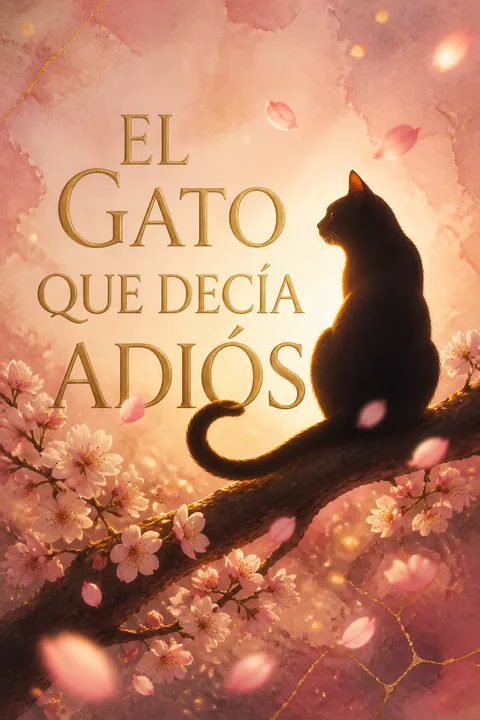

Resumen de la trama
Paw Prints and Plum Blossoms
Kota, the Sakuraba family's silver tabby, leaves soy sauce paw prints on the tablecloth, an act the family calls "being an artist." Kota's earliest memory is of being abandoned in the rain, only to be rescued by Mr. Sakuraba, a man who can't ignore a cat in need. Raised alongside the family's children, Kota becomes a sibling in the household, his presence as constant and comforting as the blue tablecloth he decorates. The family's gentle confusion of names—mixing up the children and the cat—reflects the blurred lines between human and animal, and the deep, unspoken bonds that form in the quiet moments of daily life. Kota's prints are more than mischief; they are a mark of belonging.
Names, Bonds, and Belonging
The Sakuraba family's naming rituals reveal their desire for connection. Each child's name is carefully chosen, blending characters from both parents, and when a dispute arises over the second son's name, the "losing" name is given to the cat. Kota's identity is thus entwined with the family's own, and the confusion between cat and child becomes a running joke. Yet, beneath the humor lies a truth: names are vessels for love and memory. The children's struggles with their names—Hiromi's embarrassment, Kota's acceptance—mirror their journeys toward self-acceptance and the realization that to be named is to be cherished.
Growing Up Together
Kota and Hiromi grow side by side, the cat's rapid maturation contrasting with the slow, stumbling progress of the human child. Kota becomes Hiromi's constant companion, soothing his cries and sharing in his triumphs. The family's hierarchy shifts as the children age, but Kota remains a steadfast presence, climbing the tallest shoulders, sitting on laps during meals, and offering silent comfort. The rituals of daily life—eating, playing, sleeping—become acts of mutual care, blurring the boundaries between species. Through Kota's eyes, the reader witnesses the bittersweet passage of time and the enduring nature of love.
The Weight of Goodbye
The death of the school rabbit introduces Hiromi to the concept of mortality, and the realization that Kota and Diana, the family's elder cat, will one day die fills him with dread. The family navigates grief together, seeking solace in stories of magical cats who live forever. Diana's eventual passing is a moment of profound sorrow, but also of growth; Hiromi learns to carry his sadness, comforted by Kota's presence. The cats' musings on becoming nekomata—mythical, long-lived creatures—reflect the human desire to transcend loss, even as they accept the inevitability of parting.
New Life, New Family
Kaori returns home with her newborn daughter, Shiori, to find her husband Keisuke has adopted a stray kitten, Spin. The chaos of caring for two infants—one human, one feline—forces Keisuke to grow into his role as a father. The kitten becomes both a test and a teacher, prompting Keisuke to clean, organize, and nurture in ways he never imagined. The family's struggles and small victories are chronicled in sketches and online forums, where Keisuke seeks advice and finds community. Through Spin, the family learns that love is an act of daily attention, and that even the most unlikely caregivers can rise to the occasion.
Schrödinger's Kitten
Spin's arrival is a twist of fate, a "Schrödinger's Kitten" whose existence depends on being noticed and cared for. Keisuke's journey from hapless manga artist to attentive father is mirrored in his online persona, "Cat Pee," as he navigates the challenges of kitten and baby care. The family's life becomes a series of small experiments—trimming nails, feeding, soothing cries—each moment observed and recorded. The boundaries between art and life blur as Keisuke's sketches of Spin and Shiori become a comic essay, celebrating the messy, miraculous process of becoming a family.
Fathers, Failings, Forgiveness
In another family, a gruff, emotionally distant father reluctantly allows a homely cat, Tora, into the household. Though he claims indifference, his actions—rescuing a stray, buying toys, giving up his car for safety—reveal a hidden tenderness. The family's relationships are shaped by misunderstandings, disappointments, and small acts of care. When the father grows old and frail, it is the cat Ten, fiercely loyal, who remains by his side. The father's death is met with a mix of relief and grief, but the cat's devotion reframes his legacy: even the most flawed parent can be loved, and love can redeem a lifetime of failings.
The Cat Who Waited
Kota, now elderly, senses his time is near. As Hiromi embarks on his first overseas job, Kota resolves to hold on until his return. The family gathers, each member saying their goodbyes, and Kota's last moments are marked by gratitude and peace. He waits for Hiromi, offering one final purr before slipping away. In his passing, Kota affirms the power of loyalty and the comfort of being remembered. Hiromi, now grown, finally embraces his name and his place in the family, understanding that love endures beyond loss.
Cat Island's Wild Lessons
A family trip to Taketomijima, "Cat Island," becomes a lesson in the harsh realities of survival. The island's cats, both adorable and feral, teach the visitors about the balance of luck, skill, and fate. Attempts to rescue a drowning cat or save a kitten from crows are met with the old woman's pragmatic wisdom: the weak must sometimes perish for life to continue. Yet, acts of kindness—feeding a clumsy tabby, comforting a grieving child—create moments of connection. The island's stories, like the family's own, are shaped by chance encounters and the willingness to care.
The Night Visitor's Ritual
Tom, a mischievous cat, disrupts his owner's sleep with nightly demands for attention. Their battles—sniffing, trampling, toy alarms—become a ritual, a testament to the enduring bond between human and cat. Even as the world outside is beset by crisis, the rhythms of daily life continue: cherry blossoms fall, cats knead cushions, and affection is expressed in small, stubborn acts. The story is a gentle reminder that love is found in the ordinary, and that the presence of a beloved pet can anchor us through uncertainty.
Finding Hachi, Losing Home
Hachi, a kitten with a hooked tail, is abandoned in a box and passed from child to child, each longing to keep him but thwarted by circumstance. Satoru, a boy who has already known loss, becomes Hachi's true companion. Their bond is forged through play, shared meals, and mutual comfort. When tragedy strikes and Satoru loses his parents, Hachi is sent to live with relatives, adapting to a new family and finding solace in caring for the youngest child, Tsutomu. The cycle of loss and renewal continues, as Hachi's gentle presence helps each child grow.
The Gentle Art of Letting Go
As Hachi ages, his memories blur: the faces of children, the feel of a cardboard box, the meaning of his own name. He watches Tsutomu grow, recalling the kindness of Satoru and the comfort of being called "laid-back" instead of "slow." When Hachi is struck by a car, Tsutomu and Satoru—now young men—reunite to mourn him. They share stories, regrets, and a talisman meant to protect against loss. In their grief, they find connection, understanding that love persists even as memories fade and lives diverge.
The Lucky Hooked Tail
Nana, a streetwise cat with a hooked tail, is adopted by Satoru, who names him for the number seven. Their years together are filled with travel, companionship, and quiet joy. When Satoru can no longer care for Nana, he seeks a new home, but Nana sabotages each attempt, unwilling to leave his beloved human. Their journey brings them to old friends and mentors, each encounter revealing the threads of fate that bind them. The lucky tail, once a symbol of fortune, becomes a testament to the power of chosen family and the courage to face change.
Farewells and New Beginnings
Satoru's search for a new home for Nana leads him to Professor Kubota, a former mentor with whom he shares a complicated history. Through honest conversation and mutual apology, they heal old wounds and rediscover the importance of saying goodbye. Nana's presence bridges the gap between past and present, reminding both men of the lessons learned from love and loss. The act of letting go becomes an affirmation of all that has been shared, and the promise that every ending holds the seed of a new beginning.
The Unseen Threads
Throughout the stories, cats serve as silent witnesses to human joys and sorrows, their lives interwoven with those of their families. Whether comforting a grieving child, inspiring a father to change, or anchoring a household in times of upheaval, the cats' presence reveals the unseen threads that connect us all. Their stories are marked by chance, choice, and the quiet heroism of everyday care. In their eyes, we glimpse our own struggles and hopes, and in their loyalty, we find the courage to endure.
Lessons from a Cat's Life
The cats in these stories embody resilience, acceptance, and the art of living in the present. They teach their humans to cherish small moments, to forgive imperfections, and to face loss with grace. Through their eyes, we learn that love is not measured by grand gestures, but by the accumulation of daily acts of kindness. The inevitability of parting is softened by the knowledge that every life leaves a mark, and that the bonds we form endure beyond absence.
The Enduring Paw Print
In the end, the cats' paw prints—literal and metaphorical—remain on the hearts of those they leave behind. Their stories are woven into the fabric of family, their lessons carried forward by the children who grow, the parents who change, and the friends who remember. The act of saying goodbye is not an erasure, but a transformation; love persists, reshaped by time and memory. The enduring paw print is a promise: that every life, no matter how brief, matters, and that in loving and letting go, we become more fully human.
Analysis
A meditation on love, loss, and the quiet heroism of everyday lifeThe Goodbye Cat is a tapestry of interconnected stories that use the lives of cats to illuminate the complexities of human relationships. Through its gentle, often humorous, and deeply empathetic lens, the book explores themes of belonging, identity, grief, and resilience. The cats serve as both mirrors and guides, teaching their humans to cherish the present, forgive imperfections, and face the inevitability of parting with grace. The narrative's structure—shifting perspectives, recurring motifs, and cycles of loss and renewal—mirrors the unpredictability of life itself. In a modern context, the book resonates as a reminder of the importance of small acts of care, the value of chosen family, and the enduring impact of love. Its lessons are both universal and deeply personal: that every life leaves a mark, that saying goodbye is an act of courage, and that in loving and letting go, we find the strength to begin again.
Resumen de reseñas
The Goodbye Cat is a collection of seven cat-themed short stories that has received generally positive reviews. Readers appreciate the heartwarming and emotional tales, with many praising the author's ability to capture the bond between cats and humans. Some found the stories bittersweet and tear-inducing. While most enjoyed the book, a few felt it didn't measure up to Arikawa's previous work, The Travelling Cat Chronicles. Overall, reviewers recommend it for cat lovers and those seeking touching, slice-of-life stories with Japanese cultural elements.
También leyeron








Characters
Kota
Kota is the Sakuraba family's silver tabby, rescued as a kitten and raised alongside the children. He is both participant and witness, his presence a constant thread through the family's milestones and sorrows. Kota's psychoanalysis reveals a deep sense of belonging and responsibility; he sees himself as a sibling, protector, and comforter. His rituals—climbing shoulders, sitting on laps, making paw prints—are acts of love and assertion of identity. As he ages, Kota's acceptance of mortality and his final act of waiting for Hiromi's return demonstrate a profound loyalty and wisdom, embodying the quiet heroism of everyday life.
Hiromi
Hiromi, the Sakurabas' second son, struggles with his name and his place in the family. His journey is marked by self-doubt, teasing, and the longing to be understood. Hiromi's bond with Kota is central to his development; the cat's unwavering presence helps him navigate childhood fears, grief, and the challenges of growing up. Psychoanalytically, Hiromi represents the universal quest for identity and belonging, his eventual embrace of his name and role in the family signaling a hard-won self-acceptance. His relationship with Kota is a model of mutual care and emotional growth.
Diana
Diana is the elder cat in the Sakuraba household, a Persian with a congenital eye problem. She serves as a surrogate mother to Kota and a source of wisdom for the family's cats. Diana's acceptance of her mortality and her gentle guidance to Kota reflect a mature understanding of life's cycles. Her death is a pivotal moment, teaching the family—and especially Hiromi—about grief, resilience, and the enduring nature of love. Diana's psychoanalysis reveals a nurturing spirit, her presence a stabilizing force in the household.
Keisuke
Keisuke, a manga artist, is initially hapless and self-absorbed, struggling to adapt to the demands of parenthood. The arrival of Spin, the stray kitten, becomes a catalyst for his transformation. Through trial, error, and the support of online communities, Keisuke learns to care for both his daughter and the kitten, developing empathy, responsibility, and a newfound sense of purpose. His relationship with Kaori and Shiori is marked by vulnerability and growth, his journey illustrating the redemptive power of love and the importance of small, daily acts of care.
Kaori
Kaori, Keisuke's wife, is the family's anchor, balancing the chaos of new motherhood with patience and humor. Her initial skepticism about Spin gives way to acceptance, as she recognizes the kitten's role in fostering Keisuke's growth. Kaori's psychoanalysis reveals a deep well of resilience and adaptability; she navigates the challenges of marriage, parenthood, and work with grace. Her partnership with Keisuke is characterized by mutual support, gentle teasing, and a shared commitment to building a loving home.
Spin
Spin, the orange tabby rescued by Keisuke, is both a symbol of chance and a force for change. Her presence brings chaos and joy, prompting the family to adapt and grow. Spin's interactions with Shiori, the baby, highlight the parallels between human and animal development, and her antics inspire Keisuke's creative work. Psychoanalytically, Spin represents the unpredictable nature of life and the transformative power of compassion. Her journey from abandoned stray to beloved family member underscores the theme of chosen family.
Tora and Ten
Tora, the family's first cat, and Ten, the fierce tortoiseshell, are central to the story of a gruff father's gradual softening. Tora's stoicism and Ten's wild devotion reveal the complexities of attachment and the ways in which animals can draw out hidden tenderness in even the most emotionally distant humans. Their relationships with the family, especially the father, are marked by misunderstandings, small acts of care, and eventual reconciliation. Psychoanalytically, they embody the possibility of redemption and the enduring impact of unconditional love.
Satoru
Satoru, who loses his parents as a child, is shaped by grief and the experience of being uprooted. His bond with Hachi, the hooked-tail cat, provides stability and comfort, and his later efforts to find a new home for Nana reflect a deep sense of responsibility and empathy. Satoru's psychoanalysis reveals a longing for connection and a capacity for forgiveness, both toward others and himself. His journey is one of healing, marked by acts of kindness, honest confrontation, and the courage to let go.
Hachi
Hachi, the cat with the hooked tail, is passed from home to home, adapting to each new environment with patience and grace. His relationships with Satoru, Tsutomu, and their families are characterized by quiet support and the ability to comfort those in pain. Hachi's psychoanalysis highlights the resilience of the vulnerable and the importance of being seen and valued for who one is. His story is a meditation on memory, identity, and the ways in which love can persist even as circumstances change.
Nana
Nana, named for the number seven, is Satoru's final cat, a former stray who becomes his closest friend. Their travels together are a celebration of chosen family and the beauty of shared experience. Nana's resistance to being rehomed reflects a fierce loyalty, and his perspective offers insight into the mysteries of animal consciousness. Psychoanalytically, Nana represents the intersection of fate and agency, the ways in which love is both a gift and a choice. His story is a testament to the enduring power of connection.
Plot Devices
Multiple Perspectives and Interwoven Narratives
The book employs a mosaic structure, with each chapter focusing on a different cat and family, their stories linked by themes of love, loss, and transformation. The use of both human and animal perspectives allows for a rich exploration of emotional nuance, as cats serve as silent witnesses, confidants, and catalysts for change. This narrative device deepens the reader's empathy and highlights the universality of the experiences depicted.
Symbolism of Names and Rituals
The act of naming—whether of children or cats—serves as a recurring motif, symbolizing the desire for connection and the power of memory. Rituals such as making paw prints, sharing meals, and marking anniversaries ground the stories in the rhythms of daily life, reinforcing the themes of belonging and continuity. These devices create a sense of intimacy and authenticity, inviting the reader to reflect on their own relationships and traditions.
Foreshadowing and Cycles of Life
The narrative frequently foreshadows impending loss—through the aging of pets, the illness of parents, or the changing seasons—preparing the reader for moments of grief while also emphasizing the possibility of renewal. The cyclical nature of life is mirrored in the stories of kittens growing up, children becoming adults, and families adapting to change. This structure reinforces the message that endings are also beginnings, and that love endures through cycles of parting and reunion.
Magical Realism and Folklore
References to nekomata (mythical cats) and the belief in cats' supernatural abilities add a layer of magical realism, reflecting the human need to find meaning and hope in the face of mortality. These elements serve as coping mechanisms for the characters, offering comfort and a sense of continuity beyond the physical world. The interplay between folklore and everyday experience enriches the narrative, inviting the reader to consider the mysteries that underlie ordinary life.
Metafiction and Self-Reflection
The inclusion of Keisuke's comic essays and the online forums he frequents creates a metafictional layer, drawing attention to the act of storytelling itself. The characters' awareness of their own narratives—through sketches, diaries, and shared memories—underscores the importance of bearing witness and the ways in which art can both document and transform experience. This device encourages the reader to reflect on the stories they tell about their own lives and the meanings they assign to them.
Sobre el autor
Otros libros de Hiro Arikawa

Descargar PDF
Descargar EPUB
.epub digital book format is ideal for reading ebooks on phones, tablets, and e-readers.








































