
Plot Summary
Summer's Innocence Shattered
Alan Marlowe, his wife Kate, and their four young children—Lucy, Davie, Sam, and baby Matthew—enjoy a blissful, sun-drenched summer in rural Somerset. Their days are filled with laughter, picnics, and the simple joys of family life. Alan, an illustrator, and Kate, a former actress, are deeply in love, content in their country home. The children's playful innocence and the couple's mutual devotion create a sense of security and happiness. Yet, Alan's narration hints at a future loss, a shadow that will soon fall over their happiness. The peace of their world is about to be disturbed by a chance encounter, setting in motion a chain of events that will unravel everything they hold dear.
The Stranger at the Lake
During a family outing to a nearby lake, the Marlowes meet a pregnant young woman sitting alone. She is strikingly silent, detached, and oddly out of place. Kate, drawn by empathy, strikes up a conversation and learns the woman's name is Jane. Jane reveals little about herself, except that she has had several children, none of whom are with her. Her manner is unsettling—she holds Alan and Kate's baby awkwardly, as if unfamiliar with infants. The encounter is brief but leaves a lingering sense of unease. Jane's presence is like a ripple in the calm waters of the Marlowes' life, a harbinger of the inexplicable and tragic events to come.
An Unwanted Gift
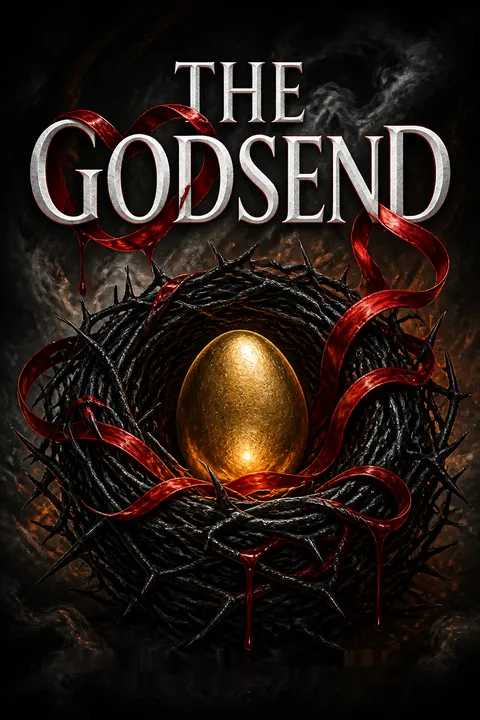
Jane unexpectedly appears at the Marlowes' home one evening, and as the night wears on, she goes into labor. With the phone out of order and the doctor delayed, Kate delivers Jane's baby—a beautiful, golden-haired girl. Jane shows no maternal affection, barely looking at her newborn. The next morning, Jane vanishes, abandoning the infant. The Marlowes are left with the baby, whom they name Bonnie. Kate, moved by compassion, insists on caring for her. The family's act of kindness, meant to be temporary, becomes permanent as Jane is never found. Bonnie's arrival is both a blessing and a curse, the "godsend" that will change everything.
Bonnie's Arrival
With Jane gone, the Marlowes foster Bonnie, and she quickly becomes the center of Kate's affections. The authorities are unable to trace Jane, and eventually, the Marlowes adopt Bonnie. She is a strikingly beautiful and precocious child, adored by all, especially Kate. Yet, Alan senses something unsettling beneath Bonnie's angelic exterior. The family adapts to her presence, but subtle tensions arise. Bonnie's voracious need for attention and affection begins to eclipse the other children. The Marlowes' act of charity, intended to heal, instead plants the seeds of discord and tragedy.
Tragedy Strikes Twice
The family's happiness is shattered when baby Matthew is found dead in his cot—an apparent case of sudden infant death syndrome. Kate is inconsolable, wracked with guilt and grief. The family struggles to recover, but before they can heal, another tragedy strikes: Davie drowns in the lake while trying to save Bonnie, who had wandered into the water. Alan is tormented by guilt and self-recrimination, but the deaths are ruled accidents. The once-happy home is now haunted by loss. Bonnie, the "godsend," remains untouched, her presence growing ever more central as the family's numbers dwindle.
The Family Fractures
Kate and Alan's marriage is strained by grief and the relentless demands of daily life. Kate clings fiercely to Bonnie, pouring all her maternal love into the adopted child. Alan, meanwhile, is troubled by Bonnie's odd detachment and the way tragedy seems to follow her. Sam, the remaining son, becomes increasingly fearful of Bonnie, claiming she hurts him and destroys his things. Alan dismisses Sam's complaints as jealousy, but a sense of unease grows. The family's unity is eroding, and Alan begins to question the nature of the child they have taken in.
Bonnie's Place in the Nest
As time passes, Bonnie's dominance in the household becomes more pronounced. She is adored by Kate and Lucy, but Sam's relationship with her deteriorates. He accuses Bonnie of cruelty, but his protests are ignored. On Bonnie's birthday, Sam refuses to sit near her, and the tension culminates in a violent altercation. Alan finds evidence that Bonnie has physically harmed Sam, but he cannot bring himself to believe the worst. The family's dynamic has shifted: Bonnie is now the favored child, and the others are pushed to the margins. The cuckoo in the nest has begun to assert her claim.
The Cuckoo's Shadow
After Sam's accidental death—he falls from his treehouse and breaks his neck—Alan is consumed by suspicion. He recalls the marks on Bonnie's wrists after Davie's drowning, the tuft of Sam's hair found in the bin, and Bonnie's uncanny strength. The pattern is undeniable: each tragedy has occurred when Bonnie was present, and each time, she has emerged unscathed. Alan's mind turns to the metaphor of the cuckoo, a parasitic bird that destroys its nestmates to claim all resources for itself. He begins to fear that Bonnie is not merely unlucky, but actively malevolent—a force of destruction in their midst.
Sam's Fear and Fall
Sam's fear of Bonnie intensifies in the weeks before his death. He becomes withdrawn, avoids Bonnie, and is plagued by nightmares. Alan, blinded by his own rationality, fails to protect his son. The day Sam dies, Alan finds him lying lifeless beneath the treehouse, Bonnie's hair ribbon clutched in his hand. The death is ruled an accident, but Alan's doubts grow. He is haunted by the possibility that Bonnie, the child he once pitied, is responsible for the deaths of all three boys. The family is now reduced to Alan, Kate, Lucy, and Bonnie—just as Bonnie seems to have always wanted.
The Village Turns Cold
After the third child's death, the village's sympathy curdles into suspicion and gossip. Anonymous letters and phone calls accuse the Marlowes of neglect or worse. Old friends avoid them, and the family becomes pariahs. Kate, unable to bear the scrutiny and isolation, insists they move to London. Alan reluctantly agrees, and they leave behind their beloved home. In the city, they hope for a fresh start, but the wounds of the past and the presence of Bonnie ensure that peace remains elusive.
London Exile
In London, the Marlowes struggle to rebuild their lives. Kate becomes increasingly protective of Bonnie, who now shares their bed every night, disrupting the couple's intimacy. Alan grows resentful and isolated, his suspicions about Bonnie festering. When Bonnie is exposed to mumps and Alan contracts the illness, he becomes sterile—a final blow to his hopes for another child. The realization that Bonnie's presence has coincided with the destruction of his family becomes inescapable. Alan's love for Kate and Lucy is now tainted by fear and despair.
Bonnie's Hold Tightens
Bonnie's grip on the family tightens as she becomes the sole focus of Kate's affection. Alan's attempts to distance himself from Bonnie are met with guilt and self-reproach. When Bonnie is temporarily sent to stay with a neighbor to avoid illness, Alan and Kate briefly reconnect, but Bonnie's return restores the old tensions. Alan's suspicions crystallize into certainty: Bonnie is the cause of their misfortunes. Yet, he is powerless to act, trapped by love, guilt, and the impossibility of proving the truth.
The Mumps and the Realization
Alan's bout with mumps leaves him sterile, and during his convalescence, he is tormented by memories and suspicions. He recalls the sequence of tragedies, Bonnie's uncanny strength, and her apparent delight in being the sole recipient of Kate's love. The metaphor of the cuckoo returns: Bonnie, like the parasitic bird, has systematically eliminated her rivals. Alan's rational mind rebels against the supernatural implications, but the evidence is overwhelming. He resolves that Bonnie must go, but Kate refuses to believe him, insisting on Bonnie's innocence.
The Swing Incident
During a trip to the park, Alan witnesses Bonnie deliberately attempt to kill Lucy by hurling a swing at her. Only Alan's shouted warning saves Lucy's life. The incident confirms Alan's worst fears: Bonnie is not merely unlucky, but actively murderous. He confronts Kate, who refuses to believe him, accusing him of madness and jealousy. The family is now irreparably divided, with Alan determined to protect Lucy at any cost, and Kate clinging to Bonnie as her last remaining child.
The Impossible Choice
Desperate to save Lucy, Alan takes her and flees to another city, demanding that Kate choose between her biological daughter and Bonnie. Kate is tormented by the choice, unable to abandon Bonnie, whom she has come to love as her own. Alan's ultimatum tears the family apart, and Kate suffers a miscarriage after a fall—an accident that Alan suspects was orchestrated by Bonnie. The family's tragedy is now complete: three sons dead, a lost baby, and a marriage in ruins.
Desperate Measures
Unable to convince the authorities to remove Bonnie, Alan contemplates killing her to save Lucy. He is tormented by the moral implications but sees no other way. When Bonnie returns from a trip with a neighbor, Alan prepares to act, but Kate's intervention and the return of both girls to the flat force a final confrontation. Alan's desperation reaches its peak as he races home, fearing for Lucy's life.
The Final Confrontation
Alan arrives home to find Lucy about to fall from a window, pushed by Bonnie. He is too late to save her—Lucy dies, and Alan, in a frenzy of grief and rage, attempts to strangle Bonnie. She fights back with unnatural strength, injuring Alan severely before neighbors intervene. Bonnie survives, and Alan is left physically and emotionally broken. Kate, shattered by Lucy's death and Alan's actions, leaves him. The family is destroyed, and Bonnie, the "godsend," remains an enigma—her true nature never fully explained.
Aftermath and Unanswered Questions
In the aftermath, Alan is left alone, maimed and haunted by guilt and loss. Kate, sedated and emotionally numb, prepares to leave him forever. Bonnie, now in the care of the authorities, returns one last time, seeking Kate's embrace. The novel ends with Alan uncertain whether Bonnie's smile is one of triumph or innocence. The question of her true nature—monster or victim—remains unresolved. The Marlowes' tragedy is complete, their lives destroyed by a force they could neither understand nor control.
Analysis
Bernard Taylor's The Godsend is a masterful exploration of the fragility of family, the limits of rationality, and the terror of the inexplicable. At its core, the novel is a psychological horror story, using the metaphor of the cuckoo to probe the darkest corners of parental fear and guilt. The ambiguity surrounding Bonnie's nature—whether she is a supernatural force or the projection of Alan's unraveling mind—invites multiple interpretations, making the novel as much a study of grief and denial as of evil. Taylor's narrative structure, with its unreliable narrator and circular, foreshadowed storytelling, immerses the reader in a world where tragedy feels both random and inevitable. The novel's refusal to provide clear answers—leaving Bonnie's true nature unresolved—heightens its unsettling power. Ultimately, The Godsend is a cautionary tale about the dangers of unchecked empathy, the destructiveness of denial, and the impossibility of protecting those we love from forces beyond our understanding. Its lessons resonate in a modern context, where the boundaries between innocence and malevolence, victim and perpetrator, remain as blurred and haunting as ever.
Review Summary
Reviews for The Godsend are largely positive, averaging 3.77/5. Readers praise Bernard Taylor's atmospheric tension, elegant prose, and well-developed characters. Many compare it favorably to The Bad Seed and The Omen, appreciating its restrained, psychological approach to the evil child trope. Common criticisms include predictability and a desire for more backstory on Bonnie's origins. The emotional focus on the parents' deterioration, rather than Bonnie herself, is frequently highlighted as a strength. The ending divides readers, though most find it appropriately bleak.
People Also Read


Characters
Alan Marlowe
Alan is the story's narrator, a sensitive, introspective illustrator whose love for his family is profound but ultimately powerless against the tragedies that befall them. His psychological journey is one of mounting suspicion, guilt, and despair. Initially rational and loving, Alan's worldview is shattered by the deaths of his children and the inexplicable presence of Bonnie. He becomes obsessed with the idea that Bonnie is a malevolent force, a cuckoo in the nest, and is driven to desperate measures to protect his surviving daughter. Alan's reliability as a narrator is questionable—his grief and paranoia color his perceptions, leaving the reader uncertain whether Bonnie is truly evil or a scapegoat for the family's misfortunes. His arc is one of tragic impotence, ending in isolation and self-doubt.
Kate Marlowe
Kate is Alan's wife, a former actress whose maternal instincts are fierce and all-consuming. She is the emotional center of the family, nurturing and protective, but her love becomes a double-edged sword. After the deaths of her sons, Kate pours all her affection into Bonnie, whom she adopts as her own. Her refusal to believe Alan's suspicions about Bonnie creates an unbridgeable rift in their marriage. Kate's psychological defense mechanisms—denial, displacement, and overcompensation—are her way of coping with unbearable loss. Ultimately, she is left bereft, her identity as a mother destroyed, and her relationship with Alan irreparably damaged.
Bonnie
Bonnie is the abandoned infant taken in by the Marlowes, growing into a beautiful, precocious, and eerily self-possessed child. She is the novel's central mystery: is she an innocent victim of circumstance, or a supernatural agent of destruction? Bonnie's behavior is ambiguous—she is alternately affectionate and cold, loving and cruel. Tragedy follows her, and her presence coincides with the deaths of the Marlowe children. The narrative hints at her being "a cuckoo," a parasitic force that eliminates rivals to claim all parental attention. Bonnie's true nature is never fully revealed, leaving her as both a symbol of evil and a tragic orphan.
Lucy Marlowe
Lucy is the eldest Marlowe child, sensitive, artistic, and deeply attached to her family. She is fiercely protective of Bonnie, whom she regards as a sister, and is largely unaware of the dangers surrounding her. Lucy's innocence and trust make her vulnerable, and she becomes the final target of Bonnie's destructive influence. Her death is the ultimate tragedy, shattering what remains of the family and leaving Alan and Kate with nothing.
Sam Marlowe
Sam is the Marlowes' second son, a lively and affectionate boy who becomes increasingly fearful of Bonnie. His complaints about her cruelty are dismissed as jealousy, and his isolation grows. Sam's death—ruled an accident—marks the point at which Alan's suspicions crystallize. Sam represents the voiceless victim, unable to protect himself or make himself believed.
Davie Marlowe
Davie is the Marlowes' third child, a nature-loving, inquisitive boy. He drowns while trying to save Bonnie, a death that is both heroic and senseless. Davie's loss deepens the family's grief and accelerates their unraveling. His fate is emblematic of the randomness—or malevolence—of the tragedies that befall the Marlowes.
Matthew Marlowe
Matthew is the youngest Marlowe child, a baby whose sudden death in his cot is the first blow to the family's happiness. His loss is attributed to natural causes, but in retrospect, Alan suspects Bonnie's involvement. Matthew's death sets the stage for the subsequent tragedies and the family's descent into suspicion and despair.
Jane Bryant
Jane is the enigmatic woman who abandons Bonnie with the Marlowes. Her background is obscure—she claims to have had several children, none of whom are with her. Jane's detachment and lack of maternal instinct are unsettling, and her disappearance leaves the Marlowes with a child they do not understand. Jane is the catalyst for the novel's events, her brief presence unleashing a force that will destroy the family.
Mrs. Taverner
Mrs. Taverner is the Marlowes' London neighbor, a practical and kind woman who temporarily cares for Bonnie. She provides a brief respite for Alan and Kate, but her involvement ultimately cannot prevent the unfolding tragedy. Mrs. Taverner represents the outside world's inability to comprehend or intervene in the Marlowes' private nightmare.
Social Worker (Mrs. Warner)
Mrs. Warner is the social worker Alan approaches in desperation, seeking to have Bonnie removed from the family. She is sympathetic but bound by bureaucracy and unable to help. Her presence underscores the limits of rational intervention in the face of inexplicable evil or psychological breakdown.
Plot Devices
The Cuckoo Metaphor
The central plot device is the metaphor of the cuckoo—a bird that lays its egg in another's nest, whose chick pushes out the host's offspring to claim all resources. Bonnie is repeatedly likened to a cuckoo, her arrival coinciding with the systematic elimination of the Marlowe children. This device operates on both literal and symbolic levels, suggesting both supernatural malevolence and psychological projection. The metaphor is reinforced by Alan's growing obsession and the narrative's structure, which mirrors the gradual displacement and destruction of the family.
Unreliable Narration
The novel is told entirely from Alan's point of view, and his reliability is increasingly in question as grief, guilt, and paranoia take hold. The reader is forced to interpret events through Alan's eyes, never certain whether Bonnie is truly evil or whether Alan is succumbing to delusion. This ambiguity is a key plot device, sustaining suspense and horror while inviting psychological analysis.
Foreshadowing and Circular Structure
From the opening pages, Alan's narration is suffused with a sense of foreboding and loss. The story is told in retrospect, with frequent references to the impossibility of escaping the past. The narrative circles back on itself, each tragedy echoing the last, reinforcing the sense of inevitability and entrapment. This structure heightens the emotional impact and underscores the theme of inescapable fate.
Symbolism of Innocence and Evil
Bonnie's angelic appearance and the family's initial happiness are contrasted with the unfolding horror. Objects such as the doll, the swing, and the hair ribbon become charged with symbolic meaning, representing both innocence and violence. The juxtaposition of the ordinary and the monstrous is a recurring device, blurring the line between the domestic and the uncanny.

Download PDF
Download EPUB
.epub digital book format is ideal for reading ebooks on phones, tablets, and e-readers.








































