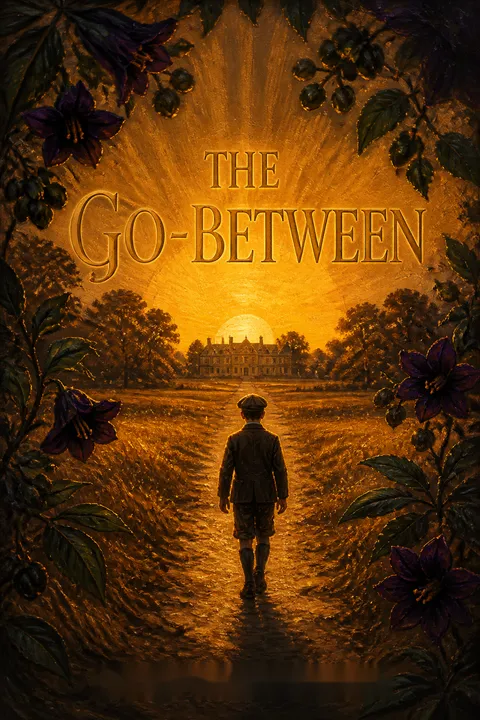

Plot Summary
The Diary's Secret Power
Leo Colston, a sensitive, imaginative twelve-year-old, discovers his old diary, unlocking memories of his childhood. The diary, a gift from his mother, becomes a talisman of self-worth and a tool for social survival at school. After being bullied for his pretentious vocabulary, Leo crafts "curses" in his diary, which coincidentally coincide with his tormentors' misfortunes. This victory elevates his status among peers, giving him a taste of power and the intoxicating sense of being special. The episode shapes Leo's belief in the potency of words and magic, and his longing for acceptance. The diary's faded pages foreshadow the pivotal summer of 1900, when Leo's innocence and faith in his own agency will be tested in ways he cannot yet imagine.
Arrival at Brandham Hall
Invited by his school friend Marcus Maudsley, Leo travels to Brandham Hall, a grand country estate in Norfolk. The Hall is a world apart from his modest home, filled with rituals, servants, and the subtle codes of the English upper class. Leo, awkward in his heavy clothes and uncertain of etiquette, is both fascinated and intimidated by the Maudsleys and their guests. He is especially drawn to Marian, Marcus's beautiful, older sister, and to the sense of possibility and danger that pervades the house. The summer's oppressive heat mirrors Leo's growing discomfort and the simmering tensions beneath the surface of Brandham's golden age.
Heatwave and Social Awkwardness
The relentless heat becomes a character in itself, transforming the landscape and intensifying emotions. Leo's inappropriate winter clothes make him the target of gentle mockery, deepening his sense of being an outsider. Marian's kindness—taking him shopping for cooler clothes—offers relief and a sense of transformation. Yet, Leo remains acutely aware of his social inferiority and the invisible barriers that separate him from the effortless confidence of the Maudsleys and their friends. The heat, both liberating and oppressive, foreshadows the passions and transgressions that will soon engulf him.
Marian's Transforming Kindness
Marian's attention flatters and confuses Leo. She orchestrates his metamorphosis, buying him new clothes and drawing him into her orbit. For the first time, Leo feels seen and valued, basking in the glow of Marian's approval. The shopping trip to Norwich is a revelation, awakening in Leo a sense of self-worth and the thrill of being chosen. Yet, beneath the surface, Marian's motives are ambiguous, and Leo's role as her confidant and helper is about to take on a more troubling dimension. The boundaries between affection, manipulation, and complicity begin to blur.
The Messenger's Burden
Leo is enlisted by Marian and Ted Burgess, a local tenant farmer, to carry secret messages between them. At first, he is thrilled by the intrigue and the sense of importance it brings. The clandestine errands, conducted under the guise of innocent walks and games, make Leo feel indispensable. But the secrecy weighs on him, especially as he senses the adult nature of the relationship he is facilitating. The power dynamic shifts: Leo is both used and needed, his innocence exploited by those who should protect it. The role of messenger becomes a moral and emotional burden, entangling Leo in a web of loyalty, guilt, and confusion.
The Lovers' Hidden World
Through his errands, Leo glimpses the intensity of Marian and Ted's forbidden love. Their meetings are charged with urgency and risk, crossing boundaries of class and propriety. Leo's imagination struggles to comprehend the physical and emotional realities he is helping to sustain. The adult world, once a realm of mystery and aspiration, now appears dangerous and destructive. Leo's complicity in the affair isolates him from both children and adults, leaving him vulnerable and exposed. The lovers' world is intoxicating but ultimately alien, and Leo's longing for inclusion turns to dread.
Games of Class and Innocence
The annual cricket match between the Hall and the village becomes a microcosm of the social order and its tensions. Leo, made twelfth man, is both participant and outsider, his catch of Ted Burgess a moment of triumph and betrayal. The game is more than sport: it is a ritual battle between tradition and rebellion, privilege and desire. The adults' expectations and the children's games intersect, but the rules are shifting. Leo's actions, shaped by innocence and the desire to please, have consequences he cannot foresee. The fragile balance of Brandham Hall is about to be shattered.
The Cricket Match and Betrayal
Leo's unexpected catch of Ted during the cricket match is celebrated as a heroic act, but it also marks a turning point. Ted's defeat on the field foreshadows his vulnerability off it. The match, followed by a concert where Leo sings and Marian accompanies, is the last communal celebration before the unraveling. The boundaries between play and reality, child and adult, are dissolving. Leo's sense of agency is at its peak, but the seeds of catastrophe have been sown. The innocence of the summer is irretrievably lost.
The Spell of Belladonna
Haunted by the escalating risks of Marian and Ted's affair, Leo attempts to break their bond through a symbolic act: uprooting the deadly nightshade (belladonna) he associates with Marian's dangerous allure. Drawing on his childhood belief in spells and curses, Leo hopes to restore order and protect those he loves. But his intervention is both naïve and fateful, a child's desperate attempt to control forces beyond his understanding. The act of destruction is cathartic but also self-destructive, marking the end of Leo's innocence and the beginning of his exile from the world of feeling.
Catastrophe in the Outhouse
The climax arrives when Mrs. Maudsley, suspecting Marian's absence, forces Leo to reveal the lovers' hiding place. Together, they discover Marian and Ted in a compromising embrace in the outhouse. The scene is traumatic: Mrs. Maudsley's screams, Leo's horror, and the shattering of all illusions. Ted, overwhelmed by shame and despair, returns home and takes his own life. Leo, traumatized and guilt-ridden, collapses under the weight of what he has witnessed and unwittingly caused. The private tragedy is set against the backdrop of a world on the brink of change, the golden age irreparably broken.
Aftermath and Exile
Leo's breakdown and subsequent convalescence are marked by silence and repression. He cannot speak of what happened, and the adults collude in burying the scandal. The episode becomes the defining trauma of Leo's life, shaping his relationships, his sense of self, and his capacity for intimacy. The world of Brandham Hall is lost to him forever, and he retreats into a life of facts and detachment. The cost of knowledge is exile—from others, from feeling, and from the self he once was.
The Weight of Memory
As an adult, Leo lives a life of quiet isolation, haunted by the events of 1900. The past is a foreign country, but its wounds remain fresh. The diary, the spells, the betrayals—all are preserved in memory, shaping Leo's identity and his inability to connect with others. The trauma of Brandham Hall becomes both a curse and a defining story, the source of his misanthropy and his longing for lost innocence. The burden of being the go-between is never lifted; Leo's life is a testament to the enduring power of memory and regret.
Return to Brandham
Fifty years later, Leo returns to Brandham, seeking closure and understanding. The Hall is changed, the people gone or transformed by time. He meets Marian, now Lady Trimingham, and her grandson, the new Viscount. The encounter is fraught with ambiguity: Marian's memories are selective, her self-justification unshaken. Leo is asked to act as go-between once more, to help lift the "curse" that lingers over the family. The past is not dead; it continues to shape the present, demanding recognition and reconciliation.
The Curse and the Cure
In his final meeting with Marian, Leo is confronted with competing narratives: Marian's romanticized version of the past and his own painful memories. She urges him to absolve her and her grandson, to break the spell of shame and secrecy. Leo is torn between compassion and skepticism, recognizing both the necessity and the impossibility of healing old wounds. The act of storytelling becomes an attempt at exorcism, a way to transform private pain into shared understanding. The curse of the go-between is both acknowledged and, perhaps, partially lifted.
The Enduring Go-Between
Leo realizes that his destiny is to be the go-between, forever caught between worlds, never fully belonging to any. His character is his fate: the intermediary, the observer, the one who carries messages but is denied fulfillment. The story ends with Leo's acceptance of his role and the recognition that the past, with all its pain and beauty, cannot be undone. The go-between endures, bearing witness to the costs of innocence betrayed and the enduring need for connection, forgiveness, and understanding.
The Past's Unforgiving Grip
The novel closes with Leo's acknowledgment that the past is both irretrievable and inescapable. The events of that summer have shaped not only his life but the lives of all involved. The golden age is gone, but its lessons remain: the dangers of secrecy, the costs of transgression, and the enduring power of love and loss. The go-between's story is a warning and a lament, a testament to the ways in which the past continues to haunt the present, demanding reckoning and, perhaps, a measure of peace.
Analysis
L.P. Hartley's The Go-Between is a masterful meditation on innocence, memory, and the irrevocable consequences of crossing boundaries—social, emotional, and moral. Through the eyes of Leo Colston, the novel explores the seductive power of the past and the ways in which childhood trauma can shape a lifetime. The story is both a nostalgic evocation of a vanished world and a devastating critique of its hypocrisies and cruelties. Hartley's use of the go-between as both plot device and metaphor allows for a nuanced exploration of complicity, agency, and the costs of knowledge. The novel's rich symbolism—the heat, the belladonna, the rituals of the Hall—deepens its psychological complexity, while its framing narrative foregrounds the unreliability and necessity of memory. In a modern context, The Go-Between resonates as a cautionary tale about the dangers of secrecy, the destructiveness of rigid social codes, and the enduring need for empathy and understanding. Its lessons are timeless: innocence, once lost, cannot be regained; the past, however foreign, continues to shape the present; and the wounds of betrayal, both personal and collective, demand reckoning and, if possible, forgiveness.
Review Summary
Reviews of The Go-Between are overwhelmingly positive, averaging 4.01/5. Readers consistently praise Hartley's evocative prose and the novel's famous opening line. Many highlight the masterful portrayal of young Leo's innocence against adult manipulation, the exploration of Edwardian class tensions, and the symbolism woven throughout the narrative. The oppressive summer heat serves as a powerful atmospheric device. Several reviewers draw comparisons to Ian McEwan's Atonement and reference the acclaimed 1971 Losey film adaptation. Critics note occasional pacing issues, with some finding Leo's naivety frustrating.
People Also Read


Characters
Leo Colston
Leo is the novel's narrator and central consciousness, a boy on the cusp of adolescence whose longing for acceptance and significance makes him vulnerable to manipulation. His outsider status—socially, emotionally, and imaginatively—shapes his experience at Brandham Hall. Leo's acute sensitivity and belief in magic render him both a victim and an agent of the unfolding tragedy. As the go-between, he is both empowered and exploited, his innocence weaponized by the adults around him. The trauma of his role leaves him emotionally crippled, unable to form deep connections or escape the grip of the past. Leo's journey is one of self-discovery, loss, and the painful acquisition of knowledge, culminating in a lifelong struggle to reconcile memory and identity.
Marian Maudsley / Lady Trimingham
Marian is the beautiful, intelligent daughter of the Maudsley family, whose charm and vivacity captivate Leo. Torn between duty (an advantageous marriage to Lord Trimingham) and passion (her affair with Ted Burgess), Marian embodies the tensions of her era: class, gender, and the awakening of desire. She manipulates Leo's affection and innocence to serve her own ends, yet is also capable of genuine kindness and vulnerability. Marian's self-image is romantic and self-exculpatory; even in old age, she reframes the past to suit her need for absolution. Her relationship with Leo is both nurturing and exploitative, leaving him with a legacy of confusion, longing, and unresolved guilt.
Ted Burgess
Ted is a tenant farmer, physically robust and emotionally intense, whose affair with Marian defies the rigid social hierarchy of Edwardian England. To Leo, Ted is both a figure of fascination and fear: a symbol of adult sexuality, working-class vitality, and forbidden desire. Ted's reliance on Leo as a messenger is both a mark of trust and a form of exploitation. Ultimately, Ted is destroyed by the exposure of his love for Marian, his suicide a testament to the destructive power of secrecy, shame, and social boundaries. Ted's fate haunts Leo, embodying the costs of innocence betrayed and the dangers of crossing forbidden lines.
Marcus Maudsley
Marcus is Leo's school friend and the youngest Maudsley child, a boy more attuned to the realities of class and social codes than Leo. His friendship offers Leo companionship and a measure of protection, but Marcus is ultimately limited by his own conventionality and loyalty to family. He serves as a foil to Leo's imaginative, emotional nature, embodying the pragmatic, rule-bound ethos of his class. Marcus's role in the unfolding tragedy is largely passive, but his presence underscores the isolation and vulnerability of the outsider.
Mrs. Maudsley
Mrs. Maudsley is the commanding presence at Brandham Hall, a woman of intelligence, will, and emotional reserve. She orchestrates the social life of the estate and enforces its codes of conduct, both overtly and through subtle manipulation. Her relationship with Marian is fraught with unspoken expectations and power struggles. Mrs. Maudsley's discovery of the lovers is the catalyst for catastrophe, her screams signaling the collapse of the old order. She embodies the repressive forces of class, propriety, and maternal authority, yet is also a figure of pathos, undone by the very system she upholds.
Lord Trimingham (Hugh)
Lord Trimingham is the local nobleman, disfigured by war but dignified and kind. He represents the values of the old order: duty, restraint, and the maintenance of social boundaries. His courtship of Marian is both a personal desire and a family expectation. Trimingham's interactions with Leo are marked by condescension and genuine warmth; he is both a role model and a symbol of the unattainable. His inability to perceive or prevent the tragedy unfolding around him highlights the limitations of his class and the fragility of the world he represents.
Mr. Maudsley
Mr. Maudsley is a shadowy figure, more often felt than seen, whose authority is both pervasive and impersonal. He embodies the financial and social power that sustains Brandham Hall, yet is emotionally remote from his family. His presence reinforces the rigid hierarchies and expectations that shape the lives of those around him. Mr. Maudsley's role in the tragedy is indirect but significant, a reminder of the impersonal forces—money, status, tradition—that govern individual destinies.
Denys Maudsley
Denys, Marian's brother, is a product of his class: confident, entitled, and largely oblivious to the emotional currents around him. He participates in the rituals of the Hall—cricket, parties, socializing—without questioning their meaning or consequences. Denys's interactions with Leo are marked by casual condescension and occasional kindness, but he remains fundamentally untouched by the events that devastate others. His character highlights the insularity and complacency of the privileged.
Marcus's Mother (Leo's Mother)
Leo's widowed mother is a figure of warmth and anxiety, devoted to her son but unable to shield him from the dangers of the wider world. Her letters and advice reflect both her love and her social insecurity. She represents the values of the lower middle class: propriety, caution, and a longing for upward mobility. Her inability to understand or intervene in Leo's ordeal underscores the isolation of the child and the limits of parental protection.
The Adult Leo
The adult Leo, narrator of the novel, is a man shaped—and scarred—by the events of his thirteenth summer. His life is marked by emotional detachment, a retreat into facts and routines, and an inability to form lasting relationships. The act of remembering and retelling his story is both a compulsion and a form of self-exorcism. The adult Leo's voice is reflective, ironic, and suffused with longing for lost innocence and connection. His journey is one of reckoning with the past, seeking understanding, and, perhaps, a measure of forgiveness.
Plot Devices
Framing Narrative and Memory
The novel is structured as a recollection by the adult Leo, whose discovery of his childhood diary triggers a flood of memories. The framing device allows for a dual perspective: the immediacy of the child's experience and the reflective, often ironic, commentary of the adult. This structure foregrounds the unreliability of memory, the selective nature of recollection, and the ways in which the past continues to shape identity. The motif of the diary, with its blank pages and coded entries, symbolizes both the allure and the dangers of uncovering buried truths.
The Go-Between as Plot Engine
Leo's function as the go-between is the central plot device, driving the action and shaping the emotional arc of the story. His errands are both literal and symbolic: he is the conduit for forbidden love, the unwitting agent of betrayal, and the sacrificial victim of adult desires. The device allows for the exploration of themes of innocence, complicity, and the costs of knowledge. Leo's role is both empowering and destructive, granting him a sense of agency while exposing him to trauma and guilt.
Symbolism and Foreshadowing
The oppressive heat of the summer is a recurring symbol, mirroring the intensifying passions and the breakdown of social order. The deadly nightshade (belladonna) represents both sexual allure and mortal danger, its destruction paralleling the collapse of innocence and the onset of catastrophe. The motif of spells and curses, drawn from Leo's childhood games, foreshadows the tragic consequences of meddling in forces beyond one's understanding. The novel's rich symbolism deepens its psychological resonance and underscores the inevitability of loss.
Class and Social Codes
The rigid hierarchies of Edwardian England are both backdrop and engine of the plot. The affair between Marian and Ted is not only a personal transgression but a violation of the social order, with consequences that extend beyond the individuals involved. The rituals of the Hall—cricket, parties, prayers—serve to reinforce boundaries and mask underlying tensions. The novel's exploration of class is nuanced and unsparing, revealing both the allure and the destructiveness of privilege.
Foreshadowing and Irony
From the opening line—"The past is a foreign country: they do things differently there"—the novel is suffused with a sense of impending doom. The adult Leo's commentary is laced with irony, highlighting the gap between the child's innocence and the adult's knowledge. The use of foreshadowing creates a sense of inevitability, while the frequent misreadings and misunderstandings of the characters underscore the limits of perception and the dangers of secrecy.
Download PDF
Download EPUB
.epub digital book format is ideal for reading ebooks on phones, tablets, and e-readers.








































