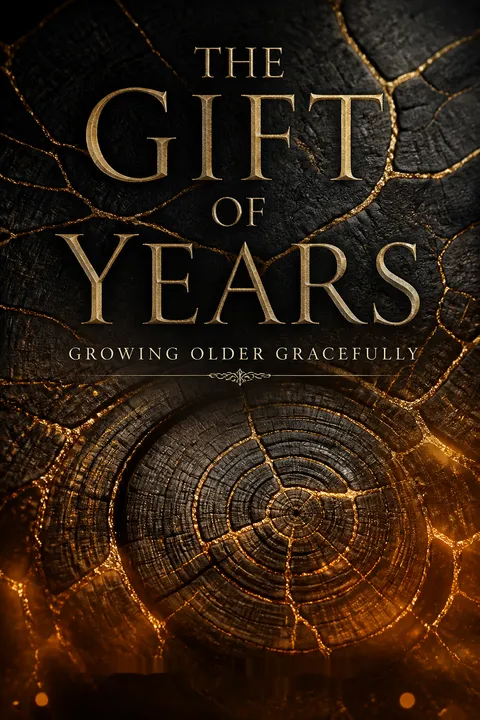

Key Takeaways
1. Embrace Aging as a Purposeful New Stage of Life
The gift of years comes to many more than realize that these later years are gift, not burden.
A new beginning. Aging is not merely an end but a distinct, purposeful phase of human growth, offering unique challenges and opportunities for maturity and spiritual development. It's a time to become more than we are, to be all that we can be, regardless of our chronological age or societal standing. This perspective shifts aging from a dreaded decline to a summit-time of life.
Beyond physical dimensions. While physical changes are inevitable, the true essence of aging lies in our mental and spiritual attitudes towards these challenges. Gerontology, the study of aging, often overlooks this spiritual dimension, which is crucial for evaluating the meaning of life itself. As physical capacities may diminish, spiritual development often increases, providing resources for a long-term evaluation of life's nature.
Reclaiming purpose. Many people spend nearly as many years out of the workforce as in it, making it essential to consider what these later years hold. This period is not one of purposelessness; rather, the purpose of life may only now become truly visible. It's about living into the values offered at every stage of life, letting go of fantasies of eternal youth, and finding the beauty in aging well.
2. Transform Regret into Growth and Self-Acceptance
Regret is a temptation. It entices us to lust for what never was in the past rather than to bring new energy to our changing present.
The ghost of aging. Regret often appears as wisdom, prompting us to question past choices and lament missed opportunities. This backward-looking exercise can be exhausting and dangerous, leading to depression and souring the present. It creates a false life of "what could have been," diverting energy from what is.
Sand trap of the soul. Dwelling on past choices, or the roads not taken, can erode self-esteem and dim the soul's light. Regret, however, is not true insight; it fails to acknowledge the myriad paths to a fulfilling life, each unique. It's a misuse of the aging process, which should instead foster comfort with the self we are, not mourn what we are not.
A step-over point. While regretting life choices can be destructive, regretting past failures (like harming others or violating personal truths) signifies growth and enlightenment. These "twinges of regret" invite us to revisit our ideals and motives, helping us understand why we are who we are. This process, if faced head-on, can bring us to a new, more present way of living.
3. Discover Profound Meaning Beyond Societal Productivity
What am I when I am not what I used to do? And does anybody really care?
Beyond the numbers. In a society obsessed with speed, busyness, and quantifiable achievements, meaning often gets lost. We are reduced to numbers—house, phone, graduation year, job count—none of which capture our thoughts, beliefs, or the quality of our inner lives. This external validation leads to a feeling of being a "cog on a gear," where our worth is tied to what we do and own.
The stripping away. Retirement or the end of a professional role can trigger an existential crisis: "What am I when I am no longer young enough to strive for a position, to garner another trophy, to get another raise?" This stripping away of titles and perks leaves us face-to-face with our true selves, often revealing a fear that there isn't one, or that our identity was solely tied to external roles.
Reclaiming inner substance. The challenge is to avoid the hollowness that comes when external accoutrements disappear. Meaning, the substance of our being, must be found within. This involves asking profound questions:
- What gets me out of bed in the morning now?
- What do others, and God, see in me now?
- What have I prepared myself to be beyond what I did?
The answer lies in being caring, interested, honest, spiritual, and involved in the important things of life, offering ideas and reflection to a world that desperately needs them.
4. Confront and Transcend the Fear of Physical Decline
It is not the getting older that is difficult. It is the fear of getting older that plagues us.
Wasteland or flowering? Society often portrays old age as a wasteland, focusing on physical beauty and public achievement, rather than a gateway to spiritual flowering. This fear shadows us, warning of diminishing agility and strength. The first pains or physical changes can trigger an insidious realization that the self we knew is deteriorating, leading to anxiety about future care and purpose.
Reality vs. perception. Despite common fears, rates of disability are declining, and mental clarity often remains until the very end of life. Most decrepitude is confined to the last few months. We have a lot of life left to live, and the crucial question is how we choose to live it: as a dark, dying time, or as a new stage meant to develop maturity and mellowness, making us necessary to those around us.
A call for new beginnings. This fear, ironically, is a sign of being very much alive. It calls for new beginnings, urging us to find new passions and interests if old physical activities become difficult. Our moral obligation is to stay as well as we can, remain active, and enrich others' lives. Our spiritual obligation is to age well, providing a model for others, and understanding that we are far more than our physical bodies.
5. Challenge Ageism by Redefining Elder Authority and Value
Old age, especially an honored old age, has so great authority, that this is of more value than all the pleasure of youth.
The obsolescence trap. Modern society, driven by newness and technological advancement, often renders anything "old" obsolete, including people. This culture struggles to value ripened experience, preferring new information over wisdom gained through years. This leads to the marginalization of older persons, who are often stereotyped as useless, incompetent, or "away with the fairies."
Beyond stereotypes. These negative portrayals are untrue; older individuals are often mentally sharp, active, and deeply engaged in their communities. They are the "real thing," proving that age does not equate to bumbling or muttering. Their continued contributions—volunteering, consulting, leading—demonstrate their social vitality and necessity. We, the elders, are the icons of aging for younger generations, showing them a path to a full life.
The authority of experience. Unlike many cultures that revere elders as shamans, tzaddiks, or bodhisattvas, modern society lacks a recognized role for this figure of wisdom. Yet, elders possess the authority of:
- Experience: Bringing historical context to current situations.
- Survival: Instilling hope that challenges can be overcome.
- Persistence: Insisting that quitting is not the answer.
This spiritual strength is our responsibility: to evaluate, cajole, and guide, ensuring that our accumulated insight makes the world better for those who follow.
6. Cultivate Joy and Freedom Through New Experiences
But if we decide to live this new, unscripted time with joy, then life will come pouring into us, almost more fully than we can sometimes bear.
Unscripted time. The later years offer a unique liberation from the expectations, deadlines, and pressures of middle age. This newfound space and time, however, can be daunting for those accustomed to a productivity-centered life. The worry of "what do we do now?" can turn retirement into personal agony, leading to bitterness if not approached with intention.
Embracing the unscripted. Choosing joy means allowing life to pour in, often more fully than imagined. This period is for rejoicing in the past, acknowledging the sweetness of previous life stages, and reveling in present possibilities. It's a time to:
- Live in gratitude for past experiences and relationships.
- Savor insights and warmth from memories.
- Be proud of accomplishments and growth.
These experiences are not past; they live within us, crying out to be celebrated.
Newfound immunity. This stage offers the joy of immunity from propriety, allowing us to decide what we really want to do, not what we must or should. We can pursue new interests, reconnect with family, engage with global issues, or simply appreciate nature. The key is conscious action, choosing to begin a new kind of life that is life-giving and a gift to the world, rather than succumbing to bitterness or enforced uselessness.
7. Embrace Lifelong Learning for Mental and Spiritual Vitality
Lifelong learning, the study says, makes the difference between healthy and unhealthy aging.
Shattering myths. The myth that older people cannot learn, or that mental decline is inevitable, is a dangerous one. While physical changes occur, neurological research shows that old brains, though physically smaller, are no less intellectually competent and can even be better in terms of reflection and creativity. Anomia (forgetting names) is common across adult ages, and the brain prioritizes emotionally significant information.
Active vs. passive aging. The danger lies in not feeding this mental growth, leading to atrophy and depression. There are two approaches to aging:
- Passive aging: Succumbing to the creeping paralysis of the soul, seeing life as slow death.
- Active aging: Cooperating with physical changes by adjusting pace, compensating for losses (e.g., reading more, listening to tapes), and staying physically active.
Active aging means living life to the full, no matter how differently.
A summons to renewal. Agatha Christie, still writing bestsellers in her eighties, exemplifies the link between education and renewal. Lifelong learning is crucial for satisfying aging, making us interesting and valuable to others. It prevents "petrifaction" or rigidity of soul. This capacity for ongoing learning is not an idle gift; it's essential for a generation whose responsibility is to bring the wisdom of years to contemporary questions, whether by becoming experts, learning new skills, or deepening spiritual knowledge.
8. Practice Divestment to Uncover Inner Wealth
When physical eyesight declines, spiritual eyesight increases.
The relentless cycle. Life follows a cycle of accumulation in early years and divestment in later years. Early life is marked by milestones of "getting"—education, job, possessions, career, family. Success is measured by these external markers. However, the "great crossover moment" arrives when the time for heaping up is over, and the question shifts to how we measure success and what to do with what we've gathered.
Spiritual quest. Major spiritual traditions emphasize a period of divestment, a renunciation of external things to embark on a spiritual quest. This is the time to evaluate life's meaning, the spiritual versus the material, and to strip away accruals to focus on the "birthing of the person within." We travel light, shaping the soul rather than accumulating more.
Beyond external image. As we let go of the large desk, the multiple sets of dishes, the big house, we become less defined by our outer image and more by our inner selves. The "relaxed grasp" is crucial; those who cling to possessions, believing "what we have is what we are," suffer agony when these things are gone. Divestment frees us to furnish the soul with poetry, beauty, friendships, and adventure, appreciating that "what's inside of us, not what's outside of us, that counts."
9. Nurture Relationships and Community Through Outreach
At its core, life is not about things, it is about relationships.
The island of age. Aging often brings separation from humanity, as loved ones disappear and the world around us grows younger and less familiar. This creates a profound loneliness, a feeling of being forgotten or sequestered from the act of living. The death of spouses and friends takes away not just companionship, but memories, a sense of self, and community, leaving an insatiable emptiness.
Two temptations. When relationships are lost, two temptations arise:
- Living in the past: Dwelling exclusively among old photographs, condemning ourselves to a world long gone.
- Emotional insulation: Avoiding new relationships to prevent further vulnerability, leading to emotional death before physical death.
These temptations prevent us from engaging with the present and risking new connections.
Alchemy of life. Relationships are the "alchemy of life," turning dailiness into gold and making human community real. To overcome loneliness, we must actively reach out, make new friends, and engage in new activities. Generativity—giving ourselves to the needs of the world—is the most important function of old age. Widening our social circle by "helping someone else" is key to successful aging, transforming isolation into a network of vital connections.
10. Share Your Life's Stories as a Source of Wisdom
Old age is a treasure-house of history—personal history, family history, national history, world history.
The taproot of society. Elders are the taproot of society, possessing deep knowledge of history, ideas, and the true meaning of concepts like family, freedom, and citizenship. More importantly, they have the ability and calling to pass these stories on. Without this "tale-telling," younger generations lack character, tradition, and the living memory of their origins.
Catechism of the family. Family tales, shared during wakes, holidays, or by the fire, serve as the catechism of the family, imparting life lessons about war, work, marriage, and the strength to endure. These stories, told with conviction by those who bear their truth within their own bodies, authenticate the past and guide the future. They reveal that:
- God is both good and a judge.
- War can be both horrible and glorious.
- Money doesn't guarantee a good life.
- Self-reliance is ultimately crucial.
Beyond biography. The burden of tale-telling is to avoid the temptation of staying "forever young" by withholding these stories. The blessing is the awareness of having fulfilled a duty to life, distilling experiences into useful lessons for younger generations. Elders are meant to be the prophets, compass, and truth-tellers of society, using their wisdom to evaluate present choices from a historical perspective and to question whether what can be done, should be done.
11. Live Fully in the Present Moment with Heightened Awareness
Moments are not lived casually once we approach old age. Now, they are savored.
The spirit of play. After years of routine, the spirit of play can diminish, and the sense of possibility can wane. However, age is meant for the revival of the spirit, allowing us to play with ideas, projects, and friends. The gift of growing older is that time becomes more meaningful, a constant companion, awakening us to the power of the immediate.
Savoring the now. As we become aware of the finite nature of time, moments are no longer lived casually but savored, milked, and relished. The present becomes everything there is to life, demanding full, unadulterated sensuousness. This heightened awareness allows us to:
- Notice the subtle beauty in everyday things (a baby's smile, water lapping the beach).
- Address loved ones' pain before it's too late.
- Appreciate the simple act of smelling fresh bread or feeling the wind.
Urgency and appreciation. The present brings an urgency that drives us to do more, to be more. We move through time leaving our mark, attuned to the contributions of those who came before us. This realization that "no one lives for nothing" transforms our perspective. The present constantly reminds us of the value of the obvious, that we may not pass this way again, and that each experience is meant to be lived fully.
12. Cultivate Faith and Forgiveness for Inner Serenity
It is not they who have many possessions who are rich but they who have no needs.
Fear of the unknown. We often fear both death and old age, accepting the latter reluctantly because we dread the former. The darkness surrounding death—the unknown, the aloneness, the absolute surrender—arrests our thoughts and feelings. This fear stems from the awareness that despite our competence in life, a moment will come over which we have no control.
Softening of heart. Age brings a softening of heart, born not just of virtue but of experience. We learn that no one is perfect, and life is a series of exceptions. This knowledge, gained from our own failings and need for mercy, compels us to reckon with others and ourselves more kindly. The "hard-won truths" of life reveal that we have much to forgive and much to be forgiven for.
The therapy of old age. Unresolved pain and bitterness, often festering for years, can only be healed by forgiveness. This act is more important to the forgiver than the forgiven, as it frees us from the burden of old anger and recrimination. Forgiveness allows us to:
- Wipe the slate clean and heal.
- Reconcile with our conscience.
- Accept our imperfections and those of others.
- Value exceptions over rigid rules.
This spiritual journey in later life is about letting go of control, trusting in a life-giving God, and finding peace with ourselves and the universe.
Review Summary
The Gift of Years receives mixed but largely positive reviews (4.22/5 stars). Readers appreciate Chittister's meditative essays on aging, organized around topics like joy, regret, forgiveness, and meaning. Many find the book transformative, especially those nearing or in retirement, praising its message that later years offer opportunities for growth rather than decline. Each chapter concludes with "burden" and "blessing" perspectives. Critics note repetitiveness and assumptions that don't resonate universally. Some secular readers find it too religious, while others appreciate its broad spiritual approach beyond specifically Catholic themes. The short chapters make it ideal for contemplative reading.
People Also Read


About the Author
Other books by Joan D. Chittister

Download PDF
Download EPUB
.epub digital book format is ideal for reading ebooks on phones, tablets, and e-readers.








































