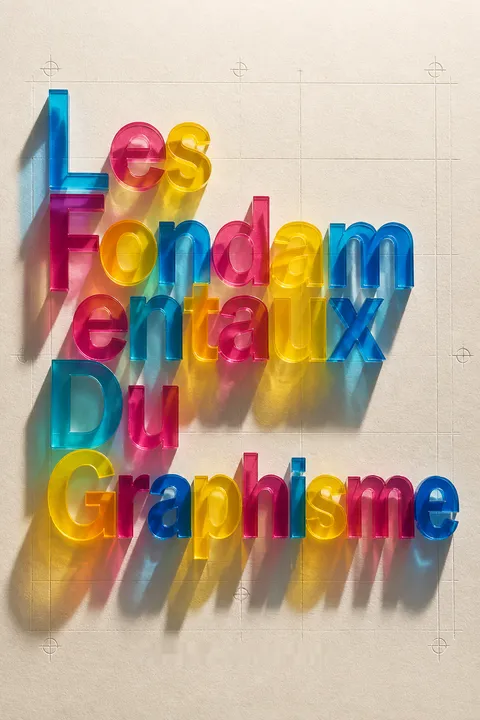

Key Takeaways
1. Graphic Design: A Multifunctional Visual Discipline
Graphic design is a broad discipline that encompasses many different aspects and elements.
Evolving role. Graphic design, once rooted in the printing and publishing trades, has transformed into a dynamic, multifunctional discipline. Initially, print production involved numerous specialists—typesetters, scanners, printers—but technological advancements, especially in the digital age, have consolidated many of these roles. Today, a graphic designer often manages the entire creative process, from concept generation to final production.
Beyond aesthetics. This evolution means graphic design is far more than just making things look good; it's about imposing order and structure on content to facilitate clear communication. Designers manipulate elements—philosophical, aesthetic, sensory, emotional, or political—to ensure a message is received and understood by its target audience. The discipline now integrates art direction, typography, page layout, and information technology, reflecting its expanded scope.
Fragmented landscape. The vastness of the field has led to a fragmented landscape where designers often specialize. Whether creating a physical space for a fragrance launch or designing a responsive website, the core principle remains: translating product values or ideas into engaging, effective visual communication. This demands versatility and the ability to collaborate across various creative and technical domains.
2. The Designer's Core Role: Problem-Solver and Aesthetic Orchestrator
A designer essentially has two roles in the process: satisfying the design brief and executing the job.
Fulfilling the brief. The primary task of a graphic designer is to interpret and fulfill a design brief, which may involve extensive research into the subject matter and audience. This initial phase is about generating preliminary ideas and bringing a sense of order to these concepts, creatively structuring and editing the content to convey the message most effectively. Designers decide what is vital to communicate and how best to present it.
Executing the job. Once the conceptual framework is established, the designer executes the job, drawing from a varied selection of sources—from philosophical viewpoints like modernism to current trends in typeface design. A crucial part of this execution is aesthetic control, which extends beyond selecting sizes and colors to bringing overall order, aiding communication, and enhancing understanding. This includes establishing clear hierarchies to simplify information access.
Effective communication. While designers can arrange text and images in infinite ways, the ultimate goal is effective communication, not radical work for its own sake. Designers leverage and evolve conventions, axioms, and clichés to convey messages efficiently. For instance, consistent website navigation systems exist because they are universally understood, saving designers from reinventing the wheel for every project while still allowing for innovation within established bounds.
3. Influences: Shaping Design from Industrialization to Postmodernism
Graphic design is subject to the evolving intellectual and aesthetic trends that influence the work of designers and reflect the attitudes of society at large.
Industrial revolution's impact. Industrialization in the 18th century profoundly reshaped graphic design by mechanizing the printing industry. Innovations like steam presses, rotary presses, line casting (Linotype), and photoengraving dramatically increased production rates and print runs. This era shifted printing from a craft to a mass-production process, demanding new approaches to type and page preparation, laying the groundwork for modern graphic design.
Technological democratization. Technology continues to be a primary driver, democratizing design by simplifying production and extending access to creative tools. Digital advancements have revolutionized how design is consumed, moving from print to diverse digital delivery systems like mobile devices and online platforms. This requires designers to adapt to responsive design, where their work must fluidly adjust across various screens, challenging traditional notions of absolute control over visual output.
Philosophical shifts. Design is also deeply influenced by intellectual movements like Modernism and Postmodernism. Modernism (1890s-1960s) emphasized functionality, strict grids, sans-serif typography, and a rejection of ornamentation, aiming for rational order. Postmodernism (late 1960s onwards) reacted against this, embracing fragmentation, decoration, and personal expression, questioning established "rules" and celebrating complexity and diversity. These movements continue to shape contemporary design thinking.
4. Typography: The Emotional and Accessible Voice of Text
Typography is the means by which a written idea is given a visual form.
Beyond words. Typography is one of the most influential elements in design, establishing character and emotional attributes that dramatically affect how a reader reacts to an idea. Typefaces vary widely, from easily distinguishable letterforms to elaborate, eye-catching styles, each possessing a unique "personality" that designers leverage. This discipline constantly evolves, with digital technology making font creation quicker, easier, and more experimental.
Classification and heritage. To manage the thousands of available fonts, typography relies on classification systems based on anatomical characteristics, generally categorized as block, roman, gothic, script, or graphic. This classification loosely charts the historical development of type, from Roman tomb inscriptions to early printing. Designers can harness this rich heritage to imbue their designs with historical references, adding depth and meaning beyond the literal words.
Digital manipulation. The digital age has revolutionized type usage, offering unprecedented control over leading (vertical spacing) and tracking (horizontal spacing). Negative leading allows for overlapping text, while negative tracking condenses space between letters. Innovations like OpenType fonts support vast glyph sets and advanced features, and "glyph switching" can even introduce intentional irregularities to mimic handmade or worn type, ironically using technology to achieve a non-technological aesthetic.
5. Identity and Branding: Crafting Recognition and Loyalty
Branding is a process that allows a company to differentiate itself and its products from its competitors, while also establishing positive links to its customers in order to create and preserve loyalty.
Identity vs. branding. While often used interchangeably, "identity" refers to the sum of qualities synonymous with an organization's service level, whereas "branding" is the process of giving this identity visual expression. A visual identity aims to build an image from an organization's key behavioral characteristics, presenting a consistent, instantly recognizable face to target consumers and stakeholders. This involves a combination of color, typography, imagery, and style to evoke specific connections.
Types of identities. Visual identities can take three forms:
- Monolithic: All products feature the overarching brand (e.g., Google's various services).
- Endorsed: Each product has a unique brand, but also identifies the parent company (e.g., Marriott's different hotel chains).
- Branded: Products are fully branded in their own right, with no obvious reference to the parent company (e.g., Procter & Gamble's diverse product lines).
Designers often create brand guidelines to ensure consistent application across all media.
Strategic differentiation. Branding is crucial in competitive markets, enabling consumers to make buying decisions based on perceptions of quality, safety, luxury, or value. Brands evolved from simple identifiers to sophisticated tools for instilling desirable qualities, as consumers began buying brands rather than just products. The rise of global brands has also spurred the development of niche brands, differentiating themselves through a more personal approach, and extending branding considerations to public-facing entities like charities and cultural organizations.
6. The Design Process: From Brief to Creative Solution
The graphic design process involves all the steps necessary to produce a piece of printed or digital work – from agreeing a brief with the client to sketching conceptual ideas for design development and liaising with those involved in the production process.
Understanding the brief. Every design project begins with a brief, which can be formal (a written document with clear objectives) or informal (a fleeting conversation). Designers often rewrite briefs to better ingest client requirements and reframe goals in a way conducive to creative solutions. A clear, shared understanding of the brief is paramount to ensure the final design meets the client's stated objectives and avoids miscommunication.
Creative problem-solving. Design is fundamentally problem-solving, requiring designers to overcome creative, practical, or economic obstacles. This involves asking the right questions, not just providing answers, and distinguishing between macro (overall strategy) and micro (specific elements) problems. Various methodologies aid this process:
- Empirical: Breaking down problems scientifically.
- Chunking: Simplifying complex problems into smaller, manageable parts.
- Lateral thinking: Changing perceptions to find unexpected solutions.
- Ockham's razor: Reducing unnecessary elements for simplicity.
Thinking creatively. Creative thinking challenges accepted paradigms and assumptions, often using deconstruction to dismantle conventional approaches. User-centred design places the user's needs at the core of the process, while principles like "KISS" (Keep It Simple, Stupid) emphasize simplicity. Designers also leverage wit and humor—through juxtaposition, transformation, homage, or trompe l'oeil—to create memorable messages that aid retention and add personality to their work.
7. Art Direction and Commissioning: Guiding the Visual Narrative
Art direction is a process that guides the creation of the visual elements of a design.
Orchestrating visuals. Art direction is about orchestrating the visual creative processes of a project to achieve a specific aesthetic, look, and feel. The art director, often the graphic designer themselves, determines the overall visual goal, guiding photographers, illustrators, stylists, and CGI developers. This involves broadly determining color palettes, resolving ad hoc queries, and ensuring the final artwork contains the required expressions and conveys appropriate messages.
Coherent design. Successful art direction results in a coherent and unified design that the target audience finds credible and attractive. It's responsible for producing powerful images that add significant value to brand development. From initial sketches of visual concepts to set construction for photoshoots and the creation of hero images, art direction ensures the vision sketched at the concept stage is realized as intended across all elements.
Strategic commissioning. Designers frequently commission external artwork, such as illustrations and photography, to access specialized skills and diverse creative styles. The commissioning process involves four stages:
- Selection: Researching available practitioners, their styles, and rates.
- Commissioning: Agreeing job parameters, costs, delivery times, and deliverables.
- Development: Beginning artwork production with sketches or prototypes.
- Completion: Delivery of the commissioned artwork, ensuring it meets expectations.
This collaborative approach allows designers to realize their creativity by harnessing external talent, adding sophistication and robustness to their designs.
8. Delivering the Message: Mastering Diverse Media Platforms
Graphic design is presented to its target audience through a wide range of media, from printed flyers to posters and from websites to apps.
The power of print. Print remains a vital medium, offering a wide range of methods like offset lithography, screen-printing, and letterpress, each providing unique finishes and tactile qualities. Designers must consider the printing process early on, as it impacts cost, schedule, and visual outcome. Print serves both internal communications (for employees) and public-facing messages, with niche publishing thriving through highly collectible, physical items that offer a valued tactile experience.
Direct and digital marketing. Direct mail and digital marketing aim to elicit specific buying actions rather than just raising brand awareness. Traditionally, printed mailouts targeted demographics, but digital platforms now allow for highly tailored messages via HTML emails, social media, and website cookies. This precision increases conversion rates but also necessitates adherence to growing legal frameworks governing data privacy and consent.
Screen and environmental design. Screen design encompasses all messages delivered via digital interfaces, from large public displays to smartphones. It demands responsiveness, adapting to various screen sizes and orientations, and integrates visual branding, motion graphics, and interactive design. Environmental design, conversely, places design within physical spaces—signage, exhibitions, retail environments—requiring consideration of human interaction, scale, and competing visual information in the built environment.
9. Environmental Design: Interacting with Physical Spaces and People
Environmental design deals with spaces rather than pages.
Human-centric scale. The principal difference in environmental design is its heavy reliance on the human form and interaction with physical structures. Unlike print or digital, environmental design uses larger formats and must function practically within a space, such as signage placed at eye level for readability. Designers must consider how people move through an environment, how their line-of-sight might be interrupted, and how competing visual information impacts message reception.
Spaces as narratives. Designing for a space is akin to designing for a printed page, in that it tells a story, creates an impression, or builds a branded experience. However, the transition into three dimensions and changes in scale demand a greater ability to conceptualize the final result. Exhibition design, for instance, engages visitors within a three-dimensional environment, creating a linear narrative through the planning and ordering of items, supported by concise text and appropriate signage.
Retail and outdoor media. Retail design translates brand values into the built environment, creating an atmosphere that encourages purchases while allowing customers to interact with merchandise. Outdoor media, from billboards to bus wraps, presents unique challenges in terms of scale, exposure time, and competition for attention. Digital out-of-home (DOOH) displays offer new opportunities for motion graphics and interactive campaigns, but all environmental design must account for atmospheric conditions and potential wear.
10. Self-Promotion: The Designer's Crucial Business Skill
Considered, thoughtful and targeted self-promotion is the designer’s key to obtaining regular work.
First impressions matter. For graphic designers, effective self-promotion is paramount for securing work, whether as an individual practitioner or a thriving agency. This begins with thorough research into prospective clients and key contacts, ensuring all communications are accurate and professional. Following up on sent materials, whether emails or physical mailers, is crucial for maintaining engagement and demonstrating proactive interest.
Diverse promotional channels. Self-promotion extends beyond direct client pitches to submitting work to magazines and journals, building reputation through word-of-mouth. Designers utilize various channels:
- Printed mailers: Showcase design, format, and print finishing capabilities, offering a tangible, memorable piece.
- Online profiles: Websites, blogs, and social media platforms serve as integral visual communication tools, showcasing portfolios, expertise, and creative approaches to a specific target audience.
- HTML emails/PDF mail shots: Provide direct, trackable communication of work samples and updates.
Strategic online presence. An online presence requires careful consideration of the target audience, how they will use the site, the core message, and technological constraints (e.g., responsive design for mobile devices). A portfolio website presents completed projects, while a blog offers insights into creative processes and inspirations. Maintaining an active, consistent, and up-to-date social media presence, aligned with the studio's identity, is vital for staying relevant and engaging potential clients.
11. Production Essentials: Tools, Color Control, and Print Finishing
The tools unleash and channel creative ideas from the design process into workable and physical or electronic products.
Basic and digital tools. Designers employ a blend of traditional and modern tools. Basic tools like layout pads, pencils, scalpels, and Pantone swatches facilitate craft-based experimentation and precise mock-ups. Digital tools, including computers, software (Photoshop, Illustrator, InDesign), mobile devices, and drawing tablets, are essential for modern workflows, enabling rapid production, editing, and testing across various platforms. Knowledge of these tools is fundamental for any designer.
Mastering color. Color is a crucial design element, but its accurate reproduction requires meticulous color management. Designers work with different color spaces like RGB (for digital screens) and CMYK (for four-color printing), understanding how each device translates color. Calibration ensures on-screen colors match printed output, while the Pantone Matching System (PMS) provides a standardized reference for specific hues, including special, metallic, and pastel colors, ensuring consistency across all media.
Print finishing magic. Print finishing processes add the final touches that can transform an ordinary piece into something spectacular. These include:
- Binding: Various methods (perfect, saddle stitch, case) to hold pages together, affecting functionality, longevity, and cost.
- Paper engineering: Manipulating stock through folding, die-cutting, and perforating for unique formats or decorative effects.
- Printing methods: Offset lithography, screen-printing, and rotogravure, each with specific characteristics for ink transfer.
- Varnishes: Clear coatings (gloss, matte, UV) to protect, enhance appearance, or add texture.
- Stocks: A wide range of paper-based substrates (newsprint, art, coated) with different properties affecting visual outcome.
These elements, when planned early in the design process, significantly contribute to the final product's visual and tactile impact.
People Also Read




Download PDF
Download EPUB
.epub digital book format is ideal for reading ebooks on phones, tablets, and e-readers.








































