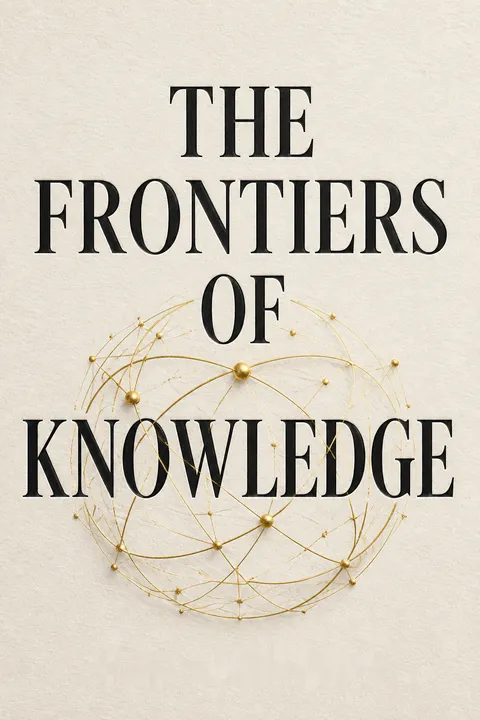

Key Takeaways
1. The Paradox of Knowledge: The More We Learn, the More Our Ignorance Expands.
Enquiry thus generates a paradox: increasing knowledge increases our ignorance.
A humbling truth. Humanity has made spectacular advances in understanding the universe, the past, and ourselves, particularly since the 19th century. Yet, contrary to the old belief that knowledge diminishes ignorance, these giant strides have revealed the vast, unmapped territories of what we don't know. This paradox is a central theme across science, history, and the study of the mind.
Frontiers of the unknown. Our inquiries, like peering through a pinhole, offer limited perspectives. Each discovery, from quantum theory to the Big Bang, or the intricacies of the human brain, opens new questions previously impossible to ask. This constant expansion of the unknown challenges our assumptions about the nature of inquiry itself, highlighting inherent barriers and difficulties.
The nature of knowledge. We must distinguish between strict, indubitable knowledge (rare outside mathematics and logic) and "highly credible and well-supported belief," which is the foundation of science. Science is inherently defeasible, subject to revision, and acutely self-critical, ensuring theories are rigorously tested and evaluated, even if absolute certainty remains elusive. This intellectual responsibility is crucial for all serious inquiry.
2. From Practical Ingenuity to Theoretical Insight: Technology's Long Road to Modern Science.
‘Knowledge how’ almost certainly came to be accompanied, at some perhaps quite early point, by efforts to achieve knowledge what – that is, theoretical knowledge, explanations of why the how works.
Ancient ingenuity. For millions of years, humanity excelled in "knowledge how"—practical skills like tool-making, fire control, agriculture, and engineering. These technologies, from early stone tools 3.3 million years ago to Roman aqueducts and Chinese gunpowder, were driven by necessity and experience, often without a deep understanding of underlying principles. This practical mastery profoundly shaped human evolution and civilization.
The birth of "knowledge what." The shift to "knowledge what"—theoretical explanations—began in earnest with the Presocratic Greek philosophers around the 6th century BCE. Thales, for instance, sought to identify the universe's fundamental "arche" (principle) through observation and reason, not myth. This marked the true beginning of science, distinguishing it from mere practical application.
A slow ascent. Early scientific inquiry progressed slowly, often hampered by traditional beliefs and powerful interests. It wasn't until the 16th and 17th centuries, with figures like Copernicus, Galileo, Bacon, and Descartes, that modern science truly took off. This era saw the integration of empirical methods, mathematics, and new instruments like the telescope and microscope, leading to an unprecedented acceleration of discovery and a new, systematic understanding of the world.
3. The Universe's Blueprint: Unveiling Fundamental Particles and Forces.
The hope that the atomic forces operative at the microscopic level of nature can be unified with gravity, which operates at the large – indeed universal – scale of nature, turns on the assumption that nature is at its profoundest level simple, entailing that the four forces of nature – the electromagnetic, the weak, the strong and gravity – are in fact just versions of a single underlying force that we cannot yet grasp.
The atomic revolution. The ancient idea of indivisible "atoms" found its scientific footing in the 19th and 20th centuries. J.J. Thomson's discovery of the electron in 1897 shattered the notion of an indivisible atom, revealing its inner structure and paving the way for quantum theory. This led to a radical new understanding of matter and energy.
The Standard Model. This model, developed in the late 20th century, describes the elementary particles (quarks, leptons) that constitute matter and the force-carrying particles (bosons: photons, gluons, W and Z particles) that mediate their interactions. The discovery of the Higgs boson in 2012 completed the model, explaining how particles acquire mass.
- Matter particles: Quarks (form protons, neutrons), Leptons (electrons, neutrinos).
- Force particles: Photons (electromagnetic), Gluons (strong nuclear), W & Z bosons (weak nuclear).
- Higgs boson: Imparts mass to other particles.
Quantum strangeness. Quantum theory, while incredibly precise and successful, presents a counter-intuitive picture of reality. Phenomena like wave-particle duality, the Uncertainty Principle, and the Measurement Problem (where a quantum state is indeterminate until measured) challenge our classical understanding. The quest for a unified theory that reconciles quantum mechanics with gravity remains a central, unresolved challenge, often leading to speculative theories like String Theory.
4. Cosmology's Grand Scale: A Universe Expanding, Dark, and Awaiting Unification.
Yet the most amazing thing about this growth of knowledge is that it has revealed to us that we have access only to about 5 per cent of physical reality.
The expanding universe. Edwin Hubble's 1929 observation that the universe is expanding, with galaxies receding faster the further away they are, led to the Big Bang Theory. This model, supported by cosmic background microwave radiation and the abundance of hydrogen and helium, posits a universe originating 13.72 billion years ago from an initial singularity.
Dark matter and dark energy. Despite the Big Bang's success, it reveals a profound ignorance: 95% of the universe remains unknown.
- Dark matter: Accounts for the gravitational effects observed in galaxies and clusters that cannot be explained by visible matter.
- Dark energy: A mysterious force accelerating the universe's expansion, seemingly active only in the latter half of its history.
Unification challenges. The greatest puzzle is reconciling Einstein's General Theory of Relativity (describing gravity, space, and time on large scales) with quantum theory (describing the microscopic realm). This quest for a "Theory of Everything" drives theories like String Theory, which proposes tiny vibrating strings as fundamental constituents and requires extra spatial dimensions. However, String Theory faces criticism for its lack of direct testability, raising questions about the role of "extra-theoretical criteria" like mathematical beauty in scientific validation.
5. Unearthing Deep Time: The Recent Discovery of Lost Civilizations and Human Origins.
The lost world recovered by nineteenth-century archaeologists and historians is the world of the first civilizations, which arose in the Near East’s Fertile Crescent.
A past reborn. Until the 19th century, reliable historical knowledge barely stretched beyond classical antiquity. Archaeology, spurred by figures like Napoleon's scholars in Egypt and later British Museum expeditions in Mesopotamia, dramatically expanded our understanding of deep history. This led to the rediscovery of ancient civilizations like Sumer, Akkad, and Babylon, pushing recorded history back to the 4th millennium BCE.
Foundational texts and laws. Discoveries like The Epic of Gilgamesh (the world's first major literary work) and The Code of Hammurabi (an early legal code) offered unprecedented insights into these complex societies. These texts revealed sophisticated social organization, legal systems, and rich cultural narratives, demonstrating a level of civilization previously unknown.
The human story. Beyond recorded history, palaeoanthropology has pieced together millions of years of human evolution. From the divergence of hominins 6-7 million years ago to the global spread of Homo sapiens by 15,000 years ago, the fossil record, though patchy, reveals a complex, non-linear story of multiple coexisting hominin species, interbreeding, and the gradual emergence of "behaviourally modern" traits like art, language, and symbolic thought. Genetic studies, like those identifying "Mitochondrial Eve" and "Y-chromosomal Adam," further illuminate our African origins and migration patterns.
6. The Contested Past: History as Interpretation, Revision, and a Mirror to the Present.
The study of history tells us more about ourselves than about the past.
The subjective lens. History, as an inquiry into past events, is inherently shaped by the present. Historians, like eyewitnesses, bring their own perspectives, biases, and contemporary concerns to the interpretation of incomplete and ambiguous evidence. This makes the "objective truth" about the past a complex and often elusive goal.
History's present impact. The past is not inert; it actively shapes present-day tensions, identities, and conflicts. Debates over historical narratives—such as Australia's "History Wars" regarding Aboriginal land rights, or the denial of the Holocaust—underscore how crucial the integrity of historical inquiry is.
- Revisionism: A legitimate process of re-evaluating evidence and interpretations, often recovering suppressed voices and perspectives (e.g., colonial histories).
- Denialism: A deliberate distortion or falsification of evidence to fit a political or ideological agenda (e.g., Holocaust denial).
Progress and pitfalls. While some historical periods might be characterized by "regress" (e.g., the post-Roman "Dark Ages"), others clearly show "progress" in terms of individual freedoms, rights, and technological advancement. However, the impulse to create triumphalist national narratives or to "read-in" modern concepts (like "religion" into prehistoric sites) can distort understanding. Responsible inquiry demands scrupulous evidence, dispassionate judgment, and a constant awareness of our own interpretive frameworks.
7. The Brain's Intricate Dance: Mapping Cognition, But Not Yet the Mind's Essence.
The commitment is to the proposition that the brain is the centre, cause, operating system, and seat of consciousness, mind, and mental life.
The brain's complexity. The human brain, with its estimated 86 billion neurons and trillions of connections, is an organ of immense complexity. Neuroscience, a relatively young field, is rapidly advancing our understanding of its anatomy and function, driven by powerful imaging technologies like fMRI. This commitment to the brain as the seat of mind is now overwhelmingly supported by evidence.
Mapping functions. Early "lesion studies" (correlating brain damage with functional loss) and later "split-brain" experiments provided initial insights into brain localization, identifying areas for speech (Broca's, Wernicke's areas), memory (hippocampus), and hemispheric specialization. Modern fMRI, by detecting blood flow changes, allows non-invasive study of healthy brains, revealing neural correlates of various cognitive functions.
- Vision: Multiple pathways, specialized cells for edges/lines (V1), color (V4), motion (V5), and face recognition (FFA).
- Memory: Different types (working, procedural, long-term, episodic) linked to distinct but interconnected regions (hippocampus, frontal lobe).
Beyond localization. While modularity exists, the brain also functions as a network of networks, with functions distributed and dynamically recruited. The Human Connectome Project aims to map these intricate connections. However, current methods still offer a "pinhole" view, raising questions about the Meddler Problem (observation affecting the observed) and the limitations of correlating brain activity with subjective experience.
8. Consciousness: The Familiar Mystery at the Frontier of Neuroscience.
Consciousness is a fascinating but elusive phenomenon: it is impossible to specify what it is, what it does, or why it evolved.
The "Hard Problem." Consciousness, our intimate experience of qualia (what it feels like to see red or feel pain) and self-awareness, remains the most profound mystery. While neuroscience can identify "neural correlates of consciousness"—brain states associated with conscious experience—it struggles with the "Hard Problem": explaining how subjective experience arises from electrochemical activity.
Theories of integration. Current theories often propose that consciousness emerges from the brain's integration of information.
- Global Neuronal Workspace: Information becomes conscious when widely broadcast across distributed neural networks.
- Recurrent Processing: Consciousness arises from feedback loops and horizontal connections within sensory areas.
- Integrated Information Theory: Defines consciousness as a system's capacity to integrate information, treating it as a fundamental quantity.
Challenges and alternatives. These theories, often relying on the "computational metaphor" for the brain, still don't fully explain why consciousness exists or how qualia arise. The "Zombie Problem" highlights that complex behavior could theoretically occur without subjective experience. Roger Penrose, a distinguished physicist, rejects computational models, suggesting consciousness might involve non-computational quantum events in brain microtubules, though this remains highly controversial.
9. The Elusive Self: An Interpreter, a Feeling, or a Product of Interaction?
The self is a fiction invented by the brain … Our conscious learning is an observation post factum, a recollection of something already accomplished by the brain.
The self as illusion? Neuroscience challenges our intuitive sense of a unified, controlling self. Michael Gazzaniga's "Left-brain Interpreter" theory, based on split-brain studies, suggests our conscious self is a post-facto rationalizer, confabulating explanations for actions already initiated by unconscious brain modules. This implies we are not truly "in charge" of our decisions.
Mind as interaction. However, reducing mind solely to brain activity overlooks the crucial role of external context. "Broad content" theories argue that thoughts and mental states are fundamentally shaped by interactions between brains and their social and physical environments. A mind is not just a brain; it's a brain "plugged into" and continuously interacting with other brains, language, culture, and history.
Beyond reductionism. While neuroscience excels at identifying neural correlates, it struggles to fully capture the richness of mental life—desire, love, morality, wisdom—which are deeply embedded in social and historical contexts. The idea that these phenomena are merely "epiphenomenal" or reducible to non-conscious events faces the "cogito" challenge: to whom or what is the illusion of self occurring? A complete science of mind must account for the persistent, empirical fact of subjective selfhood and its causal efficacy in our lives.
10. The View from Olympus: Navigating Specialization, Ignorance, and the Future of Inquiry.
The great thing about a frontier – so different from a boundary, a border, a wall – is that it is an invitation to travel across it, and travel onwards.
The cost of specialization. Modern knowledge, vast and rapidly expanding, has led to extreme specialization. While necessary for scientific progress, this creates "silos" of expertise, making a holistic "view from Olympus" – a comprehensive understanding of our place in the universe – increasingly difficult. Education, once aiming for general literacy, now prioritizes specialized training, potentially widening the "Two Cultures" gap between science and humanities.
Truth as an ideal. In this landscape of ever-expanding ignorance, truth is an idealization, a goal towards which inquiry strives. Our "knowledge" consists of rigorously supported, defeasible beliefs, measured by their proportionality to evidence and soundness of reasoning. This rational approach contrasts sharply with irrational beliefs, which often lack coherence and resist empirical challenge.
Ethical frontiers. The problems of inquiry (Pinhole, Map, Meddler, etc.) define its nature, urging us to be self-critical and adaptable. New knowledge brings immense power, creating profound moral dilemmas. Neuroscience, in particular, holds the potential for both great good and significant ethical challenges, from mind-reading to thought control. As "Grayling's Law" suggests, what can be done will be done if advantageous. Reflecting on these implications is crucial for navigating humanity's future.
Review Summary
The Frontiers of Knowledge receives largely positive reviews (3.98/5), praised for its ambitious survey of science, history, and neuroscience. Readers appreciate Grayling's accessible exploration of epistemological questions and how knowledge is acquired. The physics section examines perception limitations and quantum mechanics through a Kantian lens. History coverage addresses bias and interpretation challenges. The consciousness section explores mind-brain relationships and reductionism's limits. Critics note some sections feel rushed or incomplete, with varying accessibility depending on reader background. Many commend Grayling's intellectual honesty and ability to synthesize complex topics, though some desire deeper analysis or clearer synthesis across disciplines.
People Also Read








About the Author
Other books by A.C. Grayling




Download PDF
Download EPUB
.epub digital book format is ideal for reading ebooks on phones, tablets, and e-readers.








































