
Plot Summary
Sudden Absence, Lingering Grief
A nameless narrator, reeling from the suicide of her lifelong friend and mentor, details the waves of disbelief and numbness that follow the loss. She recounts their last conversation—about women literally crying themselves blind from trauma—and the devastations both small and large that arise in the aftermath, like errors in the obituary and awkward exchanges at a memorial attended by his three wives. Emotions are overlaid with unresolved questions: what was he thinking, what if, what next? The narrator is paralyzed, grasping at conversations, literary references, and the rituals of mourning, yet unable to find meaning or narrative closure. She feels increasingly disconnected, haunted by his presence and absence, and uncertain about where to begin processing her grief.
An Unwanted Inheritance
The deceased's third wife, overwhelmed by her husband's death and unable to care for his massive and grieving Great Dane, Apollo, asks the narrator to take him in. The narrator's small apartment, strict no-dog policy, and self-identification as a "cat person" complicate her decision. Still, there is a sense that accepting Apollo is both a burden and a vestige of her lost friend—a living reminder of love and loss. Discussions with the widow reveal more about the late writer's final months: depression, physical pain, and renewed creative energy right before his death—a paradox that only deepens the mystery. The dog becomes the symbol of unresolved attachments, making clear that grief can manifest as both obligation and mercy.
A Life with Apollo
With Apollo in tow, the narrator navigates a new domestic arrangement: this enormous, bereft animal ignores her by day and shares her bed by night. The dog's depression mirrors her own, complicating daily life and threatening her housing security due to building restrictions. She reflects on the irrational, unreciprocated devotion of dogs, their history as God's creatures, and their predisposition for heartbreak. The routines of feeding, walking, and cleaning up after Apollo blur boundaries between caretaking and captivity, gradually shifting her conception of love—from possession to patient, watchful presence.
City Walks and Solitude
As narrator and dog explore the city, the act of walking becomes a meditation on existence and a means of examining grief. The city is at once alienating and comforting, full of small, poignant sights—homeless people with pets, strangers' kindnesses, familiar literary figures. Apollo's size and solemnity set them apart, making them both spectacle and invisible. Memories of her friend's essays about flâneurs and the writer's need for solitude resurface. Walking is at once ritual, self-preservation, and an invitation to reckoning, unlocking the sense of connection and rootlessness at the core of human-animal bonds.
Writer's Block and Memory
Writing, once a vocation and lifeline, is now a source of shame, anxiety, and unproductivity. The narrator, given compassionate deadlines she cannot meet, ponders the purpose of storytelling. She draws from the wisdom and cynicism of her late friend, as well as examples from teaching, literary history, and students' struggles. Writer's block becomes entangled with mourning and guilt, fueling doubts about what writing accomplishes or erases. Does writing console, as Dinesen says, or merely distance, as Ginzburg warns? Grief grows heavier as language, once a refuge, fails to relieve suffering.
Literary Friends and Romances
The narrator reminisces about the late writer's complex love life—his three wives, myriad affairs (sometimes with students), and an unusual friendship that oscillated between eros and platonic devotion. She analyzes the costs of passion and intellectualism, the wounds left by infidelity, jealousy, and the need for ever-new companionship. Through these recollections, questions of propriety, seduction, and the inherent narcissism and destructiveness of writers surface. The narrator acknowledges her ambivalence: was she fortunate not to have her heart fully broken, or did she avoid life's deepest risks out of fear?
The Dog and the Law
Housing Apollo becomes an existential problem: building rules forbid dogs, and the building superintendent threatens eviction. Well-meaning friends suggest re-homing Apollo; online legal advice only increases her anxiety. Meanwhile, Apollo's presence in her small apartment is alternately a comfort and a near-catastrophe, sometimes triggering destruction in her absence. The narrator is torn: losing her home means utter isolation, but surrendering Apollo feels like a betrayal—not just of the dog, but of the friend she lost. Routine, law, and love are at odds, echoing the ways society polices grief and compassion.
Grappling with Loss
Pushed by concern from friends, the narrator attends therapy, bringing Apollo along as an emotional support animal to safeguard against eviction. The sessions stir up questions about the special loneliness of the "stray"—those unmarried and childless, especially in later life—and the ways our losses define us. The therapist notes that grief mixed with romantic undertones complicates healing, and suggests the narrator write about her experiences. But she resists catharsis that feels false. Gradually, the presence of Apollo, more than therapy or writing, helps buoy her—comfort is found in shared struggle, even as both continue to mourn.
Teaching and Writing's Purpose
Through her college teaching, the narrator dissects generational shifts in literary values. Students are preoccupied with authenticity, trauma, and justice, demanding that fiction bear more than witness but also activism and atonement. She contemplates the nature of bearing witness, referencing her failed attempt to write about survivors of trafficking, confronting her own guilt at using their pain for literary gain. The limits of empathy and imagination become clear. The class echoes a larger question: what is fiction for, and who gets to tell stories in an era that mistrusts art for art's sake?
Surviving Modern Literature
The narrator reflects on shrinking readerships, the professional anxieties of writers and teachers, and the commoditization of storytelling. She sees herself in her students' ambivalence—some full of aspiration, others certain that writing is an egotism or even a corrupt act. Older colleagues lament the loss of boldness, sensuality, and risk in contemporary fiction. The very identity of "writer" is unstable: subject to imposter syndrome, adoration and suspicion. Mentions of prizewinners, lost ambitions, and "distinguished visiting writers" underline the capriciousness and futility of chasing literary greatness.
Relearning How to Live
Forced to adapt by Apollo's needs and aging, the narrator forms new rituals in life—walking, massage, music, reading aloud—which comfort both dog and owner. The day-to-day grind of illness, cleanup, and social awkwardness (such as neighbors, friends, or strangers misunderstanding their bond) is recast as the daily practice of devotion. Small victories, such as securing legal permission to keep Apollo, come to feel as significant as any literary success. Slowly, the routine of caretaking becomes indistinguishable from kinship: "two solitudes that protect and border and greet each other."
Miracle, Not Closure
With the help of a sympathetic friend and a therapist's letter, the narrator wins the right to stay in her apartment with Apollo. The reprieve is a miracle, but the future remains uncertain: Apollo's health declines with age, and each day is measured by pain and tenderness. The narrator is acutely aware that saving Apollo from one loss only postpones the next inevitable heartbreak. Still, the present is a gift—a last summer, walks in city and country, a moment of peace. Loss, she learns, is not about closure, but about living inside the ache, and letting go a little at a time.
Love, Loyalty, and Letting Go
The final act of caretaking is anticipatory grief: preparing for Apollo's decline and eventual death. The narrator compares animal and human suffering, wonders how animals reckon with their mortality, and reflects on the inevitability and complexity of saying goodbye. Books, memories, and daily caregiving intermingle, offering solace but not protection from loss. She ponders whether memory is preserved or eroded by writing, but accepts that love is ultimately defined by what we miss and mourn. To love is to risk being left, to care is to know that all bonds will end—an imperfect but essential goodbye.
The Shadow of Suicide
The specter of her friend's suicide looms, never fully explained or accepted. The narrator revisits philosophical, literary, and personal attempts to make sense of self-inflicted death—Plato, Seneca, Wittgenstein, and tragic literary pacts. She circles the question of justification, blame, and the limits of empathy. Through dreams and flashbacks, she relives the shock, the what-ifs, and the impossibility of closure. Ultimately, she must "leave him his silence, his mystery," settling for neither full understanding nor absolution, but a kind of peace.
On Bearing Witness
The narrator analyzes the burden writers carry in transforming real suffering into art, especially the suffering of others. She debates the guilt and necessity of using real people as material, and the dangers of appropriation, exploitation, and erasure. From nonfictional authors like Alexievich to fictional stand-ins, she exposes the tension between empowerment and ventriloquism, documenting and displacing the experience of pain. Art only ever benefits the writer, she concludes, and sometimes this is too high a cost.
Writing Beyond Words
She recognizes that writing—while vital and sometimes transformative—is ultimately insufficient. True solace is found not in formal therapy, philosophy, or literary catharsis, but in the shared silence with Apollo. Reading aloud to him becomes an unlikely method of self-healing. Other genres—letters, confessions, poetry—offer momentary comfort but are also tainted by self-loathing and the desire for perfection. In the end, it is the act of loving, not the story or the sentence, that lingers; grief and language must coexist, but neither can wholly redeem the other.
Caring to the End
As Apollo's body fails, the narrator's caretaking intensifies. She confronts the reality that all she can do is make him comfortable and not abandon him at the end. She relishes his small pleasures—a favorite red toy, the sun on old bones, a last summer by the ocean—and dreads the final, irrevocable goodbye. The chapter affirms the universality of loss, echoing the childhood longing to escape humanity through connection with animals. It is both a love letter and an elegy—accepting mortality, determined to do better by the beings entrusted to us.
Imperfect Goodbyes
The closing images are poignant: the narrator savors each day with Apollo, grateful for their borrowed peace and bracing for the inevitable. She recognizes that love and loss are inseparable, that writing may only ever sharpen the ache, and that being able to care till the end—for a friend, a dog, or oneself—is the final, imperfect act of love. Surrounded by the sounds and scents of one last summer, she acknowledges to herself and to Apollo, blurred now into one, a simple truth: "I miss you every day. I miss you very much." With that, the story ends—no great revelation, only the quiet dignity of a life lived with courage, loyalty, and attention.
Analysis
Sigrid Nunez's The Friend is a luminous meditation on grief, artistry, and human connection, using the unlikely bond between a bereaved woman and a Great Dane to probe profound existential questions. Through a fragmented, essayistic narrative, Nunez exposes the psychic aftermath of suicide—how loss shatters narrative, memory, and self-concept, and how mourning resists neat closure. The novel's greatest innovation lies in its refusal of sentimental clichés: love between human and animal is moving but never idealized, writing is simultaneously salvation and moral peril, and the literary world emerges as equal parts solace and battlefield. The intertextual density—far from gratuitous—grounds the narrator's struggle within a wider literary tapestry, insisting that meaning is always communal. Ultimately, The Friend suggests that survival is less about healing or closure and more about abiding: caring for others, bearing witness to their suffering, and accepting the impermanence of all bonds. Nunez's prose is blessedly gentle yet unsparing, both intellectually vibrant and emotionally honest—reminding us that the best writing does not solve the mysteries of love and loss, but keeps faith with their persistence.
Review Summary
Reviews of The Friend are mixed, averaging 3.71/5. Admirers praise its elegant, spare prose and thoughtful exploration of grief, writing, and the human-animal bond, with many highlighting its unconventional, essay-like structure. The 2018 National Book Award win drew wider attention. Critics, however, found it overly pretentious and self-indulgent, particularly regarding its extensive literary references and musings on the writing life. The novel's lack of traditional plot divided readers, though Apollo the Great Dane was almost universally beloved.
People Also Read








Characters
The Narrator
An unnamed, middle-aged woman who ekes out a living as a writing instructor in New York. She was the close confidante—and briefly, lover—of the deceased male writer at the novella's center. Her emotional life is rich with introspection, longing, and self-doubt. Overwhelmed by the loss of her friend and the challenges of caring for Apollo, she struggles with writer's block and questions the ethical value of art. Her relationships are mostly platonic, marked by distance and yearning. As she tends to Apollo and revisits old patterns, she comes to reconsider her views on love, connection, and responsibility. The narrator's arc is an emotional loosening—she moves, haltingly, towards acceptance, recognizing that grief, like love, endures even as form and object shift.
The Friend (Deceased)
A celebrated writer and professor, English by background, Jewish by heritage, whose life was defined by passionate relationships, literary ambition, and serial infidelity. He was both a womanizer and a generous intellectual companion, inspiring devotion and envy in his circle. Prone to depression, he viewed writing as both necessity and torment. His death by suicide is both rational and mysterious within the novel; his memory haunts each character differently. His relationships with three wives, lovers, and especially the narrator reveal both vulnerability and selfishness. Ultimately, his absence becomes an animating presence, forcing others to grapple with what he left behind emotionally and physically (in Apollo).
Apollo
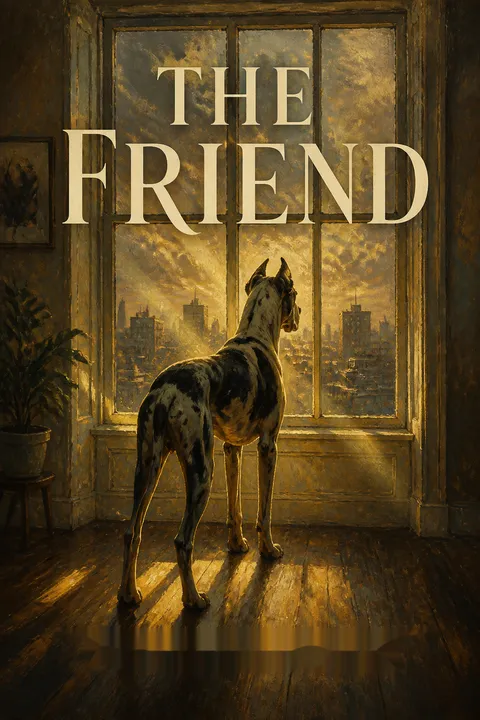
A large harlequin Great Dane, formerly the dog of the deceased, now passed to the narrator as a living legacy. Apollo is a creature of striking appearance and temperament—dignified, mournful, and deeply affected by the loss of his human. His initial detachment and depressive symptoms mirror the narrator's own, and as the narrative unfolds, their relationship deepens into mutual care. Apollo's needs create new patterns and offer the narrator a purpose beyond intellectual pursuits. He becomes the anchor for her healing and the lens through which she reconsiders love, mortality, and human-animal relationships. As both companion and mirror, Apollo's decline underscores the ephemerality and poignancy of devotion.
Wife One
The late writer's first wife, whose youthful romance with him was intense and formative for both, but ultimately ended in heartbreak and lasting psychological scars. She represents the cost of overwhelming love: mental instability, regret, and the frailty that can result from such entanglement. After their marriage, she is irreparably changed, yet she reappears for the memorial, kind and self-aware, and reestablishes a connection with the narrator, sharing in the work of remembrance and closure.
Wife Two
His second wife, easily threatened and consumed by jealousy. Her relationship with the deceased was fraught—violent, distrustful, and passionately stormy, particularly where the narrator was concerned. She is both antagonist and victim, yet in mourning, her public words are full of grace, complicating the narrator's understanding of forgiveness, performance, and what is spoken or unspoken between women intertwined by one man.
Wife Three
The third and final wife of the deceased, she is older, independent, and professionally successful outside of academia. Her relationship with the narrator is cool but not hostile; faced with a dog she cannot keep, she is pragmatic and honest about her limits. She embodies the practical burdens of loss, reluctant to take on additional responsibility. Her interactions with the narrator encapsulate the tension between duty to the dead and self-preservation for the living.
The Therapist
A quiet, kindly presence whom the narrator consults at the urging of friends. He is insightful but never intrusive, guiding her through layers of bereavement and self-questioning with patience. Although his interventions are modest—helping with emotional support certification for Apollo, nudging her to consider the roots of grief—they are significant. He helps her confront both the insufficiency and necessity of words.
Hector (The Super)
The building superintendent, initially the enforcer of rules who threatens eviction for harboring Apollo. Over time, Hector's perspective softens; he expresses regret, and helps in small ways, reflecting the broader community's complicated response to transgression against policy in the face of visible need and loyalty.
O.P. (Outstanding Prodigy)
A young female former student turned colleague, O.P. represents the newer generation of writers: prize-winning, successful early, yet crippled by expectation, self-loathing, and impostor syndrome. Her struggles with teaching, anxiety, and writing serve as an implicit warning and echo of the narrator's earlier career, framing the differences and continuities between generations in the literary world.
The Literary Circle
The larger cast—other teachers, students, writers, critics—form the chorus and context of the novel. They embody changing attitudes toward literature, competition, mentorship, and the increasingly precarious life of artists and teachers. Their voices range from the envious to the sincere, offering comic relief, social criticism, and a barometer by which the narrator measures her shrinking, evolving community.
Plot Devices
Nonlinear Narrative Structure
The novel unfolds in short, often non-chronological sections—memories, vignettes, essays, emails, and conversations—mirroring the fractured state of the narrator's mind post-loss. The narrative is recursive, circling central events (the friend's death, the arrival of Apollo) while digressing into meditations on art, suffering, literature, and the ethics of writing itself. This structure allows for immersion into the processes of mourning—its fits, starts, and inability to move forward neatly. The episodic, almost diaristic style makes the reader inhabit a mind preoccupied with meaning-making and haunted by unfinished business.
Intertextuality and Literary Allusions
The novel is saturated with references: myths, fairy tales (Rapunzel, Hachikō), Rilke, Woolf, Beckett, Simenon, Coetzee, O'Connor, and more. These allusions serve both as connective tissue—linking private loss to universal patterns—and as defensive mechanisms for the narrator. Through citation and analysis, she provides intellectual scaffolding to cope with pain, interrogating whether art can redeem suffering, or merely exploit it.
Animal as Mirror and Symbol
Apollo is more than a companion—he is a living, suffering witness to the same loss as the narrator, a mirror to her own grief and incapacity. His changing behavior, needs, and deterioration externalize emotional states that cannot be verbalized. The dog's loyalty, trauma, and bodily decline provide a non-human locus for existential questions, complicating the boundary between sentimental projection and genuine interspecies connection.
Metafictional Reflection
The narrator constantly interrogates the act of storytelling, particularly when it comes to writing about others' trauma (survivors, the dead, animals). She explores the responsibilities and limitations of art, the shame attached to its egoism, and its inescapable self-referentiality. This self-critical stance becomes both a thematic thread and a stylistic device, destabilizing any claim that narrative can offer easy consolation.
Repetition and Recursion
Motifs—such as asking, "Does something bad happen to the dog?"—recur throughout the text. These refrains structure the narrative, highlighting both the longing for reassurance and the inevitability of loss. The looping back to certain events, questions, and routines dramatizes the chronic, unresolved nature of mourning.
Download PDF
Download EPUB
.epub digital book format is ideal for reading ebooks on phones, tablets, and e-readers.








































