
Plot Summary
A Family in Full Plumage
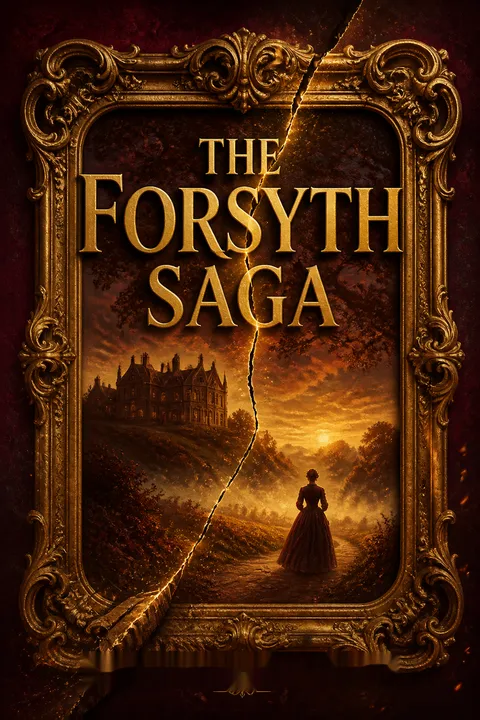
On a bright June day in 1886, the Forsyte family assembles at Old Jolyon's house to celebrate June's engagement to the architect Philip Bosinney. The Forsytes, pillars of the upper middle class, display their wealth and unity, but beneath the surface, old rivalries and suspicions fester. The family's possessive instincts and pride in property are on full display, as is their wariness of outsiders. The engagement of June to the unconventional Bosinney is met with skepticism, especially by Soames, whose own marriage to the beautiful and enigmatic Irene is already troubled. The gathering foreshadows the conflicts to come, as the Forsytes' sense of security is threatened by forces they cannot control—love, beauty, and change.
The House at Robin Hill
Soames, driven by his desire to possess and control, commissions Bosinney to build a country house at Robin Hill, hoping to entice Irene away from London and into a life he can manage. The house, meant as a symbol of Soames's love and status, becomes instead a site of emotional turmoil. Bosinney's artistic vision clashes with Soames's practicality, and the cost overruns fuel resentment. Meanwhile, Irene and Bosinney are drawn together by a mutual understanding and longing for freedom. The house, intended as a monument to Forsyte solidity, becomes a crucible for passion and rebellion, setting the stage for tragedy.
The Unforgiving Past
The Forsyte family's history is marked by pride, secrecy, and a refusal to forgive. Old Jolyon's estrangement from his son, and Soames's inability to understand Irene's unhappiness, reveal the family's limitations. Irene's marriage to Soames is a prison, and her growing attachment to Bosinney is both a rebellion and a search for self. The past—its betrayals and possessiveness—casts a long shadow, making true happiness elusive. The family's attempts to maintain respectability only deepen the wounds, as love and beauty are sacrificed to the demands of property and reputation.
The Web of Possession
The Forsytes' obsession with ownership extends beyond houses and investments to the people in their lives. Soames's view of Irene as his property leads to increasing control and, ultimately, violence. The legal and financial wrangling over the house at Robin Hill mirrors the emotional battles within the family. The web of possession tightens, ensnaring not only Soames and Irene but also June, Bosinney, and Old Jolyon. The family's inability to let go—of money, of pride, of each other—ensures that every relationship is fraught with tension and the threat of loss.
Beauty and the Buccaneer
Bosinney, dubbed "the Buccaneer" by the family, represents the disruptive force of beauty and passion. His affair with Irene is both a personal awakening and a challenge to the Forsyte way of life. June's heartbreak, Soames's rage, and Old Jolyon's sympathy for the lovers reveal the cracks in the family's facade. The tragic death of Bosinney, following a legal defeat and emotional despair, marks the end of innocence and the beginning of a reckoning. Irene, now free but scarred, leaves Soames, and the family is left to grapple with the consequences of their possessiveness.
The Breaking of Bonds
The aftermath of Bosinney's death and Irene's departure shatters the Forsyte family's sense of invulnerability. Old Jolyon reconciles with his son and finds solace in his grandchildren, but the old certainties are gone. Soames, humiliated and alone, seeks comfort in property and the hope of a son. The family's elders begin to die off, and the younger generation faces a world that is changing rapidly. The bonds of blood and property are tested as the Forsytes confront loss, regret, and the need to adapt.
The Next Generation
As the Victorian era wanes, the children of the Forsytes come of age. Fleur, Soames's daughter by his second marriage, is beautiful, willful, and restless. Jon, the son of Irene and Jolyon, is sensitive and idealistic. The two meet by chance and are instantly drawn to each other, unaware of the family history that divides them. Their love is innocent but fraught, as the legacy of the past—Soames's obsession, Irene's suffering—threatens to repeat itself. The new generation must navigate the ruins of their parents' choices.
Forbidden Love Awakens
Jon and Fleur's secret meetings are filled with the intensity and hope of first love. Their connection is immediate and deep, offering a chance to heal the wounds of the past. But the old feud between their families, rooted in Soames's sense of betrayal and Irene's escape, looms over them. As their love grows, so does the danger of discovery. The world around them is changing—war, social upheaval, and the decline of the Forsyte fortune—but the greatest threat comes from within the family itself.
The Shadow of Old Wounds
The truth of the past cannot be hidden forever. Fleur learns of her father's first marriage and the scandal that drove Irene and Soames apart. Jon, confronted with the reality of his mother's suffering and his father's pain, is torn between love and loyalty. The families, still unable to forgive or forget, place impossible demands on the young lovers. The shadow of old wounds falls across their future, and the possibility of happiness seems to slip away.
The Choice of Happiness
Jon is forced to choose between his love for Fleur and his loyalty to his mother's memory. The weight of family history, the pain of the past, and the expectations of the present converge in a moment of crisis. Fleur, desperate and determined, tries to hold on to him, but Jon cannot betray his parents. The choice is agonizing, and the cost is high. In sacrificing their love, Jon and Fleur become the latest victims of the Forsyte saga—a story of passion, pride, and the price of possession.
The Last Forsyte
The passing of Timothy, the last of the original Forsyte siblings, symbolizes the end of the Victorian age and the world the family built. The old values—property, respectability, and family unity—are fading, replaced by uncertainty and change. The younger Forsytes are scattered, their fortunes diminished, their certainties gone. The family vault at Highgate becomes a monument to a way of life that is no more. The Forsyte saga, once a story of triumph and tenacity, ends in elegy.
The End of an Age
The death of the old Forsytes and the marriage of Fleur to Michael Mont signal the passing of the torch to a new generation. The world they inherit is less certain, more fluid, and less forgiving of the possessive instincts that defined their ancestors. The values of the past—ownership, control, and pride—are giving way to new ideals of freedom, love, and individuality. The Forsyte saga closes with a sense of loss, but also with the hope that the mistakes of the past need not be repeated.
The Gilded Cage
Soames, surrounded by his art and property, is left alone, his dreams of happiness for himself and his daughter unfulfilled. Fleur, married to Michael Mont, finds herself in a world of privilege but haunted by the memory of her lost love. The gilded cage of Forsyte prosperity is revealed as a prison, not a sanctuary. The pursuit of possession has brought only emptiness, and the family's legacy is one of regret.
The Price of Freedom
Irene, having lost Jolyon and sent Jon away, faces the loneliness of freedom. Jon, exiled to a new life in America, carries with him the pain of renunciation. Fleur, forced to move on, must live with the consequences of her choices. The price of freedom is high, and the wounds of the past do not heal easily. Yet, in letting go, there is a chance for growth and renewal.
The Final Farewell
The saga ends with Soames, old and alone, reflecting on the passing of his family and the world they knew. The Forsyte vault stands as a monument to a vanished age, and the future is uncertain. Yet, in the memory of love and beauty, there is a hope that something endures beyond possession and pride. The story closes on a note of elegy and acceptance, as the last of the Forsytes lets go of the past and faces the unknown.
Analysis
The Forsyte Saga is a profound exploration of the English upper middle class at the turn of the twentieth century, using the Forsyte family as both a microcosm and a critique of a society in transition. Galsworthy's narrative dissects the possessive instinct—its power to create security, its tendency to stifle love and beauty, and its ultimate futility in the face of change. The saga's emotional arc is driven by the tension between the desire to own and the longing to be free, embodied in the tragic relationships of Soames and Irene, and later Jon and Fleur. The story is both a lament for a lost world and a warning against the dangers of pride, rigidity, and the refusal to forgive. In its modern context, The Forsyte Saga remains relevant as a meditation on the costs of materialism, the complexity of family, and the enduring struggle between tradition and transformation. The lessons it offers—about the necessity of letting go, the pain of inherited wounds, and the hope of renewal—are as vital now as they were a century ago.
Review Summary
The Forsyte Saga receives overwhelmingly positive reviews (4.18/5 stars) for its masterful storytelling spanning three generations of an upper-middle-class British family from 1886-1920. Readers praise John Galsworthy's brilliant characterization, particularly the complex Soames Forsyte, and the novel's exploration of property, marriage, and social change during the Victorian and Edwardian eras. Many compare it favorably to Austen and Wharton. The prose is accessible yet elegant, with beautiful nature descriptions. Some criticize the enigmatic portrayal of Irene and occasional plot contrivances. Most consider it a compelling, emotionally powerful masterpiece deserving of its Nobel Prize recognition.
People Also Read


Characters
Soames Forsyte
Soames is the central figure of the saga, embodying the Forsyte obsession with property and control. His love for Irene is intense but suffocating, rooted in a desire to possess rather than to understand. Soames is both victim and perpetrator—unable to adapt to change, he is left behind by the world he helped build. His relationship with his daughter Fleur is marked by devotion and anxiety, as he tries to protect her from the mistakes of his own past. Soames's tragedy is his inability to let go, and his story is one of longing, loss, and the limits of ownership.
Irene Heron Forsyte
Irene is the catalyst for much of the saga's conflict. Married to Soames against her will, she becomes a symbol of beauty and freedom in a world of possession. Her love for Bosinney and later for Jolyon is a rebellion against the Forsyte values, and her suffering is both personal and emblematic. Irene is reserved, sensitive, and deeply loyal to those she loves, especially her son Jon. Her journey is one of survival and self-assertion, as she seeks happiness on her own terms, even at great cost.
Jolyon Forsyte (Young Jolyon)
Jolyon is Soames's cousin and Irene's second husband. An artist and a man of feeling, he stands apart from the Forsyte obsession with property. His estrangement from his family, and later reconciliation, mark him as a figure of transition between the old and the new. Jolyon's love for Irene is redemptive, and his devotion to his children is unwavering. He is a voice of reason and empathy in a world of pride and conflict, but his own happiness is shadowed by the legacy of the past.
Fleur Forsyte
Fleur, the daughter of Soames and Annette, is the embodiment of the new generation. Beautiful, clever, and determined, she is both a product of her father's possessiveness and a rebel against it. Her love for Jon is intense and impulsive, offering a chance to heal the family's wounds. But Fleur is also marked by the Forsyte inability to let go, and her pursuit of happiness is fraught with the same dangers that haunted her parents. Her story is one of longing, rebellion, and the search for identity.
Jon Forsyte
Jon, the son of Irene and Jolyon, is gentle, artistic, and deeply loyal. He is drawn to Fleur by a love that seems destined to overcome the past, but is ultimately forced to choose between his own happiness and his mother's peace. Jon's struggle is the heart of the later saga—a conflict between love and duty, the present and the past. His decision to leave Fleur and start a new life abroad is both a sacrifice and an act of self-preservation.
June Forsyte
June, Old Jolyon's granddaughter, is spirited and strong-willed. Her engagement to Bosinney and subsequent heartbreak set the saga in motion. June is a champion of the underdog, devoted to art and to helping others. Her independence and resilience make her a foil to the more conventional Forsytes, and her loyalty to her family, despite their flaws, is unwavering.
Annette Forsyte
Annette, Soames's second wife and Fleur's mother, is French, pragmatic, and emotionally reserved. Her marriage to Soames is a partnership rather than a romance, and she is more interested in comfort and security than in passion. Annette's affair with Prosper Profond reveals her desire for freedom, but she remains a survivor, adapting to circumstances with grace and self-interest.
Philip Bosinney
Bosinney, the "Buccaneer," is the architect who builds Robin Hill and falls in love with Irene. His artistic vision and disregard for convention make him both attractive and dangerous to the Forsytes. His affair with Irene and tragic death are the catalyst for the family's unraveling, and his legacy is the house that becomes a symbol of both hope and loss.
Old Jolyon Forsyte
Old Jolyon is the head of the family in the early saga, a self-made man whose pride in his children and grandchildren is matched by his sense of responsibility. His estrangement from his son and later reconciliation are emblematic of the family's struggles. Old Jolyon's love for June and his sympathy for Irene mark him as a figure of transition, and his death signals the end of an era.
Timothy Forsyte
Timothy, the last surviving sibling of the original Forsyte family, is a symbol of the Victorian age and its values. Reclusive and obsessed with security, he outlives his brothers and sisters, but his death marks the final passing of the world they built. Timothy's mausoleum-like house and his obsession with property are both a monument and a warning.
Plot Devices
The House as Symbol
The house at Robin Hill, designed by Bosinney and built for Soames and Irene, is the central symbol of the saga. Intended as a monument to Forsyte solidity and taste, it becomes instead a battleground for love, rebellion, and tragedy. The house's fate mirrors that of the family—built on possession, undone by passion, and ultimately left empty as the world changes. Its recurring presence in the narrative serves as a touchstone for the characters' hopes, failures, and transformations.
Possession and Property
The Forsyte obsession with property—houses, money, people—drives the plot and shapes the characters' fates. The legal and emotional battles over ownership reflect deeper struggles for control, identity, and love. The possessive instinct, inherited and unexamined, is both the family's strength and its undoing. The narrative structure, with its focus on inheritance, wills, and settlements, reinforces the centrality of possession to the Forsyte worldview.
Generational Conflict
The saga is structured around the tensions between generations—the old Forsytes, their children, and grandchildren. The inability of the older generation to adapt, and the younger generation's struggle to escape the legacy of the past, create a cycle of conflict and repetition. Foreshadowing is used to suggest that the mistakes of the parents will be visited on the children, and the narrative returns again and again to the question of whether true happiness is possible in a world ruled by pride and memory.
Irony and Social Satire
Galsworthy employs irony and satire to critique the values of the upper middle class. The family's self-importance, their blindness to change, and their obsession with respectability are gently mocked, even as their struggles are rendered with sympathy. The narrative structure, with its shifting perspectives and interludes, allows for both intimacy and distance, inviting the reader to judge and to understand.
Letters and Confessions
Key moments in the saga are precipitated by letters, confessions, and revelations—Soames's discovery of Irene's feelings, Jon's reading of his father's letter, Fleur's learning of the family secret. These devices serve to bring hidden truths to light, forcing characters to confront the consequences of their actions and the reality of their emotions. The use of written communication underscores the limitations of spoken words and the difficulty of true understanding.
Download PDF
Download EPUB
.epub digital book format is ideal for reading ebooks on phones, tablets, and e-readers.








































