
Plot Summary
Father's Departure, Childhood Unraveled
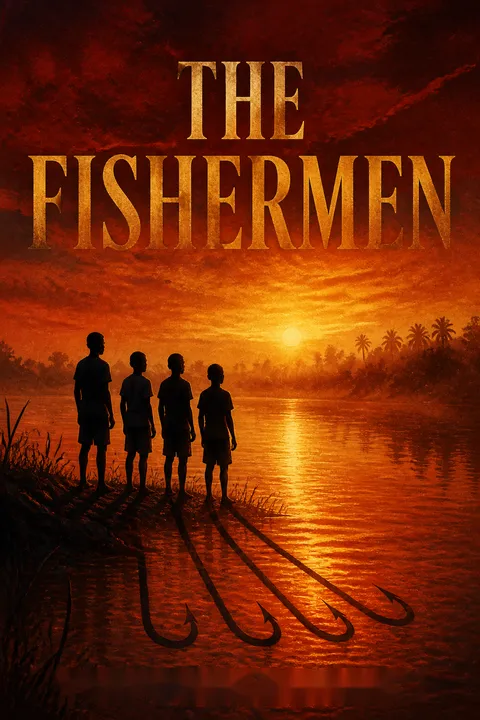
The Agwu family's life in Akure is upended when the father, a stern but loving patriarch, is transferred to a distant city for work. His departure leaves his wife and six children, especially the four eldest boys—Ikenna, Boja, Obembe, and Benjamin—adrift. The boys, once bound by their father's strict discipline, begin to explore forbidden freedoms. Their mother, overwhelmed and anxious, struggles to maintain control. The boys' curiosity and restlessness lead them to the Omi-Ala River, a place shrouded in taboo and local superstition. This new freedom, born from paternal absence, marks the beginning of their journey into danger, as the structure that once held the family together starts to unravel, setting the stage for the tragic events to come.
Forbidden River, Secret Brotherhood
With their father gone, the brothers become fishermen at the forbidden Omi-Ala River, defying their mother's warnings and the town's superstitions. The river, once revered but now feared, becomes their secret playground and a symbol of their unity and rebellion. They catch fish, share stories, and create rituals, forging a brotherhood that feels invincible. Yet, the river's dark reputation looms, and their secret is eventually discovered, leading to severe punishment. The river is both a literal and metaphorical boundary, representing the crossing from innocence to experience, and the first cracks in their familial and personal safety.
The Prophecy of Madness
The brothers' world is shattered when they encounter Abulu, the town's infamous madman, who delivers a chilling prophecy: Ikenna will die at the hands of a fisherman. This encounter plants a seed of paranoia and dread, especially in Ikenna, the eldest. The prophecy's power is magnified by the community's belief in Abulu's supernatural foresight. Ikenna's fear grows, infecting the brothers' relationships and transforming their bond into suspicion. The prophecy becomes a self-fulfilling curse, warping their perceptions and setting them on a path toward tragedy, as the line between fate and free will blurs.
The Eagle's Absence
The father, once the "eagle" watching over his brood, is now a distant figure, his authority diminished. His periodic returns cannot restore the lost order. The boys' misadventures escalate, and their mother's attempts at discipline are undermined by her own grief and exhaustion. The family's dreams—careers, unity, and hope—begin to fade. The absence of the father's guiding hand leaves the boys vulnerable to external influences and internal discord. The family's structure, once rigid and protective, is now porous, allowing chaos and misfortune to seep in.
Brothers Divided, Shadows Grow
Ikenna, consumed by Abulu's prophecy, grows increasingly suspicious of his brothers, especially Boja. The once-unbreakable bond between the siblings is eroded by fear and mistrust. Ikenna isolates himself, his behavior becoming erratic and hostile. Boja, hurt and confused, is drawn into conflict with Ikenna. The younger brothers, Obembe and Benjamin, are caught in the crossfire, powerless to heal the rift. The prophecy's poison seeps deeper, turning love into suspicion and setting the stage for violence. The family's unity, once their greatest strength, is now their greatest vulnerability.
The Madman's Curse
The madman's words haunt the family, especially Ikenna, whose mental state deteriorates. The community's fear of Abulu and belief in his visions amplify the family's isolation. Attempts to seek spiritual cleansing and rational explanations fail. The prophecy becomes a lens through which every action is interpreted, and the brothers' lives are increasingly governed by fear rather than love. The curse is not just a prediction but a psychological trap, ensnaring the family in a cycle of anxiety, suspicion, and doom.
Mother's Despair, Family Fractures
The mother, once a vigilant "falconer," is overwhelmed by the escalating conflict and her inability to protect her children. Her attempts at intervention—prayer, discipline, and appeals to reason—are futile. The family's collective trauma manifests in her mental and emotional decline. She becomes haunted by visions, dreams, and a sense of helplessness. The children, witnessing her suffering, are further destabilized. The mother's despair is both a symptom and a cause of the family's disintegration, as the protective walls of home collapse.
The Metamorphosis of Ikenna
Ikenna, once a protective and charismatic leader, is consumed by paranoia and rage. His relationships with his brothers, especially Boja, deteriorate into hostility and violence. The prophecy becomes his reality, and he interprets every slight as evidence of betrayal. The family's attempts to intervene are unsuccessful, and Ikenna's descent accelerates. His transformation is both psychological and symbolic—a loss of innocence and the birth of a destructive force within the family. The stage is set for the ultimate tragedy, as love turns to hate and brother becomes enemy.
Fratricide and the Red River
The tension between Ikenna and Boja erupts into a fatal confrontation. In a moment of rage and fear, Boja stabs Ikenna, fulfilling Abulu's prophecy. The act is both shocking and inevitable, the culmination of months of suspicion, fear, and psychological torment. The "red river" of blood is both literal and symbolic—a stain that cannot be washed away. The family is shattered, and the surviving brothers are left to grapple with guilt, grief, and the consequences of violence. The prophecy's power is complete, having destroyed the very fabric of brotherhood.
The Aftermath: Grief and Guilt
The deaths of Ikenna and Boja plunge the family into profound grief and guilt. The parents are broken, the mother's mental health collapses, and the younger brothers are left adrift. The community's response is a mix of sympathy and suspicion. The surviving brothers, especially Obembe and Benjamin, are haunted by their roles—active or passive—in the tragedy. The family's dreams are buried with the dead, and hope seems impossible. The aftermath is a landscape of mourning, regret, and the search for meaning in the ruins of what once was.
The Search for Reckoning
Unable to find peace, Obembe becomes obsessed with avenging Ikenna and Boja's deaths. He convinces Benjamin to join him in a quest to kill Abulu, the madman they hold responsible for their family's destruction. Their pursuit is both literal and symbolic—a desperate attempt to reclaim agency and restore balance. The brothers' journey is marked by fear, hesitation, and the burden of violence. The search for reckoning is a search for closure, but it is also a continuation of the cycle of violence and loss.
The Leech of Vengeance
The desire for revenge becomes a leech, draining the brothers of innocence and peace. Their plans to kill Abulu are fraught with moral ambiguity and practical danger. Attempts to poison or ambush him fail, and the brothers are forced to confront the reality of their own capacity for violence. The leech of hatred binds them together but also isolates them from the possibility of healing. The pursuit of vengeance becomes its own curse, perpetuating the cycle of violence and loss.
The Failed Exodus
As the consequences of their actions close in, the brothers plan to flee—first to Canada, then simply to anywhere safe. Their hopes for escape are dashed by fear, guilt, and the impossibility of outrunning their past. The failed exodus is a metaphor for the futility of seeking external solutions to internal wounds. The brothers are trapped by their own choices, the weight of family history, and the inescapable pull of home. The dream of a new life fades, replaced by the grim reality of what they have become.
The Tadpole of Hope
The family's hope for renewal—through immigration, reconciliation, or forgiveness—is fragile, like a tadpole in a can. Despite moments of optimism, the weight of trauma and the consequences of violence prove overwhelming. The brothers' final attempt to kill Abulu succeeds, but the victory is hollow. The hope that vengeance will bring peace is revealed as an illusion. The family's dreams, once vibrant and full of possibility, are now ghosts, haunting the survivors with what might have been.
The Roosters' Reckoning
After killing Abulu, the brothers are celebrated by some but hunted by others. The truth of their actions comes to light, and the community's response is ambivalent—part admiration, part condemnation. The brothers are forced to confront the reality of what they have done and what it has cost. The reckoning is both external (legal and social consequences) and internal (guilt, loss, and the search for redemption). The cycle of violence is complete, and the brothers must find a way to live with the aftermath.
The Moth's Descent
Benjamin, the youngest, is left alone after Obembe flees. He is arrested, tried, and imprisoned, his childhood lost to the consequences of actions he barely understood. In prison, he reflects on the events that led him there, the loss of his brothers, and the collapse of his family. The moth's descent is a metaphor for the fragility of innocence and the ease with which it can be destroyed. Benjamin's journey is one of survival, memory, and the search for meaning in the darkness.
The Egrets Return
Years later, Benjamin is released from prison and returns home. The family, though scarred and changed, is reunited. Obembe, too, returns, and the brothers are finally able to face their parents together. The egrets, symbols of renewal and peace, signal the possibility of healing after the storm. The family's wounds are deep, but the act of remembering, forgiving, and coming together offers a fragile hope. The story ends with the survivors looking toward the future, carrying the memory of the fishermen they once were.
The Fishermen Remembered
The narrative closes with Benjamin's reflection on the past—the joys, sorrows, and tragedies that shaped his family. The story of the fishermen is both a personal and universal tale of love, loss, and the search for meaning. The act of storytelling becomes an act of preservation, a way to honor the dead and keep the bonds of brotherhood alive. The fishermen are remembered not just for their tragedy, but for their courage, their dreams, and the love that, despite everything, endures.
Analysis
Modern analysis: trauma, fate, and the cost of beliefThe Fishermen is a powerful meditation on the fragility of family, the corrosive effects of fear and superstition, and the enduring quest for meaning in the face of tragedy. Obioma uses the microcosm of a Nigerian family to explore universal themes: how absence and loss can unravel the bonds of love; how belief—in prophecy, fate, or vengeance—can shape and destroy lives; and how trauma, if unaddressed, perpetuates itself across generations. The novel interrogates the tension between destiny and agency, showing how the stories we tell ourselves—about who we are, what we fear, and what we hope—can become cages or keys. Through vivid symbolism, psychological depth, and a narrative structure that mirrors the chaos of grief, The Fishermen ultimately suggests that healing is possible, but only through the painful work of remembrance, forgiveness, and the refusal to let the past dictate the future. The story's emotional arc, from innocence to loss to the tentative return of hope, resonates far beyond its setting, offering a universal reflection on what it means to be human, to suffer, and to survive.
Review Summary
The Fishermen receives mostly positive reviews, earning an overall 3.88/5 rating. Readers praise Obioma's powerful storytelling and lyrical prose in this Man Booker shortlisted debut about four Nigerian brothers whose lives unravel after a madman's prophecy. Set in 1990s Nigeria, the novel is frequently compared to Chinua Achebe's work. Reviewers commend its rich cultural detail, mythic overtones, and allegorical representation of Nigeria's colonial history. While some find it tragic and emotionally overwhelming, most consider it beautifully crafted and worthy of acclaim. A few critics feel the symbolism is heavy-handed and the pacing uneven.
People Also Read


Characters
Ikenna
Ikenna is the charismatic and protective eldest of the Agwu brothers, initially the glue holding the siblings together. His father's absence and the madman's prophecy trigger a psychological unraveling, transforming him from a loving leader into a paranoid, isolated figure. Ikenna's descent into suspicion and rage is both a personal tragedy and a symbol of the destructive power of fear and superstition. His relationship with Boja, once close, becomes adversarial, culminating in fratricide. Ikenna's arc is a study in how external pressures and internal vulnerabilities can corrode even the strongest bonds.
Boja
Boja, the second eldest, is sensitive, loyal, and deeply affected by the family's unraveling. He idolizes Ikenna but is devastated by his brother's growing suspicion and hostility. Boja's own pain and confusion lead him to violence in a moment of crisis, fulfilling the prophecy he desperately wished to avoid. His subsequent guilt and inability to live with what he has done result in his suicide. Boja's journey is marked by longing for connection, the agony of betrayal, and the ultimate cost of broken brotherhood.
Obembe
Obembe is the thoughtful and inquisitive third brother, often the mediator and interpreter of events for Benjamin. After the deaths of Ikenna and Boja, he becomes consumed by the need for vengeance against Abulu, whom he blames for the family's destruction. Obembe's quest for reckoning is both a search for justice and a way to make sense of senseless loss. His actions bind him to Benjamin, but also lead to further tragedy and exile. Obembe's arc explores the psychological toll of grief, the allure and danger of vengeance, and the longing for redemption.
Benjamin
Benjamin, the narrator, is the youngest of the four brothers and the story's emotional core. He is sensitive, observant, and deeply attached to his siblings. As the family unravels, Benjamin is both participant and witness, swept along by forces he cannot control. His journey from innocence to experience is marked by trauma, guilt, and eventual imprisonment. Benjamin's reflections on memory, loss, and the meaning of family provide the novel's moral and emotional anchor. His survival and eventual reunion with his family offer a glimmer of hope amid the darkness.
Abulu
Abulu is the town's madman, feared and shunned for his erratic behavior and supposed supernatural powers. His prophecy about Ikenna's death becomes the catalyst for the family's unraveling. Abulu embodies the destructive power of superstition, the community's collective fears, and the unpredictable nature of fate. He is both a victim of his own trauma and a symbol of the chaos that can erupt when reason is abandoned. Abulu's presence haunts the family, driving them to violence and despair.
Mother (Paulina/Adaku)
The mother is a loving, vigilant, and resourceful woman, struggling to hold her family together in the face of overwhelming loss. Her grief over her sons' deaths and her inability to protect them lead to a psychological breakdown. She is haunted by visions, dreams, and a sense of helplessness. Her journey reflects the broader theme of maternal suffering, the limits of love, and the enduring hope for healing. Despite her pain, she remains a source of strength and, ultimately, forgiveness.
Father (James Agwu)
The father is a figure of authority, discipline, and ambition, whose absence precipitates the family's decline. His dreams for his children are grand, but his inability to adapt to changing circumstances leaves the family vulnerable. The tragedies that befall his sons break him, transforming him from a proud "eagle" to a humbled, grieving man. His arc explores the limits of paternal control, the pain of lost dreams, and the possibility of reconciliation.
David
David is the youngest child, largely shielded from the family's tragedies by his age and innocence. He represents the possibility of renewal and the endurance of life after loss. As the family's story unfolds, David grows into a young man, embodying the hope that the cycle of violence and grief can be broken.
Nkem
Nkem, the baby of the family, is a symbol of innocence and the potential for healing. Her presence offers comfort to her grieving parents and brothers. As the family endures loss and trauma, Nkem's growth and resilience suggest that life, though scarred, continues.
Obembe and Benjamin's Bond
The relationship between Obembe and Benjamin is central to the novel's second half. Their shared grief, guilt, and quest for vengeance bind them together, even as it isolates them from the rest of the world. Their journey from innocence to complicity, and ultimately to separation and reunion, encapsulates the novel's exploration of brotherhood, loss, and the search for redemption.
Plot Devices
Prophecy and Self-Fulfilling Fate
The madman's prophecy is the novel's central plot device, setting in motion the events that lead to the family's destruction. The prophecy's power lies not in its supernatural accuracy, but in its psychological impact—how belief in fate can shape actions, relationships, and outcomes. The prophecy becomes a self-fulfilling curse, as fear and suspicion erode trust and provoke violence. This device explores the tension between destiny and free will, and the dangers of surrendering agency to superstition.
Symbolism and Animal Metaphors
Each major character is associated with an animal—eagle, python, sparrow, fungus, moth, egret, etc.—reflecting their psychological states and roles within the family. These metaphors enrich the narrative, providing insight into character motivations and the broader themes of transformation, vulnerability, and survival. The river, the red blood, the tadpole, and the fishermen themselves are recurring symbols, representing innocence, loss, and the search for meaning.
Fractured Narrative and Multiple Perspectives
The novel's structure—shifting between past and present, memory and action—mirrors the family's disintegration. Benjamin's retrospective narration allows for reflection, regret, and the layering of meaning. The use of dreams, visions, and stories within stories blurs the line between reality and imagination, emphasizing the power of narrative to shape identity and destiny.
Foreshadowing and Cyclical Violence
The novel is rich in foreshadowing, from the initial warnings about the river to the recurring references to violence, prophecy, and loss. The cycle of violence—brother against brother, vengeance begetting more violence—is a central motif. The narrative suggests that without intervention, trauma and hatred will perpetuate themselves, but also leaves room for the possibility of breaking the cycle through memory, forgiveness, and love.
Download PDF
Download EPUB
.epub digital book format is ideal for reading ebooks on phones, tablets, and e-readers.








































