
Plot Summary
Mud and Memory
The novel opens in the sodden, shell-blasted landscape of Flanders, 1917. Amid the ceaseless rain and thunder of artillery, a British soldier, burdened with wire and tools, slips from a duckboard and is swallowed by the mud—dead and buried in an instant. This image of arbitrary, anonymous death sets the tone: in the Great War, the line between life and death is as thin as a plank, and memory itself is threatened by the mud. The war's horror is not just in the violence, but in the way it erases individuality and meaning, foreshadowing the story's central questions about truth, justice, and the value of a single life amid mass slaughter.
Conscience on Trial
Douglas Kingsley, a brilliant London detective, stands trial as a conscientious objector. He is not a pacifist, but refuses to fight in a war he deems illogical and unjust. The courtroom is a bear pit of outrage; Kingsley's intellectual arguments are met with scorn, and his German ancestry is used against him. He is accused of cowardice and treason, but insists his refusal is a matter of intellect and conscience, not fear. The trial exposes the era's moral confusion: what is duty, and who decides? Kingsley's stance costs him everything—his career, his family, and his place in society.
Love and Loss
Kingsley's wife, Agnes, visits him in prison. Their marriage, once passionate and full of promise, is now shattered by his decision. Agnes cannot forgive the shame he has brought upon their family, nor the isolation she now endures. She returns his wedding ring, declaring her intent to divorce. Yet beneath her anger is enduring love and pain. Their son, George, is caught in the crossfire of principle and public opinion. This chapter lays bare the personal cost of conscience, as love is sacrificed on the altar of ideals, and the wounds of war reach far beyond the battlefield.
The Lavender Lamp
In London, Captain Alan Abercrombie, a celebrated poet and officer, spends his last night of leave at the Lavender Lamp Club—a haven for gay men in a society that criminalizes their love. Amid laughter, champagne, and flirtation, Abercrombie's wit masks deep wounds. He is lionized for his poetry, but weary of fame and the expectations it brings. The club's camaraderie is a fragile refuge from the war's brutality and the world's intolerance. Abercrombie's encounter with a young admirer, Stamford, hints at longing and vulnerability, foreshadowing the tragic entanglements to come.
Soldiers and Socialists
In a ruined Belgian village, ordinary soldiers of the East Lancs Regiment queue for a rare bath, grumbling about lice, uniforms, and the futility of war. Hopkins, a vocal socialist, rails against the system, arguing that the real winners are the arms manufacturers. The men's banter is laced with bitterness and gallows humor. When Hopkins refuses to don a lice-ridden tunic, he is arrested for insubordination. The scene reveals the class tensions, political ferment, and daily indignities that shape the soldiers' experience, and introduces characters whose fates will intersect with the central mystery.
Prison and Persecution
Sentenced to hard labor, Kingsley is plunged into the brutal world of Wormwood Scrubs. Both guards and inmates despise him—as a former policeman and as a "coward." He is beaten, isolated, and denied even the basic solidarity of the prison's social outcasts. Only the intervention of a powerful Irish trade unionist spares him from starvation. Kingsley's intellect, once his greatest asset, now marks him for special hatred. The chapter explores the psychology of scapegoating and the ways in which war warps justice, turning victims into pariahs and principle into a death sentence.
The Poet's Mask
At the front, Abercrombie is feted at a regimental dinner, his poetry celebrated by officers and men alike. Yet beneath the bravado, he is haunted by loss and the impossibility of living up to his public image. His relationship with Stamford, begun in secret, is now a source of pain and danger. The mask of heroism is slipping; Abercrombie's shell shock is mounting, and his sense of self is fracturing. The chapter captures the tension between public myth and private suffering, and the ways in which war destroys not just bodies, but identities.
Shell Shock and Silence
The Third Battle of Ypres erupts in a storm of artillery and mud. Abercrombie leads his men into the inferno, but emerges mute, shattered by shell shock. The medical system, overwhelmed and indifferent, processes the wounded with assembly-line efficiency. Abercrombie's muteness is both a symptom and a metaphor: in war, words fail, and the truth is buried beneath official narratives. The chapter's emotional core is the silence that follows violence—the unspoken trauma, the loss of voice, and the erasure of individuality in the machinery of war.
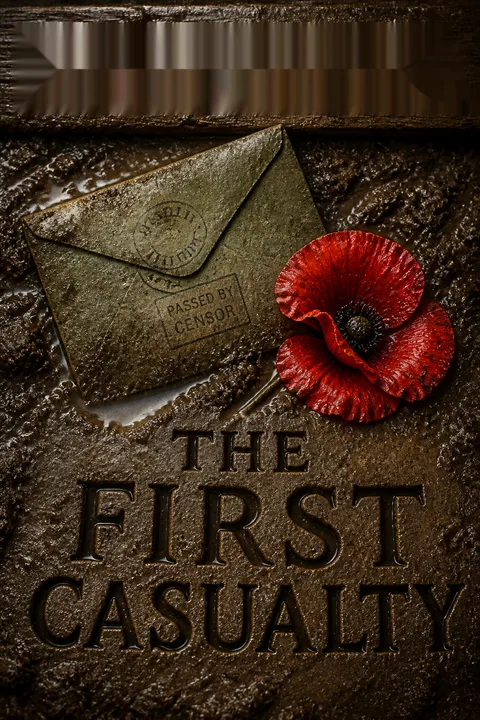
The First Casualty
In a convalescent château near the front, Abercrombie is found dead—shot in the head, not by the enemy, but by an unknown hand. Private Hopkins, recently punished for insubordination, is discovered with the murder weapon and arrested. The army, eager to avoid scandal, prepares to execute him. Yet rumors swirl: was it suicide, a crime of passion, or a political assassination? The boundaries between legal and illegal killing blur. The first casualty, as the title suggests, is truth itself. The stage is set for Kingsley's reluctant return to detective work.
A Murder in the Château
Faked as dead and spirited from prison by the Secret Intelligence Service, Kingsley is coerced into investigating Abercrombie's murder. Both government and opposition demand a credible inquiry to prevent political scandal. Disguised as Captain Marlowe of the Military Police, Kingsley navigates the chaos of the Western Front, interviewing witnesses—Nurse Murray, the traumatized Hopkins, and the enigmatic Stamford. The evidence is elusive, the crime scene compromised, and the war's madness infects every aspect of the case. Kingsley's pursuit of truth becomes a battle against the very forces that have destroyed his own life.
Truth in the Trenches
Kingsley's investigation takes him into the heart of battle. He joins a trench raid to recover the suspected murder weapon, killing Germans in the process and confronting the hypocrisy of his own position. The experience is both exhilarating and horrifying, shattering his moral certainties. He discovers that the bullet which killed Abercrombie does not match the gun found with Hopkins, exonerating the accused. Yet the real killer remains at large, and the machinery of war grinds on, indifferent to individual guilt or innocence. Kingsley's quest for justice is both urgent and, in the larger context, almost absurd.
The Green Envelope
Abercrombie, it emerges, had sought a "green envelope"—the only way to send uncensored letters from the front. He intended to denounce the war, following in the footsteps of Siegfried Sassoon. His poetry, once patriotic, had turned bitter and disillusioned. The army's censors, and the intelligence services, see this as a threat to morale. The green envelope becomes a symbol of forbidden truth, and the lengths to which institutions will go to suppress dissent. Kingsley's investigation uncovers not just a murder, but a conspiracy to silence the war's most dangerous witness.
The Shadow of Betrayal
Through dogged detective work, Kingsley identifies the real murderer: Captain Shannon, the ruthless intelligence officer who orchestrated Kingsley's own "death." Shannon killed Abercrombie to prevent his anti-war message from reaching the public, and framed Hopkins to eliminate a troublesome Bolshevik. The confrontation is tense and violent; Nurse Murray, herself a survivor of police brutality and sexual assault, shoots Shannon before he can kill again. The truth, once revealed, is too dangerous for public consumption. Justice is done, but only in the shadows, and at a terrible cost to all involved.
The Dead Man's Return
With the case closed, Kingsley negotiates his own "rebirth." He assumes the identity of his dead brother, Robert, returning to his family as a man changed by war, loss, and compromise. Agnes, his wife, is both overjoyed and furious at the deception. Their reunion is fraught with pain, forgiveness, and the hope of renewal. The world believes Kingsley is dead; only Agnes and their son know the truth. The war has claimed countless lives, but for Kingsley, the greatest casualty has been his own innocence and certainty.
The Price of Justice
The novel's resolution is bittersweet. Hopkins, though exonerated, is sent straight back into battle and killed. Nurse Murray, who has found love and loss with Kingsley, is left to grapple with the trauma of killing Shannon. The government buries the scandal, publishing a sanitized version of Abercrombie's poetry and maintaining the myth of heroic sacrifice. Kingsley, haunted by the men he has killed and the compromises he has made, reflects on the futility of seeking justice in a world gone mad. The line between right and wrong, hero and villain, is irreparably blurred.
The Final Reckoning
In the war's wake, the survivors struggle to rebuild their lives. Kingsley and Agnes attempt to reclaim their marriage, but the scars of betrayal and loss remain. The truth about Abercrombie's death, and the war's countless other secrets, is consigned to oblivion. The novel ends with a sense of unresolved grief and the recognition that, in war, the first casualty is always truth. The story's emotional arc is one of disillusionment, but also of resilience—the stubborn persistence of love, memory, and the search for meaning amid chaos.
Analysis
Ben Elton's The First Casualty is a searing exploration of the moral, psychological, and social devastation wrought by World War I. Through the lens of a murder mystery, the novel interrogates the very nature of justice, truth, and individual conscience in a world where mass violence has rendered such concepts almost meaningless. The story's emotional arc is one of disillusionment: ideals are sacrificed, love is wounded, and the machinery of war grinds up both heroes and innocents. Yet the novel also insists on the stubborn persistence of memory, love, and the search for meaning. Its characters are deeply human—flawed, passionate, and struggling to make sense of a world gone mad. The lessons are both timeless and urgent: that the first casualty of war is always truth; that justice, if it exists at all, is hard-won and compromised; and that the cost of survival is often the loss of innocence. In its unflinching portrayal of trauma, complicity, and resilience, The First Casualty offers a powerful meditation on the enduring wounds of war and the fragile hope of redemption.
Review Summary
The First Casualty receives mixed reviews, with ratings ranging from 1 to 5 stars. Praised for its vivid depiction of World War I trench warfare and intriguing premise of a conscientious objector investigating a murder at the front, some readers found the characters underdeveloped and the plot predictable. Critics appreciated Elton's research and historical accuracy but felt the book struggled to balance its elements of war novel, murder mystery, and social commentary. While some hailed it as Elton's best work, others found it disappointing compared to his comedic writing.
People Also Read
Characters
Douglas Kingsley
Kingsley is a brilliant, rational, and often arrogant London detective whose refusal to fight in the Great War is rooted in intellect rather than pacifism. His principled stand costs him his career, family, and freedom, making him a pariah in a society gripped by patriotic fervor. Kingsley's psychological complexity lies in his need for logic and justice, even as the world descends into madness. Forced into a secret investigation, he is haunted by guilt, hypocrisy, and the violence he cannot escape. His journey is one of self-discovery, as he confronts the limits of reason, the ambiguity of justice, and the enduring power of love and loss.
Agnes Kingsley
Agnes is Kingsley's wife, a woman of beauty, spirit, and conventional values. Her world is shattered by her husband's public disgrace, and she is torn between love and anger, loyalty and shame. Agnes's psychological struggle is with the expectations of her class and gender, and the pain of abandonment. Her relationship with Kingsley is marked by both deep affection and profound disappointment. Ultimately, she chooses forgiveness and the possibility of renewal, but the scars of betrayal linger. Agnes embodies the war's impact on the home front—the silent suffering, resilience, and longing for lost certainties.
Alan Abercrombie
Abercrombie is a celebrated officer and poet, lionized for his patriotic verse but tormented by the realities of war and his forbidden sexuality. His public persona is a mask, concealing trauma, grief, and disillusionment. Abercrombie's relationships—with Stamford, with his comrades, and with his own ideals—are fraught with longing and loss. His attempt to denounce the war makes him a target for those who fear the power of words. Abercrombie's death is both a personal tragedy and a symbol of the war's destruction of truth, beauty, and individuality.
Kitty Murray
Nurse Murray is a fiercely intelligent, outspoken, and sexually liberated woman, shaped by her experiences as a suffragette and a survivor of police brutality. She despises authority, especially the police, but forms a complex bond with Kingsley. Her compassion for the wounded is matched by her anger at injustice. Murray's relationship with Kingsley is passionate, honest, and ultimately heartbreaking. She is both a witness and a participant in the story's violence, forced to kill in self-defense. Her character embodies the war's challenge to traditional gender roles and the search for agency amid chaos.
Captain Shannon
Shannon is a young, charming, and utterly amoral intelligence officer. He orchestrates Kingsley's "death," manipulates events behind the scenes, and ultimately murders Abercrombie to protect the war effort. Shannon's violence extends to sexual assault and psychological cruelty. He is both a product and an agent of the war's moral collapse, believing that the ends justify any means. Shannon's confrontation with Kingsley and Murray is the novel's moral climax, exposing the cost of unchecked power and the thin line between patriotism and barbarism.
Private Hopkins
Hopkins is a socialist soldier whose refusal to submit to authority makes him a target for punishment and, ultimately, a convenient suspect in Abercrombie's murder. His innocence is proven too late; he is sent back into battle and killed. Hopkins represents the voiceless masses sacrificed by the war, and the ease with which justice is perverted by expedience. His fate is a bitter commentary on the futility of individual resistance in the face of institutional violence.
Stamford
Stamford is a young officer infatuated with Abercrombie, both as a lover and as a literary idol. His longing for recognition leads him to plagiarize Abercrombie's poetry after his death. Stamford's emotional immaturity and desperation for love make him both sympathetic and pitiable. His involvement in the events surrounding Abercrombie's death is marked by confusion, guilt, and a yearning for meaning. Stamford's arc is a study in the dangers of hero worship and the search for identity amid chaos.
Sir Mansfield Cumming
Cumming is the head of the Secret Intelligence Service, orchestrating Kingsley's resurrection and investigation. He is urbane, resourceful, and deeply cynical about the machinery of government and war. Cumming's primary concern is the preservation of order and the avoidance of scandal, even at the cost of truth. His relationship with Kingsley is one of mutual respect and wary calculation. Cumming embodies the moral ambiguities of intelligence work and the compromises demanded by power.
Lord Abercrombie
The father of Alan Abercrombie, he is a pillar of the establishment, devastated by his son's death but complicit in the cover-up that preserves the family's honor. Lord Abercrombie's grief is mingled with pride and a fierce desire to maintain the myth of heroic sacrifice. His interactions with the government reveal the ways in which personal loss is subsumed by public narrative. He is both a victim and an enforcer of the war's moral economy.
Red Sean McAlistair
McAlistair is a powerful Irish trade unionist imprisoned for his activism. He confronts Kingsley with the hypocrisies of the system, challenging him to recognize the broader injustices that predate the war. McAlistair's presence in the story is brief but impactful, serving as a conscience and a reminder of the interconnectedness of all struggles for justice. His character highlights the class tensions and political ferment that underlie the war's surface narrative.
Plot Devices
War as Moral Labyrinth
The novel uses the setting of World War I not just as backdrop, but as a crucible in which all moral, legal, and personal certainties are dissolved. The omnipresence of death, mud, and arbitrary violence creates a world where the difference between murder and legal killing, heroism and cowardice, truth and propaganda, is constantly in question. The narrative structure mirrors this confusion, with shifting perspectives, unreliable witnesses, and a central mystery that resists easy resolution. The war is both a literal and metaphorical fog, obscuring motives and erasing individuality.
Detective Story within a War Story
At its core, the novel is a murder mystery, complete with clues, red herrings, and a dogged investigator. Yet the conventions of the genre are subverted by the war's scale and madness. Evidence is lost in the mud, witnesses are killed or traumatized, and the machinery of justice is itself complicit in injustice. The detective's pursuit of truth becomes a Sisyphean task, highlighting the limitations of reason and the futility of seeking order in chaos. The whodunit structure is both homage and critique, exposing the inadequacy of traditional narratives in the face of modern atrocity.
Foreshadowing and Irony
The novel is rich in foreshadowing: the opening image of a man swallowed by mud prefigures the erasure of truth and identity; Kingsley's trial anticipates his later moral compromises; Abercrombie's mask of heroism conceals fatal vulnerability. Irony pervades the story—Kingsley, who refuses to kill, becomes a killer; the war's "heroes" are destroyed by their own side; justice is achieved only through further violence and deception. The narrative continually undercuts expectations, forcing readers to confront uncomfortable truths.
Symbolism of Letters and Poetry
Letters, poems, and censored messages recur throughout the novel, symbolizing the power and danger of truth. Abercrombie's poetry, once a tool of recruitment, becomes a threat to the war effort when it turns critical. The green envelope represents the desperate hope of communicating honestly amid surveillance and propaganda. The suppression, theft, and destruction of words mirror the erasure of individuality and the manipulation of memory. The novel interrogates the role of art and language in shaping, challenging, and preserving meaning in a world at war.
Psychological Realism and Trauma
The depiction of shell shock—mute, shattered men, haunted by nightmares—serves both as a realistic portrayal of trauma and as a metaphor for the collective psychic wound of the era. Characters' psychological states are rendered with sensitivity and nuance, from Kingsley's intellectual pride and guilt to Murray's defiant vulnerability and Abercrombie's collapse. The war's impact is not just physical, but existential, fracturing identities and relationships. The narrative structure, with its fragmented chronology and shifting perspectives, reflects the disintegration of self and society.
Download PDF
Download EPUB
.epub digital book format is ideal for reading ebooks on phones, tablets, and e-readers.








































