
Plot Summary
Shadows Over Wormwood
In the insular village of Wormwood, Vega Jane's life is defined by routine, poverty, and suspicion. But when she hears a scream at dawn and glimpses her mentor, Quentin Herms, fleeing into the deadly Quag, everything changes. The Quag is a mysterious, beast-filled barrier encircling Wormwood, and no one who enters returns. Vega's curiosity and sense of injustice are awakened as she witnesses Council members and attack canines in pursuit, hinting at secrets and dangers lurking beneath Wormwood's surface. This moment marks the end of Vega's innocence and the beginning of her quest for truth, setting her on a collision course with the village's hidden history and her own destiny.
The Forbidden Quag
The Quag is more than a physical barrier; it is a psychological prison for the people of Wormwood. Legends of monstrous beasts and certain death keep everyone inside, and the Council uses these fears to maintain control. Vega's brief, terrifying proximity to the Quag—and her sighting of Quentin Herms entering it—plants the seed of doubt about everything she's been taught. The Quag becomes a symbol of both terror and possibility, representing the unknown world beyond Wormwood and the lies that may keep its people trapped. Vega's fascination with the Quag grows, even as she tries to suppress her curiosity for the sake of safety.
Secrets in Stacks
At Stacks, the grim factory where Vega is a Finisher, she discovers a secret note from Quentin Herms, hidden in her work. The note hints at a way out of Wormwood and instructs her to search her tree for what may set her free. The factory itself is a microcosm of Wormwood's oppression: dangerous, monotonous, and ruled by Domitar, who enforces Council's will. Vega's discovery of the note—and the subsequent interrogation by Council—forces her to confront the reality that she is now entangled in a dangerous web of secrets, surveillance, and forbidden knowledge.
The Mentor's Flight
Quentin's flight into the Quag is not just an act of desperation but a calculated escape. His absence is quickly noticed, and Council's reaction is swift and severe. Vega is questioned repeatedly, and the pressure mounts as she realizes that Quentin's fate is tied to her own. The Council's paranoia and the community's hunger for the reward on Quentin's head reveal the fragility of Wormwood's social order. Vega's loyalty to her mentor and her family is tested as she is forced to lie, hide evidence, and navigate the treacherous politics of her village.
A Map to Freedom
Following Quentin's instructions, Vega finds a secret board in her tree containing a map of the Quag. The map is a revelation: it suggests that there is a way through the deadly barrier and possibly a world beyond. Vega copies the map onto her skin, knowing that possession of such knowledge is a crime. The map becomes both a beacon of hope and a source of fear, as Vega grapples with the risk of discovery and the moral dilemma of leaving her family behind. The map's existence challenges everything she has been told about Wormwood's limits.
Council's Pursuit
The Council, led by Thansius and enforced by Krone, intensifies its scrutiny of Vega. She is threatened with Valhall, the village prison, and warned that any contact with Quentin will be met with severe punishment. The Council's actions reveal their desperation to maintain order and suppress dissent. Vega's every move is watched, and her relationships—with her brother John, her friend Delph, and her ailing parents—are strained by the constant threat of retribution. The Council's duplicity and the community's complicity become increasingly apparent.
Family in the Care
Vega's visits to her parents in the Care, where they lie unresponsive, underscore the emotional toll of life in Wormwood. Her bond with her younger brother John is deep, but both are haunted by loss and uncertainty. The Care is a place of both hope and despair, where the living are suspended between worlds. Vega's sense of responsibility for her family is a driving force, shaping her decisions and fueling her determination to seek answers, even as she fears what the truth may cost her.
Morrigone's Gaze
Morrigone, the only female Council member, is both admired and feared. Her interactions with Vega are layered with hidden meanings and veiled threats. She possesses mysterious abilities and seems to know more than she reveals. Morrigone's interest in Vega—and in John's intellect—suggests a larger agenda at play. Her role as both protector and potential adversary complicates Vega's quest, as Morrigone alternately offers guidance, issues warnings, and enforces the Council's will. The dynamic between the two women is fraught with tension, envy, and unspoken understanding.
The Chain of Destin
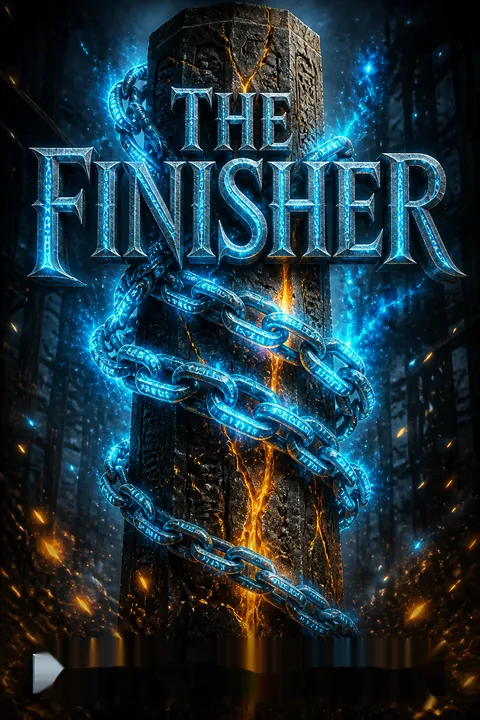
Vega acquires Destin, a sentient chain that allows her to fly and grants her strength. The chain becomes a symbol of her growing power and independence, as well as the burden of responsibility. With Destin, Vega is able to escape danger, train for the Duelum, and ultimately challenge the physical and psychological boundaries of Wormwood. The chain's mysterious origins and its connection to her family's legacy hint at a deeper magic running through Vega's bloodline. Destin is both a tool for survival and a key to unlocking her true potential.
The Book of the Quag
Vega discovers Quentin's book, a compendium of the Quag's creatures and dangers. The book is a treasure trove of forbidden knowledge, but its possession marks Vega as a traitor in the eyes of the Council. The book's detailed descriptions of monsters, magical artifacts, and survival strategies become essential to Vega's preparation for escape. However, the book also attracts suspicion, leading to her imprisonment and near execution. The struggle over knowledge—who controls it, who is allowed to possess it—becomes central to Vega's fight for freedom.
Duelum and Defiance
Forced to fight in the brutal Duelum, Vega faces overwhelming odds as the only female and the youngest competitor. With Delph's training and her own ingenuity, she defeats stronger male opponents, earning the respect and admiration of the village. The Duelum becomes a crucible, testing Vega's courage, resourcefulness, and will to survive. Her victories are not just personal triumphs but acts of defiance against a system designed to keep her—and all of Wormwood's outcasts—in their place. The Duelum is both a spectacle of violence and a stage for Vega's transformation.
Outliers and the Wall
The Council announces the existence of Outliers—monstrous beings from the Quag—as a pretext for building a massive Wall around Wormwood. The Wall is presented as protection, but it is also a prison, designed to keep the villagers in as much as to keep threats out. The construction of the Wall consumes the community, dividing families and exposing the limits of solidarity. Vega sees through the Council's manipulation, recognizing the Wall as another tool of control. The Outliers, whether real or invented, become a symbol of the manufactured threats used to justify tyranny.
Betrayals and Revelations
Vega uncovers painful secrets: her grandfather's disappearance was not an Event but a cover-up; Morrigone's powers are both a gift and a curse; and her own abilities are awakening. Delph's memories return, revealing the trauma inflicted by Morrigone's magic. Vega's relationship with John is strained as he is co-opted by the Council. The lines between friend and foe blur, and Vega must decide whom to trust. The revelation that Wormwood is a prison, and that escape is possible, shatters the last illusions of safety and belonging.
The Hall of Truth
Vega and Delph discover the Hall of Truth in Stacks, a secret library filled with magical books and artifacts. Here, they confront monstrous guardians and visions of the past, learning that Wormwood's origins are far more complex than they imagined. The Hall is a place of both enlightenment and danger, where knowledge is protected by deadly traps. The experience cements Vega's resolve to escape and exposes the depth of the Council's deception. The Hall of Truth is both a literal and metaphorical gateway to understanding—and to the peril that comes with it.
The Duelum Champion
In the final Duelum, Vega faces Ladon-Tosh, a seemingly invincible opponent who is ultimately revealed to be a vessel for monstrous jabbits. With the help of Destin and the Elemental, Vega defeats him, saving the village from destruction. Her victory is celebrated, but it comes at a cost: the truth about Wormwood's dangers, the loss of innocence, and the realization that true freedom lies beyond the village's walls. Vega's transformation from outcast to champion is complete, but her journey is far from over.
Escape Into the Quag
With the Wall completed and the Council closing in, Vega and Delph make their escape into the Quag, armed with knowledge, magic, and determination. Their flight is fraught with peril—pursued by Council, wounded, and hunted by beasts—but they survive through courage and the bonds of friendship. The Quag, once a symbol of death, becomes a path to possibility. As they leap into the unknown, Vega embraces her destiny as a seeker of truth, leaving behind the prison of Wormwood and stepping into a world of danger, wonder, and hope.
Analysis
David Baldacci's The Finisher is a coming-of-age fantasy that interrogates the boundaries—physical, psychological, and societal—that define and confine us. Through the eyes of Vega Jane, readers experience the suffocating insularity of Wormwood, a society built on fear, secrecy, and the suppression of knowledge. The novel explores themes of power, gender, and the cost of conformity, using magical artifacts and monstrous threats as metaphors for the real dangers of ignorance and authoritarianism. Vega's journey from marginalized factory worker to champion and fugitive is both a personal and political awakening, challenging the narratives imposed by those in power. The story's structure—alternating between moments of intimate vulnerability and epic confrontation—mirrors the oscillation between hope and despair that characterizes resistance in oppressive systems. Ultimately, The Finisher is a celebration of curiosity, courage, and the transformative power of truth. It warns against the dangers of complacency and the seductions of false security, urging readers to question, to seek, and to leap into the unknown—even when the cost is everything they have ever known.
Review Summary
The Finisher receives mixed reviews, averaging 3.83/5 stars. Fans praise David Baldacci's first YA fantasy for its strong protagonist Vega Jane, imaginative world-building, and action-packed adventure. Many appreciate the limited romance and fast pacing. However, critics cite frustrating issues: excessive made-up language replacing common words, slow opening (first 100-200 pages), unanswered questions despite 500+ pages, and unclear world-building. Several reviewers note it reads as series-opener rather than standalone, leaving many mysteries unresolved. The magical elements and creatures receive praise, though some find them poorly explained. Overall, fantasy enthusiasts tend to enjoy it more than Baldacci's typical thriller readers.
People Also Read
Characters
Vega Jane
Vega Jane is a fiercely independent, resourceful, and compassionate fifteen-year-old girl living in the oppressive village of Wormwood. Orphaned in all but name, she is driven by loyalty to her family and friends, a relentless curiosity, and a deep sense of justice. Vega's journey is one of awakening: from a marginalized Finisher at Stacks to a champion of the Duelum and, ultimately, a fugitive seeking freedom. Her psychological arc is marked by grief, anger, and the gradual acceptance of her own power—both magical and moral. Vega's relationships—with her brother John, her friend Delph, and her enigmatic mentor Quentin—are sources of both strength and vulnerability. Her defiance of authority and willingness to risk everything for the truth make her a symbol of hope and change in a stagnant world.
Delph (Daniel Delphia)
Delph is Vega's closest companion, a physically powerful but emotionally wounded young man. His stutter and social awkwardness mask a deep intelligence and sensitivity. Delph's loyalty to Vega is unwavering, and he becomes her confidant, protector, and, eventually, partner in escape. His own trauma—inflicted by Morrigone's magic—mirrors the psychological scars carried by many in Wormwood. Delph's journey is one of healing and self-acceptance, as he overcomes his fears, regains his voice, and chooses to risk everything for friendship and freedom. His relationship with his father, Duf, and his willingness to forgive and support Vega highlight his capacity for empathy and resilience.
John Jane
John is Vega's younger brother, a quiet, brilliant boy whose memory and analytical skills set him apart. Initially dependent on Vega, John is gradually drawn into the orbit of Morrigone and the Council, where his talents are exploited for the construction of the Wall. John's psychological arc is one of alienation and manipulation; he is both a victim and a tool of the system. His bond with Vega is tested by secrets, lies, and the pressures of expectation. John's struggle to maintain his identity and compassion in the face of power reflects the broader theme of innocence corrupted by authority.
Morrigone
Morrigone is the only female member of Council, a figure of beauty, intelligence, and mystery. She possesses magical abilities—memory manipulation, telekinesis, and more—and is both admired and feared. Morrigone's motives are complex: she seeks to protect Wormwood but is also complicit in its oppression. Her relationship with Vega is fraught with envy, rivalry, and a recognition of shared power. Morrigone's actions—mentoring John, confronting Vega, and ultimately failing to control the monsters she unleashes—reveal the dangers of unchecked authority and the costs of secrecy. Her psychological depth lies in her loneliness, ambition, and the burden of her gifts.
Thansius
Thansius is the imposing Chief of Council, a former Duelum champion whose strength is matched by his sense of duty. He is both a guardian and a jailer, enforcing the rules of Wormwood while harboring doubts about their justice. Thansius's interactions with Vega are marked by respect, regret, and a recognition of her potential. He is a pragmatist, willing to bend the truth for what he perceives as the greater good, but haunted by the consequences. Thansius's psychological complexity lies in his struggle to balance order and compassion, tradition and change.
Jurik Krone
Krone is a senior Council member, driven by resentment, ambition, and a personal vendetta against Vega's family. He is the primary antagonist, orchestrating Vega's persecution, manipulating evidence, and enforcing the harshest punishments. Krone's psychological makeup is defined by insecurity, a need for control, and a willingness to sacrifice others for his own advancement. His relationship with Vega is adversarial, fueled by old grudges and a fear of her potential. Krone represents the dangers of institutional power unchecked by empathy or self-reflection.
Quentin Herms
Quentin is Vega's mentor at Stacks, a skilled Finisher and family friend. His flight into the Quag and the secrets he leaves behind set the plot in motion. Quentin's actions are driven by a desire for freedom and a belief in possibilities beyond Wormwood. His psychological profile is that of a quiet revolutionary, willing to risk everything for knowledge and hope. Quentin's relationship with Vega is one of trust, guidance, and shared curiosity. His legacy—maps, books, and courage—empowers Vega to challenge the world's boundaries.
Duf Delphia
Duf is Delph's father, a beast trainer whose life is shattered by a workplace accident. His loss of legs and subsequent adaptation to timbertoes reflect the physical and emotional costs of Wormwood's harshness. Duf's relationship with Delph is loving but marked by hardship and sacrifice. His acceptance of help, willingness to start anew, and support for Delph's choices highlight the themes of endurance and the importance of family.
Domitar
Domitar is the blustering, self-important manager of Stacks. Initially an antagonist, he reveals unexpected depth and vulnerability as the story progresses. Domitar's complicity in the system is tempered by moments of empathy and regret. His knowledge of Wormwood's secrets and his ambiguous guidance to Vega position him as both a gatekeeper and a potential source of wisdom. Domitar's psychological arc is one of gradual awakening to the costs of conformity.
Harry Two
Harry Two is Vega's canine, a source of comfort, protection, and unconditional love. His presence grounds Vega emotionally, providing solace in moments of despair and courage in times of danger. Harry Two's near-death and miraculous recovery underscore the themes of loss, hope, and the power of connection. As a non-human character, he represents the enduring bonds that transcend the limitations of Wormwood.
Plot Devices
The Quag as Living Barrier
The Quag functions as a literal and metaphorical barrier, encircling Wormwood and shaping its inhabitants' fears and beliefs. It is a place of monsters, magic, and death, but also of hope and escape. The Quag's impenetrability is enforced by legend, Council propaganda, and the visible consequences for those who challenge it. As Vega learns more about the Quag—through maps, books, and direct experience—it transforms from a symbol of doom to a path of liberation. The Quag's mysteries drive the plot, forcing characters to confront their deepest fears and desires.
Magical Artifacts and Inherited Power
Objects like Destin (the chain), the Elemental (spear), the Adder Stone, and the map of the Quag are central to Vega's journey. These artifacts are not just tools but extensions of her identity and heritage. Their magical properties—flight, strength, healing, and transformation—reflect the latent power within Vega and her family. The artifacts serve as catalysts for action, sources of conflict, and symbols of the potential for change. Their origins and limitations are gradually revealed, intertwining personal destiny with the broader history of Wormwood.
The Duelum as Social Crucible
The brutal tournament is both entertainment and a mechanism of control, reinforcing gender roles, hierarchy, and the value of violence. Vega's participation—and ultimate victory—subverts expectations, challenges misogyny, and inspires others. The Duelum's structure, rules, and spectacle provide a stage for character development, alliances, and betrayals. It is a microcosm of Wormwood's society, where survival depends on cunning, strength, and the willingness to defy authority.
Council Manipulation and Manufactured Threats
The Council's announcement of Outliers and the construction of the Wall are classic examples of manufactured crises used to justify repression. The manipulation of information, the use of rewards and punishments, and the exploitation of communal fears are recurring plot devices. The Council's duplicity is revealed through foreshadowing, conflicting testimonies, and the gradual uncovering of hidden agendas. The tension between truth and propaganda is a driving force, shaping characters' choices and the community's fate.
Memory, Trauma, and the Power of Knowledge
The manipulation of memory—through Morrigone's magic, Council edicts, and personal trauma—is a recurring motif. Characters struggle to remember, to forget, and to make sense of their experiences. The recovery of lost memories (Delph's trauma, Vega's visions) is essential to breaking free from oppression. Books, maps, and oral histories are contested sources of knowledge, with possession and interpretation carrying life-or-death consequences. The quest for truth is both a personal and collective journey, with knowledge serving as the ultimate tool of resistance.
About the Author



Download PDF
Download EPUB
.epub digital book format is ideal for reading ebooks on phones, tablets, and e-readers.








































