
Key Takeaways
1. From Dispossession to Determination: Chavez's Migrant Roots
"Maybe that is when the rebellion started."
Early life's crucible. Cesar Chavez was born in 1927 into a modest but stable farming family in Arizona, a Chicano version of the American Dream. His grandfather, a former indentured servant from Mexico, had carved a farm out of the desert, instilling in Cesar a deep connection to the land and a sense of self-reliance. His mother, Juana, a devout Catholic, taught him the principles of nonviolence and the importance of turning the other cheek, lessons that would profoundly shape his future activism.
The Great Depression's impact. The stock market crash of 1929 eventually reached the Chavez family, leading to the loss of their eighty-acre farm in 1938 due to drought and predatory banking practices. This dispossession forced the eleven-year-old Cesar and his family onto the migrant trail, joining thousands of "Okies" and other uprooted families seeking work in California's fields. This experience exposed him to the harsh realities of farm labor and systemic discrimination.
- Lost family farm due to drought and bank actions.
- Became migrant workers, traveling across California.
- Experienced severe poverty and hunger, often foraging for food.
- Encountered widespread racial discrimination and segregation.
Seeds of defiance. As a migrant worker, Chavez witnessed firsthand the exploitation and indignities faced by farm laborers, including low wages, lack of basic amenities like water and toilets, and arbitrary firings. His father, a proud and principled man, often refused to tolerate abuse, instilling in Cesar a "strikingest family" ethos. These formative experiences, coupled with the humiliation of segregated schools and public spaces, fueled a quiet but fierce determination to fight for justice and dignity for farmworkers.
2. Forging a Movement: The Power of Grassroots Organizing
"I didn't know what CSO was, or who this guy Fred Ross was, but I knew about the Bloody Christmas case, and so did everybody in that room... Fred did such a good job of explaining how poor people could build power that I could taste it."
A pivotal encounter. In 1952, a chance meeting with Fred Ross, a community organizer from the Community Service Organization (CSO), transformed Chavez's life. Initially suspicious of the "gringo," Cesar was captivated by Ross's ability to articulate how ordinary people could build power to address issues like police brutality and segregation. Ross became Chavez's mentor, teaching him the meticulous, door-to-door organizing techniques that would become the bedrock of his future movement.
Learning the ropes. Chavez immersed himself in CSO's work, leading voter registration drives and helping Mexican immigrants become citizens. He learned to navigate political landscapes, confront red-baiting accusations from the FBI, and build a network of allies. This period honed his leadership skills and reinforced his belief in the power of collective action, even as he faced internal conflicts within CSO regarding its focus on urban versus rural issues.
- Led successful voter registration campaigns in San Jose.
- Fought against Republican attempts to intimidate Mexican American voters.
- Developed a "bird-dogging" approach to recruit members.
- Learned to counter accusations of communism with community and church support.
The birth of a vision. By 1962, Chavez felt compelled to dedicate himself fully to farmworkers. Despite CSO's refusal to fund a farmworker organizing project, he resigned, moving his family to Delano with just $1,000 in savings. There, he founded the National Farm Workers Association (NFWA), deliberately avoiding the term "union" to bypass immediate grower hostility. He envisioned a social movement rooted in the fields, building power slowly, one worker at a time, supported by a credit union, a hiring hall, and a powerful bilingual newspaper, El Malcriado.
3. The Delano Spark: Nonviolence Ignites a National Struggle
"It is well to remember there must be courage, but also, that in victory there must be humility."
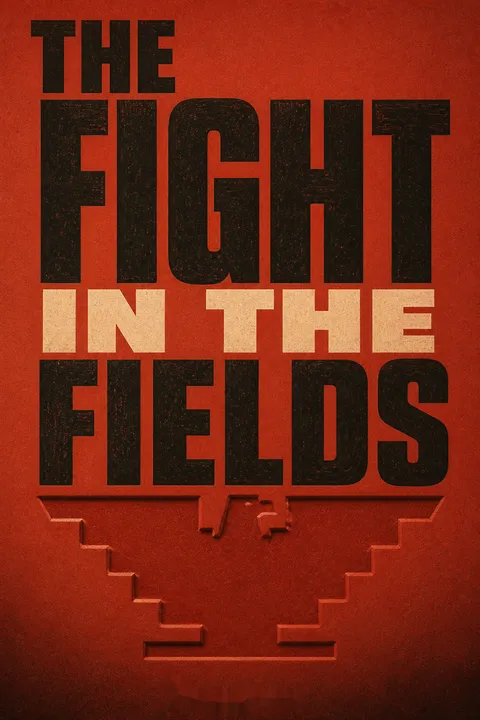
A historic alliance. In September 1965, Filipino grape workers, organized by the Agricultural Workers Organizing Committee (AWOC) and led by Larry Itliong, went on strike in Delano for better wages. Chavez, despite his cautious approach, recognized the moment's urgency. The NFWA, predominantly Mexican and Chicano, voted to join the strike on Mexican Independence Day, uniting two historically divided groups under the banner of La Huelga (The Strike) and the iconic black eagle flag.
Nonviolence as strategy. Chavez insisted on strict nonviolence, a philosophy inspired by Mahatma Gandhi and Martin Luther King Jr. This discipline, even in the face of grower intimidation, police harassment, and Teamster violence, proved crucial. It garnered widespread public sympathy and attracted a diverse coalition of supporters:
- Students from the Free Speech and Civil Rights movements.
- Clergymen and religious organizations (Migrant Ministry).
- Urban Chicano activists and artists (Teatro Campesino).
- Labor unions, notably the United Auto Workers (UAW) led by Walter Reuther.
The pilgrimage and victory. To escalate pressure and counter negative media portrayals, Chavez led a 300-mile perigrinación (pilgrimage) from Delano to Sacramento in 1966. This march, filled with religious imagery and powerful rhetoric, captured national attention. It culminated in a stunning victory when Schenley Industries, a major grape grower, agreed to negotiate, marking the first contract for farmworkers in California history and validating Chavez's nonviolent approach.
4. Boycotts and Legal Battles: Challenging Agribusiness Giants
"We were facing a giant whose policy was to break legitimate unions... But they met with a very different brand of unionism when they met us."
Taking on titans. Following the Schenley victory, the newly merged United Farm Workers Organizing Committee (UFWOC) targeted the DiGiorgio Corporation, a powerful agribusiness giant with a history of union-busting. Chavez launched a nationwide boycott of DiGiorgio products, including TreeSweet juices, leveraging consumer power to pressure the company. This strategy, combined with internal organizing and legal challenges, forced DiGiorgio to agree to union elections.
Teamster treachery and legal ingenuity. The Teamsters union, in collusion with growers, attempted to undermine UFWOC by signing "sweetheart deals" and intimidating workers. This led to a fierce rivalry, but UFWOC, with the help of attorney Jerry Cohen, fought back with legal "karate." Cohen challenged unconstitutional injunctions and used creative legal maneuvers, such as forming the "United Peanut Shelling Workers of America" to bypass anti-boycott laws, demonstrating the union's adaptability and resourcefulness.
- DiGiorgio attempted to rig elections in favor of the Teamsters.
- Chavez and allies successfully pushed for new, fair elections.
- UFWOC won elections at DiGiorgio's Sierra Vista and Arvin ranches.
- The DiGiorgio contract established groundbreaking health and welfare funds.
The Great Grape Boycott. The growers' continued resistance and attempts to evade boycotts by using multiple labels led Chavez to declare a nationwide boycott of all California table grapes in 1968. This ambitious campaign, supported by thousands of volunteers across North America, became a defining moment. It brought the plight of farmworkers into millions of homes, forcing consumers to confront the human cost of their food and ultimately compelling many growers to the bargaining table by 1970.
5. Salinas Showdown: The Fight for Union Recognition
"No longer can a couple of white men sit together and write the destinies of all the Chicanos and Filipino workers in this valley."
A new front opens. In 1970, just as the Delano grape contracts were being finalized, Salinas Valley growers, fearing the spread of UFW influence, secretly signed contracts with the Teamsters union to represent their vegetable workers. This betrayal ignited a massive revolt among thousands of Mexican and Chicano lettuce, broccoli, and strawberry pickers who felt their right to choose their own union had been stolen. Chavez, despite being stretched thin, immediately shifted the union's focus to Salinas.
Escalating conflict. The Salinas strike was marked by intense confrontations. Growers obtained injunctions against picketing, hired armed guards, and the Teamsters brought in thugs wielding baseball bats. UFW attorney Jerry Cohen was severely beaten, and violence became a daily threat. Chavez, while maintaining his commitment to nonviolence, had to navigate this volatile environment, using the media to expose the growers' and Teamsters' tactics and rally public support.
- Teamsters signed "sweetheart deals" with Salinas growers without worker input.
- Thousands of farmworkers "voted with their feet," joining mass rallies and strikes.
- UFWOC faced violent intimidation from Teamsters and grower-hired security.
- Chavez was jailed for defying an injunction against boycotting Bud Antle lettuce.
Hard-won victories. Despite the chaos, the UFW achieved significant breakthroughs. Dolores Huerta negotiated a groundbreaking contract with InterHarvest (owned by United Fruit), securing substantial wage increases, improved benefits, and the elimination of dangerous pesticides like DDT. This victory, along with the California Supreme Court ruling that overturned injunctions against the lettuce boycott, forced other major vegetable firms to sign with UFWOC, demonstrating the power of worker solidarity even in the face of overwhelming opposition.
6. A Law for Farmworkers: Political Triumph and Bureaucratic Strife
"Certainly I liked the law because it got me off the hook."
The ultimate confrontation. The brutal 1973 grape strike, marked by widespread violence and the deaths of two UFW members, Nagi Daifullah and Juan de la Cruz, convinced Chavez that a lasting solution required legal protection. He shifted strategy, pushing for a state law that would guarantee farmworkers the right to organize and bargain collectively, a right enjoyed by most other American workers since 1935. This led to intense lobbying efforts in Sacramento.
Jerry Brown's role. The election of Governor Jerry Brown in 1974, a UFW ally, created a window of opportunity. Chavez, through strategic pressure tactics like the 1975 march on Gallo, forced Brown to engage. After marathon negotiations involving the UFW, growers, and Teamsters, Brown signed the Agricultural Labor Relations Act (ALRA) in 1975, a landmark law that granted farmworkers unprecedented rights, including secret-ballot elections and protection against unfair labor practices.
- ALRA established the Agricultural Labor Relations Board (ALRB) to oversee elections.
- The law aimed to bring peace and fairness to California's agricultural fields.
- It included provisions for union access to farms and protection against retaliation.
Challenges to the law. The ALRA's implementation was immediately fraught with challenges. Growers contested elections, filed appeals, and sought to defund the ALRB, leading to bureaucratic paralysis. Chavez's attempt to enshrine the law's funding and access provisions in the state constitution via Proposition 14 in 1976 failed due to a well-funded opposition campaign. This period of legal and political wrangling, coupled with internal union disagreements, tested the UFW's resilience and forced Chavez to adapt his leadership style.
7. The Poisoned Fields: A New Battle Against Pesticides
"In the old days, miners would carry birds with them to warn against poison gas. Hopefully, the birds would die before the miners. Farmworkers are society's canaries."
A growing health crisis. As the 1980s began, Chavez increasingly focused on the devastating impact of pesticides on farmworkers and their families. Reports of cancer clusters, particularly childhood leukemia in towns like McFarland, highlighted the urgent need for action. Chavez and UFW nurse-turned-doctor Marion Moses became vocal advocates, linking decades of chemical spraying to severe illnesses and birth defects among farmworker communities.
The new grape boycott. In 1984, Chavez launched a renewed grape boycott, this time emphasizing the health risks of pesticides to consumers. The union produced "The Wrath of Grapes," a powerful video documenting the human cost of chemical exposure, which was distributed nationwide. This campaign aimed to pressure growers to adopt safer practices and negotiate contracts that included pesticide protections, a demand the UFW had pioneered in earlier contracts.
- McFarland experienced unusually high rates of childhood leukemia.
- UFW video "The Wrath of Grapes" highlighted pesticide dangers.
- Chavez undertook a 36-day fast in 1988 to protest pesticide use.
Resistance and setbacks. Growers responded with sophisticated public relations campaigns, accusing Chavez of opportunism and discrediting the union's claims. The boycott's impact was less decisive than in the past, partly due to changing political landscapes and a decline in overall union support. Despite these challenges, Chavez's relentless advocacy kept the issue of pesticide safety in the public eye, leading to some local regulatory changes and raising broader awareness about environmental justice in agriculture.
8. Enduring Legacy: Chavez's Final Fights and Lasting Impact
"Regardless of what the future holds for our union, regardless of what the future holds for farmworkers, our accomplishments cannot be undone. The consciousness and the pride that were raised by our union are alive and thriving inside millions of young Hispanics who will never work on a farm."
An elder statesman's final battles. By the 1990s, Chavez, though older and facing internal union challenges, remained a tireless advocate. He continued to campaign against pesticides, lobby for farmworker rights, and push for renewed organizing efforts. His acceptance of a school named in his honor in Coachella in 1990 symbolized a bittersweet vindication, acknowledging his profound impact even as the union faced ongoing struggles.
Personal losses and a final pilgrimage. The deaths of his mother, Juana, in 1991, and his lifelong mentor, Fred Ross, in 1992, deeply affected Chavez. Just months after Ross's funeral, Chavez traveled to Yuma, Arizona, to defend the UFW against a multi-million dollar lawsuit from Bruce Church Incorporated, a company whose land had once been his family's farm. It was there, in his home state, that he died peacefully in his sleep on April 22, 1993, at the age of sixty-six.
- Chavez died in Yuma, Arizona, while defending the UFW in a lawsuit.
- His funeral drew 40,000 people in a final march through Delano.
- His pine coffin, crafted by his brother Richard, symbolized his humility.
A lasting inspiration. Chavez's funeral was an epic event, drawing 40,000 mourners in a final procession through Delano, a testament to his enduring legacy. His son-in-law, Arturo Rodriguez, succeeded him, revitalizing the UFW's organizing efforts, particularly among Mixtec Indian farmworkers and in the strawberry industry. Chavez's life work transformed farm labor, instilled pride in the Chicano community, and inspired generations of activists, ensuring that the fight for dignity and justice in the fields would continue.
Download PDF
Download EPUB
.epub digital book format is ideal for reading ebooks on phones, tablets, and e-readers.








































