


Plot Summary
The Girl in the Floor
Charlotte Myers1 has spent all twenty-five years of her life hidden beneath a trapdoor in her parents' home, tucked into a carpet-padded hole where she reads worn romance novels by dying lamplight. In this world, women are so scarce they're sold at auction, and any female born to humans is seized by government enforcers called Seekers.
Charlotte's father Dave8 bought her mother9 legally before prices soared — but Charlotte1 herself was born in secret, her existence a crime punishable by death.
When news breaks that fifty women were captured from a hideout and Seekers are now authorized to raid private homes, her parents refuse to turn her in. Days later, the Seekers smash through their door. Dave8 falls dead on the living room floor. Charlotte1 is ripped from her house and thrown into an armored van.
Sold Under the Spotlight
After weeks in a sterile facility where she's catalogued like inventory — name, age, breed, virginity status — Charlotte1 is stripped, showered, and led naked into a pitch-black auditorium. One spotlight. One stage.
She can't see the bidders, only hear murmurs of excitement when the auctioneer announces she's a full human virgin with good odds for twins. From a private viewing room, three demons watch: Gray,2 a young incubus desperate for a female companion; Silas,4 an ancient fate demon who cannot see Charlotte's1 future because it's tangled with his own; and Aziel,3 the king of the Wrath kingdom, who agreed to buy Gray2 a female only because the incubus kept invading his dreams to feed. Gray2 selects Charlotte1 without looking. Aziel3 pays without flinching.
The Incubus Gives His Shirt
Outside the facility, a guard shoves Charlotte1 toward a black car. Gray2 materializes between them, twists the guard's wrist back, and nearly kills the man for touching her. He strips off his own shirt and hands it to her — the first act of care she's received since capture.
His scent hits her lungs immediately, flooding her with involuntary arousal: the signature weapon of an incubus. Gray2 introduces himself and explains she'll live with him, Aziel,3 and Silas.4 Charlotte1 assumes all three will use her.
Gray2 clarifies that incubi cannot claim virgins through lust — he'll only feed from her dreams until she gives real consent. The relief is fragile. They travel through a portal to the demon realm, where Charlotte1 vomits on Gray's2 shoes and collapses from the overwhelming power that saturates their estate.
Charlotte's Failed Seduction
Silas4 pulls Charlotte1 aside on her first night to deliver crucial information: Aziel3 cannot have sex without triggering a permanent life bond — a curse on his royal bloodline — and Gray,2 despite being a sex demon, genuinely won't touch her without consent.
The warning proves prescient when Aziel3 corners Charlotte1 in a hallway, pins her to the wall, and threatens to send her to an incubi den if she doesn't sleep with Gray2 by lunch. Terrified, Charlotte1 goes to Gray's2 room and tries to seduce him.
He sees through the act within seconds — smells the fear beneath her forced desire — and refuses. He promises Aziel's3 threats are empty. Charlotte1 doesn't believe him, but his refusal to take what she's offering from fear is the first evidence he means what he says.
A Grave in the Garden
Charlotte1 wakes to find her room transformed — rubber ducks on the dresser, family photos on the wall, trinkets from a life underground. Gray2 spent the previous night teleporting to her childhood home, packing suitcases until his muscles shook. He drew power from Aziel3 through their bond, an act that humiliated the proud incubus, to make one final trip.
He found her father's8 body decomposing on the living room carpet and buried Dave8 in the family garden, speaking words over a man he never knew but promised to honor. When Charlotte1 sees the photo where her father's8 arms wrap around her and her mother9 — the one they were terrified to take — she breaks. For the first time since capture, she wraps her arms around Gray2 and means it.
Eight Ball Confessions
Gray2 takes Charlotte1 to a pool hall he secretly owns in Wrath, dresses her in an oversized brown dress, and teaches her to play. They wager: each sunk ball earns a question. Charlotte1 sinks two and asks how he met Silas4 and Aziel.3 Gray's2 story is a wound he's never fully shown anyone.
He once loved a woman named Nicolette,11 introduced her to his incubus den as his own — but his family mocked his possessiveness, used their lust to seduce her, and she chose to stay with them. Expelled from the kingdom of Lust, starving and near death, he wandered into Wrath until Silas4 and Aziel3 found him. In a desperate, accidental feeding, Gray2 broke through Aziel's3 mind and triggered the Wrath king's bonding curse. He's been tethered to Aziel3 ever since.
Only Mine to Feed
Gray's2 hunger is visible — sunken cheeks, dark circles, cold skin. He's been rationing himself, refusing to seek other women out of respect for Charlotte.1 When he admits he'll need to visit a demon brothel if she won't let him feed, her jealousy hits like a wall. Charlotte1 makes her decision: she will be his only source of lust, even if that means he enters her dreams without asking.
Their first consensual dream feed is tender and electric — Gray2 uses only his hands and mouth, keeping his promise. Charlotte1 wakes mid-orgasm and, still trembling, invites him into her real bed. He asks permission. She scoots over. When he slides his fingers between hers under the covers, the handholding feels more intimate than anything that preceded it.
Hearts Ripped at the Gala
The annual gathering of demon leaders is held in Lust, Gray's2 home kingdom. Charlotte1 must attend on Aziel's3 arm to maintain the fiction that she belongs to the Wrath king, while Gray2 keeps his distance to prevent his incubus family from claiming her.
Charlotte1 watches from across the room as Gray2 sits with Shay5 — a demon female from his past — lets her straddle his lap, lets her lips graze his neck. Each glance feels like swallowing glass. When Asmod,6 the king of Lust and Gray's2 father, floods the room with pheromones, Charlotte's1 body buckles into a frenzy.
Incubi lunge for her. Silas4 fights them off with his fists. Then Aziel3 materializes behind Nicolette11 — Gray's2 first love, now Asmod's6 wife — and rips out her heart. He kills an incubus who touched Charlotte1 next. His wrath devours him whole.
Three Bodies, One Bed
Aziel3 teleports Charlotte1 to his bedroom at the estate, overcome by rage. Gray2 pursues and takes a beating — broken nose, fists to the temple — trying to keep the Wrath away from her. Charlotte,1 still burning from the incubi lust, is incoherent with need.
Silas4 helps Gray2 pin Aziel3 to the bed. In a desperate bid to calm the Wrath, Gray2 places Charlotte1 on Aziel's3 chest and guides the older demon's hand between her thighs, coaching him in slow circles. Charlotte1 rocks against Aziel's3 fingers while Gray2 strokes him to completion with his other hand.
Aziel3 calls Charlotte1 his. She promises she is. Afterward, Gray2 peels Charlotte1 off Aziel's3 body and carries her away while the Wrath lies spent and trembling — the closest thing to vulnerability he's shown in centuries.
Boyfriend, Not Owner
Charlotte1 demands answers. Gray2 confirms they're exclusive — she's his girlfriend, not his property. But the revelation that stings comes from Silas:4 the three demons agreed long ago to share a single bonded female.
Charlotte1 was purchased as a temporary placeholder, a feeding tool to keep Gray2 sustained until they find their real mate. The bonding would grant that woman immortality, power, and a permanent soul-tie. Charlotte1 realizes she's auditioning for a role they never planned to give her.
When Gray's father Asmod6 arrives with his daughter Valentine10 — a succubus positioned to inherit Lust's throne — and proposes trading Charlotte1 for her, Silas4 firmly rejects the offer. But he does so for political reasons, not romantic ones, and the distinction carves deep.
The Kiss Silas Returns
Silas4 finally tells Charlotte1 the truth about the female decline. Wrath demons discovered that the female body rejects X-chromosome sperm when the mother lacks oxytocin — a hormone produced by welcome physical touch. The worse men treated women, the fewer daughters were born.
Charlotte's1 excitement is volcanic. This knowledge could save every breed. She launches herself into Silas's4 lap and kisses him. He kisses her back with hunger, his hands gripping her hips as she grinds against him. Then he stops.
He pulls his fingers from her waistband and tells her she's too young, that she only wants him because she has no other options. Charlotte's1 devastation is quiet but absolute. Gray,2 who overheard everything from his office, comes to collect her without saying a word to Silas4 about the kiss.
Aziel's Cruel Replacement
Aziel3 returns from the fighting pits with Shay5 on his arm, announcing she will be their bonded female. Gray2 refuses. Silas4 refuses. Charlotte1 endures an agonizing breakfast where Shay5 coos at Aziel3 and makes snide comments about human food.
The household fractures along new lines: Gray2 clings to Charlotte,1 Silas4 watches from the edges, and Aziel3 parades his new companion through the estate like a shield against his own feelings. Charlotte1 catches Aziel3 kissing Shay5 through the library window and can't look away until Gray2 physically pulls her to her feet.
Days later, Aziel3 corners Charlotte1 in Gray's2 empty office and slides his hand into her leggings — touching her intimately for the first time. Charlotte's1 body responds before her mind catches up. She punches him in the groin and runs.
Fifty-Four Years of Silence
While organizing Gray's2 desk, Charlotte1 finds a file labeled FEMALES in demon script. Her translator reveals dates stretching back fifty-four years — charts, extinction timelines, scientific data. The demons didn't just discover the cause of the female decline recently.
They hoarded it for over half a century, letting Wrath build its own population while dozens of breeds died out. The human extinction timeline reads seventeen years. Charlotte1 confronts all three of them screaming. She calls them selfish pricks.
She hurls a heavy iron paperweight at Aziel's3 head — he sidesteps it calmly. Gray2 tries to explain: it was supposed to be only a ten-year advantage for Wrath, but they got busy and stopped thinking about it. Charlotte1 tells him to go fuck himself. It's the first time anyone sees her truly rage.
A Knife to Her Own Throat
Days of simmering fury erupt at dinner. Gray2 weaponizes Aziel's3 most private pain — nightmares of childhood beatings, a father who laughed while his mother screamed. Aziel3 retaliates with Charlotte's1 cruelest words about Gray2 being pathetic. The table overturns.
All three demons throw punches, blood spraying across the floor, too fast for Charlotte1 to track. The shadows flee. Charlotte1 grabs a dinner knife, presses it to her own neck, and demands they stop. They don't hear her. She pushes the blade into her skin.
The scent of her blood freezes the room instantly. Silas,4 bleeding from his mouth, orders both Gray2 and Aziel3 to leave the house and not return until they've made peace. Gray2 kisses Charlotte's1 head and vanishes. Aziel3 follows. The estate goes quiet for the first time in weeks.
Silas on His Knees
With Gray2 and Aziel3 gone, Silas4 becomes Charlotte's1 anchor. He carries her over his shoulder to his bedroom when she refuses to sleep, wraps his body around hers in the dark, and whispers her mother's9 fate — a vision of snow, trees, an elven man, and happiness. Charlotte1 falls asleep in his arms for the first time. The next day, while returning library books, she kisses him again.
This time he kisses back and doesn't stop. He drops to his knees between her thighs and tastes her until she comes apart on the library couch. Then Charlotte1 grabs his hair and orders him not to finish himself. Silas4 obeys, aching. She tells him he's one of her males, and the ancient fate — a thousand years old, one of the most powerful beings alive — accepts.
Two Demons in the Dark
Gray2 leads Aziel3 to Charlotte's1 childhood home and down through the trapdoor under the rug. They lower themselves into the carpet-lined compartment where she spent twenty-five years hiding. Gray2 ties fabric over both their eyes — Charlotte1 couldn't see in the dark, so neither will they.
The walls reek of decades of absorbed fear. Rats scamper across their feet. They sit for hours in silence, breathing her pain. Gray2 admits he loves Charlotte1 and asks why Aziel3 won't let him be happy.
Aziel3 holds him — the first and only time — and whispers that he loves Gray2 too, but cannot bond with a human. He releases Gray2 to choose Charlotte.1 They share their first kiss in the darkness of her prison. When Gray2 returns home, he promises Charlotte1 they will share the female findings with every realm.
Analysis
Charlotte1 is sold in chapter three and spends the remaining thirty chapters renegotiating the terms from within her cage. Every romantic milestone — the first kiss, the first orgasm, the word 'boyfriend' — becomes a small revolution of agency.
The multi-POV structure reveals that the demons who own Charlotte1 are themselves owned by forces they cannot control: Gray2 by his hunger, Aziel3 by his bond and his wrath, Silas4 by the fates he serves. The power hierarchy is deceptive. Aziel3 can kill anyone in the room but cannot have sex without enslaving himself. Gray2 can seduce any mind but starves when no one wants him. Charlotte,1 the weakest body in the house, becomes the axis around which three ancient beings reorganize their lives — not because she's extraordinary, but because she refuses to stop negotiating.
The female decline revelation functions as both worldbuilding and moral allegory: a species-level consequence of systemic misogyny, rendered literal through reproductive biology. The demons' fifty-four-year suppression mirrors real-world patterns of powerful institutions burying inconvenient science when disclosure threatens their advantage. Charlotte's1 fury isn't personal betrayal alone — it's the recognition that the people she loves are complicit in the systems that caged her.
What distinguishes the novel from standard dark romance is its insistence that desire under duress is still desire, and that acknowledging this complexity doesn't erase the duress. Charlotte1 wants Gray2 while hating that she was purchased. She claims Silas4 while unsure whether she's trauma-bonding. The novel refuses to resolve these contradictions, presenting them instead as the actual texture of intimacy conducted under impossible conditions.
Review Summary
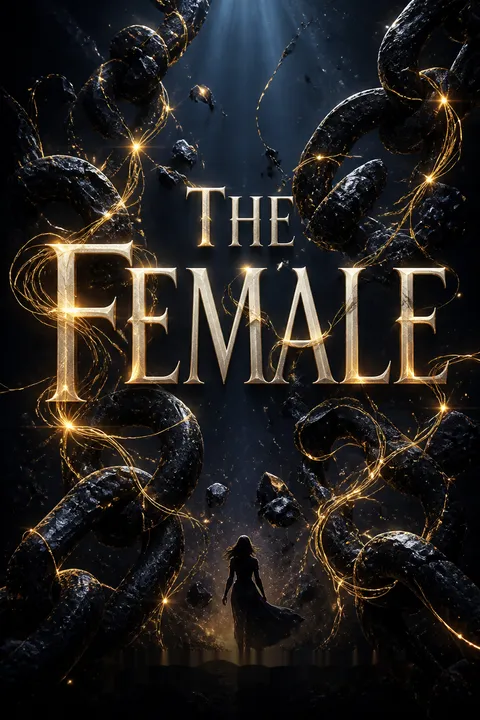
The Female receives mixed reviews (3.84/5) with readers divided on its merits. Many enjoyed the "why choose" romance and spice despite acknowledging weak plot and underdeveloped worldbuilding. The FMC Charlie is frequently criticized for being whiny, crying constantly, and lacking self-preservation instincts in a dangerous dystopian world where women are property. The three male demon characters (incubus Gray, fate demon Silas, and wrath demon Aziel) receive more positive attention. Reviewers note the book is plot-light but oddly compelling, with several admitting they "devoured" it despite recognizing its flaws, often joking about hormonal influences on their enjoyment.
People Also Read




Characters
Charlotte (Charlie) Myers
The purchased human femaleCharlotte is a twenty-five-year-old human who has never stepped into sunlight, never had a friend, never been touched by anyone outside her family. Raised beneath a trapdoor in her parents' home, she educated herself through worn romance novels and scraps of homeschooling. Her psychology is hypervigilance disguised as acceptance—she tells herself she's made peace with captivity while biting her fingers raw. Beneath her compliance lives a fierce argumentative spirit that surfaces the moment she feels safe enough to challenge authority. Charlotte's central drive is autonomy: she wants to be chosen, not purchased. Her relationships are complicated by her inability to distinguish trauma bonding from genuine connection, and by incubus pheromones that strip away her ability to trust her own desires.
Gray
Starving incubus, devoted loverGray is an incubus demon approximately two hundred years old—young and comparatively weak by demon standards. The son of Asmod6, king of Lust, he was expelled from his den for the cardinal sin of possessiveness: wanting one woman for himself. His first love chose the communal pleasures of his family over him, a wound that calcified into both his greatest fear and his deepest need. Gray's psychology centers on a desperate urge to nurture and be needed—he fills plates, brings gifts, buries dead fathers at three in the morning. He uses humor and sensuality as armor but starves himself rather than take what isn't freely given. His bond with Aziel—accidental, unreciprocated, and politically explosive—is both his greatest protection and his heaviest chain.
Aziel
Wrath's conflicted kingAziel is the king of the Wrath kingdom, roughly six hundred years old and the most powerful demon in the story. A curse on his royal bloodline means any sexual contact triggers a permanent soul bond—making intimacy an existential vulnerability. Raised by a brutal father, Aziel learned early that expressed emotion becomes ammunition. He hides genuine care behind cruelty, threatens those he's drawn to, and retreats to underground fighting pits when feelings become unmanageable. His accidental bond with Gray torments him: he neither honors nor severs it. Aziel's central conflict is between duty and desire—he believes his people need a politically advantageous mate, not a fragile human who makes him feel things he's spent centuries learning to suppress. His violence is both his coping mechanism and his love language.
Silas
The last fate demonSilas is a fate demon approximately one thousand years old and among the last of his kind. He serves as the calm center between Gray's2 emotional volatility and Aziel's3 explosive wrath. As a fate, he has a direct connection to the forces governing destiny, though he insists he's merely a vessel rather than a controller. His inability to see Charlotte's1 future—because it's entangled with his own—signals a connection he initially refuses to acknowledge. Silas's hidden desire is to submit: he craves being dominated, held down, told he's good. This vulnerability explains his resistance to Charlotte1, whom he considers too young and too purchased to truly choose him. His rejection of her is self-protective rather than honest, and his eventual acceptance is hard-won.
Shay
Rival female, political pawnShay is a demon female with past sexual relationships with both Gray2 and Silas4. Her uncle is the king of Envy, giving her political value. She serves as Charlotte's1 primary antagonist—a woman who represents everything Charlotte1 isn't: powerful, experienced, and demon-blooded. Shay's envy of Charlotte's1 position makes her dangerous, and Aziel3 recruits her as a shield against his own feelings for the human he's trying to keep at arm's length.
Asmod
Lust king, Gray's fatherAsmod is the king of Lust and Gray's2 father, a politically cunning demon who weaponizes hospitality. He married Nicolette11—Gray's2 first love—specifically to wound his son. Asmod wants his daughter Valentine10 bonded to Aziel3 to secure an alliance between Lust and Wrath. He views Charlotte1 as either a threat to his schemes or a useful pawn, calculating her value from every angle.
Rock
Shadow tutor, quiet allyRock is a shadow demon who serves as Charlotte's1 tutor and one of her few genuine allies in the estate. Born too weak to hold a physical form, he exists as a dark, blurry figure slowly materializing with age. Rock is patient, kind, and wryly funny—the only male in Charlotte's1 daily life who never makes her uncomfortable. He manages the estate's grounds and becomes a confidant.
Dave
Charlotte's protective fatherDave is Charlotte's1 father, a human man who purchased her mother9 legally before female prices skyrocketed. He spent twenty-five years hiding Charlotte1 beneath their home, repeating a nightly mantra: she is her own person and deserves to be treated that way. His love manifests as fierce protection and constant guilt over the confined life he cannot improve for his daughter.
Charlotte's mother
Hidden wife, lost parentCharlotte's mother is a gray-haired woman who taught her daughter1 about sex through smuggled romance novels and prepared her for a world she hoped Charlotte1 would never have to face.
Valentine
Lust princess, rival candidateValentine is Asmod's6 daughter and Gray's2 sister, a succubus positioned to inherit Lust's throne. She is proposed as a politically advantageous alternative to Charlotte1 as the three demons' bonded female.
Nicolette
Gray's first stolen loveNicolette is Gray's2 first love—the woman who chose the communal pleasures of his incubus den over his devotion. She later married Asmod6, Gray's2 own father, becoming a living reminder of his deepest rejection.
Erica
Facility friend, brief comfortErica is a red-haired woman Charlotte1 befriends at the holding facility. She's one of the few who takes the offered sexual experience before the auction, providing Charlotte1 a glimpse of female choice in a choiceless world.
Plot Devices
Incubus Lust
Chemical override of consentGray's2 pheromones act as a biological weapon on Charlotte's1 nervous system, flooding her with involuntary arousal whenever he's near. This means Charlotte1 can never be fully certain whether her desire is genuine or manufactured. Gray2 uses controlled, gradual exposure to desensitize her, training her body to function through his scent rather than be enslaved by it. The lust serves triple duty in the narrative: as a constant source of tension between Charlotte1 and Gray2, as a metaphor for the loss of bodily autonomy that defines women's lives in this world, and as a practical survival mechanism—Gray2 will starve without sexual energy. Charlotte's1 growing resistance to it becomes the primary measure of her increasing agency and independence.
The Aziel-Gray Bond
Inescapable soul chainWhen Gray2 was starving and near death, he accidentally broke through Aziel's3 mind and fed—triggering the fates' curse on the Wrath royal bloodline, which bonds permanently through any sexual contact. Gray2 caused Aziel3 to orgasm without penetration, and that was enough. This involuntary bond chains the king of Wrath to an incubus he never chose, creating a dynamic of profound resentment and suppressed need. Aziel3 refuses to honor the bond publicly, treating Gray2 as a friend rather than a mate. The bond shapes every relationship in the household: it explains why Aziel3 tolerates Gray's2 intrusions, why he cannot fully commit to Charlotte1 or any other female, and why any woman who joins them must accept that two of her males' souls are already permanently intertwined.
The Female Report
Suppressed science as indictmentA research file hidden in Gray's2 desk reveals that the Wrath kingdom discovered the biological cause of the global female decline fifty-four years ago: women's bodies reject X-chromosome sperm when they lack oxytocin—a hormone produced by welcome physical touch. The worse women are treated, the fewer daughters are born. The demons kept this knowledge secret for over five decades, allowing Wrath to quietly rebuild its female population while dozens of other breeds went extinct—with humans estimated to follow within seventeen years. When Charlotte1 discovers the report, it transforms from a scientific finding into an indictment of the three men she loves. The document becomes the story's moral fulcrum, forcing a reckoning between Charlotte's1 personal happiness and her obligation to her gender.
Charlotte's Hideaway
Prison turned crucibleThe trapdoor beneath a rug in Charlotte's1 childhood bedroom leads to a small, carpet-padded underground compartment where she spent most of her twenty-five years. Equipped with a reading light, a clock, headphones, and pillows arranged into a chair, it represents both safety and imprisonment—the only place she was invisible to the Seekers' scanning technology. The walls absorbed decades of her fear, creating a scent so potent that even demons who enter months later are overwhelmed. The hideaway bookends the narrative: Charlotte's1 life begins here in isolation and terror, and it reappears when Gray2 forces Aziel3 to sit blindfolded in its darkness, confronting what their inaction cost real women. The compartment transforms from Charlotte's1 prison into the space where the demons reckon with their complicity.
Silas's Gem Necklace
First weapon she's ever ownedA navy-blue gemstone enchanted with Silas's4 power and tied to Charlotte's1 DNA, worn on a thin gold chain around her neck. When slammed against a target with sufficient force, the stone explodes and inflicts serious damage—enough to kill most demons, though not Silas4 himself or anyone stronger. Silas4 commissions it from a mage after the Lust party incident, recognizing that Charlotte's1 greatest vulnerability is her complete powerlessness against demon-level threats. The necklace is the first weapon Charlotte1 has ever possessed and the first time any of the three males has actively equipped her to defend herself rather than simply shielding her. She tests it gleefully on Silas's4 chest, blowing a visible chunk from his flesh. The gem marks her transition from passive possession to someone capable of drawing blood.
About the Author



Download PDF
Download EPUB
.epub digital book format is ideal for reading ebooks on phones, tablets, and e-readers.








































