
Key Takeaways
1. Extraordinary Altruism: A Paradox Explained by Fear
An avalanche of new technologies for studying human psychology and behavior have emerged in recent decades, including new methods for measuring and manipulating activity inside the brain, acquiring genetic information, and comparing human and animal behaviors.
The Altruism Paradox. Charles Darwin's theory of natural selection suggests that altruists, who sacrifice for others, should have died out long ago, yet altruism persists. While kin-based and reciprocal altruism can be explained by genetic or personal benefit, extraordinary altruism—risking one's life for an anonymous stranger with no possible payoff—remains a profound mystery. This paradox, much like the historical belief that insects couldn't fly, challenges our understanding of natural laws.
A Personal Catalyst. The author's own life-saving rescue by a stranger ignited a quest to understand this phenomenon. This experience, coupled with her academic focus on psychology, led to a serendipitous discovery: people who accurately recognize fearful faces are also more altruistic. This ability predicted generosity better than gender, mood, or self-reported compassion, hinting at a deeper, less obvious connection.
Seeking Scientific Answers. Just as high-speed photography solved the mystery of insect flight, new neuroscientific tools are unraveling the enigma of altruism. The author's research, inspired by her rescue, began to explore the brain's role in this connection, particularly by examining the neural mechanisms underlying both extreme altruism and its opposite: psychopathy. This scientific pursuit aims to reconcile altruism with evolutionary theory, moving beyond supernatural or cynical explanations.
2. The Psychopathic Brain: A Deficit in Fear and Empathy
If amygdala dysfunction robs people of both empathy and the ability to recognize fear, could amygdala-based sensitivity to others’ fear be a critical ingredient for altruism—including acts of extraordinary altruism like the one that saved my life?
Psychopathy's Core Deficit. Psychopathy, characterized by callousness, poor behavioral control, and antisocial behaviors, is strongly influenced by genetics (up to 70% heritable). Unlike reactive aggression (impulsive, often trauma-induced), psychopaths engage in proactive aggression—cold, purposeful cruelty. This distinction is crucial because child abuse and neglect, while harmful, don't primarily cause proactive aggression; rather, they often lead to reactive aggression.
The Amygdala's Role. Research using fMRI revealed that psychopathic adolescents exhibit dysfunction in the amygdala, a brain structure vital for social and emotional functions. Specifically, their amygdala is underresponsive to images of others' fear, impairing their ability to recognize fearful expressions. This deficit is mirrored by patients with Urbach-Wiethe disease, who have bilateral amygdala damage and cannot recognize or even draw fearful faces.
A Lack of Personal Fear. Psychopaths also report experiencing fear infrequently and weakly themselves, often describing it as "not unpleasant." This muted personal experience of fear, coupled with amygdala dysfunction, prevents them from truly understanding or empathizing with fear in others. They struggle to grasp why causing fear is wrong, seeing threats as mere tools to achieve goals, rather than sources of suffering.
3. Heroes Feel Fear, But Act Anyway: The Anti-Psychopathic Brain
What distinguishes heroes from other people is not how they feel, but what they do—they move toward the source of the terror, rather than away from it, because somebody needs their help.
Challenging Stereotypes. "Moral typecasting" often portrays heroes as stoic and fearless, like superheroes. However, real-life heroes, such as Cory Booker rescuing a neighbor from a fire, consistently report feeling intense terror during their acts. This highlights that bravery isn't the absence of fear, but the willingness to act despite it, driven by the urgent need to help.
Extraordinary Altruists' Brains. To understand the opposite of psychopathy, the author studied altruistic kidney donors—individuals who voluntarily donate an organ to an anonymous stranger, incurring significant personal risk with no direct benefit. These "anti-psychopaths" showed:
- An unusually strong amygdala response to pictures of others' fear.
- An enhanced ability to recognize fearful expressions.
- Physically larger right amygdalas (about 8% larger than controls).
Sensitivity and Bravery. These findings suggest that extraordinary altruists are more sensitive to others' fear, not less. Their heightened empathic response to distress, coupled with a unique ability to override their own fear, allows them to act. They often describe their decision to help as intuitive, a "no-brainer," or an "opportunity," rather than a calculated act of courage, indicating a deep-seated, almost involuntary drive to care.
4. The Evolutionary Roots of Care: From Milk to Allomothering
The answer traces back many millions of years. The short version is that I am a descendant of creatures called cynodonts, and loggerhead turtles are not.
The Mammalian Advantage. Unlike r-selected species like loggerhead turtles, which lay many eggs and provide no parental care, mammals are K-selected. Our cynodont ancestors evolved to produce altricial (helpless, dependent) young. To sustain these vulnerable offspring, cynodont mothers developed the ability to produce milk, a revolutionary adaptation that provided constant nourishment and warmth.
Love's Genesis. Milk production necessitated a profound evolutionary shift: the emergence of maternal love or caring. This powerful motivational tether ensures mothers stay close to their young, feeding and protecting them. This capacity for love, initially for one's own offspring, is the foundation for all other forms of love and caring observed in mammals, marking a "star hour" in vertebrate evolution.
Allomothering's Expansion. The neediness of altricial young also drove the evolution of allomothering—caring for infants other than one's own. This behavior is common in many social mammals, from rats to lions and domestic dogs, who often adopt and nurture unrelated young, even those of different species. Humans are hyper-allomothers, with extensive communal care for children being a hallmark of our species' survival. This broadens the circle of care beyond immediate kin.
5. Oxytocin: The Alchemist of Compassion in the Amygdala
This molecular alchemist is called oxytocin.
The "Love Hormone" in Action. Oxytocin, a neurotransmitter produced in the hypothalamus, is crucial for mammalian reproduction, stimulating uterine contractions and enabling milk ejection. Beyond these physiological roles, oxytocin is also the "switchman" that transforms aversion into care. Virgin female rats, normally repulsed by pups, become assiduously maternal within minutes of receiving an oxytocin injection, even for strange pups.
Oxytocin's Amygdala Connection. Oxytocin acts significantly within the amygdala, reducing aversion to unfamiliar infant cues (smell, sight, sound) and promoting approach behaviors. In humans, intranasal oxytocin increases preference for infant faces and improves the recognition of fearful expressions. This suggests oxytocin helps interpret distress cues and redirects the brain's response from avoidance to caring.
Transforming Fear into Care. The amygdala's robust response to fearful expressions, which resemble baby faces (kindchenschema), is likely twofold: it signals distress and infantile vulnerability. Oxytocin, by modulating amygdala activity, allows individuals to experience the physiological signs of fear (empathy) without the behavioral urge to flee. This enables a "caring approach" to the frightened, effectively turning a potential threat response into a protective instinct.
6. Humanity's Hidden Goodness: More Altruistic Than We Realize
The actual numbers are clear: goodness is overwhelmingly common, and kindness is the norm, not the exception.
A World of Generosity. Despite common perceptions of human selfishness, objective data reveals widespread altruism. The World Giving Index shows that over half the global population helps a needy stranger monthly, and billions donate money or volunteer. The United States consistently ranks among the most generous nations, with hundreds of billions donated to charity and millions of blood and bone marrow donations annually.
Declining Violence, Rising Kindness. Beyond individual acts, historical trends show a consistent decline in all forms of cruelty and violence over centuries, from war deaths to child abuse. Simultaneously, altruism is increasing: charitable giving, blood donations, and even extraordinary acts like altruistic organ donation have risen significantly. This suggests a global shift towards greater compassion and less aggression.
The Negativity Bias. Our brains are wired with a "negativity bias," causing us to pay more attention to, and better remember, bad events. Media exacerbates this by disproportionately reporting negative and unusual events. This creates a distorted perception that the world is more dangerous and people are more callous than they actually are, leading to widespread cynicism despite objective improvements in human well-being and altruism.
7. Beyond Compassion: Flattening the Social Discounting Curve
To them, it is nearly as worthwhile to make a sacrifice for someone whose name they don’t know or whom they have never even met as it would be for most of us to sacrifice for our closest friends and family.
The Social Discounting Phenomenon. Our willingness to sacrifice resources for others typically declines sharply with social distance—a phenomenon called "social discounting." We readily help close loved ones, but our generosity plummets for distant acquaintances or strangers. This pattern is consistent across cultures and reflects the evolutionary biases of kin selection and reciprocal altruism.
Altruists' Unique Perspective. Extraordinary altruists, however, exhibit a significantly flatter social discounting curve. They are willing to make substantial sacrifices for near-strangers, valuing their welfare almost as much as most people value that of their closest friends or family. This "alloparenting on overdrive" mindset means they don't discriminate based on relationship, believing "everyone's life is equally valuable."
Expanding the Circle of Care. This reduced social discounting is a key differentiator for extraordinary altruists. It suggests that while most people can be compassionate, altruists do extend that compassion broadly, even to the unknown. The ongoing global increase in altruism towards strangers indicates that societies are collectively flattening their discounting curves, expanding their "circles of compassion" beyond immediate social groups.
8. Intuition, Not Deliberation, Drives True Altruism
When altruism arises this way, from primitive, emotional processes, the only effect that self-control could possibly have is to suppress it, much as it suppresses aggression.
The Speed of Altruism. Research on Carnegie Hero Medal recipients shows that heroic acts are overwhelmingly fast and intuitive, not the result of careful deliberation. Heroes often describe acting "without thinking" or being "compelled," suggesting that altruistic urges stem from deep, primitive emotional processes rather than rational calculation. Taking more time to reflect often leads to less generosity.
Critique of "Effective Altruism." The movement of "effective altruism," which advocates for rational, evidence-based charitable giving, may inadvertently suppress natural altruistic impulses. While objective impact is important, relying solely on logic can lead to "a vortex of indecision" and ignore the emotional desire that truly motivates action. Desire, not reason, drives people to care and act.
Beyond Self-Reported Empathy. Even individuals who describe themselves as "super-rational" and low in empathy can exhibit high levels of the specific empathy crucial for altruism: sensitivity to others' vulnerability and distress. This highlights that our conscious understanding of our own motivations can be flawed; deep-seated neural mechanisms, like an active amygdala responding to fear, may drive altruistic behavior beneath the surface of rational thought.
9. Cultural Shifts: Prosperity and Literacy Expand Our Circle of Care
The genes that build the brain structures that motivate us to care are not operating in a vacuum.
Well-being and Generosity. Increases in global prosperity, health, and education correlate with rising altruism towards strangers. Studies show that higher well-being (life satisfaction, purpose, meeting basic needs) is a strong predictor of altruistic kidney donations and other forms of generosity. As people move out of poverty, they tend to become more altruistic, challenging the trope that wealth leads to selfishness.
Individualism and Outgroup Care. While collectivist cultures foster strong ingroup bonds and generosity, individualist cultures, often wealthier, tend to be more altruistic towards strangers. This is because individualism, with its higher "relational mobility," encourages viewing unfamiliar people as potential friends, rather than strictly as outsiders. This cultural shift helps flatten social discounting curves, expanding the scope of compassion.
The Power of Literacy. Widespread literacy, facilitated by inventions like the printing press, has also played a crucial role. Reading fiction, in particular, acts as a "mind's flight simulator," allowing individuals to viscerally experience the emotions and plights of diverse, distant characters. This emotional investment breaks down cultural barriers, fostering a universal appreciation for shared human experience and increasing empathy for strangers.
10. Cultivating Altruism: Practice, Purpose, and Humility
The fact that, for most people, alleviating others’ suffering and bringing them joy can be a source of personal pleasure is, in my view, what distinguishes most of us from psychopaths—it is evidence that we have the capacity for genuine altruism.
The Joy of Giving. Altruism is inherently reinforcing; the satisfaction and "euphoria" derived from helping others make it more likely to be repeated. This positive feedback loop can create a "virtuous cycle of giving," where small acts of altruism build into larger, more extraordinary ones, much like "dominoes falling." This pleasure is not selfish, but rather evidence of our innate capacity for genuine concern for others.
Practice Makes Altruism. To become more altruistic, one must simply start practicing. Engaging in small, meaningful acts—donating blood, volunteering, helping a stranger—can make altruistic behavior second nature. Programs like "Roots of Empathy," which allow children to care for infants, demonstrate that practicing care can increase empathy and reduce aggression, capitalizing on our innate alloparenting capacities.
Humility: The Binding Ingredient. Buddhist practices like compassion and loving-kindness meditation, which train individuals to extend care to all beings, are effective routes to enhanced altruism. Crucially, extraordinary altruists often exhibit profound humility, resisting labels like "hero." They see themselves as no different from others, recognizing that their capacity for compassion reflects universal human potential. This humility flattens the "mountains" of narcissism and parochialism, enabling them to act for strangers with the same conviction they would for loved ones.
Review Summary
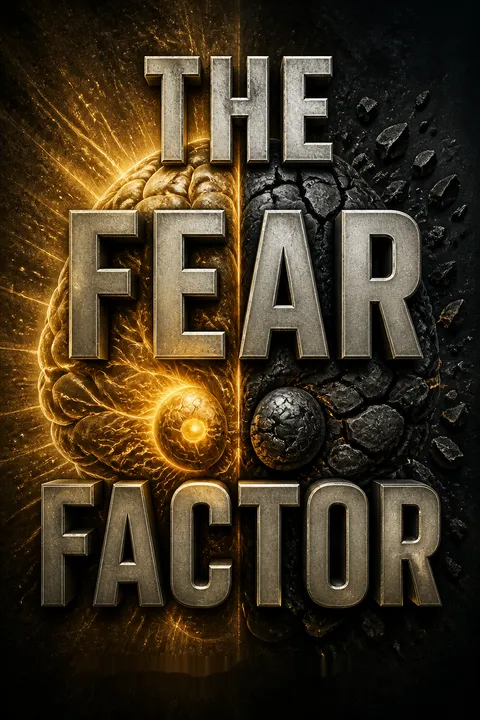
The Fear Factor examines psychopaths and altruists through neuroscience research, focusing on the amygdala's role in recognizing and responding to fear. Reviewers praise Marsh's accessible writing and fascinating insights into empathy, altruism, and caring behavior. Many found the research compelling, particularly studies on kidney donors and psychopaths' inability to recognize fear. Critics noted repetitiveness, questioned some conclusions about societal safety, and felt certain chapters were unnecessary filler. Overall, readers appreciated the optimistic message that human kindness is common and the scientific exploration of what drives helping behavior.
People Also Read




Download PDF
Download EPUB
.epub digital book format is ideal for reading ebooks on phones, tablets, and e-readers.








































