
Plot Summary
Memory's Unforgiving Gift
Penny Bly, a young woman with eidetic memory and hyperthymesia, remembers every detail of her life since waking from a coma at age seven. Her mind is a vault of perfect recall, but the years before her accident are lost in a fog. Penny's abilities are both a blessing and a curse, isolating her from others and making her a subject of fascination at the Willow Brook Institute for the Brain. She is haunted by the gaps in her memory, especially about her father, who left after her accident. The pain of abandonment and the mystery of her past drive her need for answers, setting the stage for her journey.
Abandonment and the Birthday Card
On the eve of her twenty-first birthday, Penny's therapist, Dr. Brock, announces he's leaving for a new job, triggering her deep-seated fear of abandonment. Hours later, she receives her annual birthday card from her estranged father—this time, a final goodbye. The card's message devastates her, compounding her sense of isolation. Penny's world, already small and controlled, feels even more confining. The double blow of losing her therapist and her father's last words pushes her to a breaking point, forcing her to confront the emptiness and pain that have defined her life.
The Treasure Map Decision
Amid her grief, Penny recalls a vivid memory: a cross-country road trip with her father, during which they left notes for each other in hidden places—a "treasure map" of their journey. Discovering the actual map among her mother's things, Penny sees it as a sign. The map lists five locations, the last matching the return address on her father's final card. With nothing left to lose, Penny decides to leave her cloistered life and follow the trail, hoping to find her father—or at least, herself. The decision is both desperate and exhilarating, marking the true beginning of her journey into the wild.
Leaving the Institute
On her birthday, Penny leaves the Willow Brook Institute for good, severing ties with the only world she's known. She faces awkward goodbyes, especially with Dr. Cheong, her new therapist, and leaves behind a parting gift: a portrait that reveals more than surface likeness. Penny's departure is both an act of rebellion and a leap into uncertainty. She returns home briefly, confronting her neglectful, alcoholic mother, and retrieves the treasure map. With a mix of fear and anticipation, she steps into the unknown, determined to chase the fragments of her past and the possibility of connection.
Drawing for Survival
Penny's first stop is a mall, where she witnesses a caricature artist at work. Realizing she can draw people's true essence with uncanny speed and accuracy, she offers her services to a dissatisfied customer. Her portrait moves the woman to tears, and Penny earns her first cash. This moment is transformative: her art, once a private solace, becomes a means of survival. She meets Travis, a drifting nineteen-year-old with artistic ambitions and a kind heart. Their connection is awkward but genuine, and together they begin to navigate the practicalities of life on the road.
Meeting Travis
Travis, drawn to Penny's talent and strangeness, offers her companionship and a place to stay. Their rapport is tentative, marked by mutual curiosity and vulnerability. Penny, unused to trust, is wary but recognizes the value of an ally. Travis's home life is as fractured as hers, and he's eager for escape. They share stories, dreams, and insecurities, finding comfort in each other's presence. Their partnership is cemented by necessity and a shared sense of being outsiders. Together, they plan to follow the treasure map, pooling their meager resources and hopes.
The Wild Beckons
Penny and Travis set out, their first destination the site of the first hidden note. The road is both literal and metaphorical—a passage from safety to chaos, from childhood to adulthood. They face immediate challenges: money, transportation, and the unpredictability of the world. Penny's savant abilities are both asset and liability, helping them navigate but also drawing unwanted attention. The wild, as her father once called it, is full of dragons—dangers both real and imagined. Yet, for the first time, Penny feels alive, her pain and longing tempered by the thrill of possibility.
The Comedy Club Catastrophe
In Minneapolis, Travis seeks a loan from a shady acquaintance, Leo, whose family runs a comedy club with criminal ties. Penny and Travis become entangled in a deadly confrontation between rival gangs. A shooting erupts, leaving Leo and his father dead. Penny and Travis flee, traumatized and hunted, their innocence lost. The event marks a point of no return: they are now fugitives, implicated in crimes they didn't commit. The wild reveals its true nature—unforgiving, chaotic, and indifferent to their suffering. Penny's sense of control, always tenuous, is shattered.
On the Run
Penny and Travis are forced to separate in the chaos. Penny, alone and desperate, steals Travis's car and flees the city. She is pursued by Bain, a corrupt off-duty cop involved in the club's criminal dealings. Bain corners her, threatening violence and demanding sexual favors in exchange for her silence. In a moment of terror and self-defense, Penny kills him with Travis's gun. The act is both horrifying and liberating, a brutal assertion of agency. She disposes of the body and car in a lake, forever altering the trajectory of her life.
The Gas Station Gambit
As Penny, Travis, and a new ally, Fia—a Nicaraguan woman on the run from her own past—continue west, they are tracked by Sebastian and Mani, enforcers for a Central American cartel. At a gas station, Penny manipulates the attendant into believing the men are about to rob and kill him. A shootout ensues, resulting in Mani's death. Penny's actions, though calculated for survival, leave her shaken. The line between victim and perpetrator blurs. The trio's bond deepens, forged in crisis, but the weight of their choices grows heavier.
Fugitives and New Alliances
Fia, grateful for Penny's help, offers her resources and a plan to disappear. The three become a makeshift family, united by necessity and shared trauma. They travel through Rapid City and Denver, evading both law enforcement and the cartel. Penny's headaches worsen, a physical manifestation of her psychological strain. She confides in Travis, revealing the truth about Bain and her own guilt. Their relationship, once tentative, becomes a lifeline. Fia's story—her own flight from violence and betrayal—mirrors Penny's, reinforcing the theme of survival through connection.
The Headache and the Confession
In Denver, Penny's headaches reach a breaking point. She suffers a seizure-like episode, losing her savant abilities—her memory, her synesthesia, her artistic gift. Dr. Brock, summoned by Penny, arrives with Eve, a government agent interested in recruiting Penny for her talents. The meeting turns violent: Sebastian, seeking revenge for his brother's death, attacks. Eve kills him with cold efficiency. Penny, now "broken," is no longer valuable to the agency. The loss of her abilities is both a tragedy and a release, forcing her to confront who she is without her gifts.
The Denver Extraction
Eve, refusing to let Penny go, attempts to forcibly abduct her. Fia and Travis intervene, and a brutal struggle ensues. Penny is wounded, but with Fia's help, they escape. Dr. Brock, revealed as both protector and manipulator, is left behind. The trio, battered but free, flees Denver. Penny's sense of self is in flux—no longer a prodigy, no longer a lab rat, but something new. The wild, once a place of danger, becomes a space of possibility. The journey is no longer about finding her father, but about forging her own path.
The Truth About the Stairs
In California, Penny finally confronts the truth of her past. Visiting the last address on the treasure map, she meets her aunt Gloria, who reveals the family's buried secrets. Penny's father did not abandon her; he died at her mother's hands, killed in a moment of rage after Penny's accident. The accident itself was not a push, but a leap—Penny's own act, a desperate bid for escape. The revelation is shattering, but also clarifying. Penny's lifelong guilt and longing are transformed into understanding and, eventually, forgiveness.
The Final Note
Gloria gives Penny her father's final note, written during their last trip together. The letter reveals a man torn by love and regret, who never intended to leave Penny or her mother. The note is both a balm and a wound, offering closure but also underscoring the irretrievability of the past. Penny grieves for what was lost, but also for what was never truly hers. The journey, once about finding her father, becomes a reckoning with herself. She chooses not to return home, but to keep moving forward, embracing the uncertainty of the wild.
Forgiveness in the Wild
Penny, Travis, and Fia forge new identities and prepare to disappear. Fia returns to Nicaragua to reclaim her family. Penny and Travis, now partners in both survival and hope, choose to travel together, seeking a place beyond the reach of their pasts. Penny writes a postcard to her mother, offering forgiveness, love, and apology. The act is both symbolic and real—a gesture of release, a refusal to be defined by trauma. Penny's journey is no longer about escape, but about acceptance and the possibility of happiness.
Letting Go
On a flight to Tokyo, Penny faces her greatest fear: death. When the plane is struck by lightning and plummets, she experiences both terror and calm. In the face of mortality, she finds peace—not in control, but in surrender. Her father's imagined voice comforts her, and she realizes that happiness is not the absence of pain, but the acceptance of life's extremes. The plane levels out, and Penny, changed by the ordeal, chooses to live fully in the present. The wild, once a place of fear, becomes a home.
Happiness and the Now
The story ends with Penny smiling, truly and freely, for the first time. She is no longer defined by her memory, her trauma, or her quest for answers. She is, at last, herself—imperfect, wounded, but alive. The wild is not a place to be feared, but a space to be inhabited. Happiness, she learns, is not a destination, but a moment—a fleeting, precious now. Penny's journey, marked by loss and discovery, ends not with certainty, but with hope.
Analysis
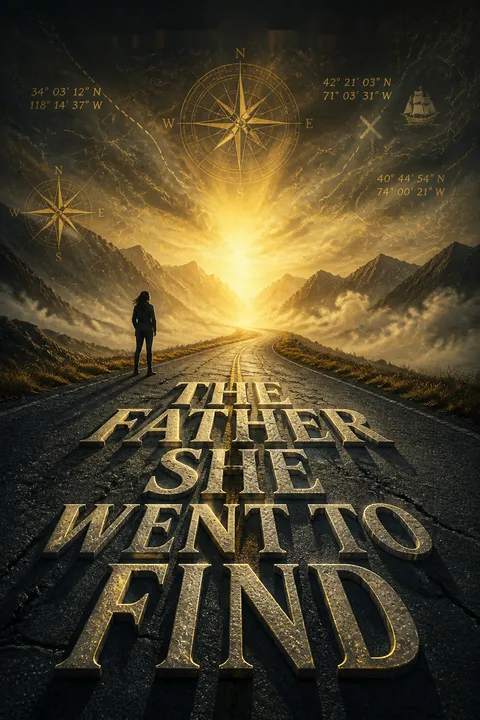
Carter Wilson's The Father She Went to Find is a psychological thriller that transcends its genre, offering a profound meditation on trauma, memory, and the search for happiness. At its core, the novel is about the limits of control—over the past, over others, and even over oneself. Penny's journey, marked by extraordinary gifts and devastating losses, is a testament to the resilience of the human spirit and the necessity of connection. The story dismantles the myth of closure, showing that answers, when found, are often unsatisfying or painful. True healing comes not from solving the mysteries of the past, but from embracing the uncertainty of the present and forging bonds in the wild. The novel's structure—fragmented, recursive, and deeply interior—mirrors the workings of Penny's mind, inviting readers to experience both her brilliance and her vulnerability. Ultimately, the book argues that happiness is not a destination, but a fleeting, hard-won moment—a smile in the face of chaos, a hand held in the dark, a choice to forgive and move forward. In a world where everything matters in the now and nothing matters in the forever, The Father She Went to Find is a powerful reminder that survival is not enough; we must also learn to live.
Review Summary
The Father She Went to Find follows Penny, a 21-year-old savant with photographic memory who leaves her sheltered life at an institute to find her estranged father. Reviews average 3.65/5 stars, with readers praising the unique premise, compelling protagonist, and addictive pacing. Many found Penny's naivety engaging despite some unrealistic situations. The 1980s road-trip thriller combines coming-of-age elements with intense action, violence, and unexpected twists. The ambiguous ending divided readers. Several noted the audiobook narration was strong, though some criticized excessive violence and the title itself.
People Also Read


Characters
Penny Bly
Penny is a twenty-one-year-old woman with extraordinary memory and artistic talent, but also profound psychological scars. Her eidetic recall and synesthesia set her apart, making her both a subject of scientific fascination and a social outcast. Penny's life is defined by abandonment: her father's disappearance, her mother's neglect, and the loss of her therapist. Her journey is both external—a quest to find her father—and internal, a struggle to reconcile her gifts with her pain. Penny's psychological landscape is shaped by trauma, guilt, and longing, but also by resilience and a fierce desire for connection. Over the course of the story, she moves from passive victim to active agent, learning to let go of the past and embrace the uncertainty of the present.
Travis Shepard
Travis is a nineteen-year-old dropout with artistic aspirations and a troubled home life. He is drawn to Penny's strangeness and talent, seeing in her a kindred spirit. Travis is both protector and dependent, his bravado masking deep insecurity. His relationship with Penny is marked by awkwardness, loyalty, and moments of genuine tenderness. Travis's journey mirrors Penny's: he seeks meaning and belonging, but is haunted by fear and self-doubt. His willingness to risk himself for Penny, especially in moments of crisis, reveals a capacity for courage and love. Travis's development is subtle but profound, moving from passive drift to active choice.
Fia
Fia is a Nicaraguan woman on the run from a violent past, having stolen money from a cartel and lost her lover in the process. She is resourceful, pragmatic, and fiercely protective—qualities honed by years of survival. Fia's relationship with Penny and Travis is initially transactional, but deepens into genuine care. She becomes a surrogate mother to Penny, offering both tough love and unwavering support. Fia's own trauma and longing for her children mirror Penny's, creating a bond of empathy and mutual recognition. Her decision to return home at the end is both an act of courage and a testament to the power of love.
Dr. Lance Brock
Dr. Brock is Penny's longtime therapist and mentor, a figure of stability and authority. He is both caring and calculating, genuinely invested in Penny's well-being but also complicit in her objectification as a research subject. His departure triggers Penny's abandonment issues, and his later involvement with government interests reveals a more ambiguous morality. Dr. Brock's psychoanalytic approach is both a lifeline and a cage for Penny, offering insight but also reinforcing her sense of difference. His ultimate inability to protect her—or to control her—forces him to confront his own limitations.
Eve
Eve is a government operative tasked with recruiting Penny for her unique abilities. She is efficient, ruthless, and emotionally detached—a product of the same system that sought to claim Penny. Eve's presence introduces a new level of danger, as she is willing to use violence and coercion to achieve her goals. Her interactions with Penny are marked by a chilling lack of empathy, serving as a dark mirror to Penny's own struggle with agency. Eve's defeat at the hands of Fia and Travis is both a literal and symbolic rejection of institutional control.
Sebastian
Sebastian is a Nicaraguan cartel enforcer, driven by loyalty to his brother and a code of violence. He is intelligent, patient, and relentless, embodying the dangers of the wild that Penny's father warned her about. Sebastian's pursuit of Penny and her friends is both personal and professional, escalating the stakes and forcing the protagonists to confront their own capacity for violence. His death is a turning point, marking the end of one threat but also the loss of innocence.
Linda Bly (Penny's Mother)
Linda is Penny's alcoholic, emotionally abusive mother. Her neglect and cruelty are both a cause and a symptom of the family's dysfunction. Linda's own trauma—her role in her husband's death and the burden of raising a "special" child—renders her incapable of love or connection. She is both villain and victim, a figure of pity as much as resentment. Penny's eventual forgiveness of her mother is an act of liberation, breaking the cycle of blame and self-destruction.
Jack Bly (Penny's Father)
Jack is the absent center of Penny's life, a figure defined by memory, longing, and myth. His departure after Penny's accident is the wound around which her identity is formed. The truth of his fate—killed by Linda in a moment of rage—shatters Penny's illusions but also frees her from the tyranny of the past. Jack's presence in Penny's imagination, as a voice of comfort and guidance, is both a coping mechanism and a testament to the enduring power of love.
Gloria (Penny's Aunt)
Gloria is Linda's estranged sister, a figure of both revelation and regret. Her role is to deliver the final truths about Penny's family, offering both closure and new wounds. Gloria's own isolation and sorrow mirror Penny's, reinforcing the theme of generational trauma. Her decision to finally tell Penny the truth is an act of courage and compassion, breaking the silence that has haunted the family.
Leo
Leo is Travis's high school acquaintance, a minor criminal whose involvement with the comedy club sets the story's central catastrophe in motion. His death is both senseless and inevitable, a reminder of the randomness and brutality of the world Penny has entered. Leo's fate serves as a warning and a motivator, pushing Penny and Travis further into the wild.
Plot Devices
Trauma as Catalyst and Obstacle
The story's structure is built around the interplay of trauma and memory. Penny's accident is both the origin of her gifts and the source of her suffering. The narrative uses flashbacks, recovered memories, and psychoanalytic dialogue to explore the ways trauma distorts perception and shapes destiny. The gradual revelation of the truth about the stairs is foreshadowed through Penny's fragmented recollections and her father's imagined voice. The loss of Penny's abilities after a second traumatic episode serves as both a plot twist and a metaphor for the limits of control.
The Quest Structure
The treasure map provides a classic quest framework, with each location representing a stage in Penny's search for meaning and connection. The journey west is both a physical escape and a psychological odyssey, mirroring the archetypal hero's journey. The quest is repeatedly subverted: the notes are lost or meaningless, the father is dead, the answers are unsatisfying. The real treasure is not found in the past, but in the present moment and the relationships forged along the way.
Found Family and Chosen Bonds
The formation of a makeshift family—Penny, Travis, and Fia—serves as a counterpoint to the failures of biological kinship. The plot repeatedly tests and reaffirms the value of chosen bonds over blood ties. The characters' willingness to risk themselves for each other is both a source of strength and vulnerability. The motif of abandonment is transformed into one of acceptance and mutual care.
The Wild as Metaphor
The "wild" is both a literal space (the world outside the institute) and a metaphor for the unpredictability of life. It is populated by "dragons"—threats both external (criminals, law enforcement, government agents) and internal (trauma, guilt, fear). The wild is initially a place of terror, but becomes, through experience and acceptance, a space of freedom and self-discovery.
Duality and Extremes
The narrative is structured around the interplay of opposites: memory and forgetting, control and surrender, victimhood and agency, love and loss. Penny's journey is one of moving from the safety of the middle to the extremes of experience. The story's climax—a near-death experience on a plummeting airplane—serves as a literal and symbolic confrontation with the limits of control and the necessity of letting go.


Download PDF
Download EPUB
.epub digital book format is ideal for reading ebooks on phones, tablets, and e-readers.








































