
Key Takeaways
1. Empathy is an Active Inquiry, Not Just Passive Feeling
Empathy requires inquiry as much as imagination. Empathy requires knowing you know nothing.
Beyond sympathy. Empathy is not merely a sympathetic manner or a caring tone; it's an active, intentional process of inquiry. As a medical actor, the author learned that "voiced empathy" was a checklist item, meaning students had to explicitly articulate their understanding, not just feel it. This highlights that true empathy demands more than passive feeling; it necessitates a deliberate engagement with another's experience.
Asking questions. The core of empathy lies in asking the right questions, those that bring difficulty into the light so it can be seen. It means acknowledging a "horizon of context" that extends perpetually beyond what one can immediately perceive. This active questioning allows for a deeper understanding of the intricate web of connections that shape a person's suffering.
Entering another's pain. Drawing from the Greek empatheia (em- into, pathos- feeling), empathy is a "penetration, a kind of travel." It suggests entering another person's pain as one would a foreign country, through "immigration and customs, border crossing by way of query." This metaphor emphasizes the investigative and respectful nature of true empathetic engagement, seeking to understand the unique landscape of another's experience.
2. Pain is Both Actual and Constructed by Narrative
He understood my pain as something actual and constructed at once. He got that it was necessarily both—that my feelings were also made of the way I spoke them.
Shaping feelings. Our feelings are not just raw, unmediated experiences; they are also shaped by the way we speak them, the narratives we construct. The author's argument with her boyfriend, Dave, after her abortion, revealed this tension: he suggested she was "making this up," not meaning she felt nothing, but that her feelings were a process of construction, attaching long-standing needs to a specific event.
Physical manifestation. This interplay is vividly illustrated by "conversion disorder," where emotional grief sublimates into physical symptoms like seizures. The character Stephanie Phillips, grieving her brother, convulses from sadness without consciously connecting the two. Her seizures become a "private language," granting substance and choreography to her unspoken pain, demonstrating how the body can express what the mind cannot or will not articulate.
Tangible signs. Physical symptoms, even if rooted in emotional distress, offer tangible signs that lend themselves to diagnosis and, potentially, closure. The author notes that her sadness about her abortion was never a convulsion, but she was "almost relieved" when cramping started, because "at least I knew what I felt." This highlights the human need for pain to be legible, to have a form that can be acknowledged and understood, even if its origins are complex.
3. The Ethics of Witnessing: Privilege, Guilt, and Connection
I spent a day in their kingdom and then leave when I please. It feels like a betrayal to come up for air.
The tourist's dilemma. Witnessing the suffering of others, especially as an outsider, often involves a profound sense of privilege and guilt. At the Morgellons conference, the author felt this acutely, recognizing her ability to "come up for air" and leave the "kingdom of the sick" at will, a luxury denied to those she observed. This creates an ethical tension between genuine concern and the inherent imbalance of the observer's position.
"Inpathy" vs. empathy. The author questions whether her obsession with her brother's Bell's palsy was true empathy or "inpathy"—importing his problems into her own life rather than truly expatriating herself into his. This self-reflection highlights the risk of turning others' misfortunes into opportunities to indulge one's own fears, blurring the lines between genuine connection and a self-serving projection of one's own anxieties.
Souvenirs of suffering. Experiences like the LA gang tour, where tourists observe poverty and violence from an air-conditioned bus, exemplify the problematic nature of "exoticism." The tour offers a "quick fix of empathy," allowing participants to "pack up [their] own heightened awareness like a souvenir." This commodification of suffering raises questions about whether such witnessing truly fosters understanding or merely reinforces distance and allows for a "moral outrage" that is ultimately self-serving.
4. The Body as a Site of Unspeakable Truths
My face will always remind me of a stranger. And I will never know his name.
Trauma's inscription. The body often bears the indelible marks of trauma, communicating truths that words struggle to convey. The author's broken nose, a result of being mugged in Nicaragua, became a constant physical reminder of a violent encounter, a "branding" that reshaped her face and her sense of self. This physical alteration served as a silent testament to an event she found difficult to articulate.
Articulating pain. Artists like Frida Kahlo used their bodies and their art to express profound physical and emotional pain. Kahlo's plaster corsets, painted with symbols of her life and suffering, framed an "invisible woman, still naked in her want." These corsets, along with her ex-votos, transformed personal agony into public declaration, demonstrating how the body, even in its brokenness, can become a powerful medium for expression.
The anorexic body. The anorexic body, too, is presented as a "semiotic system," a "sculpture in bone" that attempts to communicate in flesh what words cannot. Carolyn Knapp's desire for her mother to "see her bones more clearly" was an attempt to convey "something about pain... an amalgam of buried wishes and unspoken fears." This highlights how extreme physical states can become desperate, albeit often misunderstood, forms of communication.
5. The Search for Narrative in Suffering
We tell ourselves stories in order to live, Joan Didion wrote, meaning frightened people need motives. Meaning everyone does.
Constructing meaning. Faced with inexplicable suffering, humans instinctively seek to construct narratives and assign motives, even if those narratives are imperfect or doubted. The West Memphis Three case illustrates this: the absence of a clear motive for the murders led prosecutors and the public to invent "Satanic rituals," providing a comprehensible, albeit false, framework for an incomprehensible tragedy.
Personal mythologies. Individuals also create personal mythologies around their pain. Morgellons patients, for instance, develop elaborate theories about fibers and parasites to explain their symptoms, providing a "container" and "community" for their otherwise dismissed suffering. Similarly, addicts often fashion narratives of victimhood, patterning their dysfunction with "the saving, satisfying grace of cause-and-effect" to make sense of their struggles.
The writer's quest. Writers, too, engage in this search for narrative. James Agee's Let Us Now Praise Famous Men was an endless attempt to "make clear enough" the "accumulated weight" of sharecroppers' lives, seeking a "stitching of a moral" in their suffering. The author's own struggle to write about her heartbreak, initially feeling "horribly banal," led her to impose a causal logic to make her pain legible and profound.
6. Challenging the Dismissal of "Sentimentality"
I want us to feel swollen by sentimentality and then hurt by it, betrayed by its flatness, wounded by the hard glass surface of its sky.
The "saccharine" accusation. "Saccharine" and "sentimentality" are often used as derogatory terms to dismiss emotions deemed "too much," "unearned," or "shallow." This critique, the author argues, stems from a fear of banality and a desire to assert one's own "sophisticated" emotional responses. It implies that true feeling must be nuanced and complex, not "crude quantities of feeling."
Anti-sentimentality's ego boost. The author contends that anti-sentimentality can be its own form of "affective ego boost," a "masturbatory double negative." By rejecting "shameless sentiment," individuals may merely be asserting their own "discernment rather than empathy," creating a self-righteous stance that dismisses others' emotional experiences. This posture, while seemingly intellectual, can be equally self-serving.
Interrogated sentimentality. Jamison advocates for an "interrogated sentimentality" that allows for raw, even "overt" emotion, while remaining aware of its potential distortions. She believes there is value in feeling "swollen by sentimentality and then hurt by it," as this process can lead to a "sharpened sense of everything not sweet." This approach seeks to embrace the power of simple feelings without succumbing to their unexamined flatness, fostering a more open and honest emotional landscape.
7. The Paradox of Isolation and Shared Suffering
It’s a lonely world.
Profound loneliness. Pain, especially when misunderstood or dismissed, can be profoundly isolating. Morgellons patients, often diagnosed with "delusions of parasitosis," experience a "lonely world" where their suffering is invalidated by the medical establishment. This isolation is compounded by the fear of contagion, leading families and friends to keep their distance, further entrenching the patient's solitude.
Confinement and inner mobility. Charlie Engle's incarceration exemplifies physical isolation, stripping him of the "right of motion" that defined his life as an ultrarunner. To cope, he developed "inner mobility," using imagination and reading to "go somewhere else when he's not allowed to go anywhere." This mental escape highlights the human spirit's resilience in finding freedom even within the most restrictive confines, yet it underscores the profound loneliness of his physical reality.
Shared solitude. The Barkley Marathons, an ultrarace designed to push runners to extreme physical and mental limits, paradoxically fosters a sense of shared solitude. Runners are "alone out there" for hours, facing the "full weight of their aloneness," yet this shared ordeal creates a unique bond among competitors and their support crews. The idea that "someone back at camp is thinking of you alone out there" provides a subtle, yet powerful, form of connection, transforming isolation into a collective experience.
8. Language's Struggle to Capture Pain's Fullness
Human speech is like a cracked pot on which we beat out rhythms for bears to dance to when we are striving to make music that will wring tears from the stars.
Inherent inadequacy. Flaubert's quote perfectly encapsulates the inherent inadequacy of language to fully capture the depth and complexity of human pain. Words, like a "cracked pot," are imperfect vessels, often falling short of expressing the "music that will wring tears from the stars." This struggle is evident in the author's own difficulty articulating the trauma of her mugging, feeling like she was "constantly shuffling together pieces of an elaborate puzzle."
Metaphor's double edge. Metaphors can be "tiny saviors," translating emotion into "surprising and sublime language," offering an "escape hatch out of the predictability of sentiment." However, they can also "deflect and diffuse the glare of revelation," allowing writers to avoid the "bald and unexciting phraseology" of direct emotional expression. This dual function highlights language's capacity to both illuminate and obscure the raw truth of feeling.
The "post-wounded" voice. In contemporary narratives, particularly among women, there's a prevalent "post-wounded" voice characterized by numbness, sarcasm, or cleverness. This stance, often seen in shows like Girls, is a defense mechanism against accusations of melodrama or self-pity. It reflects a societal pressure to avoid "wounded affect," leading to a language that implies pain without explicitly claiming it, creating a "claustrophobic" emotional landscape.
9. The "Wounded Woman" Archetype: A Complex Legacy
Woman is a pain that never goes away.
Historical archetype. The "wounded woman" is a pervasive archetype in literature and culture, from Miss Havisham to Sylvia Plath, often romanticized or fetishized. Sontag notes that in the 19th century, "sadness made one 'interesting'" and "sickness became more and more the ideal look for women," linking female suffering to refinement and vulnerability. This legacy creates a complex challenge for contemporary women trying to express their pain without falling into reductive stereotypes.
Medical bias. This archetype has real-world consequences, as evidenced by studies showing that women's pain reports are often "discounted as 'emotional' or 'psychogenic' and, therefore, 'not real,'" leading to sedatives instead of medication. This systemic bias forces women to navigate a medical landscape where their physical suffering is often invalidated, reinforcing the idea that female pain is inherently less legitimate.
Beyond the stereotype. The author argues against dismissing female pain as "overly familiar" or "out-of-date," asserting that "female pain is still news. It's always news." She advocates for representing women's suffering without fetishizing it, acknowledging its reality and variety while avoiding reductive stereotypes. The goal is to witness pain and a "larger self around that pain," a self that heals without disowning its scars.
10. Empathy as a Choice and a Labor
Empathy isn’t just something that happens to us—a meteor shower of synapses firing across the brain—it’s also a choice we make: to pay attention, to extend ourselves.
Intentional effort. Empathy is not a spontaneous, unwilled impulse but a deliberate act requiring "exertion" and "work." It's a conscious choice to "pay attention, to extend ourselves," even when it's difficult or uncomfortable. This intentionality means that caring, even when prompted by duty or a sense of "should," is not hollow but a commitment to a set of behaviors greater than individual inclinations.
Beyond comfort. The author challenges the notion that genuine empathy must always "rise unbidden," arguing that "intentionality is the enemy of love." Instead, she posits that true empathy involves "waking up in the middle of the night and packing our bags and leaving our worst selves for our better ones." This implies a continuous, active process of self-improvement and a willingness to step outside one's comfort zone to connect with others' pain.
A path to connection. This labor of empathy, though demanding, is ultimately transformative. It allows for a deeper understanding of others, fostering a sense of shared humanity even in the face of profound difference. By choosing to engage, to inquire, and to extend oneself, one can move beyond mere observation to a more profound connection, making visible the invisible struggles and affirming the inherent value of every individual's experience.
Review Summary
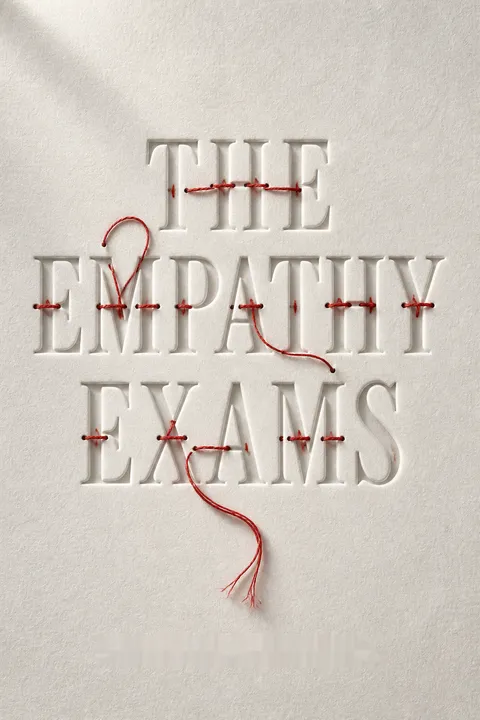
The Empathy Exams is a collection of essays by Leslie Jamison exploring empathy, pain, and human experiences. Reviewers praise Jamison's insightful writing and ability to examine diverse topics, from medical acting to ultramarathons. Many found the essays thought-provoking and emotionally resonant, particularly the titular essay and the final piece on female pain. However, some critics felt the collection was self-indulgent or failed to fully explore empathy. Overall, the book received largely positive reviews for its intellectual depth and Jamison's skillful prose.
People Also Read

Download PDF
Download EPUB
.epub digital book format is ideal for reading ebooks on phones, tablets, and e-readers.








































