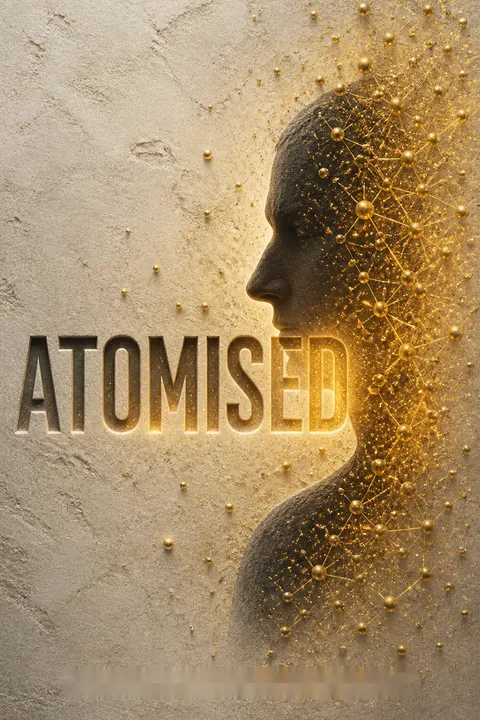

Plot Summary
Prologue: Dream of Unity
The narrative opens from a perspective outside humanity, recounting a time of bitter isolation and emotional poverty in late-twentieth-century Europe. In this dying cultural landscape, love, connection, and meaning have almost vanished, and individuals move through their lives like self-contained cells, yearning for but unable to achieve unity. Yet, the narrator hints all is not lost—a metaphysical mutation is occurring that will one day replace competition with harmony, suffering with joy, and the chaos of human division with a serene web of togetherness that was once only a dream.
Cold Logic, Absent Hearts
Michel Djerzinski, a brilliant but emotionally distant biologist, prepares to leave his research institute, feeling alien among his colleagues. His logic is sharp, his humanity blunted; his professional environment is sterile, lacking the camaraderie and grandeur of past scientific communities. Michel's life, full of muted rituals and numbed routines, reveals his inability to connect meaningfully with those around him. Trapped in the paradox of a world where knowledge grows but empathy withers, he wonders if anything truly unites people at all.
Childhoods Fragmented
Through an intricate family saga, Michel and his half-brother Bruno emerge as children shaped by abandonment and the dissolution of family ties. Both are handed between caretakers, always at a remove from unconditional love. Bruno's humiliating early memories and Michel's studies into the cold facts of the universe reflect a world where stable attachment is rare. Both children survive, but cracks of alienation, shame, and confusion define their adolescent foundations, seeding a lifetime of trouble forming connections.
Compulsory Loneliness
Michel grows up cared for by an aging grandmother, entering adolescence solitary, obsessed with abstract morality and science, distinctly set apart. Bruno, fat and frightened, faces bullying and cruelty at boarding school—rituals of dominance shaping his very soul. These formative years reveal the mechanics of social hierarchies and the inevitability of pecking orders. Both brothers, equipped either with logic or desperate hunger, emerge with their emotional intelligence stunted, set up for isolation as if by design.
Brothers, Apart Together
Michel and Bruno, half-brothers, both haunted by their mother's absence and coincidentally sharing schools, remain essentially strangers. Their rare meetings are marked by an awkward intimacy: two damaged individuals, each a mirror for the other's deficiencies. The world they inhabit, built on the myths of sexual liberation and material progress, is exposed as a groundless void. Their family story is a microcosm of societal dissolution, set adrift by the very freedoms that were supposed to deliver them.
Adolescence and Awakening Pain
Michel finds fragile happiness with Annabelle, a pure-hearted girl whose devotion becomes the fleeting hope of his adolescence—but he is paralyzed, unable to convert affection into physical closeness. Bruno, meanwhile, grows obsessed with sex and girls, but finds only humiliation, compounded by rejection and envy. Both brothers are outsiders—their youth marked not by discovery, but by the first real pains of yearning and disappointment, which echo in their adult desires and dysfunctions.
First Loves Disintegrate
Teenage romance falters: Annabelle waits for Michel's affection to mature, but his emotional hesitance causes an irreversible rift; she finds fleeting passion elsewhere, leaving both with unresolved yearning. Bruno continues his pattern of misguided advances and sexual frustration. The ideals of lasting love and mutual devotion, passed down from parents and pop culture, dissolve under the onslaught of social change and personal inadequacy, leaving a ghost trace of what might have been.
The Age of Desire
As the sexual revolution transforms Western culture, Bruno enters adulthood believing sex is the key to happiness, only to be consumed by shame, obsessive masturbation, and relentless comparison. Michel drifts further into abstraction. Both are examples of a generation that, freed from repression, finds itself instead in a new competitive struggle: sexual access as a status marker, pleasure as a currency that only a few can spend. The supposed liberation soon proves a new kind of prison.
Collapse of the Family
Both brothers' attempts at forming meaningful romantic or familial bonds repeatedly end in estrangement or self-destruction. The myths of parental love are exposed as inconsistent and frail—Bruno's sense of fatherhood fails, Michel's mother dies after decades of cosmic wandering, Bruno's own relationships implode. The very language of family becomes hollow; tradition and continuity are obliterated by individualism and material priorities, leaving only transient connections and emotional residues.
The Allure of Utopias
As life's disappointments accumulate, the search for meaning shifts to utopian spaces: communes, New Age therapy camps, and libertine experiments. Michel hides in pure research, hoping to wrest ontological order out of chaos; Bruno gropes for happiness in sexualized resorts and partner-swapping. Each path promises, and then withholds, fulfillment. These spaces—meant as escapes—only reinforce the tragedy of the protagonists' compulsive loneliness and the hollowness of the era's promises.
Liberation and Isolation
The pursuit of absolute freedom, whether sexual, psychological, or philosophical, paradoxically leads to further isolation. At "places of change," individuals, now middle-aged, cope with aging, decline, and desire's waning. Simone's narrative turns to critique—liberated society, having achieved its sexual revolution, finds neither happiness nor connection. Instead, the market replaces love, and pleasure becomes another object for desperate competition, accelerating decline rather than joy.
Bewildered by Bodies
Bruno's efforts to find pleasure in sexual adventure expose yet more vulnerability and humiliation: inadequacies of body, premature ejaculation, and the struggle to keep pace with the sexualized marketplace. He meets Christiane, and for a brief moment, intimacy and gentleness offer a reprieve. As their bodies give way to illness and aging, sexual libertinage becomes an act of hope—and then of despair. Christiane's paralysis and eventual death shatter all illusions that the body could ever guarantee fulfillment or love.
Midlife, Still Searching
Both brothers reach middle age clinging to small routines, emptiness gnawing ever deeper. Michel's achievements in science are detached from human feeling, Bruno's family life and pleasures collapse into isolation and depression. Attempts at new love and happiness—Bruno's with Christiane, Michel's reconciliation with Annabelle—are shadowed by the knowledge that change may be impossible. Acceptance, regret, and the limits of renewal become the new terrain.
Failed Escapes, Small Happinesses
For a time, Bruno and Christiane experience fragile happiness, their sexuality and companionship providing a healing counterpoint to past pain. Michel and Annabelle, briefly reunited, find an adult tenderness, but it is steeped in the melancholy of missed chances and the dull certainty of mortality. Their shared moments are precious yet inevitably slip away—to disease, disappointment, or death. Even at these peaks, fulfillment remains partial, the sense of doom never far.
The Tyranny of Biology
Michel's research uncovers the cruel mathematics of biology: sexual reproduction itself gives rise to instability and death. The hope for progress—a scientific revolution that might free future beings from individual fate—grows, even as it cruelly highlights Michel's own alienation. Meanwhile, Annabelle falls ill and dies after a final, failed hope for a child. The logic of biology proves ultimate, reducing all human striving to a set of processes that always end in loss.
Death, Memory, and Mourning
The deaths of Annabelle and Christiane devastate Michel and Bruno, leaving them shell-shocked, their regrets boundless. Funerals and rituals become occasions for philosophical reflection and despair. The book sharply details the emotional detritus of their generation: a profound bewilderment at the failure of love, of biology, of community. Even amidst scientific and social progress, ghosts of childhood, missed loves, and lost elders haunt their every step.
Approaching the End
Michel flees to Ireland, immersing himself in solitary work, while Bruno, institutionalized by despair, finds peace only in medication and routine. The narrative's lens widens: Western civilization itself is depicted as exhausted, having sacrificed everything—including meaning and kinship—for progress and rational certainty. A sense of impending, epochal change pervades—the present is unsustainable, and the future, paradoxically, must be prepared by relinquishing cherished illusions.
Final Experiments
In his final years, Michel completes the scientific work that will allow for the replacement of the human species: a method for perfect genetic reproduction, eliminating sexual death and the tyranny of individuality. His death—whether by suicide or quiet vanishing—coincides with the publication of findings that trigger a global metaphysical and biological revolution. The baton passes to a new generation, who interpret and deploy Michel's ideas, facing bitter resistance but eventually transforming the species itself.
Resurrection and Revolution
The narrative leaps ahead: Michel's vision becomes reality. A new, peaceful, asexual, and immortal species emerges, created through a logic of shared connection, universal fraternity, and the end of history's endless suffering and division. Science and art endure, but without vanity or isolation. The perspective of the new beings is calmly grateful for their flawed human ancestors, recognizing the great suffering and sublime dreams that made transcendence possible. The book ends as it began, with a note of distant, luminous hope.
Analysis
Michel Houellebecq's The Elementary Particles dissects the disintegration of meaning, love, and community in late-twentieth-century Western society as both a bitter social diagnosis and a science fiction thought experiment. With stark clarity, the novel charts the fallout of sexual liberation, the atomization of family, and the triumph of materialism—not as historical accidents, but as inevitable outgrowths of a culture that no longer believes in transcendence or unity. Through the mirrored estrangement of its two protagonists, Michel (cold genius) and Bruno (embodiment of frustrated desire), the book anatomizes how freedom without connection breeds suffering. The sexual revolution—initially a promise of joy—evolves instead into a cruel system of competition and hierarchy, particularly for those unfit to "win" in the erotic marketplace. Science—once the bearer of hope—is itself revealed as a source of alienation, until, in a final twist, it becomes the gateway to a new, post-human future with the power to transcend individuality and death itself. Yet the cost is ambiguous: the possibility of true connection arises at the very moment that the "human" disappears, replaced by beings for whom suffering, loss, and even identity are obsolete. The Elementary Particles ultimately asks if the principle of modernity—individualism and rationality—contains within it the seeds of its own abolition, and whether all our striving for unity can only be realized once we are no longer ourselves.
Review Summary
Reviews of The Elementary Particles reveal a polarizing work. Many praise its unflinching examination of sexual frustration, modern alienation, and Western society's decline through two damaged half-brothers. Admirers highlight its dark humor, philosophical depth, and emotional power, particularly its epilogue. Critics find the explicit sexual content gratuitous, the characters unrealistic, and the prose coldly detached. Most acknowledge Houellebecq's provocative intelligence, drawing comparisons to Sartre, de Sade, and Camus, while debating whether its misanthropy and misogyny serve genuine literary purpose or mere shock value.
People Also Read






Characters
Michel Djerzinski
Michel, the book's principal protagonist and half-brother to Bruno, is raised in neglect, channeling his pain into scientific logic and abstraction. A genius in molecular biology, he is incapable of love or friendship, his intimacy with others always mediated through intellectualization. Psychoanalytically, Michel is a case of dissociation—his trauma produces a strange serenity, but at the cost of human warmth. His scientific victories serve society but bring no solace to himself; in the end, his quest is for a logic of harmony and peace that he cannot personally realize. His abandonment of self and eventual disappearance are both an escape and a legacy to a future beyond suffering.
Bruno Clément
Michel's older half-brother, Bruno embodies the human animal in pain—psychologically wounded, obsessed with sex, ever-humiliated by his own awkwardness, he seeks comfort in bodies, food, and fantasy. His development traces the effect of familial neglect, school trauma, and cultural liberalization on the psyche: he is an "omega male," never able to compete or dominate, always vulnerable to rejection and self-hate. Despite brief periods of happiness with Christiane, his life cycles between shame, addiction, therapy, and despair. Bruno is both a product and a victim of a civilization that disavows its own cruelty.
Annabelle
Annabelle, Michel's first and only true love, is beautiful, devoted, and—in her youth—innocent, believing in perfect connection and happiness. Psychologically, she is vulnerable to disappointment; each romantic failure deepens her sense of being "meat," of her beauty as both curse and source of endless suffering. Her arc is defined by hope and by the crushing weight of unmet expectations. The tragedy of her later life, and her final illness and suicide, are rendered as the ultimate price paid for a faith in love in a world that cannot deliver it.
Christiane
A biology teacher and sexual partner to Bruno in middle age, Christiane is nurturing, sensual, and emotionally open, but marked by disappointments and physical decline. She offers Bruno a fragile haven, embodying the hope that generosity and physical affection can overcome a history of pain. Yet her own limitations—illness, the eventual confinement of paralysis—mirror the body's ultimate betrayal, casting their love as real but tragically impermanent.
Janine/Jane
The mother of both Bruno and Michel, Janine is emblematic of the 1960s' promise and subsequent collapse. A woman who embarks on sexual liberation, then abandons her children to pursue self-realization, she unintentionally transmits chaos and fracture. Psychologically, she is restless, narcissistic, unable to provide stability or enduring love, and in the end retreats into New Age spirituality before her lonely death, which neither reconciles nor repairs her relationships.
Serge Clément
Bruno's biological father, a successful plastic surgeon, embodies the entrepeneurial spirit divorced from deep connection. He fails as a parent, never able to sustain affection or guide his son, and his narrative offers a critique of masculine egoism, careerism, and the emptiness of material success. He is the archetype of a generation that mistakes tolerance for engagement and is ultimately alone at the end.
Bruno and Michel's Grandmother
She raises Michel after Janine leaves, offering unconditional care in a world starved of it. Her love is depicted as the antithesis of modern atomization: loyal, sacrificial, and undemanding. When she dies, her absence leaves a void that is never filled, symbolizing both the loss of traditional familial bonds and the impossibility of returning to small-scale, loving communities.
David di Meola
The product of 1960s idealism and the American spiritual scene, David becomes a rock star, then spirals—through relentless pursuit of sensation—into sadism and murderous nihilism. He is a symbol of the logical endpoint of unbridled individualism, sexual hedonism, and the rejection of all traditional limits. His role gives the book a nightmarish counterpoint, making explicit the dangers lurking at the extreme of "liberation."
Desplechin
Michel's scientific superior, Desplechin stands as the last representative of rational, humanist science bridged with social tradition. He recognizes the emptiness growing at the heart of his field as reductionism replaces wisdom. Though supportive of Michel and humane in his own way, he cannot stem the tide of meaninglessness overtaking science and society. His retirement symbolizes the passing of an era.
Frédéric Hubczejak
The narrator of the epilogue and portrayer of the coming post-human epoch, Hubczejak is the executor of Michel's scientific legacy. Pragmatic, charismatic, somewhat oblivious to metaphysical subtlety, he organizes the implementation of the new species, driven by a conviction that the technical solution to humanity's suffering is not only possible but essential. Hubczejak is at once a logical successor and a cautionary figure, his inability to perceive nuance reinforcing both the promise and the inadequacy of pure rationalism.
Plot Devices
Split Narration and Shifting Perspectives
The narrative moves fluidly across third-person omniscience, first-person collective futures, scholarly footnote, and dry scientific comment. These perspectives allow the story to oscillate between intensely personal suffering and cool, sociological detachment. Each voice marks a shift in epoch: from human striving to post-human reflection; from individual story to historic movement. This multi-layered approach both enacts and critiques the very isolation the book anatomizes.
Parallel Biographies and Mirror Structure
Bruno and Michel's lives proceed in parallel, their stories rhyming but diverging: one a worshiper of body and appetite, the other of mind and abstraction. Their shared origins and generational experiences frame the decline of twentieth-century Western society. Through their mirrored arcs, the book enacts the wider theme of the quest for unity always giving way to disintegration.
Scientific Theory as Existential Metaphor
Embedding technical discourse (quantum paradoxes, DNA topology, positivism) into the narrative, the novel makes biology and physics metaphors for loneliness and hope. The mutability and fatedness of molecules stand for emotional determinism, the longing for perfect reproduction becomes the wish for an unbroken love. Fundamental scientific discoveries foreshadow social revolution.
Pervasive Foreshadowing and Historical Recursion
The opening and closing address by "the new species" frame human history as an epoch in decline, preparing for its own replacement. Each character's attempt at liberation or happiness echoes the larger movement: the failed utopias, doomed loves, or revolutionary breakthroughs individually anticipate the species-wide transformation detailed at the end.
Sociological Survey as Storytelling
Digressions on sexuality, consumerism, family, aging, and education are woven into the plot as both explanation and commentary, often in a neutral, pseudo-academic tone. These surveys expose the machinery behind characters' fates, making the novel itself feel like a case study in the human experiment.

Download PDF
Download EPUB
.epub digital book format is ideal for reading ebooks on phones, tablets, and e-readers.








































