
Plot Summary
Ghosts in the Bloodline
India Morgan Phelps, known as Imp, introduces herself as a woman living with schizophrenia, tracing her family's legacy of mental illness and suicide. Her mother and grandmother both suffered from madness, and their stories are inseparable from her own. Imp's narrative is immediately unreliable, colored by her awareness of her own fractured mind. She reflects on the arbitrary nature of beginnings and endings, and how stories—especially those about ghosts—are never truly linear. The ghosts that haunt her are not just supernatural, but also the memories, traumas, and inherited curses that shape her life. This chapter sets the tone for a memoir that is as much about the struggle for truth as it is about the struggle for sanity.
The Painting's Haunting Gaze
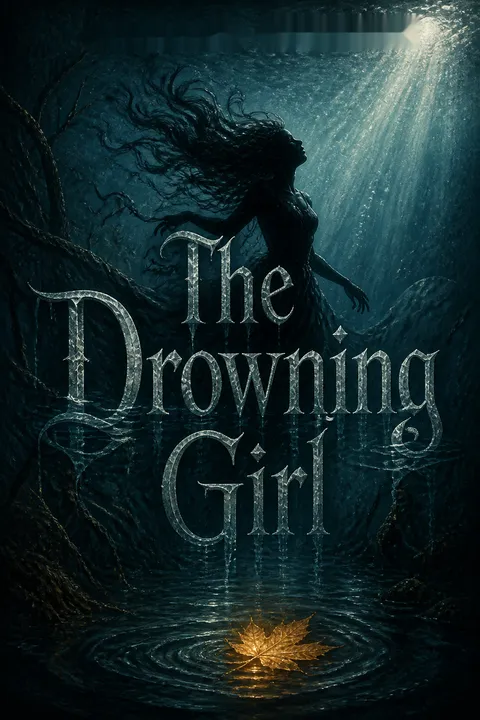
On her eleventh birthday, Imp's mother takes her to the RISD Museum, where she first encounters "The Drowning Girl," a painting by the obscure artist Phillip George Saltonstall. The painting, depicting a naked girl wading into a shadowy pool, becomes a touchstone for Imp's life—a window into another world, a source of dread and fascination. The painting's ambiguous threat and the story of its troubled creator mirror Imp's own sense of being haunted. The painting is not just art; it is a meme, a contagious haunting that spreads from artist to viewer, from mother to daughter. Imp's obsession with the painting becomes a metaphor for the way trauma and madness are transmitted and transformed.
Meeting Abalyn: Strangers and Shelter
Imp meets Abalyn Armitage, a tall, androgynous woman recently evicted by her girlfriend, when she finds Abalyn's belongings on the street. Their awkward, defensive first conversation quickly turns into an offer of help, and Abalyn moves in with Imp. Their relationship is built on mutual need and the comfort of shared strangeness. Abalyn is a trans woman, a gamer, and a writer, and her presence brings both stability and new complications to Imp's life. Their intimacy grows, but so does the sense that both are haunted by their pasts and by the stories they tell themselves about who they are.
Fairy Tales and False Memories
Imp reflects on the fairy tales that shaped her childhood: her love for "The Little Mermaid" and her fear of "Little Red Riding Hood." These stories become templates for understanding her own life, especially as she grapples with questions of transformation, duality, and danger. Imp's memories are unreliable—she is aware that some are false, and that her diaries cannot always be trusted. The boundaries between fact and fiction, memory and invention, are porous. Fairy tales, like hauntings, are contagious, shaping the way we see ourselves and others. Imp's narrative becomes a fairy tale of its own, with shifting roles and uncertain endings.
The Wolf and the Mermaid
Imp's life is haunted by two archetypes: the wolf and the mermaid. The wolf represents danger, predation, and the threat of being devoured—echoing her fear of "Little Red Riding Hood" and her encounters with mental illness. The mermaid, by contrast, is a figure of longing, transformation, and tragic beauty. These figures are not just symbols; they manifest in Imp's life as obsessions, dreams, and eventually as real people—most notably Eva Canning, who may be both wolf and mermaid, ghost and lover. The chapter explores how these archetypes shape Imp's relationships and her sense of self.
Night Drives and Apparitions
Imp describes her habit of driving alone at night to escape her thoughts. On one such drive, she encounters a naked woman—Eva Canning—standing by the side of the road near the Blackstone River. The encounter is uncanny, as if Eva simply appeared out of nowhere. Imp's memory of the event is fractured; she recalls meeting Eva twice, once in July and once in November, each time under different circumstances. This paradox becomes central to the narrative, blurring the line between reality and hallucination, fact and haunting. The road becomes a liminal space where the boundaries between worlds dissolve.
The Siren's Song Begins
After bringing Eva home, Imp's life begins to unravel. She is plagued by intrusive thoughts, dreams, and compulsions—most notably an obsession with the poem "The Lobster Quadrille." Eva's presence is both seductive and destructive, drawing Imp deeper into her own madness. The siren's song is not just a metaphor; it is a real force, compelling Imp to actions she cannot fully control. The chapter explores the contagious nature of hauntings, the way art and trauma spread from person to person, and the seductive pull of self-destruction.
Obsession, Art, and Madness
Imp's obsession with "The Drowning Girl" and with Eva becomes intertwined with her own art. She paints compulsively, trying to exorcise her ghosts, but finds that art only spreads the haunting further. The chapter delves into the history of the Blackstone River, local legends of drowned girls and river ghosts, and the way these stories become part of Imp's own mythology. The boundaries between artist and subject, creator and creation, blur. Art is both a means of survival and a source of madness—a way to make sense of the world, but also a way to lose oneself in it.
Drowning in Dreams
Imp's dreams become increasingly vivid and disturbing, filled with images of drowning, transformation, and violence. She records her dreams obsessively, trying to find meaning in their chaos. The dreams bleed into waking life, making it harder for Imp to distinguish between reality and hallucination. Her relationship with Abalyn becomes strained as the haunting intensifies. The chapter explores the power of dreams to reveal hidden truths, but also their capacity to deceive and destroy.
The River's Secret History
Imp delves into the history and folklore of the Blackstone River, uncovering stories of suicides, murders, and supernatural occurrences. She becomes obsessed with the legend of Perishable Shippen, the "Siren of Millville," and with the idea that something from the sea became trapped in the river. Her research becomes a form of magical thinking, an attempt to impose order on chaos. The river is both a real place and a symbol of the unconscious, a site of both danger and revelation.
Eva Canning: Arrival and Unraveling
Eva Canning moves from being a mysterious figure on the roadside to a central, destabilizing presence in Imp's life. Eva is both alluring and terrifying, a siren who sings Imp toward destruction and transformation. Their relationship is intensely physical, emotional, and hallucinatory. Eva's story is revealed in fragments: her connection to a suicide cult, her own troubled past, and her ambiguous identity as both victim and predator. The boundaries between Imp and Eva, self and other, living and dead, become increasingly blurred.
The Open Door of Night
Imp uncovers the story of the Open Door of Night, a cult led by Jacova Angevine that ended in mass suicide by drowning. Eva Canning is revealed to be both a victim and a vector of this haunting, her story intertwined with that of her mother and the cult. The idea of hauntings as memes—contagious, self-propagating stories—reaches its climax. Imp realizes that her own narrative is infected, that she is both haunted and a haunter, both victim and carrier.
The Bathtub and the Breaking Point
Driven to the edge by Eva's haunting and her own unraveling mind, Imp attempts suicide by drowning herself in the bathtub. She is saved by Abalyn, but the event marks a breaking point. The narrative fractures further, with Imp's sense of self and reality collapsing. The chapter is a raw, unflinching depiction of mental illness, self-destruction, and the struggle to find meaning in suffering.
The Wolf Who Cried Girl
In the aftermath of her suicide attempt, Imp experiences a hallucinatory journey in which she becomes both the wolf and the girl, both predator and prey. The narrative becomes increasingly fragmented, blending fairy tale, folklore, and personal history. Imp confronts the paradoxes at the heart of her story: the coexistence of multiple truths, the impossibility of resolution, and the necessity of embracing ambiguity. The wolf, once a figure of fear, becomes a symbol of survival and transformation.
The Truth in Fragments
Imp, with the help of her psychiatrist and Abalyn, begins to reconstruct her story from fragments—memories, dreams, research, and art. She makes lists, writes stories within stories, and tries to distinguish between truth and fiction. The process is painful and incomplete, but it allows her to reclaim some agency over her narrative. The chapter explores the limits of memory, the necessity of fiction, and the possibility of healing through storytelling.
The Cemetery and the Sea
Imp and Abalyn visit the grave of Eva Canning, discovering that Eva was both a real person and a ghost, both mother and daughter, both victim and survivor. The journey to the cemetery and the sea becomes a ritual of mourning and release. Imp lays flowers on the water, honoring both the dead and the living, and acknowledges the impossibility of closure. The sea, like the past, is vast, unknowable, and eternal.
The Final Song
Eva returns one final time, asking Imp to take her to the sea. At Moonstone Beach, Eva walks into the water and disappears, leaving Imp alone but changed. The haunting is not ended, but transformed. Imp is left with memories, art, and the knowledge that some ghosts can never be exorcised. The final song is both a farewell and a beginning—a recognition that survival is not the same as healing, but that it is enough.
Hauntings Without End
In the aftermath, Imp reflects on the nature of hauntings, the impossibility of certainty, and the necessity of living with ambiguity. She continues to be haunted by Eva, by her mother and grandmother, by art and memory and madness. But she also finds moments of peace, connection, and even love—with Abalyn, with her art, with herself. The story ends not with resolution, but with acceptance: the ghosts remain, but so does the possibility of survival.
Analysis
A modern gothic meditation on madness, memory, and the power of storiesThe Drowning Girl is a haunting, labyrinthine exploration of what it means to live with mental illness, to inherit trauma, and to seek meaning in a world where truth is always elusive. Through Imp's fractured, self-aware narration, the novel interrogates the boundaries between fact and fiction, sanity and madness, art and life. It challenges the reader to embrace ambiguity, to accept that some ghosts can never be exorcised, and that survival is not the same as healing. The novel's use of unreliable narration, intertextuality, and recursive structure mirrors the experience of schizophrenia, inviting the reader to share in Imp's struggle for coherence and connection. At its heart, The Drowning Girl is a story about the necessity of storytelling—the ways in which we use art, myth, and memory to make sense of our lives, to survive our hauntings, and to find moments of beauty and meaning in the midst of chaos. It is a testament to the power of fiction to both wound and heal, to the enduring presence of ghosts, and to the possibility of living with them.
Review Summary
Reviews for The Drowning Girl are largely positive, praising Kiernan's masterful use of an unreliable schizophrenic narrator, lyrical prose, and the blurring of reality and fantasy. Many readers admire the atmospheric, haunting quality and the nuanced portrayal of mental illness. The novel draws comparisons to David Lynch's work for its slow distortion of reality. Critics note its plotlessness and meandering tangents as weaknesses, with some finding it exhausting or pretentious. Most agree it defies genre classification, functioning best as literary psychological fiction.
Characters
India Morgan Phelps (Imp)
Imp is the heart of the novel—a young woman living in Providence, Rhode Island, struggling with schizophrenia and the legacy of generational trauma. Her narrative is fragmented, self-aware, and deeply unreliable, reflecting her constant battle to distinguish truth from hallucination, memory from invention. Imp is both fiercely intelligent and painfully vulnerable, using art, research, and storytelling as tools for survival. Her relationships—with her mother, grandmother, Abalyn, and Eva—are shaped by longing, fear, and the desire for connection. Over the course of the novel, Imp moves from being a passive victim of her hauntings to an active participant in her own story, embracing ambiguity and the necessity of living with ghosts.
Abalyn Armitage
Abalyn is Imp's lover and, for a time, her roommate and caretaker. Tall, androgynous, and fiercely independent, Abalyn is a gamer, writer, and survivor of her own traumas. Her trans identity is central to her character, shaping her experiences of love, rejection, and transformation. Abalyn provides stability and support for Imp, but their relationship is strained by Imp's illness and the intrusion of Eva. Abalyn is both compassionate and pragmatic, willing to confront difficult truths and to walk away when necessary. Her presence in Imp's life is a source of both comfort and pain, and her eventual return signals the possibility of healing and connection.
Eva Canning
Eva is the novel's central haunting—a woman who is by turns mermaid, wolf, suicide, and survivor. She appears to Imp as a naked stranger on the roadside, as a lover, as a ghost, and as a vector of contagious madness. Eva's story is fragmented and ambiguous: she is connected to a suicide cult, to the painting "The Drowning Girl," and to the legends of the Blackstone River. She is both victim and predator, both real and unreal. Eva's presence forces Imp to confront her own traumas, desires, and the limits of her sanity. Ultimately, Eva is less a person than a force—a siren's song that compels transformation, destruction, and, paradoxically, survival.
Rosemary Anne Phelps
Imp's mother, Rosemary, is a constant presence in the narrative, both in memory and as a ghost. Like her own mother before her, Rosemary suffered from mental illness and ultimately died by suicide. Her relationship with Imp is complex—marked by love, pain, and the transmission of both wisdom and madness. Rosemary's death is a foundational trauma for Imp, shaping her sense of self and her understanding of the world. Her advice to remember what matters, to make notes, becomes a guiding principle for Imp's own storytelling.
Caroline
Caroline, Imp's maternal grandmother, is another link in the chain of inherited madness. She is a storyteller, a keeper of family lore and fairy tales, and a source of both comfort and fear. Caroline's stories—about crows, ravens, and changelings—become part of Imp's personal mythology. Her suicide, like Rosemary's, is both a warning and a legacy, a reminder of the dangers and the necessity of confronting one's ghosts.
Dr. Magdalene Ogilvy
Dr. Ogilvy is Imp's psychiatrist, a steady and compassionate presence who helps Imp navigate the labyrinth of her mind. She is both a guide and a mirror, challenging Imp to confront her own truths and to accept the limits of certainty. Dr. Ogilvy's approach is pragmatic and empathetic, emphasizing the importance of storytelling, self-awareness, and the acceptance of ambiguity. She is one of the few characters who remains grounded in reality, providing a counterpoint to the novel's more fantastical elements.
Phillip George Saltonstall
Saltonstall is the painter of "The Drowning Girl," a troubled artist whose life and work become central to Imp's obsession. His own history of mental illness, failed love, and ambiguous death mirror Imp's struggles. Saltonstall's painting is both a source of haunting and a metaphor for the transmission of trauma and madness. He is less a character than a symbol—a reminder of the dangers and the necessity of art.
Albert Perrault
Perrault is a contemporary artist whose work is obsessed with fairy tales, violence, and transformation. His sculptures and paintings—especially those based on "Little Red Riding Hood" and the Black Dahlia murder—become another vector of haunting for Imp. Perrault's art is both seductive and repulsive, a reminder of the power of stories to both heal and harm. He is connected to Eva and to the broader web of contagious hauntings that shape the novel.
Jacova Angevine
Angevine is the leader of the Open Door of Night, a cult that ends in mass suicide by drowning. She is both a real historical figure and a mythic presence, a prophet who opens the door to the sea and to oblivion. Angevine's story is intertwined with Eva's, and her legacy is one of both destruction and transformation. She represents the dangers of charismatic leadership, the allure of self-destruction, and the power of belief.
The Siren / The Wolf
The siren and the wolf are not single characters, but recurring archetypes that shape the narrative. The siren represents longing, transformation, and the lure of self-destruction; the wolf represents danger, predation, and the fear of being devoured. Both are figures of haunting, both are projections of Imp's fears and desires, and both manifest in the people and stories that populate her life. They are the ghosts that can never be exorcised, only lived with.
Plot Devices
Unreliable Narration and Fragmented Structure
The novel's most important device is its unreliable narrator. Imp's schizophrenia, her awareness of her own unreliability, and her constant questioning of memory and truth create a narrative that is deliberately fragmented, recursive, and self-contradictory. The story is told in memoir form, but with frequent digressions, stories within stories, and metafictional asides. The structure mirrors the experience of mental illness—disjointed, nonlinear, and haunted by gaps and false memories. The use of art, research, and fairy tales as narrative devices allows the story to shift between genres—ghost story, fairy tale, psychological thriller—without ever settling into a single mode.
Hauntings as Memes and Contagion
The novel reimagines hauntings not as supernatural events, but as contagious stories—memes that spread from person to person, generation to generation, through art, trauma, and memory. Paintings, poems, fairy tales, and personal histories become vectors for these hauntings, infecting those who encounter them and compelling them to repeat, transform, and transmit the stories. This device allows the novel to explore the ways in which trauma, madness, and obsession are both personal and collective, both unique and universal.
Duality and Paradox
The narrative is built around paradoxes: the coexistence of multiple versions of events (July and November, wolf and mermaid, fact and fiction), the impossibility of resolution, and the necessity of living with ambiguity. The novel refuses to offer closure or certainty, instead inviting the reader to embrace the coexistence of contradictory truths. This device is reflected in the structure, the characters, and the themes, creating a story that is as much about the limits of storytelling as it is about the events themselves.
Intertextuality and Metafiction
The novel is deeply intertextual, drawing on fairy tales, folklore, poetry, art history, and personal memoir. Imp's narrative is filled with references to other texts—both real and invented—and with stories within stories (her own short stories, the histories of Saltonstall and Perrault, the legends of the Blackstone River). This layering of texts creates a sense of depth and complexity, but also of instability; the boundaries between stories, between art and life, are always in flux. The metafictional asides—Imp's commentary on her own storytelling, her awareness of her audience—reinforce the novel's central concern with the nature of truth and fiction.
Symbolism and Recurring Motifs
The novel is rich in symbolism: water as both danger and salvation, art as both creation and destruction, wolves and sirens as figures of transformation and longing. These motifs recur throughout the narrative, linking disparate events and characters and creating a sense of thematic unity. The painting "The Drowning Girl," the Blackstone River, the fairy tales of mermaids and wolves—all serve as symbols of the novel's central concerns: the struggle for identity, the legacy of trauma, and the possibility of survival.
Download PDF
Download EPUB
.epub digital book format is ideal for reading ebooks on phones, tablets, and e-readers.








































