
Key Takeaways
1. The Trinity: A Divine Dance of Relational Love
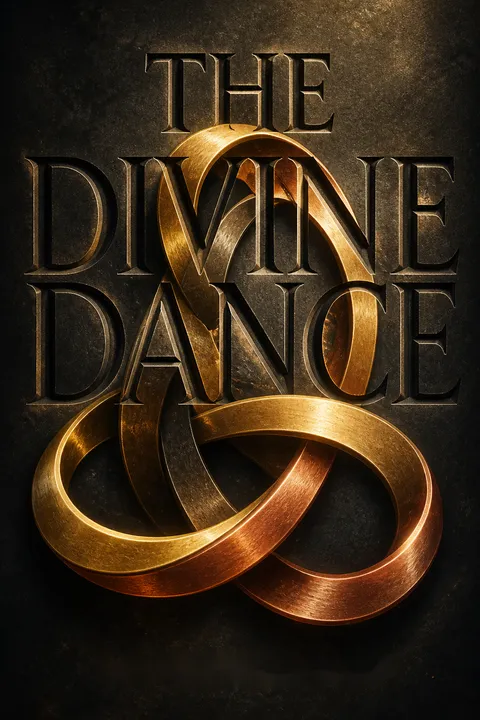
Whatever is going on in God is a flow, a radical relatedness, a perfect communion between Three—a circle dance of love.
Beyond static dogma. The traditional understanding of the Trinity as a baffling mathematical conundrum (1+1+1=3) has often rendered it irrelevant to practical Christian life. Instead of a static, abstract doctrine, the book reintroduces the ancient Cappadocian Fathers' vision of the Trinity as a dynamic, flowing "circle dance" (perichoresis) of perfect communion and love. This reinterpretation moves the Trinity from an intellectual puzzle to an experiential reality, inviting believers into a deeper, more participatory understanding of God's nature.
God as the dance. This isn't just God doing a dance; God is the dance itself—an infinite current of love streaming ceaselessly between Father, Son, and Spirit. This relational essence of God challenges the common perception of a distant, isolated monarch, revealing a God whose very being is defined by self-giving, other-centered love. This dynamic flow is the foundational reality of the universe, echoing in everything from subatomic particles to galaxies.
Invitation to participate. The "divine dance" is not a closed circle; it includes all creation. Rublev's iconic depiction of the Trinity, with an open fourth space at the table, symbolizes humanity's invitation to join this eternal banquet and dance of love. This audacious inclusion, rooted in creation itself and made concrete in Jesus, signifies that salvation is God's original intention—Plan A—for union with all beings, not a later emergency additive.
2. A Trinitarian Revolution: Reshaping Our Image of God
Instead of God being the Eternal Threatener, we have God as the Ultimate Participant—in everything—both the good and the painful.
Paradigm shift needed. The common Christian image of God remains largely "pagan" and untransformed, portraying a static, imperial monarch who acts as a critical spectator. This outdated paradigm, full of inconsistencies, demands a "Trinitarian Revolution" in Christian consciousness. This shift is not merely logical but a cataclysmic insight, akin to a scientific paradigm shift, necessary for genuine spiritual transformation.
God as inherent life. The Trinitarian Revolution redefines God from a distant judge to the Ultimate Participant, inherent in life itself and the Life Force of everything. This expansive view sees God not as an object, but as the Life Energy between all objects, making God coterminous with the ever-expanding universe and totally inclusive. This perspective liberates us from a small, exclusionary god, revealing a God always involved in all of life, both good and painful.
Everything is holy. This paradigm shift repositions grace as inherent to creation, not an occasional merit. The eternally-flowing life of the Trinitarian God is the source of every vital impulse, creative momentum, and loving surge. Consequently, everything is holy for those who learn to see, fostering a joyous cooperation with divine generosity that connects all things. This revolution addresses humanity's profound sense of disconnection from God, self, others, and the world.
3. God as Relationship Itself: The Universe's Core Pattern
Now we are prepared to say that God is not, nor does God need to be, 'substance' in that historic Aristotelian sense of something independent of all else but, in fact, God is relationship itself.
Beyond substance, into relation. Western thought, heavily influenced by Aristotle, prioritized "substance" (independent being) over "relationship." This led to a non-Trinitarian view of God as a singular, independent substance, rather than a dynamic interplay of relations. Jesus, by calling himself "Son of the Father" and yet "one with the Father," fundamentally shifted this, giving primacy to relationship as the core of divine identity.
Absolute relatedness. The Trinity reveals God as "absolute relatedness," a constant, unhindered dialogue and outpouring of love. This challenges the notion of God as a static, isolated entity, instead presenting a "fountain fullness" of love. Any concept of divine anger or withholding is rendered theologically impossible within this Trinitarian framework, as God's love is relentlessly restorative and always winning.
Relational universe. This relational nature of God is mirrored throughout the cosmos. From the orbiting particles of an atom to the vastness of galaxies, reality is fundamentally relational. The power of the universe lies not in individual particles, but in the interaction and space between them. This insight, affirmed by quantum physics and cosmology, aligns scientific and spiritual cosmologies, demonstrating that the universe's very structure is a reflection of the Trinitarian dance.
4. Vulnerability and Diversity: The Essence of Divine Being
God’s weakness I would describe as inter-being.
Divine vulnerability. Unlike human strength, which values self-sufficiency and control, God's "weakness" is described by Paul as "inter-being"—a constant, undefended openness to the other. This vulnerability, mirrored in the self-emptying (kenosis) of the Trinity, is the key to ongoing growth and allows for both gifting and wounding. Spirit-led people, embracing this risk, never stop growing and changing, recognizing new moments of opportunity.
Delight in diversity. The Trinity affirms an intrinsic plurality to goodness, where Father, Son, and Holy Spirit are distinct yet perfectly one. God's goal in creation is not uniformity but the making of unique persons, celebrating diversity. Heaven, therefore, is not a homogenous state but a multitude of "mansions," where each individual's unique journey and "you-ness" are cherished. This divine pattern allows for authentic community and freedom, where union is not destroyed by difference.
Dissolving boundaries. Human strength asserts boundaries, but God's nature is to dissolve them. The Trinity, with its distinct yet unified persons, provides a paradigm for preserving personal identity while fostering total communion. This challenges human tendencies towards individualism or mindless groupthink, inviting us into a "mutual deference" where identity is both maintained and fully shared, making mature love and authentic community possible.
5. The Law of Three: Unlocking Dynamic Change and Community
The magic of three breaks us out of our dualistic impasses, and always invites a fourth world for us to enter into.
Beyond binary thinking. Human experience often traps us in binary oppositions (first force vs. second force), leading to rivalry and antagonism. The "Law of Three" proposes a ternary universe where a third, genuinely novel force emerges, surprising us out of our rigid boxes. This third force redeems the initial positions, giving everyone a valuable role in creating something new—a "fourth possibility" that becomes a new field of collective arising.
Community's foundation. Richard of St. Victor's insight that "supreme happiness is when two persons share their common delight in a third something—together" highlights the generative power of three. This principle extends to human community: it takes one to be an individual, two to make a couple, but at least three to make a community. A "trey" (threesome) fosters common cause and collective purpose beyond individual interests, creating stability and security essential for genuine community.
Quest for understanding. The Law of Three encourages a spirit of questing and a desire for understanding over rigid certitude. Those who demand certitude often cling to ideologies, making a god out of partial truths. In contrast, the Trinitarian mystery whispers of living in "exquisite, terrible humility before reality," fostering compassionate and wise people who never stop growing. This dynamic, flowing faith is a stark contrast to static concepts that turn faith into a right to certitude.
6. Suffering and At-One-Ment: Participating in God's Kenosis
The cross is the visible symbol of what is always going on inside of God!
Embracing the whole. Trinitarian spirituality calls for an open-handed embrace of all reality, including suffering. Paul's insight that "just as we share abundantly in the sufferings of Christ, so also our comfort abounds through Christ" reveals a participatory mystery. This isn't masochism, but a profound solidarity with God's self-emptying (kenosis), where the cross symbolizes God's constant suffering in limiting Himself into finite expressions.
At-one-ment, not penal substitution. The book critiques "penal substitution" atonement theory, which implies God the Father's lack of freedom to love or forgive. Instead, it champions "at-one-ment," where the cross is an icon showing God's solidarity with humanity's rejection and abandonment. God is not watching suffering from a distance but is in the suffering with us, transforming it through restorative justice, which is God's true nature.
Forgiveness as flow. Forgiveness is central to this Trinitarian understanding. It requires seeing the other as a whole person, an image of the Divine, embracing paradox. God loves us in our "obstinate unworthiness," not because we are good, but because God is good. This unconditional love, received as a gift, empowers us to forgive others, especially for petty resentments that clog the soul. Sin, in this context, is simply whatever stops this divine flow of love and mutuality.
7. Beyond Wrath: God's Unconditional, Restorative Love
I do not believe there is any wrath in God whatsoever—it’s theologically impossible when God is Trinity.
Reinterpreting wrath. Passages about God's wrath in Scripture often reflect human projections of our own experiences of loss and inner dryness onto God. The Bible, as a "text in travail," shows a gradual progression towards grace, with Jesus personifying this grace. The Trinitarian God, being absolute givenness, cannot logically harbor wrath or withholding; the divine waterwheel flows only in one positive direction.
Human projections. Our understanding of God's "anger" often stems from our own need for retributive justice and our inability to grasp unconditional love. Hateful people project hatred, while loving people see love. The Trinity, however, beautifully undoes this negativity through a "totally positive movement that never reverses its direction." God's mercy is infinite, using even our sins for redemption, as "where sin abounds, grace abounds even more."
God's divine lure. When we ascribe negativity to God, we spiritually trap ourselves, as there's no way out without traversing stages of grief and denial. God, as the divine lure, is most equipped to pull us out of this cycle. The Trinitarian God is not a smiter but a constant giver, whose love is unwavering. Our task is to own our projections and allow God's knowing and loving to be the full and final shape of goodness, trusting in the relentless outpouring force of the divine dance.
8. Expanding Our Vision: Interfaith Wisdom and Cosmic Christ
Truth is one, and universal.
Interfaith dialogue. Trinitarian theology offers a robust foundation for interfaith dialogue, moving beyond competitive uses of Jesus as a "trump card." By recognizing the "Cosmic Christ" as a larger ontological identity than the historical Jesus, Christians can engage with other faiths without fear, acknowledging that God's incarnation includes and honors all of creation. This perspective fosters intelligent dialogue and mutual appreciation, rather than tribal exclusion.
Universal patterns. The book draws parallels between the Trinity and Hindu concepts like sat-chit-ananda (being-knowledge-happiness), demonstrating that universal truths about God's nature are echoed across different spiritual traditions. This broadened theological vocabulary allows for a deeper understanding of our own beliefs by recognizing shared spiritual heritage. If God is one, then universal patterns of truth should be found everywhere, fostering friendship rather than fear among faiths.
From pyramid to circle. Understanding the Trinity as the basic template of reality shifts our consciousness from a monarchical, pyramidal view of God to a circular one. This change in perspective redefines our understanding of what's happening, how it happens, where we're going, and our role in the eternal flow. It emphasizes that grace is intrinsic to all creatures, built into the very nature of things, and that our true nature is to become who we are—a mystery known through relationship and love.
9. The Trinity Deficit Disorder: Reclaiming Father, Son, and Spirit
We’re currently suffering from a Trinity Deficit Disorder.
Absentee Father. When God-as-Father is perceived as absent, threatening, or punitive, it creates a foundational insecurity, leading to fear, paranoia, and a win/lose paradigm for life. This "non-knowing of the Father" results in a society lacking a sense of inherent safety and benevolence, where individuals feel orphaned and compelled to save themselves through control and materialism. True "God-knowledge" is intimate, experiential, and relational, not abstract.
Missing Paschal pattern. A deficit in understanding God-as-Son (Logos) leads to a lack of meaningful direction or purpose, forcing individuals to figure out life from scratch. Without trust in the Paschal Mystery—the pattern of loss and renewal, death and resurrection—people seek resurrection without death, answers without doubt. This superficiality, often seen in "born-again" language that avoids honest talk about death, fails to provide a real alternative to cultural struggles.
Stifled Spirit. When God-as-Holy Spirit (Implanted Hope) is missing, there's no inner momentum, no élan vital to recover from wounds or drive progress. The Spirit is the relentless force of history, constantly unfolding creation and evolving consciousness, even amidst pushback. This divine indwelling is a "homing device" within us, insisting on our deep internal dignity and value, assuring us that we are "already home free" if we allow this flow.
10. Prayer as Merging: Entering the Inside-Out Flow
It is first of all God’s prayer, and it’s only secondarily yours.
Beyond manipulation. Conventional prayer often treats God as an "Other" to be influenced or manipulated, reducing it to a transactional exchange. In a Trinitarian understanding, prayer is a mutual merging, a loving and trusting relatedness. It's about discerning "What is God desiring in me now?" and aligning our will with that divine flow, rather than imposing our own agenda.
Through Christ, in the Spirit. Christian prayer is primarily addressed to the Father, offered "through the Christ" and "in the Spirit." This reflects our inclusion in the divine dance: we stand in persona Christi, with Christ's authority, guided by the indwelling Spirit. Our prayers are not solely "ours" but a participation in God's own desire, making us co-creators in the divine plan.
"Let it be." The prayers of Mary and Jesus ("Let it be") exemplify this surrendered approach. Mary's "yes" to the Spirit shows that our willingness matters to God, who does not come uninvited. Jesus in Gethsemane embodies absolute relatedness, trusting the Father's will. Prayer becomes a merging, a dancing, a participation, where we rest in God, not in outcomes, knowing that our inclusion in the dance matters in the great scheme of things.
11. Incarnation as Gospel: God's Total Embrace of Humanity
The Incarnation was an inevitable conclusion, not an accident or an anomaly.
God becomes what God loves. Jesus' incarnation reveals the image of the invisible God, demonstrating that God became what God loves—everything human. This is not an accident but an inevitable conclusion of God's love affair with creation, as "we all become what we love." The Word became flesh and moved into our neighborhood, generously inside and out, true from start to finish.
Redemption in Incarnation. For Franciscans, Christmas was already Easter; Incarnation, rightly appreciated, is already redemption. Jesus' birth proclaims God's total embrace, not needing the cross to convince God to love us, but to change our minds about God's love. The cross serves as a dramatic icon to correct our "nearsightedness" and reveal the Father's eternal givenness, which was present from all eternity.
Cosmic sympathy. The Incarnation reveals a "cosmic sympathy" with all things. Jesus, as the "first of many brothers and sisters," bore the mystery fully, allowing us to handle it in small doses "with him, in him, and through him." This understanding moves beyond individualistic spirituality, preparing us to live as Christ, recognizing that our humanity is a participation in God's eternal being, and that God's love is a constant, total flow towards our lives.
12. Everything is Holy Now: Embracing the Universal Flow
The very nature of God, therefore, is to seek out the deepest possible communion and friendship with every last creature on this earth.
No sacred-secular divide. Once we enter the "circle of praise and mutual deference" of the Trinity, the distinctions between secular and sacred, natural and supernatural, dissolve. "Everything is holy now," and the only resistance to this divine flow is human refusal to see, enjoy, and participate. Our role is to be "transmitter stations," reflecting God's glory back to God, finding profound meaning in simply being.
Spirit's work: diversity and connection. The Holy Spirit continuously multiplies life in endlessly diverse forms, yet also acts as the "Great Connector," harmonizing all these diverse things into "one Christ, loving Himself." This fire of love melts boundaries, dissolving labels and definitions, revealing the inherent goodness, truth, and beauty in everything. This "essential ecstasy" is available to all creatures, except humans who often resist their own happiness through mind games and judgment.
God is for you. The Trinitarian vision assures us that God is not a remote controller but operates lovingly from within. God's love is constant, total, and 100% towards our lives; we cannot diminish it, nor can we earn more of it. This realization liberates us from fear, doubt, guilt, and shame, inviting us into a "very safe universe." Our job is to exemplify heaven now, allowing love to happen, and joining Trinity's whirling invitation to the cosmic dance.
Review Summary
The Divine Dance receives mostly positive reviews (4.2/5 stars), with readers praising Richard Rohr's accessible exploration of Trinitarian theology. Many find the book transformative, appreciating how Rohr presents God as relationship and flow rather than a distant singular being. The concept of participating in the "divine dance" resonates deeply with readers. Some criticize the book's repetitive, unstructured style and "fuzzy mystic speak." One harsh review condemns it as New Age heresy. Overall, readers value Rohr's contemplative approach and practical spiritual exercises, though some prefer more traditional theological treatments.
People Also Read



About the Author
Other books by Richard Rohr






Download PDF
Download EPUB
.epub digital book format is ideal for reading ebooks on phones, tablets, and e-readers.








































