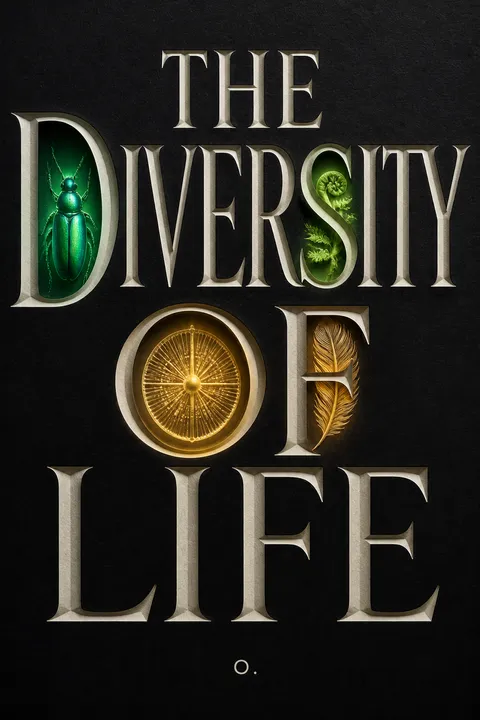

Key Takeaways
1. Earth's Biodiversity: A Vast, Undiscovered, and Priceless Treasure.
The most wonderful mystery of life may well be the means by which it created so much diversity from so little physical matter.
Sheer scale and fragility. The biosphere, comprising all organisms, is a thin, delicate film on Earth's surface, representing only one part in ten billion of the planet's mass. This immense variety of life operates on a mere 10% of the sun's energy reaching Earth, with energy sharply discounted at each step of the food web. The largest part of the living world's physical bulk resides in plants, tapering to scarce top carnivores.
Species as fundamental units. Despite definitional challenges, the species remains the pivotal unit for understanding diversity. Classification, as demonstrated by the Arfak people's precise knowledge of bird species matching European ornithologists, is crucial for survival and scientific comparison. Without this unit, analyzing ecosystems and genetic foundations would be chaotic.
Intrinsic and utilitarian value. Every species is a living genetic library, a masterpiece of evolution, exquisitely adapted and thousands to millions of years old. Beyond its intrinsic worth, biodiversity is a "magic well"—the more knowledge and benefits we draw from wildlands, the more there is to draw, offering immense untapped material wealth.
2. The Sixth Extinction: Humanity's Unprecedented Impact on Life.
The sixth great extinction spasm of geological time is upon us, grace of mankind.
Unprecedented rates. Earth has experienced five major extinction spasms over the past half-billion years, each requiring 10 to 100 million years for biodiversity to recover. Humanity is now precipitating a sixth, with extinction rates hundreds or thousands of times higher than natural background levels, a pace that evolution cannot possibly match within any timeframe meaningful to humans.
Historical human impact. Evidence from archaeological sites reveals that early human colonists caused massive extinctions.
- Pacific Islands: Polynesians extinguished at least half of the endemic landbird species upon arrival, including flightless moa-nalos and rails.
- North America: Paleo-Indian hunters, around 12,000 years ago, are implicated in the swift disappearance of 73% of large mammal genera (mammoths, ground sloths) and many large birds.
- New Zealand & Madagascar: Moas and lemurs vanished soon after human arrival.
Rifle shots vs. holocausts. Extinction occurs in two ways: "rifle shots," where individual species are targeted (e.g., overhunting, exotic predators), and "holocausts," where entire ecosystems are destroyed, wiping out countless unknown species simultaneously. The latter is increasingly prevalent today.
3. Evolution's Engine: How Species Arise and Diversify.
The origin of species is therefore simply the evolution of some difference—any difference at all—that prevents the production of fertile hybrids between populations under natural conditions.
Vertical change vs. speciation. Evolution involves two patterns: vertical change (a single species transforming over time) and speciation (a single species splitting into two or more distinct species). Speciation, the multiplication of species, is the primary driver of biodiversity, requiring reproductive isolation between populations.
Intrinsic isolating mechanisms. Species maintain their distinctness through hereditary differences that prevent free interbreeding. These "intrinsic isolating mechanisms" are diverse and often arise as accidental by-products of adaptation to different environments. Examples include:
- Habitat preference: Flycatchers adapting to open woodlands versus swamp forests.
- Breeding times: Giant silkworm moths mating at specific hours of the night.
- Courtship signals: Jumping spiders using species-specific colors and dances.
- Genetic incompatibility: Hybrids failing to develop or being sterile.
Modes of speciation. Geographical speciation (allopatric) is common, where physical barriers isolate populations, allowing them to diverge. Rapid speciation can also occur sympatrically (in the same place) through:
- Polyploidy: Instantaneous chromosome doubling, common in plants (e.g., radish-cabbage hybrid).
- Host races: Insects specializing on different host plants (e.g., Rhagoletis fruit flies on hawthorns vs. apples).
4. Ecosystems: Intricate Webs Sustained by Interdependent Species.
In communities there are little players and big players, and the biggest players of all are the keystone species.
Community organization. Ecosystems are not random collections of species but loosely organized communities where the presence of some species strongly influences the chances of others. Keystone species, though not necessarily abundant, have a disproportionately large impact on community structure.
Examples of keystone species:
- Sea otters: Their predation on sea urchins prevents kelp forests from being overgrazed, maintaining diverse marine habitats.
- Jaguars and pumas: By preying on rodents and coatis, they prevent overpopulation of herbivores that would otherwise decimate tree seedlings, altering forest composition.
- Elephants and rhinoceros: In African savannas, they shape the physical structure of habitats by felling trees and creating mosaics of grasslands and woodlands.
- Driver ants: These massive colonies drastically alter the abundance and composition of small animal communities in their path.
Interconnectedness of life. Species interact through complex food webs, competition, and various forms of symbiosis:
- Parasitism: One species benefits at the host's expense (e.g., mites on army ants).
- Commensalism: One benefits without affecting the other (e.g., forehead mites on humans).
- Mutualism: Both species benefit (e.g., mycorrhizal fungi and plant roots, coral polyps and algae). These mutualistic relationships are foundational to major ecosystems like forests and coral reefs.
5. The Uncharted Majority: Most Life on Earth Remains Unknown.
We dwell on a largely unexplored planet.
Vast unknown diversity. Despite 1.4 million species formally described, the true number on Earth is estimated to be between 10 and 100 million. Over 99% of known species are poorly understood, often by little more than a scientific name and a few anatomical notes. This profound ignorance hinders our understanding of life's capacity.
Arthropods and microorganisms. The largest gaps in our knowledge lie within:
- Arthropods: Insects, spiders, and crustaceans, with 875,000 species described, are estimated to number 5-30 million, especially in tropical forest canopies. Terry Erwin's "bug bomb" method revealed hundreds of species on single trees, many new to science.
- Microorganisms: Bacteria and fungi are the "black holes" of biodiversity. Only about 4,000 bacterial species are known, but DNA-matching techniques suggest millions exist in a single gram of soil or sediment. Fungi are estimated at 1.5 million species, with only 5% described.
Ecological significance. These unstudied organisms are vital. If insects disappeared, humanity and most terrestrial vertebrates would follow within months, as nutrient cycles would collapse and land surfaces would rot. The discovery of new phyla, like the Loricifera (ambulatory pineapples in deep-sea gravel), underscores how much remains hidden, even at the highest taxonomic levels.
6. Drivers of Loss: Habitat Destruction and Human Pressures.
The cutting of primeval forest and other disasters, fueled by the demands of growing human populations, are the overriding threat to biological diversity everywhere.
Primary causes of extinction. The leading causes of species loss are:
- Habitat destruction/degradation: Accounts for over 70% of fish species decline in North America.
- Exotic species: Introduced species outcompete or prey on natives (e.g., Nile perch in Lake Victoria, Euglandina rosea snail in Tahiti).
- Pollution: Chemical contaminants harm sensitive species.
- Overharvesting: Direct exploitation of species.
- Disease: Often exacerbated by other stressors.
Fragility of tropical forests. Tropical rain forests, though exuberantly diverse, are among the most fragile habitats. They grow on "wet deserts" with acidic, nutrient-poor soils, where most carbon and nutrients are locked in vegetation. When cleared, the soil rapidly loses fertility, and regeneration is slow and often incomplete, unlike temperate forests.
Quantifying the loss. In 1989, tropical rain forests were being destroyed at 1.8% annually. Using the area-species curve (S = CA^z), this rate is projected to extinguish or doom approximately 0.5% of rain forest species each year. If current deforestation continues for 30 more years, 10-25% of rain forest species could disappear, translating to 5-10% or more of all species on Earth. This is a "calamitous" rate, far exceeding natural background levels.
7. Unmined Riches: The Untapped Value of Wild Species.
Biodiversity is our most valuable but least appreciated resource.
Immense material wealth. Wild species offer vast, untapped resources. The perennial maize Zea diploperennis, discovered just before extinction, holds genes for disease resistance and perennial growth, potentially worth billions to agriculture. The rosy periwinkle from Madagascar yields two alkaloids that cure Hodgkin's disease and childhood leukemia, generating over $180 million annually.
Pharmaceutical and food potential.
- Medicines: Over 40% of U.S. prescriptions are derived from organisms (plants, microorganisms, animals). Examples include aspirin (meadowsweet), hirudin (leeches), kistrin (Malayan pit viper), and taxol (Pacific yew). Less than 3% of flowering plants have been screened for alkaloids.
- Food: Only 20 plant species provide 90% of the world's food, a narrow base vulnerable to disease. Thousands of tropical species remain underutilized, like the "supermarket" winged bean (edible leaves, pods, seeds, tubers, nitrogen-fixing) or maca (cold-resistant Andean root vegetable).
- Animal husbandry: Wild species like the giant Amazon river turtle (25,000 kg meat/hectare/year, 400x cattle yield) and green iguana offer sustainable, high-yield protein sources far superior to conventional livestock in many regions.
Genetic engineering. Advances in genetic engineering allow direct gene transfer between vastly different species, bypassing traditional breeding limitations. This transforms each species into a "loose-leaf book" of potentially transferable genes, increasing the value of every wild species for improving crops, medicines, and other products.
8. A New Ethic: The Imperative for Global Conservation.
The stewardship of environment is a domain on the near side of metaphysics where all reflective persons can surely find common ground.
Prudence and long-term vision. The biodiversity crisis demands an urgent, practical ethic that transcends short-term economic gains. We must view every species as priceless, not to be knowingly extinguished, and commit to protecting all species and races in perpetuity. This responsibility is akin to public health or military defense, beyond individual capacity.
Ecosystem services and human welfare. Natural ecosystems provide indispensable "services" that sustain human life:
- Atmospheric regulation: Forests influence temperature, wind, and precipitation (e.g., Amazon creates half its own rainfall).
- Soil genesis: Organisms create and enrich soils, crucial for agriculture.
- Water purification: Natural systems filter and detoxify water.
- Pollination and pest control: Insects and other animals perform vital ecological roles.
Disregarding these services risks catapulting humanity into an "alien environment" uncongenial to human life.
Biophilia and human origins. Human sensibility is deeply rooted in the natural world. Our innate "biophilia"—the subconscious connection to life—is evident in our phobias (snakes, spiders), aesthetic preferences (park-like landscapes), and recreational pursuits (hiking, gardening). This deep connection forms the basis for an enduring environmental ethic, reminding us that we are part of nature, not apart from it.
9. Restoration and Hope: Saving What Remains for Future Generations.
There can be no purpose more enspiriting than to begin the age of restoration, reweaving the wondrous diversity of life that still surrounds us.
Multi-faceted conservation. Addressing the biodiversity crisis requires a blend of science, capital, and government action. Key strategies include:
- Global surveys: Rapid Assessment Programs (RAP) for local hot spots, BIOTROP for broader regions, and national biodiversity institutes (e.g., Costa Rica's INBio) for comprehensive inventories.
- Bioeconomic analysis: Valuing ecosystems for sustainable products (extractive reserves) and ecotourism, making conservation economically viable for local communities.
- Sustainable development: Implementing practices like strip logging and improved agriculture (e.g., Honduras's Guinope region) to reduce pressure on wildlands.
Protecting and expanding reserves. Only 4.3% of Earth's land is protected, and these fragments are shrinking. Expanding reserves to 10% of land surface, prioritizing "hot spots" (areas rich in endemics and under extreme threat), is crucial. Mechanisms like debt-for-nature swaps and the Global Environment Facility (GEF) can fund these efforts. Reserve design (SLOSS debate) should prioritize large, interconnected areas.
Restoring wildlands. The next century must be an "age of restoration." Efforts like planting dry tropical forests in Costa Rica's Guanacaste National Park demonstrate that degraded lands can be revitalized. While caution is needed with exotic species, the long-term goal is to create synthetic biotas in wastelands, allowing species extinct in the wild to regain security. The ultimate aim is to carry as much of the world's biodiversity as possible through the current bottleneck, preserving millions of species for future generations.
Review Summary
The Diversity of Life receives overwhelmingly positive reviews (4.22/5) for its comprehensive exploration of biodiversity, extinction, and conservation. Readers praise Wilson's eloquent, accessible writing that makes complex ecology understandable without oversimplification. The book covers evolution, species formation, ecosystems, and humanity's devastating impact on biodiversity. While published in 1992, reviewers find it remains relevant despite some dated aspects. Critics note its textbook-like density and occasionally repetitive nature. Most appreciate Wilson's five-point conservation plan and warnings about the sixth mass extinction, though some find the content depressing and question whether proposed solutions are achievable.
People Also Read





About the Author





Download PDF
Download EPUB
.epub digital book format is ideal for reading ebooks on phones, tablets, and e-readers.








































