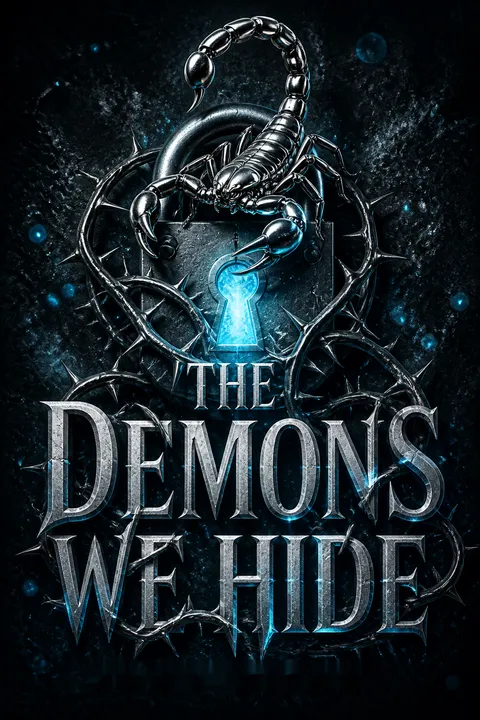

Plot Summary
Childhood Promises, Broken Trust
Juliet and Lex's childhood friendship is forged in the shadows of abuse and privilege. Juliet, the daughter of Silverwood's elite, finds solace in Lex, a quiet boy with bruises no one else sees. Their bond is a lifeline, but the world conspires to tear them apart—her family's ambitions, his father's violence, and the town's rigid lines. When Juliet exposes Lex's abuse, she learns that truth brings consequences, not safety. The innocence of their connection is lost, replaced by a simmering rage and a vow: to never be powerless again. This early trauma sets the stage for the tangled loyalties, betrayals, and obsessions that will define their lives, as both learn that love and violence are never far apart.
Scorpion Kings' Dark Pact
Years later, Lex, Nolan, and Gio—now the Scorpion Kings—are bound by blood, crime, and a code of loyalty. Their world is one of drugs, hacking, and survival, ruled by the iron fist of Gio's father, Darrio Vargas. Lex's obsession with Juliet has only grown, his secret room filled with her images. When Juliet returns to their orbit, the Kings' pact is tested: desire for her threatens to unravel their unity. Each boy is haunted by his own demons—Lex's need for control, Nolan's cold calculation, Gio's hunger for love and violence. Together, they walk the line between protectors and predators, their brotherhood both a shield and a prison, as Juliet's presence forces them to choose between her and each other.
Juliet's Fury Unleashed
Juliet, once Silverwood's princess, is now its pariah. Betrayed by family, friends, and lovers, she wields her anger like a blade. Her trust in the Scorpion Kings is fragile, easily shattered by secrets and half-truths. When her apartment burns down and Gio is hospitalized, Juliet suspects the Kings' involvement, fueling her need for revenge. She uses sex and manipulation to test their loyalty, refusing to be a pawn in their games. Yet, beneath her fury lies exhaustion and longing—for safety, for love, for a place to belong. Her rage is both her armor and her undoing, driving her deeper into the Kings' world even as she tries to destroy it.
Gio's Betrayal and Blood
Gio, the charming playboy, is brutally attacked—an act meant as a warning to the Kings: stay away from Juliet. Hospitalized and vulnerable, Gio's absence fractures the group's dynamic. His father's indifference and the town's suspicion only deepen his wounds. Yet, Gio's loyalty to his brothers and Juliet never wavers. He becomes both a victim and an avenger, seeking answers and retribution. His pain exposes the cracks in the Kings' armor, forcing them to confront the reality that their enemies are closing in. Gio's ordeal is a turning point, binding him to Juliet in shared trauma and marking him as both protector and weapon in the escalating war for survival.
Lex's Obsession Revealed
Lex's fixation on Juliet is no longer a secret. His home is a shrine to her, his fantasies dark and consuming. When Juliet seeks him out, their encounter is a collision of need and dominance—sex as both escape and battleground. Lex's need to possess her is matched only by his fear of losing her to his brothers or the world. He oscillates between tenderness and brutality, offering Juliet both sanctuary and captivity. His obsession is both his strength and his curse, driving him to protect her at any cost, even as it threatens to destroy the fragile trust between them and the unity of the Scorpion Kings.
Nolan's Calculated Vengeance
Nolan, the Kings' leader, is the architect of their survival. Cold, methodical, and fiercely protective, he navigates the dangers of Silverwood's underworld with ruthless efficiency. When Gio is attacked and Juliet is targeted, Nolan orchestrates their response—gathering information, making alliances, and preparing for war. His relationship with Juliet is fraught with tension, desire, and the ever-present threat of betrayal. Nolan's willingness to do whatever it takes—to kill, to manipulate, to sacrifice—sets him apart, but also isolates him. His greatest fear is not violence, but losing control of the people he loves, especially as the lines between justice and revenge blur.
Fire, Lies, and Ashes
The burning of Juliet's apartment is a catalyst, forcing her into the Kings' world with no way back. The fire is both a literal and symbolic act—destroying her last ties to her old life and marking her as a target. Suspicion falls on the Kings, but the truth is more complicated: someone wants Juliet isolated and vulnerable. The fire exposes the town's hatred, the fragility of alliances, and the lengths to which enemies will go to control her fate. In the ashes, Juliet must decide whether to trust the Kings or strike out alone, knowing that every choice carries a price.
Dangerous Games of Desire
Desire is a weapon in Silverwood, and Juliet learns to wield it as well as any of the Kings. Their encounters are charged with violence as intimacy and power—bondage, pain, and pleasure blurring the lines between love and control. Each King seeks to claim her, but Juliet refuses to be owned, using her body to test their limits and her own. The games they play are dangerous, pushing them all to the edge of obsession and self-destruction. In the heat of their passion, secrets are revealed, alliances are tested, and the true nature of their connection is laid bare: they are each other's salvation and damnation.
The Girl Who Runs
Juliet's instinct is always to run—first from her family, then from the Kings, and finally from herself. Each escape is met with pursuit, the Kings unwilling to let her go. Their world is a labyrinth of locked doors, hidden rooms, and invisible chains. Even when she finds temporary refuge with friends, the past always catches up. The more she runs, the more entangled she becomes, until flight is no longer an option. The Kings' relentless pursuit is both a threat and a promise: she can never truly escape, but she may finally find a place where she belongs, if she dares to stop running.
Enemies, Lovers, Monsters
The Kings are both Juliet's saviors and her captors. Their love is monstrous—violent, possessive, and all-consuming. They kill for her, bleed for her, and demand her loyalty in return. Juliet is forced to confront the darkness within herself, recognizing that she is drawn to their brutality as much as their tenderness. Together, they form a new kind of family—one built on shared trauma, mutual need, and the willingness to do whatever it takes to survive. In each other, they find both the monsters they fear and the lovers they crave, redefining what it means to be safe, loved, and free.
The Price of Survival
Survival in Silverwood comes at a steep price. Juliet, once sheltered and privileged, is now complicit in the Kings' crimes—lying, stealing, and ultimately killing to protect herself. Each act of violence leaves a mark, eroding her sense of self and blurring the line between victim and perpetrator. The Kings, too, are changed by what they must do to keep her safe, their hands stained with blood and their souls weighed down by guilt. Together, they must reckon with the consequences of their choices, knowing that survival means becoming the very thing they once feared.
Secrets Behind Locked Doors
Lex's secret room is the heart of his obsession—a shrine to Juliet, filled with stolen moments and hidden cameras. When Juliet discovers it, the truth is both horrifying and strangely validating: she has always been watched, always been wanted. The revelation is a turning point, forcing her to confront the reality of her relationship with the Kings. Is she a lover, a prisoner, or a trophy? The locked doors are both literal and metaphorical, representing the secrets they all keep and the fear of what will happen when those secrets are finally exposed.
The Hunt for Truth
As the Kings dig deeper into the attacks on Juliet, they uncover a web of lies, betrayals, and hidden motives. The truth about her father's downfall, her mother's disappearance, and the town's vendetta against her family is more complicated than anyone imagined. Allies become enemies, and enemies reveal unexpected loyalties. The hunt for answers is a race against time, as the Kings realize that the real threat may be closer than they think. In the end, the only way to survive is to trust each other, even when trust feels impossible.
The Kidnapping at Trail's End
Juliet's kidnapping is the ultimate test of the Kings' loyalty and ruthlessness. As she fights for her life, the Kings mobilize—tracking her through technology, violence, and sheer will. The rescue is brutal, leaving bodies in its wake and binding Juliet to the Kings in blood. The experience is both traumatizing and transformative, forcing Juliet to confront her own capacity for violence and the reality that the Kings will kill for her without hesitation. The aftermath is a reckoning: survival means accepting the darkness within herself and those she loves.
Blood on Their Hands
The Kings' vengeance is swift and merciless. Juliet, given the choice, pulls the trigger herself—killing one of her captors and crossing a line she can never uncross. The act is both liberation and damnation, marking her as one of them. The Kings, too, are changed by the blood they spill, their unity forged in violence and guilt. Together, they must face the consequences of their actions, knowing that justice in Silverwood is always personal and always paid for in blood.
The Monster in the Mirror
Juliet's nightmares are haunted by the monster who first violated her trust—Morpheus, her father's friend and her own abuser. The trauma of her past shapes every choice she makes, every relationship she forms. The Kings, each with their own scars, become both her tormentors and her healers, forcing her to confront the darkness within herself. In the mirror, Juliet sees both victim and monster, survivor and perpetrator. Her journey is one of self-acceptance, as she learns that healing is not about forgetting, but about owning her story and refusing to be defined by her pain.
The Choice to Kill
Given the gun, Juliet chooses to kill—not out of necessity, but out of a need to reclaim her power. The act is both horrifying and exhilarating, a declaration that she will no longer be a victim. The Kings watch, both proud and wary, knowing that this choice binds her to them forever. In killing, Juliet becomes both more herself and more like them—a Scorpion Girl, marked by violence and loyalty. The choice is not just about survival, but about who she is willing to become to protect herself and those she loves.
Becoming a Scorpion Girl
In the aftermath of violence, Juliet is no longer an outsider. She is a Scorpion Girl—claimed by the Kings, feared by the town, and finally in control of her own fate. The journey has cost her everything: innocence, safety, and the illusion of a normal life. But in its place, she has found something new—a family forged in blood, a love that is both monstrous and redemptive, and a sense of self that can withstand even the darkest storms. The demons they hide are now shared, and together, they are ready to face whatever comes next.
Analysis
A modern gothic of trauma, power, and chosen familyThe Demons We Hide is a raw, unflinching exploration of what it means to survive in a world where love and violence are inseparable. Lucy Smoke crafts a narrative that is both a dark romance and a psychological thriller, using the conventions of the bully romance and reverse harem genres to interrogate deeper questions of agency, trauma, and identity. The novel's power lies in its refusal to offer easy answers: every act of violence is both a wound and a weapon, every relationship a battleground of desire and fear. Juliet's journey—from victim to avenger, from princess to Scorpion Girl—is a testament to the resilience of the human spirit, but also a warning about the cost of survival. The Kings, too, are both monsters and lovers, their obsession a mirror for Juliet's own hunger for control and connection. In the end, the novel suggests that healing is not about erasing the past, but about embracing the demons we hide—and finding, in the darkness, a new kind of family. The story's lessons are both cautionary and hopeful: that true power comes from owning one's story, that love can be both salvation and damnation, and that sometimes, the only way out is through.
Review Summary
The Demons We Hide, the second book in the Scorpion Kings series, receives overwhelmingly positive reviews (4.26/5 stars). Readers praise the dark, spicy "why choose" romance featuring fallen princess Juliet and the possessive Scorpion Kings—Nolan, Lex, and Gio. Reviewers love the tension, character development, and explosive chemistry, though many express frustration with another major cliffhanger ending. Some note Juliet's initial stubbornness and trust issues create tension, but most appreciate her growth into a fierce protagonist. The spice level, plot twists, and emotional depth earn acclaim, with readers eagerly anticipating book three.
People Also Read



Characters
Juliet Donovan
Juliet is the fallen queen of Silverwood, once privileged and adored, now hated and hunted. Betrayed by her family, friends, and the town itself, she is forced to shed her innocence and become a fighter. Her journey is one of rage, trauma, and transformation—learning to wield her pain as both shield and weapon. Juliet's relationships with the Scorpion Kings are fraught with desire, distrust, and mutual need. She is both their obsession and their equal, refusing to be owned even as she is drawn into their darkness. Her greatest struggle is with herself: to accept her capacity for violence, to confront her trauma, and to choose who she will become. In the end, Juliet is not a victim, but a survivor—one who claims her place among monsters and finds power in her own brokenness.
Lex (Alexio Medicci)
Lex is the Scorpion Kings' dark heart—a genius hacker with a shrine to Juliet hidden behind locked doors. Abused as a child, he learned early that love and violence are intertwined. His obsession with Juliet is both terrifying and tender, driving him to extremes of control and devotion. Lex's need to possess her is matched only by his fear of losing her to his brothers or the world. He is both her savior and her captor, offering safety at the price of freedom. Lex's psychological complexity lies in his struggle to balance love and obsession, violence and care. His development is a slow unmasking, as he learns to trust Juliet with his secrets and to accept that true connection requires vulnerability as well as dominance.
Nolan Pierce
Nolan is the Kings' brain and backbone—a master of planning, manipulation, and sacrifice. Raised in violence, he is both ruthless and fiercely loyal, willing to do whatever it takes to protect his brothers and Juliet. Nolan's relationship with Juliet is a battle of wills, marked by sexual tension, mutual respect, and the ever-present threat of betrayal. He is both her judge and her advocate, pushing her to confront her own darkness while hiding his own. Nolan's psychological depth comes from his constant balancing act: justice versus revenge, control versus compassion. His greatest fear is losing those he loves, and his development is a journey from cold calculation to genuine connection, learning that leadership means sharing both power and pain.
Gio (Giovanni Vargas)
Gio is the Kings' wild card—a seductive, impulsive force of nature with a deep well of pain. The son of a crime lord, he is both victim and perpetrator, craving love and violence in equal measure. Gio's attack and hospitalization expose his vulnerability, binding him to Juliet in shared trauma. His relationship with her is playful, passionate, and fiercely protective, but also marked by jealousy and insecurity. Gio's psychological complexity lies in his struggle to reconcile his need for affection with his capacity for brutality. His development is a journey from reckless abandon to purposeful action, learning that true loyalty means both fighting for and with those he loves.
Darrio Vargas
Darrio is the shadow over Silverwood—a ruthless gangster whose power is built on fear and violence. As Gio's father and the Kings' employer, he is both a source of protection and danger. Darrio's relationship with his son is marked by contempt and manipulation, using Gio as both pawn and weapon. His presence forces the Kings to confront the reality of their world: loyalty is always conditional, and survival means making impossible choices. Darrio's psychological role is that of the patriarchal monster, embodying the cycle of abuse and the cost of power.
Morpheus Calloway
Morpheus is the hidden monster in Juliet's life—her father's friend, her family's savior, and her own violator. His abuse is the root of Juliet's deepest trauma, shaping her relationships and her sense of self. Morpheus is a master of appearances, using charm and authority to mask his predation. His psychological complexity lies in his ability to inspire both trust and terror, forcing Juliet to confront the reality that evil often wears a familiar face. His role is that of the ultimate betrayer, the wound that never fully heals.
Denise Donovan
Denise is the ghost in Juliet's story—a mother who chooses escape over protection, leaving her daughter to face the consequences of her family's downfall alone. Her disappearance is both a mystery and a betrayal, forcing Juliet to question the meaning of love and loyalty. Denise's psychological role is that of the absent caregiver, the one whose absence is more painful than her presence. Her choices haunt Juliet, shaping her fear of abandonment and her struggle to trust.
Allen Donovan
Allen is the spark that ignites Juliet's descent—a father whose crimes (real or fabricated) destroy his family and reputation. His imprisonment is both a punishment and a liberation, forcing Juliet to fend for herself. Allen's psychological complexity lies in his dual role as both victim and perpetrator, forcing Juliet to confront the ambiguity of guilt and innocence. His downfall is the catalyst for the story's events, setting Juliet on a path of survival, vengeance, and transformation.
Ma-Ri
Ma-Ri is the Dionysus Lounge's owner and a rare source of stability in Juliet's chaotic world. She offers work, shelter, and a semblance of family, but is ultimately forced to betray Juliet under pressure from the Kings' enemies. Ma-Ri's psychological depth comes from her struggle to balance compassion with survival, loyalty with pragmatism. Her relationship with Juliet is one of mutual respect and disappointment, highlighting the difficulty of doing the right thing in a world built on secrets and threats.
Roquel and Mads
Roquel and Mads are Juliet's only real friends—outsiders who offer acceptance, support, and a glimpse of a different life. Their presence is a reminder that not all relationships are transactional or violent. Roquel's boldness and Mads' quiet strength provide Juliet with both challenge and comfort, helping her navigate the treacherous waters of Silverwood. Psychologically, they represent the possibility of healing and the importance of chosen family, even as their own struggles mirror Juliet's journey.
Plot Devices
Multiple Perspectives and Unreliable Narration
The novel employs a rotating first-person perspective, allowing readers to inhabit the minds of Juliet, Lex, Nolan, and Gio. This structure creates a sense of intimacy and immediacy, but also unreliability—each character's version of events is colored by trauma, desire, and self-deception. The shifting viewpoints mirror the story's central themes: the impossibility of objective truth, the fluidity of loyalty, and the psychological complexity of love and violence. The use of flashbacks, dreams, and hallucinations further blurs the line between reality and perception, forcing readers to question what is real and what is imagined.
Locked Rooms, Surveillance, and Obsession
Locked doors, hidden rooms, and secret cameras are recurring motifs, symbolizing both literal and metaphorical captivity. Lex's shrine to Juliet is the most explicit example—a physical manifestation of his obsession and need for control. Surveillance is both protection and violation, reflecting the characters' fear of being seen and their longing to be known. These devices heighten the story's tension, creating a claustrophobic atmosphere where privacy is impossible and secrets are always on the verge of exposure.
Violence as Intimacy and Power
Violence is not just a backdrop, but a language through which characters express love, loyalty, and dominance. Sex scenes are charged with aggression and vulnerability, blurring the boundaries between pleasure and pain, consent and coercion. The act of killing—whether in self-defense or revenge—is both a loss of innocence and a reclamation of agency. These plot devices force characters to confront their own darkness, forging new identities in the crucible of trauma and desire.
Foreshadowing and Symbolic Motifs
Fire is a recurring symbol—Juliet's apartment burning, the bonfires at parties, the heat of passion and violence. It represents both destruction and the possibility of renewal, mirroring Juliet's journey from privileged innocence to hardened survivor. Blood, too, is ever-present—on hands, in beds, on the ground—marking the cost of survival and the bonds of loyalty. These motifs foreshadow the story's climactic moments, reminding readers that every act of violence carries both an ending and a beginning.
The Monster Within and Without
The novel's central plot device is the mirroring of internal and external monsters. Juliet's abuser, Morpheus, is the literal monster, but the Kings—and Juliet herself—must confront the monsters within: obsession, rage, the capacity for violence. The story's structure forces characters to face their own reflections, asking whether survival means becoming the very thing they fear. This device is both narrative and psychological, driving the story's emotional arc and its ultimate message of self-acceptance.
Download PDF
Download EPUB
.epub digital book format is ideal for reading ebooks on phones, tablets, and e-readers.








































