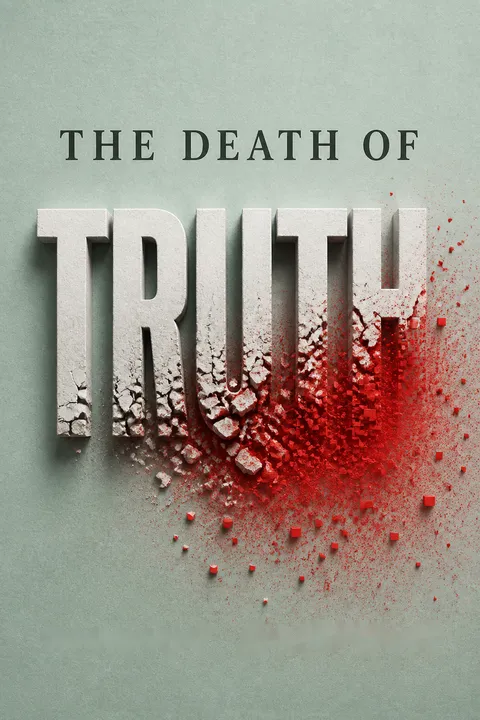

Key Takeaways
1. The Erosion of Objective Truth and Reason
The ideal subject of totalitarian rule is not the convinced Nazi or the convinced Communist, but people for whom the distinction between fact and fiction (i.e., the reality of experience) and the distinction between true and false (i.e., the standards of thought) no longer exist.
A dangerous parallel. The contemporary political landscape eerily mirrors Hannah Arendt's chilling observation about totalitarianism: a world where the lines between fact and fiction, true and false, have blurred. This "truth decay," as the Rand Corporation terms it, manifests in fake news, fake science, fake history, and a deluge of misinformation from political leaders and foreign adversaries alike. The sheer volume of false claims, exemplified by President Trump's prolific lying, signals a profound assault on democratic institutions and norms.
Historical echoes. The decline of reason is not unprecedented in American history, recalling what Richard Hofstadter called "the paranoid style" and "the indigenous American berserk." This irrational counter-theme, fueled by grievances over changing demographics, economic inequality, and social upheaval, has been inflamed by populist leaders who offer scapegoats instead of solutions. The Trump administration, in particular, embodies anti-Enlightenment principles, prioritizing instinct and whim over knowledge and expert analysis, leading to erratic decision-making and a disregard for institutional wisdom.
Consequences of neglect. The disastrous Iraq War serves as a stark reminder of the calamities that arise when momentous decisions are driven by ideological certainty and cherry-picked intelligence, rather than rational policy-making and expert analysis. Today, this disdain for expertise persists, with government agencies hollowed out, public opinion ignored, and inconvenient facts attacked. When citizens lose basic literacy in critical issues, they risk their democracy being hijacked by demagogues, leading to a gradual decay of democratic institutions.
2. The Rise of Subjectivity and Narcissism
Everyone is entitled to his own opinion, but not to his own facts.
The "Me Decade" amplified. The 1970s "Me Decade" and Christopher Lasch's "culture of narcissism" laid the groundwork for today's "selfie age," where self-absorption and attention-seeking are paramount. This embrace of subjectivity has led to the diminution of objective truth, elevating opinion and feelings over verifiable facts. Political figures now openly prioritize how people "feel" over what statistics or evidence demonstrate, creating a reality where personal perception trumps empirical data.
Philosophical underpinnings. This shift is partly rooted in postmodernist thought, which, originating in academia, denies an objective reality and posits that knowledge is filtered through individual prisms of class, race, and gender. While intended to expose biases, these arguments have been hijacked by the populist right to justify "alternative facts" and question established scientific consensus. The Paul de Man scandal, where deconstructionist principles were used to explain away pro-Nazi writings, starkly illustrates the dangers of such extreme relativism.
Tocqueville's warning. Alexis de Tocqueville, observing early American society, worried that citizens' tendency to withdraw into "small private societies" and indulge in "the enjoyments of private life" would diminish civic duty. This self-absorption, he predicted, could pave the way for a "soft despotism" where a people, too preoccupied with "petty and paltry pleasures," become "reduced to nothing better than a flock of timid and industrious animals, of which the government is the shepherd." This prescient warning resonates deeply in an era where personal gratification often overshadows collective responsibility.
3. Language as a Weapon: Co-opting and Corrupting Discourse
Without clear language, there is no standard of truth.
Orwell's chilling prophecy. George Orwell understood that "political chaos is connected with the decay of language," a principle authoritarian regimes throughout history have exploited to control thought. From the Soviet Union's "wooden language" to Mao's linguistic engineering and the Nazis' "tiny doses of arsenic" that poisoned German culture, words are weaponized to suppress critical thinking and inflame bigotry. The Nazis' transformation of words like "fanatical" into terms of praise demonstrates how language can be subverted to normalize the unacceptable.
Trump's linguistic assault. President Trump's torrent of lies, twisted syntax, and inflammatory bombast serve as a modern example of language co-option. He not only lies reflexively but also contaminates principles intrinsic to the rule of law with personal agendas, exchanging the language of democracy for that of autocracy. His Orwellian trick of using words to mean their exact opposite—calling legitimate journalism "fake news" while accusing opponents of his own sins—aims to assert power over truth itself, much like Vladimir Putin's strategy.
Rewriting reality. This linguistic manipulation extends to rewriting history and controlling narratives. The Trump administration's swift removal of climate change information from government websites and the suppression of dissenting views echo the Ministry of Truth's continuous rewriting of history in Orwell's 1984. Such actions, coupled with the president's impulsive and often misspelled tweets, reveal a cavalier disregard for accuracy and precision, creating a chaotic environment where facts are fluid and reality is whatever the leader declares it to be.
4. The Vanishing of Shared Reality in a Hyperreal World
Do I want to interfere with the reality tape? And if so, why? Because, he thought, if I control that, I control reality.
The "hyperreal" takes hold. The modern world, saturated with media and information, increasingly prefers the "hyperreal"—simulated or fabricated realities—over the mundane "desert of the real." This burgeoning disorientation, where the actual and the imagined blur, has been amplified by politicians who instinctively grasp that a new internet-driven landscape makes it easier to promote viral narratives and alternate realities. The result is a society where "credibility" has replaced "truth," and the art of "making things seem true" is highly rewarded.
Propaganda's evolution. Politicians have always spun reality, but television and the internet have provided unprecedented platforms for prevarication. Lee Atwater's cynical maxim, "perception is reality," articulated a Machiavellian approach to mass media that Trump has perfected, casting immigrants as scapegoats and discrediting journalism as "enemies of the people." His business background, marked by inflated claims and fabricated personas, demonstrates a transactional view where all that matters is making the sale, regardless of veracity.
Digital manipulation. The alt-right's concept of "red-pilling the normies" exemplifies the deliberate effort to convert people to alternative realities, where white persecution and threats to multiculturalism are central. Online platforms like 4chan and Reddit serve as testing grounds for memes and fake news, which then seep into mainstream consciousness. As Renee DiResta notes, social network algorithms, driven by "asymmetry of passion," boost conspiracy theories and silo communities, leading to a point where "the Internet doesn’t just reflect reality anymore; it shapes it."
5. Digital Echo Chambers and the Fragmentation of Society
We’re all islands shouting lies to each other across seas of misunderstanding.
The "Big Sort" goes digital. Arthur Miller's bewilderment at not knowing a single Bush supporter foreshadowed a deepening societal fragmentation. Bill Bishop's "The Big Sort" describes how, since the 1980s, people have increasingly clustered into communities based on shared values, tastes, and beliefs. The internet and social media have exponentially amplified this phenomenon, creating impermeable "filter bubbles" and "echo chambers" where individuals are sealed off from dissenting viewpoints, leading to a shrinking common ground and a vanishing consensus.
Partisanship as identity. This ideological sorting has transformed political affiliation into a tribal identity, akin to being a die-hard sports fan. Loyalty to one's party often trumps facts, morality, and decency, leading to knee-jerk denial of inconvenient truths and a reluctance to compromise. Gerrymandering further exacerbates this, creating districts where elected officials fear being primaried if they deviate from extreme partisan lines, thus fueling a "binary tribal world" where the goal is to "provoke, condemn, and defeat the other."
The media's role. The explosion of right-wing media, from Rush Limbaugh to Fox News and Breitbart, has created an "alternate reality bubble" that relentlessly repeats its own tropes and frames national debates through sheer volume and shamelessness. These outlets often prioritize "truth-based content"—self-serving, pre-cooked narratives—over verifiable facts, further reinforcing existing beliefs and poisoning audiences against mainstream journalism. This environment fosters confirmation bias, where people readily embrace information that supports their views while rejecting anything that challenges them.
6. Propaganda's New Playbook: The "Firehose of Falsehood"
The point of modern propaganda isn’t only to misinform or push an agenda. It is to exhaust your critical thinking, to annihilate truth.
Lenin's enduring legacy. Vladimir Lenin's model of revolution, aiming to smash the state and its institutions through confusion, chaos, and violent rhetoric, remains frighteningly durable. His "incendiary language," designed "not to convince, but to break up the ranks of the opponent," serves as a template for modern "neo-Bolsheviks" like Trump and European populists. These figures, often operating from political fringes, employ "alternative media" to spread disinformation and hatemongering, believing that "ordinary morality does not apply to them" in their struggle for power.
The "firehose" strategy. Russia, a master of propaganda, has perfected the "firehose of falsehood"—an unremitting, high-intensity stream of lies, partial truths, and complete fictions. This strategy, deployed with tireless aggression, aims to obfuscate truth, overwhelm audiences, and exploit the psychological tendency to accept the first information received. Russian state media like RT and Sputnik blend infotainment with disinformation, creating a perception of multiple sources while being unconcerned with veracity or consistency.
Engineered cynicism. The sheer volume of this "dezinformatsiya" numbs and exhausts people, leading to "outrage fatigue" and a retreat into private lives. As scholar Zeynep Tufekci notes, the goal is not necessarily to convince, but to "produce resignation, cynicism, and a sense of disempowerment." Vladislav Surkov, "Putin's Rasputin," orchestrates this "performance-art" propaganda, creating conflicting story lines to blur reality and fiction. His nihilistic vision, where "power for power’s sake" reigns, openly repudiates objective truth, suggesting that all narratives are contingent and all politicians are liars.
7. The Nihilism of the Trolls and the Normalization of Cruelty
The world is a horrible place. Lions kill for food, but people kill for sport.
A deepening cynicism. America grapples with a homegrown nihilism, a by-product of disillusionment with a dysfunctional political system, technological upheaval, and dwindling hopes for the American dream. This mindset makes voters susceptible to attacks on the status quo and leads to a cynical rationalization of transactional politics and shamelessness. Trump, with his dog-eat-dog view of the world and lack of empathy, embodies this nihilism, defining himself through attacks and constantly seeking enemies and scapegoats.
The "Flight 93 Election." This pervasive negativity extends to many Republicans in Congress who abandon reason and policy-making, prioritizing big-money donors over public interest. Their willingness to ignore Trump's lies and reckless decisions, fearing his base, fuels a self-fulfilling prophecy of governmental dysfunction. This nihilism manifests in grotesque acts of cruelty, such as trolling grieving parents of Sandy Hook victims or the survivors of the Parkland massacre, and the widespread "weaponization" of irony, fear, and lies.
Ironic fascism. The internet provides a platform for the most appalling racist, sexist, and cruel remarks, often delivered with a wink or a sneer, then dismissed as "just joking." This "ironic fascism," as researchers Alice Marwick and Rebecca Lewis describe it, can serve as a gateway drug to unironic bigotry. Neo-Nazi sites like The Daily Stormer explicitly advise writers to use humor and a "light" tone so that "the unindoctrinated should not be able to tell if we are joking or not," while privately admitting, "I actually do want to gas kikes." This demonstrates the destructive power of postmodern irony, which, as David Foster Wallace observed, is "critical and destructive" but "singularly unuseful when it comes to constructing anything to replace the hypocrisies it debunks."
8. Democracy's Vulnerability: Lessons from History and Warnings for the Future
A popular Government, without popular information, or the means of acquiring it, is but a Prologue to a Farce or a Tragedy; or perhaps both.
Washington's clairvoyant warnings. George Washington's Farewell Address of 1796 eerily foresaw the dangers America now faces, warning against "cunning, ambitious, and unprincipled men" who might subvert the people's power, "insidious wiles of foreign influence," and the "continual mischiefs of the spirit of party." His concerns about factionalism and the need for a "common good" resonate deeply today, as President Trump and foreign adversaries actively incite divisions along racial, ethnic, and political lines.
Huxley vs. Orwell revisited. Neil Postman's Amusing Ourselves to Death argued that technological distractions were leading to Huxley's dystopia of a population deadened by frivolous entertainment, rather than Orwell's totalitarian oppression. However, the Trump era has made Orwell's 1984 newly relevant, demonstrating how a leader can control narratives, redefine reality, and erode democratic standards. The damage inflicted on American institutions and foreign policy will take years to repair, reflecting deeper societal dynamics beyond any single figure.
The path forward. There are no easy remedies, but citizens must defy the cynicism and resignation that autocrats depend upon. The inspiring activism of the Parkland students, for instance, demonstrates the power of turning grief into action and challenging fatalism. Protecting the foundational pillars of democracy—the three branches of government, education, and a free and independent press—is paramount. As Jefferson and Madison understood, without open avenues to truth, popular information, and commonly agreed-upon facts, democracy is hobbled, destined for "a Farce or a Tragedy; or perhaps both."
Review Summary
Reviews of The Death of Truth are largely positive, averaging 3.79/5. Many praise Kakutani's literary breadth and her ability to contextualize modern political dysfunction within broader cultural trends. Admirers call it essential, timely, and brilliantly researched. Critics, however, note it preaches to the choir, offering little new insight for those already informed. Some find it too short and lacking analytical depth, while others take issue with her treatment of postmodernism as a root cause. Most agree it is a dense, thought-provoking read, despite its perceived one-sidedness.
People Also Read


Download PDF
Download EPUB
.epub digital book format is ideal for reading ebooks on phones, tablets, and e-readers.








































