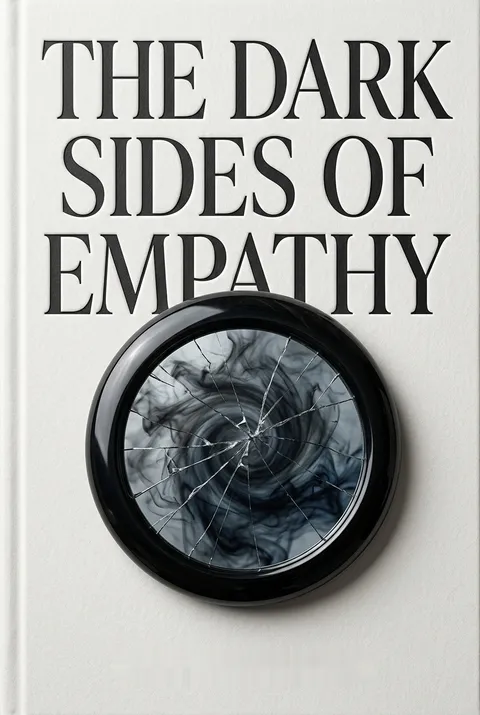

Key Takeaways
1. Empathy is not inherently good and can motivate harmful acts.
Sometimes we commit atrocities not out of a failure of empathy but rather as a direct consequence of successful, even overly successful, empathy.
Challenging assumptions. The common understanding that empathy leads to morally correct behavior is a dangerous oversimplification. While empathy can foster positive social connections, it can also directly motivate problematic actions, ranging from callousness to exploitation and sadism. This perspective contradicts the popular glorification of empathy as an unalloyed good.
Beyond moral compass. Empathy is not designed to be a fair moral compass. Expecting it to deliver just judgments, as some critics do, sets up a straw man argument. Instead, empathy is a fundamental human ability, a "sixth sense," that shapes our social perception and allows us to participate in the experiences of others, but it primarily serves the empathizer's own experiences and knowledge.
Spectrum of behavior. The book argues that malicious acts happen because of empathy, not in spite of it. This includes instances where empathetic understanding of another's pain can be a source of arousal, as seen in sadistic fantasies. Such examples highlight that empathy is a complex capacity that can be channeled in profoundly disturbing ways, extending far beyond simple prosocial behavior.
2. Empathy often leads to self-loss, where the empathizer projects their "self" onto others.
The objective person is indeed a mirror: he is accustomed to submit before whatever wants to be known, without any other pleasure than that found in knowing and “mirroring;” he waits until something comes, and then spreads himself out tenderly lest light footsteps and the quick passage of spiritlike beings should be lost on his plane and skin.
Nietzsche's insight. Drawing on Friedrich Nietzsche, the book posits that empathy can lead to a "self-loss" or "depersonalization" of the empathizer. The "objective person," characterized by their perceptive abilities, becomes a mirror, shedding their own will, judgment, and passions to fully receive the imprint of the other. This self-thinning is a precondition for deep empathetic reception.
Projected identity. In this dynamic, the empathizer relinquishes their own sense of self to perceive a strong, decisive self in others. The observed individual, who loves, hates, and rules, appears as a powerful "self" to the empathizer, even if that self is merely a projection. The price of empathy is the loss of one's own self, with the reward being the (re)discovery of a self in the other, which exists primarily from the external perspective of the observer.
Resentment's root. Nietzsche further links this self-loss to resentment. The empathetic observer, having sacrificed their own strong identity, may harbor quiet rage or bad will towards the strong individual they admire. This "secondhand feeling" (re-sentiment) suggests that empathy can be a form of compensation for a weak identity, leading to a desire to strip others of the very selfhood the empathizer lacks.
3. Empathy fuels division by reinforcing quick, often arbitrary, side-taking.
Empathy is the mechanism that turns quick and even accidental side-taking into enduring alliances and prolonged divides.
The three-person model. Humans possess a powerful, evolutionarily old tendency to take sides in conflicts. This "three-person model of empathy" describes how an observer, witnessing a conflict between two parties, quickly aligns with one side. This initial side-taking then leads to adopting that side's perspective, developing empathy for them, and consequently, apathy or antipathy towards the opposing side.
Positive feedback loop. This dynamic creates a self-reinforcing cycle: initial side-taking strengthens empathetic alignment, which in turn solidifies the initial judgment. This process can occur rapidly and intuitively, often preceding rational moral judgment. Empathy, therefore, doesn't necessarily resolve conflicts but can deepen them by legitimizing both positive and negative behaviors towards others.
Polarizing effects. Examples like Donald Trump's political success illustrate this. Trump's "victim-hero" narrative, portraying himself as "one against all," attracted empathy from supporters who felt similarly victimized. This emotional investment reinforced their side-taking, making them impervious to criticism and dismissing facts as "FAKE NEWS." Similarly, attempts to teach empathy to bridge divides, like in Northern Ireland, sometimes backfired, reinforcing "us vs. them" distinctions.
4. "Filtered empathy" means we often identify with the helper, not the victim, making empathy self-serving.
To empathize with the victim means to perceive and coexperience their (temporal) situation, one that contains a narratively cogent backstory, an opportunity for intervention, and the possibility of improvement.
The humanitarian scene. When confronted with suffering, people often assume a straightforward path from empathy to altruistic action. However, the "scene of humanitarian empathy" is more complex. It requires a victim whose suffering is undeserved, a narrative implying a better future, and the belief that intervention can alter the situation. Crucially, empathy is more likely when the observer can imagine themselves as a helper.
Helper identification. Instead of directly empathizing with the suffering victim, many people identify with the (real or imaginary) helper figure. This "filtered empathy" allows the observer to coexperience the heroic acts of intervention and share in the gratitude reserved for the savior. It provides a safe distance, minimizing the risk of self-loss while still allowing for a positive emotional experience.
Self-serving compassion. This form of empathy is often self-serving and limited. It can disappear once the complex scene unravels or if the victim fails to meet the helper's expectations (e.g., showing gratitude, improving quickly). Filtered empathy can inadvertently trap victims in their role, denying them agency, as their suffering becomes useful only insofar as it burnishes the helper's image.
5. "False empathy" can lead to overcorrection and short-lived, self-centered humanitarian impulses.
False empathy arises from the tension between the theoretical readiness to empathize and the simultaneous sense that a specifi c act of empathy is inadequate.
Misguided connection. False empathy occurs when an empathetic response is inaccurate or inappropriate, and this error is recognized, often by an external party. This realization can trigger an overcorrection, leading the empathizer to overemphasize empathy in subsequent actions. It's not a phony empathy, but a genuine misjudgment that, once exposed, demands a strong compensatory reaction.
Merkel's moment. Angela Merkel's interaction with a crying Palestinian refugee girl, Reem, exemplifies false empathy. Merkel initially misjudged Reem's tears, projecting her own performance anxiety onto the child. This public misstep, highlighted by a moderator, led to accusations of "lacking empathy." This public shaming likely contributed to Merkel's subsequent, highly empathetic "we can do it" policy regarding refugees.
Intoxication and backlash. Merkel's overcorrected false empathy transformed her into a "hero-helper" for millions, enabling widespread filtered empathy among Germans. This created a "culture of welcoming" fueled by intense, but often short-lived, enthusiasm. However, like a powerful drug, false empathy's intoxication dissipates, leading to backswing dynamics, resentment, and widespread antipathy when the high expectations placed on refugees were not met.
6. "Empathetic sadism" involves causing or enjoying others' suffering for the sake of feeling empathy.
The stronger and more intense the pain and suffering I imagine to infl ict on the person, the higher the gratifi cation I derive.
Cruelty for connection. Empathetic sadism describes the act of creating, encouraging, or tolerating another's suffering precisely to feel empathy with them. The goal is not merely to inflict pain, but to use that pain as a means to achieve a heightened state of empathetic understanding and arousal. This challenges the notion that sadists lack empathy; instead, they may possess it in abundance, using it for self-gratification.
Aesthetic roots. The concept of empathy originated in aesthetics (German Einfühlung), where it described projecting feelings onto inanimate objects for the observer's pleasure. This aesthetic origin provides a clue to empathetic sadism: the pleasure derived from observing suffering, as in tragedy, can be self-absorbed. The "paradox of tragedy" – positive feelings from a hero's terrible fate – suggests that empathy can be enjoyed for its own sake, independent of concern for the other's well-being.
The empathetic rapist. An extreme manifestation is the "empathetic rapist," who commits violence not from a lack of empathy, but from a desire to feel it. By inflicting torment, the perpetrator aims to understand and share the victim's pain, thereby connecting empathetically. This makes the act even more blameworthy, as the perpetrator fully comprehends the suffering they cause, using it as a perverse means to stimulate their own emotional state.
7. Punishment and manipulative behaviors are often driven by the emotional rewards of sadistic empathy.
The enjoyment of the ensuing punishment is bound or limited by the experienced pain-empathy of the initial transgression.
Pleasure in retribution. Humans derive emotional satisfaction from punishing wrongdoers. This "altruistic punishment" is not purely selfless; it provides an immediate emotional reward to the punisher, driven by anger and the chance for retribution. Empathetic sadism, in this context, serves an evolutionary function by incentivizing individuals to enforce social norms, as the pleasure of seeing justice served (or pain inflicted) outweighs the cost of intervention.
Theatrical scenes. Punishment is a highly ritualized "scene of punishment" that evokes and repeats the original wrongdoing. Witnesses to executions, for example, often seek to understand the condemned's suffering, sometimes projecting their own desired emotions onto the victim. This comparison of crime and punishment, facilitated by an empathetic observer, can create a sense of proportionality, limiting excessive sadism by binding the pleasure of punishment to the initial pain-empathy of the transgression.
Manipulative empathy. Beyond overt punishment, "manipulative empathy" involves guiding others into predictable emotional situations to understand and coexperience their feelings. This includes everyday behaviors like teasing, bullying, moralizing, or deliberately embarrassing someone. The pleasure comes from controlling the other's emotional state and correctly predicting their response, often exploiting their emotional transparency (e.g., shame) for the empathizer's gratification.
8. "Vampiristic empathy" appropriates others' experiences, stripping others of agency for the empathizer's self-enrichment.
Vampiristic empathy is the process of coexperiencing another’s situation while supplanting their objectives, goals, or desires with one’s own.
Long-term appropriation. While empathy is crucial for healthy long-term relationships, extended engagement can turn toxic. "Vampiristic empathy" describes a process where an observer shares another's experiences to the point of appropriating them, neglecting the other's well-being and replacing their goals with the observer's own. This is a more sustained form of self-serving empathy, where the other becomes a means to access desired experiences.
Helicopter parenting. A common manifestation is "helicopter parenting," where parents excessively hover over their children, ostensibly for their success, but often to relive their own aspirations or seek external validation. This "aspirational empathy" can strip children of agency, forcing them to conform to parental ideals. The child becomes a "stage" for the parent's unfulfilled dreams, turning healthy concern into an obsessive, controlling dynamic.
The stage mother. The stereotypical "stage mother" epitomizes this, aggressively grooming her child for performance careers to bask in reflected glory. This behavior, while seemingly driven by love, is rooted in the parent's desire for heightened feelings of perfection, presence, or success through the child's life. The child's natural experiences are supplanted by a script designed by the parent, leading to potential psychological harm for the child.
9. Obsessive fandom and stalking are extreme forms of vampiristic empathy, seeking reflected glory and control.
Through empathizing with their victims, the stalker wants to be seen as being as special, worthy of being observed themself.
Obsessive observation. Stalking and obsessive fandom represent extreme forms of vampiristic empathy, characterized by intense, prolonged observation of another person. While often justified by the stalker as care or intimacy, this behavior is fundamentally about the stalker's self-focused desires. The internet and mass media have amplified this phenomenon, creating an illusion of proximity and intimacy without real responsibility.
The "glowing skin" effect. Stalkers often project an idealized perfection onto their targets, seeking to elevate them through adulation. Simultaneously, through empathetic identification, the stalker aims to elevate themselves out of obscurity, imagining themselves in the "glowing skin" of being observed and deemed special. This blending of observer and observed creates a heightened sense of presence and importance for the stalker.
Resentment and control. This vampiristic dynamic is fueled by the stalker's own perceived emptiness or lack of originality. They appropriate the target's experiences to enrich their own lives, but this often leads to resentment when the target fails to reciprocate the emotional effort or acknowledge the stalker's "devotion." The stalker then feels justified in invading the target's private sphere, seeking control and a perverse form of recognition.
10. Empathy's true value lies in aesthetic and emotional enrichment, not moral improvement.
When we free ourselves from the overly optimistic view that empathy should make us morally good, we can still cherish how empathy widens the scope of our experiences dramatically and enables a rich and complex coexperiencing of our joint world.
Beyond morality. The book concludes that empathy has no strong, inherent link to morality. It can be used for good or ill, and attempts to force it into a purely moral framework are naive and often counterproductive. Instead of expecting empathy to automatically make us "better" people, we should appreciate its profound impact on our aesthetic perception and emotional development.
Aesthetic expansion. Empathy significantly expands our aesthetic perception in three key ways:
- Widening scope: It allows us to "live in more than one world," experiencing others' emotional and cognitive reactions, much like narrative transportation.
- Multiplying perspectives: It enables us to see a single situation from multiple viewpoints, ours and others', heightening our awareness of social interactions (e.g., the "glowing skin" phenomenon).
- Intensifying experience: It creates a feeling of importance and "pure presence" in a moment, intermingling past, present, and future possibilities into a prolonged, multi-dimensional event.
Emotional awareness. Empathy also plays a crucial role in increasing our overall emotional awareness. By coexperiencing emotions in others, we learn to recognize and understand our own feelings more clearly, enriching our emotional lives. Teaching empathy, therefore, should aim for this aesthetic and emotional enrichment, rather than a misguided pursuit of moral improvement, while remaining vigilant about its darker potentials.
People Also Read


Download PDF
Download EPUB
.epub digital book format is ideal for reading ebooks on phones, tablets, and e-readers.








































