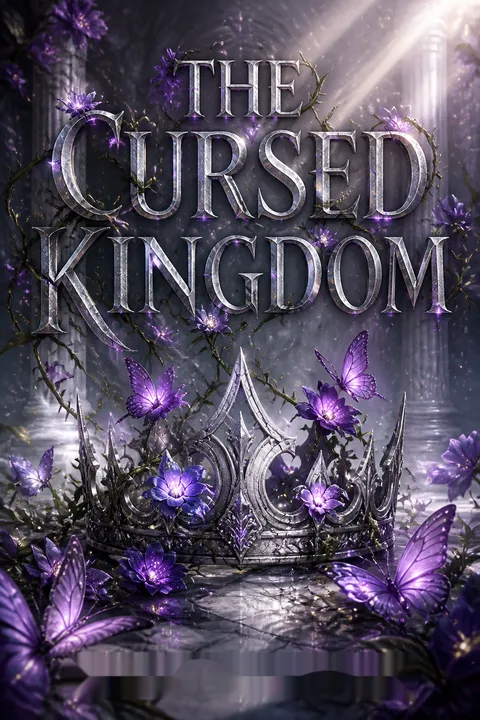

Plot Summary
Playground Promises and Secrets
Abby's earliest memory of Lillian is tinged with jealousy and awe. As children, Abby resents Lillian's arrival in her small town, blaming her for stealing her brother's attention. But Lillian, with her violet eyes and white hair, is more than she seems—she's a faerie in hiding, exiled from her realm with her mother. Their first encounter on the playground is awkward, but a tentative friendship forms as Lillian helps Abby climb the slide, and Abby invites her home for popsicles. The girls bond over secrets, with Lillian confessing her true nature. This moment of trust and shared vulnerability forges a connection that will shape both their lives, even as the shadow of Lillian's otherworldly origins lingers, hinting at dangers yet to come.
Delysum's Deadly Price
Years later, Abby and Lillian are adults sharing a small apartment. Lillian is dying, her faerie body starving for the magic absent from the human world. Only delysum tea, a rare and dwindling supply, keeps her alive. Abby is haunted by the memory of Lillian's mother, who sacrificed herself to save her daughter, and by her own powerlessness to help. The two women's lives are defined by routine and quiet desperation: Abby works a thankless job to support them, while Lillian cleans obsessively to feel useful. The specter of Lillian's impending death hangs over every interaction, fueling Abby's fear and determination. Their love is fierce, but the solution—returning to the faerie realm for more delysum—is fraught with secrets and danger.
Descent into Desperation
When Lillian's health takes a sharp turn for the worse after a fall, Abby's desperation peaks. She can no longer bear to watch her friend waste away. Despite Lillian's adamant refusal, Abby becomes determined to enter the faerie realm herself to retrieve delysum. On Abby's birthday, she manipulates Lillian into drinking, hoping to lower her defenses. The plan is both loving and cruel, born of terror and devotion. Abby's guilt is palpable, but her resolve is unbreakable. She prepares for the journey in secret, leaving instructions and money for Lillian in case she doesn't return. The emotional stakes are clear: Abby will risk everything, even Lillian's trust, to save her.
The Portal Opens
Abby's plan comes to fruition when, in a haze of alcohol and nostalgia, Lillian agrees to open a portal to the faerie realm. The act is physically draining for Lillian, a reminder of how far she's fallen from her former strength. Abby seizes the moment, grabbing her backpack and leaping through the portal before Lillian can stop her. The transition is jarring—Abby is thrust into a world of shimmering magic and wild beauty, utterly alone. The portal closes behind her, leaving both women on opposite sides of an uncrossable divide. Abby's betrayal is complete, but so is her commitment: she will find delysum, no matter the cost.
Lost in the Faerie Wilds
Abby's first days in the faerie realm are a test of endurance and will. She navigates endless prairies, abandoned shacks, and unfamiliar terrain, her supplies dwindling and her body aching. The magic in the air is both beautiful and alien, a constant reminder of what Lillian is missing. Abby's journey is marked by hunger, thirst, and the gnawing fear of failure. She clings to memories of Lillian for strength, her love a lifeline in a world that feels both wondrous and hostile. The landscape is indifferent to her suffering, and Abby's determination is all that keeps her moving forward.
Strangers and Customs
Abby's first encounter with a faerie—Samuel—reveals just how unprepared she is. The faerie realm is governed by customs she doesn't understand: gloves signal availability for mating, and honesty about one's origins is expected. Samuel is kind but wary, offering Abby food, answers, and a pair of gloves in exchange for a chance to touch her and test the mate bond. Their dinner is a crash course in faerie politics, geography, and the looming threat of the shifters. Abby learns that delysum is not just a medicine but a weapon, and that the Redstall Forest, where it grows, is forbidden and deadly. The stakes of her quest become clearer—and more perilous.
Gloves, Mates, and Motives
Samuel's help comes with strings attached: in the faerie realm, touch is sacred, and gloves are a barrier against unwanted bonds. Abby's ignorance nearly causes a scandal, but Samuel is patient, explaining the rules and offering her a way to blend in. Their interaction is tinged with longing and disappointment when the mate bond fails to spark. Samuel's vulnerability—his low magic tolerance and outsider status—mirrors Abby's own. Their brief connection is a reminder that everyone in this world is searching for belonging, and that kindness is often transactional. Abby leaves with new knowledge, new gloves, and a renewed sense of urgency.
Dinner with a Faerie
Over a magical meal, Samuel reveals the fractured state of the faerie realm. The shifters, exiled and desperate, are rumored to be weaponizing delysum. The faerie princes are planning a dangerous journey to the gods' portal, hoping for divine intervention. The Redstall Forest is a no-man's-land, filled with ancient grudges and new dangers. Abby's quest is no longer just about saving Lillian—it's entangled in a web of political intrigue and power struggles. The meal is both a respite and a warning: nothing in this world is as simple as it seems, and every action has consequences.
The Shifter's Forest
Abby's attempt to sneak into the Redstall Forest is fraught with peril. The wall is heavily guarded, and the shifters are as dangerous as the rumors suggest. Abby's resourcefulness is tested as she crawls through mud, hides from patrols, and faces the terror of being truly alone. Her encounter with the faerie and shifter princes—Kieran and Mason—changes everything. They are powerful, unpredictable, and have their own agenda. Abby is caught in their orbit, her fate no longer her own. The forest is a crucible, burning away her illusions and forcing her to confront the reality of her quest.
Captured by Princes
Kieran and Mason are both captors and protectors, their motives opaque. Abby is alternately threatened, cared for, and used as a bargaining chip. The dynamics between the princes are fraught with history, rivalry, and the shadow of a shared mate bond. Abby's humanity is both a liability and a shield—she is too weak to be a threat, but valuable enough to be traded. The journey through the forest is grueling, marked by hunger, injury, and the constant threat of violence. Abby's resilience is tested, and her relationship with her captors grows more complicated with every step.
Bargains and Betrayals
The journey culminates at the portal to the gods' realm, where Kieran and Mason hope to trade Abby for Zaha's help against the shifters. The gods' realm is surreal and unsettling, its rules unknowable. Zaha is unimpressed by their offering, and the bargain fails. Instead, she offers a different deal: Kieran must give up his crown to Mason in exchange for her intervention. Abby is rejected, her value as a pawn spent. The princes' ambitions and loyalties are laid bare, and Abby is left to grapple with the consequences of her journey and the realization that she is, once again, powerless.
The God's Refusal
Zaha's refusal to accept Abby as a gift is both a relief and a new source of anxiety. She is sent back to the human realm, but not alone—Kieran is with her, and the secret of Lillian's existence is exposed. The return is not a homecoming but a new captivity, as Kieran's anger and sense of betrayal lead him to imprison both Abby and Lillian. The lines between friend and foe blur, and the true cost of secrets is revealed. Abby's guilt is overwhelming, and her love for Lillian is both her strength and her undoing.
Homecoming and Revelations
Kieran's discovery of Lillian in Abby's home is explosive. The past collides with the present as old wounds are reopened and new ones inflicted. Lillian is arrested and thrown into a cell, her fate uncertain. Abby is locked away, her pleas ignored. The emotional fallout is devastating: trust is shattered, and the bonds of love and loyalty are tested to their limits. The truth about Lillian's past, her connection to the princes, and the real nature of delysum begin to surface, setting the stage for a reckoning that will change all their lives.
Lillian's Cell
Lillian's imprisonment is both physical and emotional. She is weak, injured, and haunted by the choices that led her here. Kieran and Mason confront her, demanding answers about her mother, Callie, and the murder of Kieran's father. The cell is a crucible, forcing Lillian to confront her past and the consequences of her actions. Abby's loyalty is unwavering, but her understanding is incomplete. The truth is messy, and forgiveness is not easily won. The cell becomes a place of reckoning, where old grievances and new alliances are forged.
The Truth of Delysum
Lillian reveals the truth about delysum: in the human realm, it is not a poison but a lifeline, the only thing keeping her alive. Her mother's sacrifice, the years of hiding, and the desperate measures taken to survive are laid bare. The princes are forced to confront the complexity of Lillian's actions and the limits of their own understanding. Abby's role as both savior and betrayer is highlighted, and the cost of love—its sacrifices and its failures—is made painfully clear. The truth is not enough to heal the wounds, but it is a start.
The Mate Bond Awakens
The revelation that Lillian is the princes' mate changes everything. The mate bond, long avoided and feared, is now a reality. The dynamics between Kieran, Mason, and Lillian shift, opening the door to both healing and new conflict. Abby is both witness and participant, her own feelings of jealousy, love, and loss swirling beneath the surface. The future is uncertain, but the possibility of redemption and reconciliation glimmers on the horizon. The story ends on a note of hope and ambiguity, with the promise that the past need not define the future.
The Queen's Judgment
Queen Gitta's intervention is the final test. Her judgment is swift and uncompromising, a reminder that power is never given freely. The fate of Lillian, Abby, and the princes hangs in the balance, determined by forces beyond their control. The personal and the political are inextricably linked, and the cost of peace is measured in sacrifice and loss. The story closes with the sense that the true battle is just beginning, and that the choices made in the name of love and survival will echo for generations to come.
Analysis
A modern fantasy of love, sacrifice, and the cost of survivalThe Cursed Kingdom is a story about the lengths we go to for those we love, and the ways in which desperation can both save and destroy us. At its heart, it is a meditation on the ambiguity of power: delysum is both poison and cure, the mate bond is both blessing and curse, and every act of love is shadowed by the possibility of betrayal. The novel interrogates the boundaries between worlds—human and faerie, self and other, past and present—and asks what it means to belong. Its characters are defined by their willingness to risk everything for hope, even when hope seems impossible. The story's lessons are both timeless and timely: that survival often requires impossible choices; that secrets, no matter how well-intentioned, have a cost; and that healing is possible only when we are willing to face the truth of our own vulnerability. In a world where power is always contested and love is never simple, The Cursed Kingdom offers a vision of redemption that is hard-won, incomplete, and all the more precious for it.
Review Summary
The Cursed Kingdom receives mostly positive reviews, with an average rating of 3.88 out of 5. Readers praise the unique world-building, engaging plot, and the main character Abby's humor. Many find the book binge-worthy and eagerly anticipate the sequel. Some criticize the slow pacing and lack of spice, while others appreciate the slow-burn romance. The cliffhanger ending is controversial, leaving readers divided but intrigued. Overall, the book is described as a fun, entertaining read with elements of enemies-to-lovers and reverse harem.
People Also Read


Characters
Abby Williams
Abby is the emotional heart of the story—a fiercely loyal, stubbornly determined woman whose love for Lillian drives her to reckless extremes. Her journey is one of transformation: from jealous child to self-sacrificing adult, from passive bystander to active participant in a world she barely understands. Abby's psychological landscape is shaped by fear—of loss, of helplessness, of being left behind—but also by hope and resilience. Her relationship with Lillian is both her greatest strength and her deepest vulnerability. Abby's arc is defined by her willingness to risk everything for love, even when it means betraying trust or facing impossible odds. Her outsider status in the faerie realm makes her both a target and a wildcard, and her humanity is a source of both weakness and unexpected power.
Lillian Collins
Lillian is a study in contrasts: ethereal and otherworldly, yet deeply human in her suffering and longing. Exiled from the faerie realm as a child, she is forced to adapt to a world that cannot sustain her. Her mother's sacrifice and her own declining health shape her into a figure of quiet strength and enduring guilt. Lillian's relationship with Abby is complex—marked by love, dependence, and the burden of secrets. Her past is a tangle of trauma and survival, and her connection to the princes is both a source of danger and a potential path to redemption. Lillian's development is defined by her struggle to reconcile her faerie identity with her human experiences, and by her willingness to face the consequences of her choices.
Kieran Ashford (Kie)
Kieran is a man caught between duty and desire, haunted by the murder of his father and the weight of his crown. His relationship with Mason is fraught with rivalry, loyalty, and the shadow of a shared mate bond. Kieran's psychological complexity lies in his struggle to balance compassion with ruthlessness, tradition with change. His interactions with Abby and Lillian force him to confront his own prejudices and the limits of his power. Kieran's arc is one of reluctant growth, as he learns that leadership requires sacrifice and that justice is rarely simple. His eventual recognition of Lillian as his mate is both a blessing and a curse, opening the door to healing but also to new conflicts.
Mason Verlice
Mason is the embodiment of raw power and barely contained rage. Exiled from his people, forced to live among faeries who distrust and despise him, he is both a threat and a guardian. His relationship with Kieran is defined by a forked mate bond—an unbreakable connection that is both a source of strength and a constant reminder of what he has lost. Mason's interactions with Abby are marked by hostility, but also by a grudging respect for her resilience. His psychological landscape is shaped by abandonment, anger, and a desperate need for belonging. Mason's arc is one of reluctant vulnerability, as he is forced to confront the possibility of love and forgiveness.
Queen Gitta
Queen Gitta is the embodiment of faerie power and tradition. Her presence is commanding, her judgment swift and often merciless. As Kieran's mother, she is both a source of support and a formidable obstacle. Her psychoanalysis reveals a woman who values order, loyalty, and the survival of her people above all else. She is willing to make hard choices and demand sacrifices, even from those she loves. Gitta's relationship with Abby and Lillian is adversarial, but not without a certain cold respect for their tenacity. Her role in the story is to enforce the rules of the world and to remind the characters that personal desires are always subject to the greater good.
Callie Collins
Though dead before the main events, Callie's influence is profound. Her decision to flee the faerie realm and her sacrifice to save Lillian set the entire story in motion. Callie is a figure of both strength and tragedy, her actions motivated by love and desperation. Her psychoanalysis reveals a woman haunted by guilt and the knowledge that survival sometimes requires impossible choices. Callie's legacy is the burden Lillian carries, and her absence is a wound that never fully heals.
Samuel
Samuel is Abby's first real contact in the faerie realm—a kind, lonely faerie with low magic tolerance and outsider status. His willingness to help Abby, despite his own vulnerabilities, is a rare act of kindness in a world defined by suspicion and power. Samuel's psychoanalysis reveals a man searching for connection, hoping that the mate bond will bring him the acceptance he craves. His disappointment when the bond fails to spark with Abby is poignant, and his brief presence is a reminder of the possibilities that are lost in the pursuit of larger goals.
Zaha
Zaha is the story's most enigmatic figure—a being of immense power, inscrutable motives, and a penchant for games. Her refusal to accept Abby as a gift is both a mercy and a test, forcing the characters to confront the limits of their agency. Zaha's psychoanalysis reveals a being who is both bored and burdened by her own power, who intervenes in mortal affairs for reasons that are never entirely clear. She is both a force of chaos and a potential source of salvation, her actions shaping the fate of entire realms.
Jackie
Jackie is a minor but telling presence—a beautiful, ambitious woman who embodies the expectations and rivalries of faerie court life. Her interactions with Kieran and the other nobles highlight the pressures of status, appearance, and political maneuvering. Jackie's psychoanalysis reveals a woman who is both a product and a perpetuator of the system, her ambitions both understandable and ultimately limited by forces beyond her control.
The Guards
The various guards who appear throughout the story are both individuals and symbols. They enforce the rules of the realm, often with brutality and indifference. Their psychoanalysis reveals the dangers of obedience without empathy, and the ways in which power is maintained through violence and fear. The guards are both victims and perpetrators, their actions shaping the fates of the main characters in ways both direct and indirect.
Plot Devices
Portal as Threshold
The portal between the human and faerie realms is the story's central plot device—a literal and metaphorical threshold. It represents the point of no return, the moment when love and desperation override caution and trust. The act of crossing the portal is both a betrayal and a declaration of agency, setting in motion a chain of events that cannot be undone. The portal's mechanics—its physical toll, its unpredictability, its role as both escape and trap—mirror the characters' emotional journeys. It is a device that forces transformation, both for those who cross and those left behind.
Delysum as Symbol and Weapon
Delysum is more than a magical plant—it is the story's central symbol, embodying the duality of salvation and destruction. For Lillian, it is a lifeline; for the faeries, a poison; for the shifters, a weapon. Its scarcity and potency drive the plot, shaping alliances and betrayals. Delysum's ambiguity—its ability to both heal and kill—reflects the moral complexity of the characters' choices. It is a plot device that raises questions about the cost of survival, the ethics of power, and the limits of love.
The Mate Bond
The mate bond is both a narrative engine and a psychological crucible. It drives the characters together and apart, forcing them to confront their deepest fears and desires. The rules of the bond—its activation by touch, its social and political implications, its potential for both joy and suffering—are a source of both comfort and conflict. The bond's role in the story is to test the characters' capacity for forgiveness, vulnerability, and change. It is a device that blurs the line between fate and free will, raising questions about what it means to belong to another.
Foreshadowing and Parallelism
The story is rich in foreshadowing and parallelism: the childhood scene on the playground echoes in the adult betrayals; the secrets kept by Lillian and her mother are mirrored in Abby's own deceptions; the cycles of exile, survival, and sacrifice repeat across generations. These devices create a sense of inevitability, but also of possibility—the idea that the past need not dictate the future, and that healing is possible even in the wake of profound loss.
Political Intrigue and Power Struggles
The backdrop of faerie and shifter politics is more than setting—it is a plot device that raises the stakes of every personal choice. The struggle for the crown, the threat of war, the machinations of the gods—all serve to remind the characters that their fates are never entirely their own. The interplay between personal and political motives drives the story's tension, forcing the characters to weigh love against duty, and survival against justice.
About the Author



Download PDF
Download EPUB
.epub digital book format is ideal for reading ebooks on phones, tablets, and e-readers.








































