
Key Takeaways
1. Reagan's Lifelong Confidence and Divine Purpose Fueled His Crusade.
Ronald Reagan believed America was chosen by God to confront the Soviet Communist empire and prevail.
Early life lessons. Ronald "Dutch" Reagan's formative years as a lifeguard on the Rock River in Dixon, Illinois, instilled in him an unshakable self-confidence. Saving 77 lives over seven summers, often in treacherous waters, taught him resilience and a "can-do" attitude that would define his approach to challenges throughout his life. This early experience, coupled with his mother Nelle's deep faith, convinced him that God had a specific plan for him.
Spiritual conviction. This sense of divine purpose intensified after a near-fatal assassination attempt in 1981, which Reagan interpreted as a sign that his life was spared for a special mission related to the Cold War. He believed his "team" was chosen by God to defeat atheistic Soviet Communism, seeing it as a moral imperative. This spiritual dimension amplified his resolve, transforming his inherent confidence into an unwavering conviction that America could and should lead the world to freedom.
Unwavering optimism. Reagan's optimism, rooted in his faith, allowed him to pursue audacious policies despite widespread skepticism and criticism. He genuinely believed that the Soviet system, built on a "lie," was destined to fail, and that America's role was to accelerate that inevitable collapse. This profound self-assurance and sense of destiny became the bedrock of his presidency, enabling him to envision and pursue a victory in the Cold War when few others thought it possible.
2. Hollywood Was Reagan's Training Ground for Cold War Combat.
"I know it sounds kind of foolish maybe to link Hollywood, an experience there, to the world situation," he said from the White House in 1981, "and yet, the tactics seemed to be pretty much the same."
Early anti-Communism. Reagan's entry into Hollywood in 1937 eventually led him to the Screen Actors Guild (SAG), where he became deeply involved in fighting Communist infiltration. He viewed this struggle as "hand-to-hand combat," learning firsthand the deceptive tactics of Communist organizers who sought to control unions and spread their ideology through the film industry. This period hardened his anti-Communist resolve, shaping his understanding of the enemy.
Public advocacy. Beyond SAG, Reagan publicly campaigned against Soviet influence, notably on behalf of "Displaced Persons" (DPs) fleeing Soviet-occupied Eastern Europe after WWII. He rejected Moscow's demands for forced repatriation, seeing the DPs as future Americans escaping totalitarianism. His testimony before the House Un-American Activities Committee (HUAC) in 1947, though nuanced, affirmed his commitment to battling Communism while upholding democratic principles.
Media platform. As host of "GE Theatre" from 1954-1962, Reagan transformed his role into a national platform for his political views. He toured the country, delivering speeches that warned against big government and, crucially, the global threat of Soviet Communism. He used the show itself to air anti-Communist themes, such as an episode where he played a U.S. intelligence officer countering Communists in an Asian village, or another where he played a Soviet major who comes to understand freedom.
3. Reagan Rejected Containment, Aiming for Soviet Collapse.
"Dick, my idea of American policy toward the Soviet Union is simple, and some would say simplistic. It is this: We win and they lose. What do you think of that?"
A radical shift. From the outset, Ronald Reagan fundamentally rejected the prevailing Cold War doctrines of "Yalta," "containment," and "détente." He viewed the Yalta agreement as a betrayal that condemned Eastern Europe to Soviet totalitarianism, and containment as a passive strategy that merely accepted the status quo of enslaved nations. Détente, in his eyes, was a "one-way street" that legitimized and prolonged the Soviet empire by providing it with economic and technological lifelines.
Winning the Cold War. Reagan's vision was not to manage the Soviet relationship but to defeat the USSR. He believed Communism was inherently incompatible with freedom and destined for collapse, and that the United States had a moral obligation to accelerate this process. This intent was clearly articulated to his foreign policy advisor, Richard V. Allen, in 1977, four years before his presidency, signaling a profound paradigm shift from previous administrations.
Formalizing rollback. Upon entering office, Reagan immediately set his administration on a course for a "strategic offensive" against the Soviet Union. Early policy documents, such as NSDD-32 (1982) and NSDD-75 (1983), formally authorized efforts to "reverse the geographic expansion of Soviet control" and "promote... change in the Soviet Union toward a more pluralistic political and economic system." This was a clear mandate for "rollback," not just containment, aiming to weaken Moscow's hold on its empire from within.
4. Economic Warfare Was a Core Pillar of Reagan's Strategy.
"The Soviet economy was being held together with baling wire; it was a basket case, partly because of massive spending on armaments."
Exploiting vulnerabilities. Reagan believed the Soviet economy was inherently weak and could not sustain a prolonged competition with the West. His administration, particularly through the NSC and CIA under Bill Casey, systematically identified and exploited these vulnerabilities. A key insight was the USSR's heavy reliance on oil and gas exports for hard currency, accounting for up to 80% of its foreign earnings.
Pipeline obstruction. Despite strong opposition from European allies and domestic businesses, Reagan aggressively sought to block the construction of the Siberian gas pipeline. He argued that the pipeline would provide billions in revenue to the Soviets and create dangerous European dependence. His resolve led to a compromise, limiting the pipeline to one strand and significantly delaying its completion, costing the USSR billions in lost revenue.
Covert operations. The "Farewell Dossier," a trove of KGB documents revealing Soviet technology theft, enabled a sophisticated counter-intelligence operation. The US fed the Soviets defective technology, including rigged software that caused a massive explosion in the Siberian pipeline in 1982. Additionally, Reagan and Casey covertly convinced Saudi Arabia to drastically increase oil production in 1985-86, causing global oil prices to plummet from $30 to $10 a barrel, devastating Soviet hard currency earnings and forcing the cancellation of major industrial projects.
5. The Arms Race and SDI Were Deliberate Tools to Bankrupt the USSR.
"The Soviet Union cannot possibly match us in an arms race."
Strategic spending. Reagan viewed the arms race not merely as a defensive necessity but as a powerful offensive weapon to "spend [the USSR] into oblivion." He believed that America's superior industrial and technological capacity would allow it to outspend the Soviets, forcing them to divert critical resources from their already struggling civilian economy to military expenditures they could not afford. This strategy was articulated as early as his 1980 campaign.
The SDI challenge. In March 1983, Reagan announced the Strategic Defense Initiative (SDI), a vision for a space-based missile defense system. Though ridiculed as "Star Wars" by critics, SDI was a deliberate technological challenge designed to:
- Render nuclear weapons "impotent and obsolete," addressing Reagan's deep abhorrence for MAD (Mutually Assured Destruction).
- Force the Soviets into a costly new arms race in advanced technologies they could not match.
- Serve as a powerful bargaining chip for arms reduction talks.
Soviet desperation. SDI "enormously frightened" the Soviets, becoming Gorbachev's "number-one preoccupation." Soviet officials admitted that SDI accelerated their decline, forcing them to spend "tens of billions of dollars" on countermeasures and new ICBMs. This unsustainable military burden, combined with other economic pressures, pushed the USSR to the brink of bankruptcy, fulfilling Reagan's prediction that they would "cry 'Uncle'."
6. Poland and Solidarity Were the Wedge to Splinter the Soviet Empire.
"This may be the last chance in our lifetime to see a change in the Soviet empire's colonial policy re Eastern Europe."
A moral imperative. Reagan had a deep "preoccupation with Poland," viewing its people as tragic victims of totalitarianism. He saw the rise of the independent trade union Solidarity, especially after Pope John Paul II's inspiring 1979 visit, as a potential "wedge" to splinter the entire Soviet bloc. He believed that if Poland could break free, other Eastern European nations would follow.
Responding to martial law. When Poland's Communist regime declared martial law in December 1981, Reagan was "absolutely livid." He immediately imposed sanctions on Poland and the USSR, linking them to human rights and openly blaming Moscow for the crackdown. He made an extraordinary gesture, asking Americans to light candles for Poland, a symbolic act that deeply resonated with Poles and infuriated the Soviets.
Covert support. Through NSDD-32 and other directives, Reagan authorized clandestine financial, intelligence, and logistical support for the Solidarity underground. This aid included printing presses, photocopiers, and short-wave radios, enabling the creation of underground newspapers and broadcasts via Radio Free Europe (RFE), which became a vital lifeline for Poles. This sustained Solidarity's morale and operational capacity, making it the first time Communist police suppression failed to crush a popular movement.
7. Afghanistan Became the Soviets' Unwinnable War, Fueled by US Aid.
"The people of Afghanistan remember Mr. Ronald Reagan’s assistance to Afghanistan during the years of ‘jihad’ (holy war) against the Soviets."
A costly occupation. The Soviet invasion of Afghanistan in 1979 was a brutal, costly undertaking that outlived three Soviet leaders. Reagan viewed it as another predictable result of Communist expansion and a "reign of terror" against a deeply religious people. He consistently denounced Soviet atrocities, including the use of chemical weapons and the displacement of millions of Afghans.
Escalated covert action. Reagan's administration dramatically increased covert aid to the Afghan Mujahideen, shifting the US objective from merely "harassing" Soviet forces to achieving "outright military victory." NSDD-166 (1985) authorized a massive influx of advanced weapons and training, making it the largest CIA covert action program in history. This included:
- Billions of dollars in money and arms.
- Training in guerrilla warfare, sabotage, and antitank attacks.
- Satellite imagery and intelligence on Soviet targets.
The Stinger missile. The introduction of the Stinger antiaircraft missile in 1986 was a game-changer. These shoulder-launched, heat-seeking missiles effectively neutralized Soviet helicopter gunships, which had been their primary tactical advantage. The Stingers achieved an 80% kill ratio, demoralizing Soviet forces and eliminating their air superiority.
Soviet defeat. Within 20 months of the Stinger's deployment, the Red Army began its retreat in May 1988, suffering 60,000 casualties, including 16,000 killed. This military humiliation, contrary to conventional wisdom, forced the USSR to turn inward, concluding that it could no longer sustain its external adventures. Reagan's proactive policies, not just Soviet internal contradictions, proved fatal in Afghanistan.
8. Reagan's Rhetoric Directly Challenged and Undermined Soviet Legitimacy.
"General Secretary Gorbachev, if you seek peace, if you seek prosperity for the Soviet Union and Eastern Europe, if you seek liberalization: Come here to this gate. Mr. Gorbachev, open this gate. Mr. Gorbachev, tear down this wall!"
Moral clarity. Reagan consistently used the "bully pulpit" of the presidency to articulate a clear moral distinction between the United States and the Soviet Union. His "Evil Empire" speech in 1983, delivered to evangelical Christians, branded the USSR as the "focus of evil in the modern world," rejecting any notion of moral equivalency between the two superpowers. This polarizing rhetoric was deliberate, aimed at exposing the true nature of Communism.
Challenging symbols. Reagan repeatedly called for the dismantling of the Berlin Wall, a symbol of Soviet oppression and the division of Europe. His iconic 1987 speech at the Brandenburg Gate, directly challenging Gorbachev to "tear down this wall," was a powerful public demand for liberalization. This was not a new sentiment for Reagan, who had called for the wall's removal multiple times since 1967, but now he spoke with the full weight of the presidency.
Prophetic pronouncements. Throughout his presidency, Reagan made numerous predictions about Communism's demise, often stating that it was a "sad, bizarre chapter in human history whose last pages are even now being written." He believed that freedom was "infectious" and that the "tide of history" was moving away from totalitarianism. These pronouncements, initially dismissed as "wishful thinking" by many, proved remarkably prescient.
9. Gorbachev's Reforms, Though Unintended, Accelerated the USSR's Demise.
"The Soviet Union could have been preserved and should have been preserved."
A reluctant reformer. Mikhail Gorbachev, upon assuming power in 1985, aimed to preserve and strengthen the USSR, not dismantle it. His signature policies of "perestroika" (restructuring) and "glasnost" (openness) were intended to revitalize the Soviet system and make it more efficient, not to lead to its collapse. He envisioned a "golden age" for the USSR, firmly rooted in Marxist-Leninist ideals, and initially resisted any notion of abandoning socialism or a divided Germany.
Unleashing unintended forces. Despite his intentions, Gorbachev's reforms unleashed forces he could not control. By introducing elements of political pluralism, such as genuinely contested elections and an end to the Communist Party's monopoly on power (repudiating Article 6 of the USSR Constitution in 1990), he inadvertently fostered a democratic movement that gained its own momentum. The newfound freedom of the press and public discourse further fueled dissent.
Loss of control. As Eastern European nations broke free in 1989, Gorbachev, though unwilling to use force to retain them, still hoped to preserve the Soviet Union itself. However, the "contagion" of freedom spread to the Soviet republics, leading to declarations of independence. His attempts to reassert control, including violent crackdowns in Lithuania and Latvia in 1991, failed. Ultimately, Gorbachev's efforts to reform the system led to its "unintentional" destruction, a failure he lamented even years later.
10. The Cold War Ended in a Decisive Victory for Freedom, as Reagan Intended.
"We won, they lost."
A transformed world. The collapse of Communism in Eastern Europe in 1989, triggered by Poland's free elections, rapidly spread across the continent, culminating in the fall of the Berlin Wall. This "March of Freedom" unfolded largely peacefully, fulfilling Reagan's hope that Eastern Europeans would "choose their own way... through peaceful means." By December 1991, the Soviet Union itself ceased to exist, marking the end of the Cold War.
Reagan's foresight. While Gorbachev's reforms were crucial, Reagan's consistent intent to "kill" Soviet Communism and his strategic policies played a decisive role. His economic warfare, the arms race, SDI, and unwavering support for freedom fighters and democratic movements created an unbearable strain on the Soviet system. Soviet officials themselves acknowledged that Reagan's policies "accelerated the decline" and "bankrupted" the USSR.
A legacy of liberation. Reagan left office with restored national morale and a world on the cusp of unprecedented democratic expansion. The number of democracies worldwide doubled during his tenure and continued to rise dramatically thereafter. His vision of a "City Upon a Hill" that would spread freedom globally was realized, not through nuclear war, but through a relentless, multi-faceted crusade that proved the superiority of free societies.
Review Summary
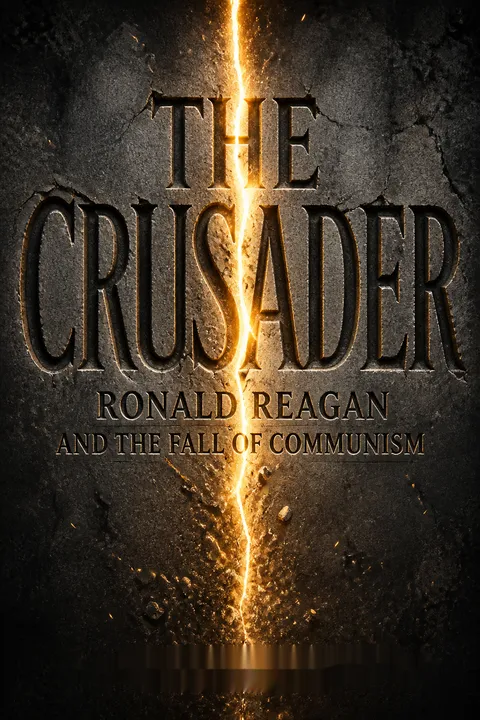
The Crusader receives mostly positive reviews (4.33/5) for its detailed documentation of Reagan's lifelong anti-communist crusade and role in ending the Cold War. Readers praise Kengor's meticulous research using declassified American and Soviet documents, though some note the book reads like a dense textbook rather than accessible biography. Critics appreciate the comprehensive coverage of Reagan's strategies—economic warfare, SDI, support for resistance movements—from Hollywood through his presidency. However, detractors question the book's hagiographic tone and the authenticity of controversial claims, particularly regarding a disputed Ted Kennedy letter. Most reviewers recommend it for Cold War enthusiasts despite its one-dimensional focus.
People Also Read



Download PDF
Download EPUB
.epub digital book format is ideal for reading ebooks on phones, tablets, and e-readers.








































