
Key Takeaways
1. Memory is the foundation of identity and conscious experience
"Memory is not only crucial to identity, but forms the basis for conscious experience."
Memory shapes who we are. Our memories form the basis of our personal identity, allowing us to maintain a sense of self across time. Without the ability to recall past experiences and learned information, we would lack the continuity necessary to form a coherent sense of who we are.
Consciousness emerges from memory. Our moment-to-moment conscious experience relies on working memory to maintain and manipulate information. This allows us to integrate sensory inputs, thoughts, and past knowledge into a seamless stream of awareness.
Memory loss disrupts identity. Conditions like Alzheimer's disease that impair memory formation and recall can profoundly affect a person's sense of self. As memories fade, so too does the individual's connection to their past and their ability to navigate the present.
2. Attention and visualization are crucial for forming strong memories
"The art of memory is the art of attention."
Focus enhances encoding. Paying close attention to information or experiences significantly increases the likelihood of forming lasting memories. When we concentrate fully on something, we engage more neural resources in processing and storing that information.
Visualization strengthens recall. Creating vivid mental images associated with information we want to remember makes it easier to recall later. The more detailed and emotionally engaging the visualization, the stronger the memory trace becomes.
Multi-sensory encoding. Engaging multiple senses when forming a memory creates a richer, more robust neural network associated with that information. For example:
- Visual: Picturing a scene or object
- Auditory: Hearing associated sounds or rhythms
- Kinesthetic: Imagining physical sensations or movements
- Olfactory/Gustatory: Recalling smells or tastes
3. Different types of memory serve distinct functions in our lives
"We are talking here of a molecular balance involving two separate mechanisms: one for memory, the other for forgetting."
Short-term memory holds information temporarily, allowing us to work with it briefly before it's either forgotten or transferred to long-term storage. Capacity: 7±2 items for about 20-30 seconds.
Long-term memory stores information for extended periods, potentially a lifetime. It includes:
- Explicit (declarative) memory:
- Episodic: Personal experiences and events
- Semantic: General knowledge and facts
- Implicit (non-declarative) memory:
- Procedural: Skills and habits
- Priming: Unconscious influences on behavior
Working memory actively manipulates information, crucial for reasoning and problem-solving. It integrates information from short-term and long-term memory stores.
4. Working memory is the "queen of memory" and key to intelligence
"When you strengthen working memory, you coincidentally increase your intelligence."
Central to cognitive performance. Working memory capacity correlates strongly with general intelligence and academic achievement. It allows us to hold and manipulate information, crucial for complex reasoning tasks.
Trainable and improvable. Unlike other aspects of intelligence, working memory can be significantly enhanced through targeted exercises and techniques. Some effective methods include:
- N-back tasks
- Dual n-back training
- Complex span tasks
- Memory updating exercises
Wide-ranging benefits. Improving working memory can enhance various cognitive abilities, including:
- Reading comprehension
- Mathematical problem-solving
- Logical reasoning
- Attention control
- Decision-making
5. Memory is malleable and susceptible to errors and distortions
"Each time we bring a memory to mind we alter the memory."
Reconstruction, not replay. Memories are not static recordings but are reconstructed each time we recall them. This process can introduce errors and alterations based on our current knowledge, beliefs, and emotional state.
Common memory errors:
- Misattribution: Assigning a memory to the wrong source
- Suggestibility: Incorporating misleading information into existing memories
- Bias: Distorting memories to align with current beliefs
- Transience: Forgetting over time
- Blocking: Temporary inability to retrieve a memory
- Persistence: Unwanted recurrences of distressing memories
Implications for eyewitness testimony. The malleability of memory has significant implications for the legal system, as eyewitness accounts can be unintentionally altered by post-event information or suggestive questioning.
6. Mnemonic techniques can dramatically improve memory performance
"The more bizarre or irreverent the images, the easier it is to remember."
Method of loci. This ancient technique involves associating items to be remembered with specific locations along a familiar route. To recall the information, one mentally walks through the route, retrieving the associated items.
Acronyms and acrostics. Creating memorable phrases or words using the first letters of items to be remembered. For example, "ROY G. BIV" for the colors of the rainbow.
Chunking. Grouping individual pieces of information into larger, more meaningful units. For example, remembering a phone number as three groups (area code, prefix, line number) instead of ten separate digits.
Visualization and association. Creating vivid, often absurd mental images that link new information to existing knowledge. The more unusual or emotionally engaging the image, the more memorable it becomes.
7. Sleep, diet, and exercise play vital roles in memory enhancement
"Sleep improves the quantity and quality of all of the different types of memory."
Sleep consolidates memories. During sleep, the brain processes and strengthens newly formed memories, transferring them from short-term to long-term storage. Key points:
- Slow-wave sleep is crucial for declarative memory consolidation
- REM sleep aids procedural memory and emotional regulation
- Even short naps can boost memory performance
Diet impacts cognitive function. Certain nutrients and dietary patterns can support brain health and memory:
- Omega-3 fatty acids (found in fatty fish)
- Antioxidants (berries, dark chocolate)
- B vitamins (leafy greens, whole grains)
- Mediterranean diet pattern
Exercise boosts brain function. Regular physical activity has been shown to:
- Increase hippocampal volume
- Improve blood flow to the brain
- Stimulate the release of growth factors that support neuroplasticity
- Enhance attention and working memory performance
8. Collective memory shapes our shared understanding of history and culture
"Historical memories of our collective past are as fluid and susceptible as individual memories when it comes to reshaping in response to current historical-political moments."
Shared narratives. Collective memory forms the basis of cultural identity, influencing how societies interpret their past and present. These shared memories can be shaped by:
- Official historical accounts
- Media representations
- Educational curricula
- Cultural traditions and rituals
Memory wars. Conflicts often arise over how historical events should be remembered and interpreted. These disagreements can have significant political and social consequences, influencing policy decisions and group identities.
Malleability of collective memory. Like individual memories, collective memories can be distorted or manipulated. Factors influencing this include:
- Political agendas
- Generational shifts
- New historical evidence
- Changes in societal values
9. Technology both aids and challenges our natural memory capabilities
"To get an idea of how impressive that performance is, look again at the list of numbers that you tried memorizing. That list is exactly eighty digits long."
External memory aids. Digital devices and the internet serve as vast external memory stores, allowing instant access to information. This can free up cognitive resources for other tasks but may lead to decreased reliance on internal memory.
Changing patterns of attention. The constant availability of information and entertainment can lead to shortened attention spans and decreased deep engagement with material, potentially impacting memory formation.
Enhanced record-keeping. Digital photos, videos, and social media create detailed records of our lives, but may alter how we naturally form and recall memories.
Future implications:
- Brain-computer interfaces could dramatically expand memory capacity
- Virtual and augmented reality may create new forms of experiential memory
- Ethical concerns about memory manipulation and privacy in a digital age
Review Summary
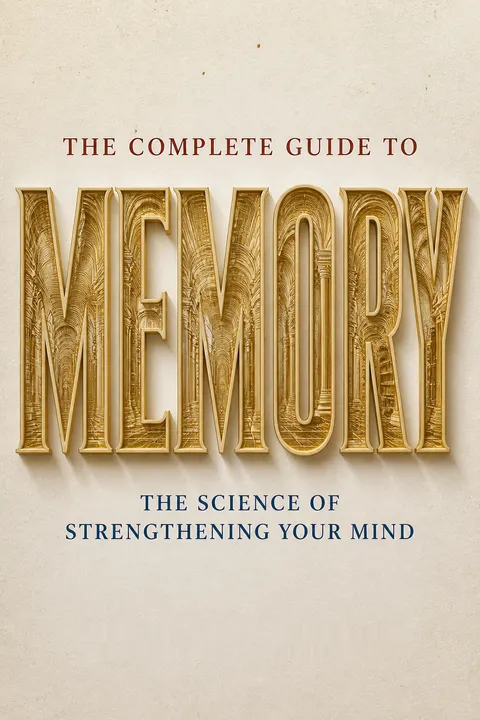
The Complete Guide to Memory receives mostly positive reviews, with readers praising its comprehensive coverage of memory science, practical exercises, and engaging anecdotes. Many find it accessible and informative, appreciating the author's expertise and the book's balance of scientific research and practical advice. Some reviewers note its relevance for aging populations and those concerned about cognitive decline. Criticisms include occasional digressions, dense technical sections, and a lack of novel information for some readers. Overall, it's considered a valuable resource for understanding and improving memory.
People Also Read

FAQ
1. What is "Complete Guide to Memory: The Science of Strengthening Your Mind" by Richard Restak about?
- Comprehensive exploration of memory: The book delves into the science, history, and practical techniques for understanding and improving human memory.
- Blend of neuroscience and practical advice: Restak combines the latest findings in brain science with time-tested memory strategies, making the subject accessible and actionable.
- Addresses memory concerns: It discusses common worries about memory loss, especially as people age, and differentiates between normal forgetfulness and signs of serious problems.
- Focus on enhancement and protection: The book aims to help readers develop a "superpower memory" to enhance cognitive abilities and potentially protect against conditions like Alzheimer’s.
2. Why should I read "Complete Guide to Memory" by Richard Restak?
- Improve everyday memory: The book offers practical tools and exercises to boost memory for daily tasks, names, numbers, and more.
- Understand memory’s role in identity: Restak explains how memory forms the foundation of personal identity and consciousness.
- Reduce anxiety about forgetfulness: By distinguishing normal memory lapses from pathological ones, the book helps alleviate unnecessary fears.
- Protect brain health: The author provides evidence-based strategies that may help maintain cognitive function and reduce dementia risk.
3. What are the key takeaways from "Complete Guide to Memory" by Richard Restak?
- Memory is trainable: With the right techniques, anyone can significantly improve their memory, regardless of age.
- Attention and emotion are crucial: Focused attention and emotional engagement are essential for encoding and retaining memories.
- Memory is fallible and reconstructive: Memories can be distorted, forgotten, or even fabricated, highlighting the importance of critical thinking.
- Lifestyle matters: Sleep, diet, exercise, and mental habits all play significant roles in memory performance and brain health.
4. How does Richard Restak define and categorize different types of memory in "Complete Guide to Memory"?
- Episodic, semantic, procedural: Restak distinguishes between episodic (personal experiences), semantic (general knowledge), and procedural (skills and habits) memory.
- Working memory as "queen": Working memory is highlighted as the most important for intelligence and daily functioning, acting as a mental workspace.
- Sensory memory: Brief, transient memories from sensory input (visual, auditory, etc.) are the first stage of memory processing.
- Implicit vs. explicit memory: The book explains the difference between memories we consciously recall (explicit) and those that influence us unconsciously (implicit).
5. What are the most effective memory improvement techniques recommended in "Complete Guide to Memory"?
- Method of loci (memory palace): Visualizing information placed in familiar locations to aid recall, a technique dating back to ancient Greece.
- Chunking and association: Grouping information into meaningful units and linking new data to existing knowledge enhances retention.
- Multi-coding and imagery: Engaging multiple senses and creating vivid mental images make memories more durable.
- Repetition and self-testing: Regularly retrieving information and testing oneself strengthens long-term memory more than passive review.
6. How does "Complete Guide to Memory" by Richard Restak address common memory worries and distinguish normal from abnormal memory lapses?
- Normal vs. concerning lapses: The book provides scenarios and checklists to help readers differentiate between everyday forgetfulness and signs of serious impairment.
- Role of attention and interest: Many memory lapses are due to lack of attention or interest, not brain disease.
- Context matters: Memory complaints must be evaluated in the context of the individual’s life, stress levels, and routines.
- When to seek help: Persistent, severe, or rapidly worsening memory problems, especially those affecting daily life, may warrant medical evaluation.
7. What is the historical evolution of memory techniques as described in "Complete Guide to Memory"?
- Ancient roots: Techniques like the method of loci originated with Greek and Roman thinkers such as Simonides and Cicero.
- Medieval and Renaissance developments: Memory theaters and elaborate visualization systems were developed by figures like Giulio Camillo and Giordano Bruno.
- Scientific study: The 19th-century work of Hermann Ebbinghaus introduced experimental methods and concepts like the forgetting curve.
- Modern neuroscience: Advances in brain imaging and cognitive psychology have deepened understanding of memory’s biological basis and practical applications.
8. How does "Complete Guide to Memory" explain the relationship between memory, identity, and consciousness?
- Memory as identity’s foundation: Restak argues that memory is central to personal identity; losing memory can mean losing one’s sense of self.
- Developmental perspective: The book explains how memory and identity co-develop in childhood and unravel together in conditions like Alzheimer’s.
- Consciousness and working memory: Working memory is described as the seat of conscious experience, linking past, present, and future.
- Memory’s role in self-reflection: The ability to recall and analyze past experiences is key to self-awareness and personal growth.
9. What are the main threats to memory identified in "Complete Guide to Memory" by Richard Restak?
- Seven "sins" of memory: Absent-mindedness, transience, blocking, misattribution, suggestibility, bias, and persistence (as described by Daniel Schachter).
- Technological distortion: Overreliance on digital devices can weaken natural memory abilities.
- Distraction and multitasking: Modern life’s constant interruptions undermine attention and memory formation.
- Depression and mood: Negative emotions and depression can impair memory encoding and retrieval.
10. How does "Complete Guide to Memory" address the fallibility and distortion of memory, including false memories and collective memory?
- Memory is reconstructive: Memories are not perfect recordings but are rebuilt each time they are recalled, making them susceptible to errors.
- Influence of suggestion and bias: External information, leading questions, and personal beliefs can alter or create false memories.
- Collective and historical memory: Societal narratives, media, and technology shape how groups remember events, sometimes leading to "memory wars" and "memory laws."
- Practical implications: The book warns of the dangers of misinformation, both personally and collectively, and encourages critical evaluation of memories.
11. What lifestyle and accessory aids for better memory does Richard Restak recommend in "Complete Guide to Memory"?
- Sleep and naps: Adequate sleep and even short naps significantly enhance memory consolidation.
- Diet and exercise: Mediterranean and MIND diets, along with regular physical activity, support brain health and memory.
- Moderation with substances: Coffee and tea may be beneficial, but alcohol should be limited or avoided, especially in older age.
- Use of technology: While digital tools can aid memory, they should supplement—not replace—active memory training and attention.
12. What are the best quotes from "Complete Guide to Memory" by Richard Restak and what do they mean?
- "Memory is the key to brain enhancement." – Emphasizes that improving memory boosts overall cognitive abilities.
- "The art of memory is the art of attention." (Samuel Johnson, quoted) – Highlights the foundational role of focused attention in forming memories.
- "Memory is not only crucial to identity, but forms the basis for conscious experience." – Suggests that memory underpins both who we are and our awareness of the world.
- "Let the brain be the brain." – Advises trusting well-learned skills and not overthinking, especially in high-pressure situations.
- "Who controls the past controls the future: who controls the present controls the past." (George Orwell, quoted) – Warns of the power and danger of manipulating collective memory for social or political ends.
About the Author
Download PDF
Download EPUB
.epub digital book format is ideal for reading ebooks on phones, tablets, and e-readers.








































