
Plot Summary
The Vanishing Inheritance Game
Tom, Philip, and Vernon Broadbent arrive at their father's Santa Fe estate, expecting a meeting about their inheritance. Instead, they find the house stripped of its priceless art and antiquities, and their father, Maxwell Broadbent, missing. The police are called, but clues point not to a robbery, but to a deliberate disappearance. The brothers' strained relationships and contrasting personalities are immediately evident, setting the stage for a reluctant alliance. The mystery deepens when a videotape from their father reveals a shocking challenge: he has entombed himself, along with his fortune, somewhere in the world. The brothers must find his tomb to claim their inheritance, launching a high-stakes treasure hunt that will test their bonds and beliefs.
Father's Last Challenge
The brothers watch their father's video, where Maxwell, larger than life even in death, explains his motives. Disillusioned by his sons' lack of ambition and unity, he has orchestrated a final, elaborate lesson: only by working together and earning their inheritance can they claim it. He frames his act as a revival of ancient traditions—taking his wealth to the grave, but with a twist. The challenge is not just about finding treasure, but about forcing his sons to confront their own failings and relationships. The emotional impact is immediate: anger, disbelief, and a sense of betrayal. The brothers' responses foreshadow the personal journeys and transformations that will unfold as they pursue their father's legacy.
Brothers Divided, Paths Chosen
The brothers' old rivalries flare as they debate how to proceed. Philip, the pragmatic art historian, seeks help from Marcus Hauser, his father's old partner and a private investigator with a shadowy past. Vernon, the spiritual seeker, consults his guru and decides to pursue the tomb for altruistic reasons. Tom, the veterinarian, initially rejects the quest, seeking peace in his simple life, but is drawn back in by Sally Colorado, an ethnopharmacologist desperate to recover a priceless Mayan codex among the treasures. Their separate paths, driven by need, guilt, and hope, set up a race not only against each other, but against outside forces with their own agendas.
The Codex's Secret Power
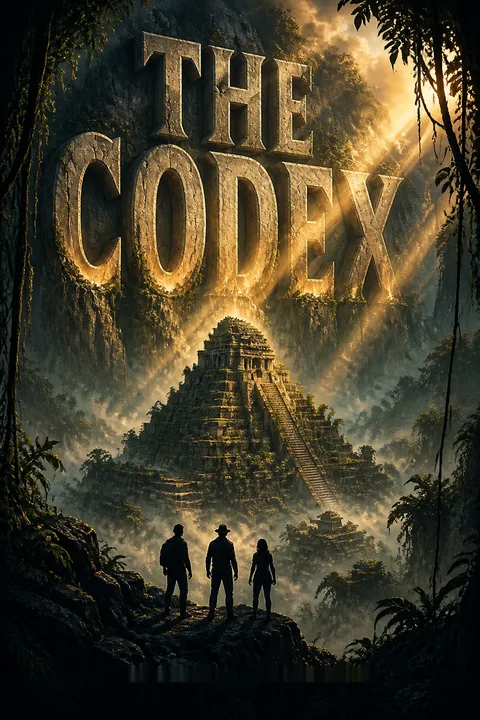
Sally Colorado reveals the existence of the Codex—a unique Mayan manuscript containing centuries of indigenous medical knowledge, potentially holding cures for modern diseases. The pharmaceutical world, represented by the desperate CEO Lewis Skiba, becomes a new player, willing to pay millions or kill to obtain it. The Codex's value transforms the quest from a family drama into a global race, with the fate of the rainforest and untold lives at stake. The brothers' personal motives are now entangled with ethical dilemmas and the interests of powerful corporations, raising the stakes and moral complexity of their journey.
Into the Mosquito Coast
Clues lead the brothers, Sally, and their rivals to the wilds of Honduras, a land of impenetrable jungle, swamps, and lost cities. Each team—Philip with Hauser, Vernon with his guru, Tom with Sally—faces the dangers of the Mosquito Coast: treacherous rivers, corrupt soldiers, and the ever-present threat of betrayal. The jungle becomes a crucible, stripping away civilization and forcing each character to confront their fears, weaknesses, and the true nature of their quest. The landscape itself is a character, indifferent and deadly, shaping the fates of all who enter.
Jungle Pursuits and Betrayals
As the searchers penetrate deeper, alliances fracture. Hauser reveals his true colors, turning on Philip and murdering guides and rivals to secure the treasure for himself and his corporate backers. Vernon's spiritual ideals are tested to the breaking point as his guru succumbs to the jungle's perils. Tom and Sally, pursued by mercenaries and corrupt officials, must rely on each other and the help of indigenous guides. The jungle's dangers—disease, predators, and human treachery—claim lives and force the survivors to adapt or perish. The brothers' paths begin to converge, driven by necessity and the realization that only together can they hope to succeed.
The Healer and the Hunter
Sally's quest for the Codex brings her into contact with indigenous healers and the living traditions of Mayan medicine. The contrast between the pharmaceutical industry's ruthless exploitation and the rainforest's fragile knowledge becomes stark. Tom, drawn to Sally's passion and integrity, finds new purpose beyond his family's legacy. Their relationship deepens as they face mortal danger, and the Codex becomes a symbol of hope—not just for wealth, but for healing and preservation. The ethical stakes of the quest are crystallized: will the Codex be another lost treasure, or a gift to the world?
The Swamp's Deadly Labyrinth
The Meambar Swamp becomes a nightmarish trial for all. Disease, starvation, and violence decimate the searchers. Vernon's guru dies, Philip is tortured and nearly killed by Hauser, and Tom's group is pushed to the brink of death by fever and hunger. Only the intervention of Borabay, a mysterious indigenous healer—and, as it is revealed, Maxwell's secret son—saves them. The brothers are forced to confront their own mortality, their resentments, and the meaning of family. The jungle strips them bare, leaving only what is essential: love, forgiveness, and the will to survive.
Rivals, Mercenaries, and Motives
Hauser, now a full-blown villain, manipulates and murders his way to the White City, the legendary lost metropolis where Maxwell's tomb is hidden. The brothers, reunited and aided by Borabay, must outwit Hauser and his mercenaries, as well as navigate the complex politics of the local tribes. The Codex's fate hangs in the balance, as does the legacy of Maxwell Broadbent. The stage is set for a showdown that will test every lesson learned, every bond forged, and every value held.
The White City Revealed
The brothers and Borabay reach the White City, a place of haunting beauty and danger. They discover Maxwell entombed alive, barely clinging to life, and rescue him just as Hauser closes in. A desperate escape ensues, culminating in a standoff on a precarious suspension bridge over a chasm. Sally's sharpshooting and the brothers' courage turn the tide, but not before Hauser meets a fiery end and the bridge—and the path to the city—are destroyed. The White City, and its secrets, are saved from exploitation, but at great cost.
The Tomb's Living Prisoner
Maxwell, dying from his ordeal and wounds, is reunited with his sons and Borabay. In his final days, he confesses his regrets, acknowledges his failures as a father, and offers forgiveness and wisdom. Each son is changed: Philip lets go of his bitterness, Vernon finds purpose, Tom embraces love and integrity, and Borabay claims his place in the family. Maxwell's last will divides the treasures, but more importantly, he leaves his sons the freedom to choose their own paths. The family, fractured by years of resentment, is finally healed in the shadow of death.
Family, Forgiveness, and Farewell
Maxwell's funeral is a blend of Mayan and Western traditions, a celebration of life, death, and reconciliation. The treasures are entombed, the Codex is entrusted to Sally and Tom for the benefit of all, and the brothers go their separate ways, changed forever. The story's villains—Hauser and Skiba—meet their own ends, undone by their greed and moral blindness. The Broadbents, once defined by their father's shadow, emerge as individuals, united by love and the lessons of their journey.
The Codex's New Destiny
Sally and Tom establish a foundation to translate and share the Codex, resisting the temptations of wealth and corporate power. The pharmaceutical industry's machinations are exposed, and the Codex becomes a symbol of hope for medicine and conservation. The brothers honor their father's memory not by hoarding his treasures, but by using them to heal and inspire. The rainforest, the tribes, and the world are given a chance at renewal, and the story ends with a sense of possibility and peace.
The Enduring Legacy
In the aftermath, each character finds their own form of redemption. The Broadbent estate passes to Borabay, the indigenous son, symbolizing a new era of respect and connection. The brothers, Sally, and the people they touched carry forward the lessons of the quest: that true wealth lies not in gold or art, but in love, courage, and the willingness to change. The Codex, once a prize to be fought over, becomes a gift to humanity, and the story closes on the enduring power of family, forgiveness, and hope.
Analysis
Douglas Preston's The Codex is a modern adventure that reimagines the classic treasure hunt as a crucible for family, ethics, and the meaning of legacy. At its heart, the novel is a meditation on what we truly inherit—not just wealth or artifacts, but wounds, values, and the capacity for change. The story critiques the destructive power of greed, both personal and corporate, and the blindness of those who seek to possess rather than understand. The Codex itself is a powerful symbol: knowledge that can heal or destroy, depending on who wields it and why. Preston's narrative structure—interweaving action, psychological depth, and cultural critique—invites readers to reflect on the costs of ambition, the necessity of forgiveness, and the enduring power of love. In the end, the greatest treasure is not gold or art, but the hard-won wisdom that comes from facing our shadows, reconciling with our past, and choosing to use our gifts for the good of all.
Review Summary
The Codex receives mixed reviews, averaging 3.9/5 stars. Fans praise its Indiana Jones-style adventure, fast pacing, and entertaining jungle quest plot involving three brothers searching for their father's buried treasure in Honduras. Critics appreciate the action and suspense. However, detractors cite poor writing quality, boring characters, excessive jungle descriptions, predictable romance, weak plot development, and slow pacing. Some find it too clichéd and silly. Several reviewers note it lacks the quality of Preston's collaborative works with Lincoln Child, though many still recommend it as enjoyable escapist adventure fiction.
People Also Read

Characters
Maxwell Broadbent
Maxwell is a towering figure—physically, intellectually, and emotionally—whose life as a tomb raider and collector has left him both wealthy and isolated. His relationships with his sons are marked by control, disappointment, and a desperate desire to shape their destinies. Psychoanalytically, Maxwell is driven by a need for legacy and immortality, but also by guilt and regret. His final challenge is both a test and a plea for connection. In the end, his ordeal in the tomb strips him of pride and pretense, allowing him to offer forgiveness and receive it in turn. His death is both an ending and a beginning for his family.
Tom Broadbent
Tom, the youngest son, is a veterinarian who values simplicity, integrity, and compassion. He is the emotional center of the family, often acting as peacemaker and moral compass. Tom's journey is one of reluctant engagement: drawn into the quest by duty and love, he discovers his own strength and capacity for leadership. His relationship with Sally Colorado awakens new purpose, and his willingness to risk everything for the Codex and his family marks his transformation. Tom's arc is one of self-acceptance and the embrace of love over legacy.
Philip Broadbent
Philip, the eldest (until Borabay's revelation), is an art historian whose wit and sarcasm mask deep wounds. He is driven by a need for recognition and the burden of his father's expectations. His alliance with Hauser is both pragmatic and tragic, leading to betrayal and near death. Philip's journey is one of humility and reconciliation: stripped of pride and privilege, he learns to value family and forgiveness over possessions. His psychoanalytic struggle is with envy, resentment, and the fear of inadequacy, ultimately resolved in acceptance.
Vernon Broadbent
Vernon, the middle brother, is a wanderer in search of meaning, often lost in cults and causes. He is the most vulnerable and idealistic, easily manipulated but also deeply compassionate. Vernon's ordeal in the jungle tests his faith and resilience, and his rescue of Tom is a moment of redemption. His arc is one of self-discovery and the realization that purpose comes not from gurus, but from love and action. Vernon's psychological journey is from dependency to agency, from confusion to clarity.
Sally Colorado
Sally is an ethnopharmacologist whose quest for the Codex is driven by both scientific curiosity and a desire to heal. She is intelligent, resourceful, and unafraid to challenge the brothers' assumptions. Her relationship with Tom is a source of strength and vulnerability, and her sharpshooting skills are crucial in the climax. Sally's arc is one of transformation from outsider to family, from ambition to altruism. She embodies the story's ethical core, insisting that knowledge and power be used for the common good.
Marcus Hauser
Hauser is a former partner of Maxwell, now a private investigator and mercenary. He is cunning, ruthless, and driven by old grievances and new opportunities. Hauser's psychoanalytic profile is that of the narcissist and sociopath, capable of charm but devoid of empathy. His manipulation of Philip, betrayal of allies, and ultimate demise are the dark mirror to the brothers' journey. Hauser's fate is a cautionary tale about the corrosive power of greed and the emptiness of conquest.
Borabay
Borabay is Maxwell's secret son by a Tara woman, raised in the jungle and skilled as a healer and hunter. His revelation as a Broadbent is a turning point, symbolizing the union of Western and indigenous wisdom. Borabay's loyalty, courage, and resourcefulness save the brothers and embody the story's themes of reconciliation and respect for tradition. His inheritance of the Broadbent estate is both poetic justice and a hopeful gesture toward a more inclusive future.
Lewis Skiba
Skiba is the desperate head of a failing pharmaceutical company, willing to do anything to secure the Codex and save his fortune. His psychological arc is one of moral collapse and, ultimately, redemption through loss. Skiba's story is a critique of the modern business world's ethical blindness, and his final acceptance of failure is a rare moment of grace.
Professor Julian Clyve
Clyve is Sally's fiancé and the world's leading Mayanist, whose desire for recognition and wealth leads him to betray his ideals. He is both a rival and a foil to Tom, representing the temptations of power and the dangers of intellectual arrogance. Clyve's arc is one of disillusionment, as he realizes that true value lies not in accolades, but in integrity and love.
The Teacher (Art Brewer)
The Teacher is Vernon's spiritual leader, a former philosophy professor turned cult figure. His journey into the jungle is a quest for wealth disguised as enlightenment, and his death is a sobering reminder of the dangers of self-delusion and the limits of charisma. The Teacher's arc is a warning against the seductions of easy answers and the importance of authenticity.
Plot Devices
The Inheritance Quest
Maxwell's decision to entomb himself with his fortune is the central plot device, transforming a simple inheritance into a test of character, unity, and worth. This device drives the narrative, forcing the brothers to confront their past, their relationships, and their values. It is both a literal and symbolic journey, echoing ancient myths and modern dilemmas. The quest structure allows for multiple storylines—adventure, mystery, family drama—to intertwine, and for each character to undergo transformation.
The Codex as MacGuffin
The Mayan Codex is more than a treasure; it is a symbol of lost knowledge, cultural survival, and the tension between exploitation and preservation. Its presence attracts not only the brothers, but corporations, mercenaries, and healers, raising the stakes from personal to universal. The Codex's fate becomes a test of the characters' ethics and priorities, and its ultimate destiny is a measure of their growth.
Duality of Civilization and Wilderness
The Honduran jungle is not just a setting, but a force that strips away artifice and reveals true character. The contrast between the civilized world (art, wealth, science) and the wild (survival, tradition, nature) is a constant source of tension and revelation. The jungle's dangers—disease, predators, betrayal—are both literal and metaphorical, forcing the characters to adapt, unite, and change.
Foreshadowing and Irony
The narrative is rich with foreshadowing: Maxwell's references to ancient tombs, the brothers' childhood dynamics, Sally's warnings about the Codex's power. Irony abounds: the tomb raider entombed, the inheritance that nearly destroys the heirs, the villain undone by his own cunning. These devices create suspense, deepen character, and invite reflection on the unpredictability of fate.
Family as Both Wound and Healing
The story's emotional core is the fractured Broadbent family, whose wounds are both personal and generational. The quest forces them to relive old hurts, confront their failings, and, ultimately, forgive. The addition of Borabay as a hidden brother is a masterstroke, symbolizing the possibility of healing and the expansion of family beyond blood and culture.
About the Author

Download PDF
Download EPUB
.epub digital book format is ideal for reading ebooks on phones, tablets, and e-readers.








































