
Key Takeaways
1. Time Measurement: A Human Invention for Order
It seems that time is a human invention that measures the lines of our existence.
Early calibrations. From trickling waters to shifting shadows, humanity's earliest attempts to measure time were crude but essential for organizing life. The division of the day into twenty-four hours, and then into minutes and seconds, emerged from Babylonian and Egyptian astronomy, driven by the need for social coordination rather than inherent natural divisions. These early methods, like sundials and water clocks (clepsydrae), were imprecise but served their purpose in agrarian societies.
Industrial revolution's demand. The advent of the Industrial Revolution dramatically increased the need for precise timekeeping. Factories, mass production, and coordinated transportation (like railroads) necessitated standardized time zones and more accurate mechanical clocks. This shift transformed time from a casual, local phenomenon into a rigid, universal regulator of human activity, dictating when to eat, sleep, and work.
Ubiquitous precision. Today, digital displays on smartphones and computers provide ubiquitous, hyper-precise time, far beyond the needs of ancient civilizations. This constant access to exact time has further ingrained time as a social regulator, shaping our daily appointments, deadlines, and expectations. The evolution of timekeeping reflects humanity's continuous quest for order and efficiency in an increasingly complex world.
2. Philosophical Roots: Debating Time's Existence and Continuity
What, then, is time? If no one asks me, I know; if I wish to explain to him who asks, I know not.
Ancient paradoxes. Philosophers like Zeno of Elea challenged the very notion of motion and time's continuity with paradoxes like the flying arrow, suggesting that at any given instant, an arrow is stationary, thus motion is an illusion. This raised fundamental questions about whether time and space are continuous or composed of discrete, indivisible units. Aristotle countered, arguing that time and motion are inseparable and infinitely divisible.
Augustine's dilemma. Saint Augustine famously articulated the human struggle to define time, acknowledging an intuitive understanding that vanishes upon attempting explanation. He questioned time's existence before creation, suggesting that if there was no time, there was no "then," implying time is intrinsically linked to the universe's existence and events.
Kant's internal sense. Immanuel Kant proposed that time is not an external reality but an "internal sense," a form of intuition inherent to our minds, allowing us to perceive ourselves and our internal states. He envisioned time as a one-dimensional mental image, a pre-existing framework for our experiences, suggesting that our perception of time is deeply embedded in our cognitive structure.
3. Newton's Absolute Time Yields to Einstein's Relativity
Absolute, true and mathematical time, of itself, and from its own nature flows equably without regard to anything external, and by another name is called duration.
Newton's universal clock. Isaac Newton conceived of "absolute, true and mathematical time" as a universal, continuously flowing entity, independent of any external observation or event. This absolute time served as the bedrock for his laws of motion and gravitation, providing a consistent framework for understanding the universe's mechanics. He distinguished it from "relative, apparent and common time," which is what our clocks measure.
The pail experiment. Newton's thought experiment with a rotating pail of water aimed to prove the existence of absolute space and, by extension, absolute time. He observed that the water's concave surface, even when relatively at rest with the pail, indicated an absolute rotational motion, implying a fixed, unobservable reference frame for true motion and time.
Einstein's paradigm shift. The 20th century shattered Newton's absolute framework. Albert Einstein's theory of special relativity revealed that time is not absolute but relative, dependent on the observer's motion and gravitational field. This meant that duration is not fixed; two objects traveling different paths from point A to point B might experience different amounts of time, a counterintuitive notion confirmed by experiments like the twin paradox.
4. Space-Time: An Inseparable Cosmic Fabric
Henceforth, space for itself, and time for itself shall completely reduce to a mere shadow, and only some sort of union of the two shall preserve independence.
Minkowski's unification. German mathematician Hermann Minkowski introduced the concept of space-time, a four-dimensional continuum where space and time are fused into an inseparable union. This geometric representation revolutionized physics, treating time not as a separate entity but as a fourth dimension, intrinsically linked to the three spatial dimensions.
Light's constant speed. The constancy of the speed of light in a vacuum is central to space-time. This universal constant links spatial and temporal units, allowing time to be expressed in terms of distance (e.g., light-years). This fusion implies that space-time intervals are absolute, even though space and time individually are relative to the observer.
Light cones and black holes. Space-time geometry gives rise to "light cones," which delineate the past and future events causally connected to a present "now." Furthermore, general relativity predicts phenomena like black holes, regions where gravity is so intense that space-time is sharply curved, and nothing, not even light or time, can escape, creating a perpetual "now" within.
5. Time Travel: A Theoretical Dance, Not a Practical Leap
The laws of physics do not allow the appearance of closed timelike curves.
Closed timelike curves (CTCs). Mathematical physics theoretically permits time travel via "closed timelike curves" (CTCs), world lines that loop back on themselves in space-time, allowing a traveler to return to an earlier point in their own past. This concept, however, often leads to paradoxes like the grandfather paradox, where altering the past could negate one's own existence.
Hawking's conjecture. Stephen Hawking's "chronology protection conjecture" suggests that the laws of physics prevent the formation of CTCs, safeguarding the universe from such paradoxes and ensuring that cause always precedes effect. While wormholes, theoretical shortcuts through space-time, might allow for intergalactic travel, their use for human time travel remains highly speculative and fraught with physical impossibilities.
Relative aging, not true travel. The "twin paradox" illustrates time dilation, where an astronaut traveling at near-light speed ages slower than their Earth-bound twin. This is not time travel into the future but a difference in the scaling of time due to relative velocity. The astronaut experiences less time, but no time is skipped, and they cannot return to an earlier point in their personal timeline.
6. Subjective Time: Our Personal, Emotional Experience
The knowledge of some other part of the stream, past or future, near or remote, is always mixed in with our knowledge of the present thing.
Mindful time. Henri Bergson argued that our "real duration" (durée réelle) of time is a continuous, mindful experience, distinct from the discrete, measurable time of clocks. This subjective time is shaped by our consciousness, emotions, and memories, making it fluid and personal rather than rigidly objective.
Stream of consciousness. William James described consciousness as a "stream," where past thoughts linger in the present, blending with incoming future perceptions to create a seamless flow. He posited that our "practically cognized present is no knife-edge, but a saddle-back," allowing us to look both backward and forward, giving us a continuous sense of temporal transition.
The elusive "now." The "present moment" is a fleeting, almost imperceptible instant that constantly slips into the past. Attempts to consciously grasp it are futile, as it "melts in our grasp, fled ere we could touch it, gone in the instant of becoming." This elusive nature of the "now" highlights the subjective and often illusory quality of our immediate temporal experience.
7. Aging Accelerates Perceived Time: A Cognitive Illusion
As we age, our metabolism and body clocks run slower, even though the sun attempts to readjust those clocks every day.
The speeding years. A common perception among older individuals is that time seems to accelerate with age. While a child might find a week tediously long, an elder perceives it as a flash. This phenomenon is influenced by a combination of psychological and physiological factors.
Routine and memory. As life progresses, daily experiences often become more routine and less novel. The brain pays less attention to repetitive events, causing days, weeks, and years to "lump" into smaller perceived bundles of time. Salient, memorable experiences, which tend to make time feel longer, become less frequent with age, contributing to the foreshortening effect.
Physiological slowing. Research suggests that our internal biological clocks, particularly the dopamine system, weaken and run slower with age. This physiological deceleration can lead to an underestimation of passing time, creating the subjective sensation that external time is speeding up. This interplay between internal biological rhythms and external events profoundly shapes our temporal perception as we age.
8. Biological Clocks: The Body's Internal Rhythms
Every cell knows the time.
The master pacemaker. The suprachiasmatic nucleus (SCN) in the hypothalamus acts as the body's master pacemaker, coordinating and regulating circadian rhythms—the roughly 24-hour cycles of biological processes. This internal clock synchronizes sleep-wake cycles, body temperature, hormone production (like melatonin), and alertness with external environmental cues.
Genetic feedback loops. At a molecular level, circadian rhythms are driven by genetically based feedback loops. Pioneering research on fruit flies identified "Period" (per) genes and their corresponding proteins (PER) that cycle in a 24-hour rhythm, repressing and then restarting their own production. Similar "CLOCK" genes and mechanisms exist in mammals, demonstrating a fundamental biological timekeeping system.
Cellular autonomy. Remarkably, almost every cell in the body contains its own "peripheral clock," capable of maintaining autonomous oscillations. While the SCN acts as the central conductor, these individual cellular clocks in organs like the liver, pancreas, and heart also respond to local cues, ensuring that all bodily functions are synchronized for optimal health and performance.
9. Environmental Cues: Synchronizing Our Inner World
The body, through its sense machines, takes in a stridency of noises, impressions of colors, smells and shapes and textures, and in code sends it to the mind, which somehow makes sense of all that noise and swallows the whole mess to magnificently alter the mind by producing something comprehensible.
Zeitgebers: Time givers. Our internal biological clocks are constantly calibrated by "zeitgebers" (German for "time givers"), environmental cues that synchronize our endogenous rhythms with the external world. Light is the most powerful zeitgeber, with retinal ganglion cells sending signals to the SCN to regulate melatonin production and reset the circadian clock daily.
Beyond light. Other zeitgebers include:
- Temperature: Influences metabolic rates and cellular processes.
- Eating patterns: Align hormonal activities and synchronize organ clocks (e.g., liver cells).
- Exercise: Improves sleep cycles and reinforces rhythmic behavior.
- Social routines: Work schedules, appointments, and communal activities provide external structure.
Disrupted rhythms. Disruptions to these synchronizers, such as night shift work or transmeridian flights (jet lag), can desynchronize internal rhythms, leading to fatigue, impaired cognitive function, and long-term health consequences. The body's intricate network of clocks relies on consistent environmental signals to maintain its harmonious operation.
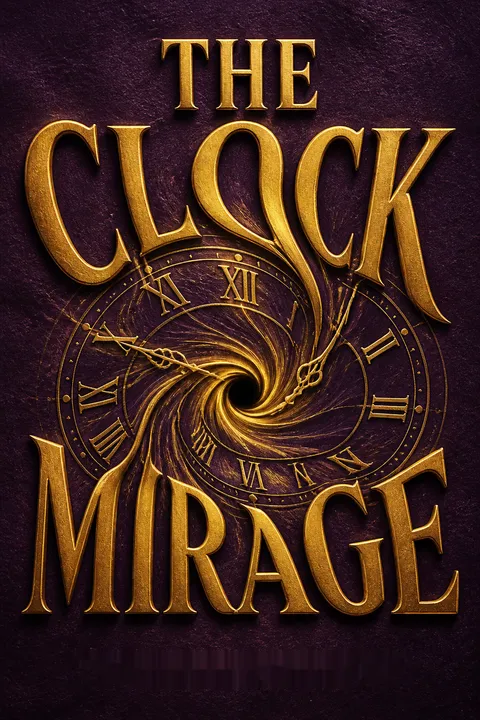
10. The Clock Mirage: Time as an Organizing Illusion
Time’s only appearance is a ghost of memories and anticipations, a mirage.
A multifaceted concept. Time is not a singular, easily definable entity but a complex interplay of objective measurements, subjective perceptions, philosophical constructs, and biological rhythms. It is a "mirage" in the sense that its appearance of being a tangible, universally consistent force is often an illusion, shaped by our minds and the tools we use to measure it.
An organizing principle. Ultimately, time serves as an indispensable organizing tool for human civilization and scientific inquiry. It provides a framework for sequential ordering, causality, and planning, enabling societies to function and science to explore the universe. Without this organizing principle, the world would be chaotic and incomprehensible.
The body as the clock. Despite its elusive nature, our most intimate experience of time is rooted in our own biology. The constant, rhythmic activity of our cells, synchronized by circadian rhythms and environmental cues, gives us an inner feeling of time's passage. This "inner feeling that rides on the rhythm of our cells" is our most fundamental and undeniable connection to time, making us, in essence, the clock itself.
Review Summary
People Also Read



Download PDF
Download EPUB
.epub digital book format is ideal for reading ebooks on phones, tablets, and e-readers.








































