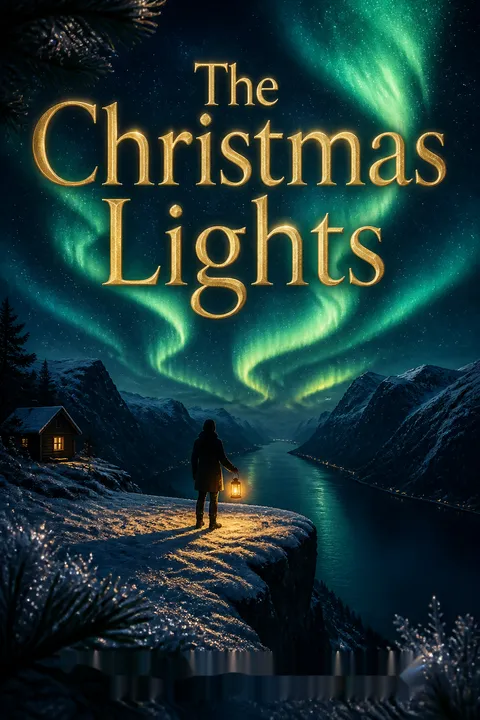

Plot Summary
Influencer Love Underwater
In the South Pacific, Bo and Zac, famous travel influencers, live a life curated for millions of followers. Their love is passionate and spontaneous, culminating in Zac's underwater marriage proposal. Yet, even in paradise, Bo's anxiety and trauma linger beneath the surface, hinting at deeper struggles. Their friend and photographer, Lenny, is ever-present, capturing every moment for their brand. The trio's dynamic is both exhilarating and claustrophobic, as private moments are constantly weighed against public expectations. The chapter sets the tone: love, adventure, and the tension between authenticity and performance.
Arrival in Norwegian Winter
The trio travels from tropical Samoa to wintry Norway for a new sponsorship. The stark contrast between climates mirrors the emotional shift as they settle into a remote shelf farm perched above a fjord. The isolation is both beautiful and unsettling. Bo feels the loss of privacy more acutely, and the relentless demands of their digital life begin to wear on her. The arrival at the farm introduces Anders, their taciturn local guide, and his formidable grandmother, Signy. The landscape's harshness foreshadows the emotional and physical challenges ahead.
Echoes of the Past
Interwoven with the present, the narrative flashes back to 1936, following young Signy and her sister Margit as they lead animals to the summer pastures. The girls' camaraderie, rivalries, and dreams are set against the looming threat of natural disaster. The past is alive with folklore, hardship, and the ever-present danger of the mountains. These historical threads echo the contemporary characters' struggles, suggesting that the land remembers—and repeats—its traumas.
The Shelf Farm Ascent
Bo, Zac, and Lenny's journey to the shelf farm is physically demanding and emotionally charged. The ascent is a metaphor for the barriers between them and true connection. Anders' brusque assistance and Signy's stern welcome highlight the cultural and generational divides. The farm's primitive conditions—no electricity, outhouses, wood stoves—strip away the veneer of their curated lives, forcing the trio to confront discomfort, dependence, and the limits of their own resilience.
Meeting Signy and Anders
The group's interactions with Anders and Signy deepen. Anders' stoicism masks a painful past, while Signy's sharpness hides wisdom and loss. Bo is drawn to Anders' authenticity, sensing a kindred spirit beneath his reserve. The farm's routines—chopping wood, fetching water, tending fires—become rituals of survival and self-discovery. The contrast between the influencers' digital existence and the farm's timeless rhythms grows starker, and Bo's longing for something real intensifies.
Digital Lives, Private Fears
The pressure to perform for their audience strains Bo and Zac's relationship. Lenny's omnipresent camera blurs the line between intimacy and spectacle. Bo's desire for privacy clashes with the demands of their brand, and her old anxieties resurface. The arrival of Anna, the sponsor's marketing rep, adds another layer of surveillance and competition. Meanwhile, Bo's social media stalker reemerges, sending chilling messages that threaten her sense of safety and control.
The Troll Returns
Bo's stalker escalates his campaign, exploiting the couple's public life to sow fear and doubt. The digital world's dangers intrude on the physical, and Bo's panic grows. Zac and Lenny are dismissive, unable to grasp the depth of her terror. Anders, however, recognizes the seriousness of the threat, his own history with violence and injustice making him uniquely empathetic. The tension between public persona and private vulnerability reaches a breaking point.
Waterfall Catastrophe
In pursuit of the perfect shot, Bo is pressured into posing at a treacherous waterfall. Ignoring Anders' warnings, she slips and nearly drowns, suffering hypothermia and injury. The incident exposes the recklessness of their influencer lifestyle and the fragility of their relationships. Anders' rescue cements a bond between him and Bo, while Zac's guilt and Lenny's opportunism widen the cracks in the group. The near-tragedy is a wake-up call, but its lessons are slow to take root.
Recovery and New Bonds
As Bo recuperates at Anders' house, away from the farm and her companions, a new intimacy develops between them. Anders' care is practical and gentle, and Bo finds solace in his quiet strength. Their conversations reveal shared traumas and a longing for connection beyond performance. Meanwhile, Anna's presence at the farm stirs jealousy and suspicion, and Lenny's behavior grows increasingly erratic. The group's unity is unraveling, and Bo is forced to question what—and who—she truly wants.
Anna Arrives, Tensions Rise
Anna's integration into the group disrupts established dynamics. Her flirtation with Zac and brief affair with Lenny create a web of secrets and resentments. Bo's suspicions about Zac's fidelity are confirmed, deepening her sense of isolation. The farm, once a place of potential renewal, becomes a crucible for old wounds and new betrayals. Anders' past is hinted at, and Signy's cryptic warnings about fate and survival take on new urgency.
Secrets in the Snow
The truth about Anders' history emerges: he was imprisoned for killing a man who murdered his girlfriend, only to be exonerated years later. The group's reaction is a mix of fear, fascination, and judgment. Bo, however, sees the pain and injustice beneath the headlines. Her empathy for Anders grows, even as her relationship with Zac deteriorates. The past and present collide, and the farm's isolation becomes both sanctuary and prison.
The Stalker Revealed
Bo's stalker is revealed to be Lenny, the photographer who has been with her all along. His obsession, masked as friendship and professional loyalty, is exposed in a climactic confrontation. The revelation is both shocking and inevitable, reframing years of their shared history. Lenny's betrayal is a violation of trust and safety, and the group's carefully constructed reality collapses. Anders' intervention is decisive, and Bo is forced to reckon with the true cost of living her life online.
Christmas Market Unraveling
A trip to the Christmas market in Alesund becomes a turning point. The group's public image unravels as fans, strangers, and the stalker converge. Bo's sense of self is fractured by the relentless gaze of others, and the boundaries between performance and reality dissolve. The market's festive chaos mirrors the chaos within the group, and Bo's longing for home and authenticity becomes overwhelming.
The Truth About Anders
Bo learns the full story of Anders' past: his love, his loss, his wrongful imprisonment, and his struggle to rebuild. Their connection deepens into love, forged in shared pain and mutual recognition. Signy's wisdom about fate and survival resonates, and Bo begins to see a path forward that is neither escape nor performance, but acceptance and courage. The possibility of a new life—rooted in truth, not spectacle—emerges.
Betrayals and Confessions
The group's secrets come to light: Zac's infidelity, Anna's complicity, Lenny's obsession. Bo confronts the reality that her relationship with Zac is built on illusion and avoidance. The farm, once a symbol of adventure and freedom, is now a stage for heartbreak and reckoning. Signy's own confession of a violent act in her youth parallels Bo's crisis, underscoring the novel's themes of guilt, forgiveness, and the unpredictability of destiny.
Avalanche of Consequences
As the group prepares to leave, the threat of the mountain's collapse looms—a metaphor for the emotional avalanches that have reshaped their lives. The past disaster in 1936, which shaped Signy's fate, echoes in the present as Bo must choose between running from pain or embracing it. The final days at the farm are marked by sorrow, clarity, and the acceptance that some losses are necessary for new beginnings.
Let Destiny Happen
Bo says goodbye to Anders, choosing to leave with Zac and escape Lenny's shadow. Yet, the sense of unfinished business and unspoken love lingers. Signy's advice to "let destiny happen" becomes a guiding principle. Bo's journey home is both literal and metaphorical—a return to her roots, her family, and her true self. The pain of parting is tempered by the hope of reunion and the knowledge that real life is lived, not performed.
The Final Goodbye
Bo returns home for Christmas, reconnecting with her family and finding peace in honesty and vulnerability. The experience in Norway has changed her irrevocably. She realizes that love, loss, and destiny are intertwined, and that true happiness comes from embracing uncertainty. In a final act of courage, she returns to Anders, choosing a life of authenticity and connection over spectacle and escape. The past is honored, the future embraced.
Homecoming and New Beginnings
The novel ends with Bo and Anders reunited, ready to build a life together rooted in truth and mutual understanding. Signy's story comes full circle, her own survival and resilience mirrored in Bo's journey. The mountains, once symbols of danger and loss, become emblems of endurance and renewal. The Christmas lights shine not just as decoration, but as beacons of hope, guiding the characters—and the reader—home.
Analysis
Karen Swan's The Christmas Lights is a meditation on authenticity, vulnerability, and the search for home in a world obsessed with performance and spectacle. Through its dual timelines, the novel explores how trauma, love, and destiny shape lives across generations. The contemporary narrative interrogates the costs of living online: the erosion of privacy, the dangers of constant exposure, and the seductive power of curated identity. Bo's journey—from influencer to survivor, from performer to participant—mirrors the historical arc of Signy, whose survival depends on both luck and courage. The novel's central lesson is that true connection requires risk: the willingness to be seen, to be hurt, and to let go of control. The Norwegian landscape, with its beauty and danger, is both a crucible and a sanctuary, forcing characters to confront their fears and embrace the unknown. Ultimately, The Christmas Lights is a story of redemption and hope, reminding readers that even in the darkest winter, the promise of light—and love—endures.
Review Summary
The Christmas Lights receives an overall positive reception, averaging 4.03 stars. Readers praise its atmospheric Norwegian setting, dual timeline structure alternating between present-day Instagram influencers Bo and Zac, and 1936 milkmaid Signy. Many highlight Swan's vivid descriptions of fjords, frozen waterfalls, and the Northern Lights. The novel is noted for its darker-than-expected tone, social media commentary, and suspenseful elements. Some criticisms include predictability, underdeveloped characters, and minimal Christmas content despite the festive title.
Characters
Bo Loxley
Bo is a British travel influencer whose curated online life masks deep trauma and longing for connection. Haunted by her brother's death and the relentless demands of her digital persona, she oscillates between adventure and anxiety, performance and vulnerability. Her relationship with Zac is passionate but increasingly performative, and her friendship with Lenny is fraught with unspoken tensions. Bo's journey is one of self-discovery: she must confront her fears, recognize the dangers of constant exposure, and ultimately choose authenticity over spectacle. Her bond with Anders is transformative, offering her a chance at real intimacy and healing.
Zac Austen
Zac is Bo's fiancé and partner in their influencer brand. A New Zealander with boundless energy and charm, he thrives on adventure and public adoration. However, his need for validation and avoidance of emotional depth create distance in his relationship with Bo. Zac's infidelities and reliance on Lenny for both logistics and emotional support reveal his immaturity and fear of vulnerability. He is both a victim and perpetrator of the group's performative culture, ultimately unable to offer Bo the authenticity she craves.
Lenny
Lenny is the group's photographer and brand manager, whose role as facilitator masks a deep, unhealthy fixation on Bo. His constant presence blurs the line between friend and voyeur, and his eventual unmasking as Bo's stalker is both shocking and tragically inevitable. Lenny's psychological complexity—his need for belonging, his resentment, his capacity for manipulation—makes him both pitiable and dangerous. His betrayal is the catalyst for the group's collapse and Bo's liberation.
Anders Jemtegard
Anders is the Norwegian guide whose stoicism and reserve conceal a history of profound loss and injustice. Wrongly imprisoned for the murder of his girlfriend, Anders returns to his ancestral home seeking peace and anonymity. His bond with Bo is immediate and deep, rooted in shared trauma and a longing for authenticity. Anders' journey is one of redemption and acceptance: he must learn to trust, to forgive himself, and to embrace the possibility of new love. His relationship with his grandmother, Signy, grounds him in tradition and resilience.
Signy
Signy is Anders' grandmother and the keeper of the farm's history. Her sharp tongue and stern demeanor hide a well of wisdom and compassion. Signy's own past—marked by violence, loss, and survival—parallels Bo's journey, offering guidance and perspective. Her belief in destiny and the cycles of life anchors the novel's themes. Signy's story is a testament to endurance, the power of choice, and the possibility of renewal after devastation.
Anna
Anna is the marketing representative for the group's sponsor, whose arrival disrupts the group's fragile equilibrium. Her flirtation with Zac and brief affair with Lenny expose the group's underlying insecurities and rivalries. Anna's own vulnerabilities—her desire for connection, her struggle for recognition—make her both a rival and a mirror for Bo. Her presence forces the group to confront uncomfortable truths about loyalty, desire, and the cost of ambition.
Margit
Margit is Signy's older sister in the historical narrative, whose dreams of love and freedom are shattered by violence and betrayal. Her story is one of survival and sacrifice, echoing the novel's central themes. Margit's resilience and capacity for forgiveness offer a model for Bo and the other characters, reminding them that healing is possible even after the deepest wounds.
Sofie
Sofie is Margit's friend and rival, whose pursuit of status and security leads to heartbreak and isolation. Her choices—driven by envy, desire, and desperation—have far-reaching consequences for herself and those around her. Sofie's arc is a cautionary tale about the dangers of self-deception and the limits of ambition.
Nils
Nils is Margit and Signy's childhood friend, whose loyalty and kindness are tested by the upheavals of the past. His unrequited love for Sofie and his eventual acceptance of his fate mirror the novel's exploration of longing, loss, and the necessity of letting go.
Rag
Rag is the antagonist in the historical narrative, whose violence and entitlement precipitate tragedy. His actions set in motion the events that shape Signy's and Margit's destinies, serving as a reminder of the dangers lurking beneath the surface of even the most idyllic settings.
Plot Devices
Dual Timeline Structure
The novel employs a dual timeline, weaving together the contemporary story of Bo and her companions with the historical narrative of Signy and Margit. This structure allows for thematic resonance: the traumas, choices, and redemptions of the past echo in the present, suggesting that history is both a burden and a guide. The interlacing of timelines creates suspense, deepens character development, and underscores the cyclical nature of fate.
Social Media as Both Mirror and Mask
The omnipresence of social media is both a narrative engine and a psychological trap. The characters' lives are curated, edited, and consumed by millions, blurring the line between reality and performance. The tension between public image and private truth drives the plot, exposing the dangers of constant surveillance and the longing for genuine connection. The stalker subplot literalizes the threat of exposure, turning the digital gaze into a source of terror.
Foreshadowing and Symbolism
The Norwegian landscape—its mountains, fjords, and storms—serves as both setting and symbol. The threat of avalanche, the collapse of the mountain, and the cycles of light and darkness foreshadow the characters' emotional upheavals. The Christmas lights, the marzipan pig, and the recurring motif of home are imbued with layered meaning, representing hope, destiny, and the possibility of renewal.
Unreliable Perception and Revelation
The novel is structured around revelations: the true identity of the stalker, the reality of Anders' past, the betrayals within the group. Characters' perceptions are often unreliable, shaped by trauma, desire, and self-deception. The gradual unveiling of secrets creates suspense and emotional catharsis, forcing characters—and readers—to confront uncomfortable truths.
Destiny and Choice
The tension between destiny and free will is a central plot device. Signy's mantra—"let destiny happen"—echoes through the novel, challenging characters to accept what they cannot control while also making courageous choices. The interplay of fate and agency shapes the characters' arcs, suggesting that true freedom lies in embracing uncertainty and acting with integrity.
Download PDF
Download EPUB
.epub digital book format is ideal for reading ebooks on phones, tablets, and e-readers.








































