
Plot Summary
Dreams Amid Bricks
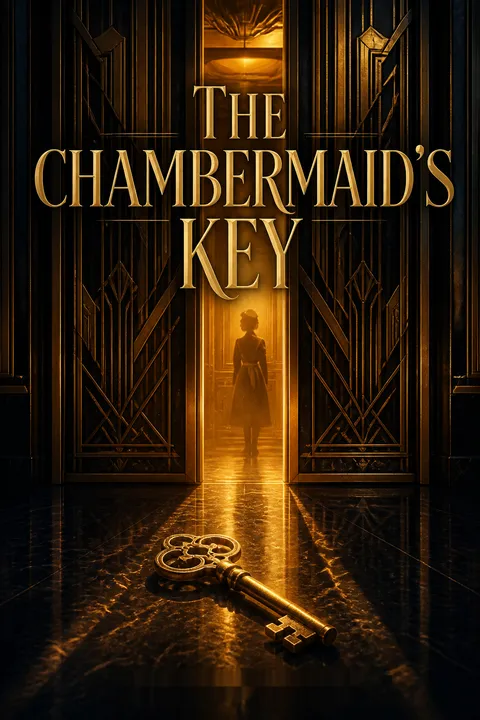
Rosie Ryan, tough yet tender, grows up in Toronto's impoverished Ward in 1929. Her life is penned in by hardship, family folklore of Irish immigration, and the crumbling bricks of her neighborhood, but her heart's set on rising above all that. Rosie's beloved Dominion Hotel—a sparkling new palace across class lines—rises from dust outside her window, symbolizing ambition and possibility. Through Rosie's sharp eyes, readers witness the contrasts of neighbourhoods, the resilience within poverty, and the emergence of friendship with vibrant Bianca. Together, they plot a way out, their laughter and dreams pressing against the boundaries that circumstance and prejudice impose, while Rosie saves every penny, determined to change her stars.
Dominion Hotel Beckons
Determined to escape the laundry's drudgery, Rosie hustles for a chambermaid job at the grand new Dominion Hotel. The rigorous hiring process is fierce, but she's singled out for her grit and references. She steps into a world shimmering with marble, chandeliers, and promise, learning from wise headmaid Mrs. Evans. Rosie earns her crisp black-and-white uniform, the first badge of her dignity. She marvels at the building's artistry, the teeming life inside, and the ladder of staff hierarchy, each rung a test. Rosie and other chambermaids scramble to prepare for the Dominion's extravagant opening gala—the city's social pinnacle—where histories and futures mingle under the painted ceilings.
Ascending and Belonging
Rosie's routine becomes a medley of early mornings, hard scrubbing, and newfound pride. The elevator—the symbol of ascension—carries her, the humblest worker, up sixteen floors daily as she tends to guests' secrets. Even as she remains invisible, tiny tokens like tips accumulate as proof of her worth. Relationships blossom among staff: fierce loyalty to Mrs. Evans, wary camaraderie with fellow maids, and growing affection for Damien, a charming Irish waiter hiding singular ambitions—and possibly secrets—of his own. Rosie, balancing humility and ambition, dares to believe she can stake a claim to respect beyond her neighborhood.
Night of Glitter and Guilt
The Dominion's opening gala is a fever dream of music, champagne, and fragile etiquette. Rosie, standing silent as part of the backdrop, sees both glamour and the moral rot beneath. She intervenes quietly to protect Damien from the predatory attentions of a guest, setting off a friendship veined with growing longing; shadows move among the crowd, hinting at undercurrents of crime. Behind closed doors, staff and guests hide frailties and desires. The night cements Rosie as a witness to both aspiration and exploitation, marking her initiation into the hotel's elegant yet perilous underworld.
Secrets Behind Closed Doors
Rosie settles into the rhythms of the hotel, her every action shadowed by discretion and the hazards of poverty. Life in The Ward persists in struggle, but the Dominion offers brief snatches of joy—and peril. Rosie's friend Bianca's father, crippled in a construction accident, accrues a debt to shady men. Temptations and schemes bloom: Damien's side associations, Bianca's desperate designs to get hired despite age, and Rosie's own refusal to betray guests' trust or gossip. Behind guestroom doors, Rosie witnesses possessions as tokens of lives unraveling, setting the stage for darker entanglements.
Dangerous Affections Ignite
As summer deepens, so do affections between Rosie and Damien, twin souls driven by loss and hunger for more. Their relationship becomes both a refuge from hardship and a risk—the lure of criminal opportunity knocking at Damien's door through the enigmatic and menacing Mr. Carboni, a mafia figure using hotel labor for shadowy ends. Mrs. Evans, haunted by her own losses, warns Rosie and tries to shield her staff. Chambermaid bonds are tested, loyalty to friends like Bianca is strained by Bianca's impulsiveness, and Rosie wrestles with choosing personal happiness versus survival in a world ruled by debt and secrecy.
Whispers in the Pipes
Whispers travel—up pipes, through basement corridors, into hotel legend. Rosie overhears snatches of voices, guest secrets, hints of smuggling, and talk of a hidden tunnel. The rumor mill among staff feeds suspicion: about sordid deals, the mounting control of Mr. Carboni, and the cost of keeping silent. In a parallel present, Bridget, a modern building inspector and Rosie's descendant, investigates a locked door in the hotel's subbasement, discovering mysterious deliveries and connections to a hidden criminal trade. The past and present begin to entwine, each feeding the other with stories buried beneath glittering surfaces.
Blood and Betrayal
In 1929, Mrs. Evans is murdered, and the Dominion's staff—especially the chambermaids—are rocked by grief and fear. Suspicion falls on dangerous men, but thanks to Mr. Carboni's machinations, Rosie and Damien are scapegoated in the press. Their only option is flight, abetted by a stolen ledger full of criminal names, debts, and secrets—a key to future safety but also a target on their backs. Bianca, drawn in over her own desperate debt, confesses to killing Mrs. Evans in a misguided attempt at self-liberation, but is gravely wounded during the trio's attempted escape.
Dispossession and Flight
Now fugitives, Rosie and Damien's plans unravel. Their escape down the hotel's secret tunnel is paid for with heartbreak: Bianca dies from a gunshot wound, their shared history forever tainted by violence and sorrow. Reeling, Rosie and Damien reach the railway, longing for a new beginning but burdened by poverty, pregnancy, and grief. In a final turn of fate, Damien is killed in a tragic accident, leaving Rosie alone, her dreams reduced to survival for herself and the child she carries—the future bound, for now, to memory and will.
A Legacy in Ashes
Rosie, penniless and traumatized, flees north. In a small town, she finds solidarity with new employers and hope through the promise of new life. She gives birth to Mary, her daughter, but is hunted still by Carboni's men and police, haunted by loss and the crimes she's witnessed. Realizing she cannot guarantee her child's safety, Rosie leaves Mary at a church with a note and a photograph. Generations ripple outward—sacrifice, love, and abandonment woven into one.
Echoes in Modern Marble
2024: Bridget Kelly, a practical but romantic building inspector, navigates career challenges and discovers the old secrets hidden in the Dominion's subbasement. Aided by archivist Matthew, Bridget uncovers fraud, murder cover-ups, and a chain of corrupt power stretching from interwar mobsters through modern developers. As she exposes contemporary crime, her own ancestry calls: she finds a photograph of the chambermaids and traces her lineage—a tangible link to Rosie, Mary, and a brutal but noble matrilineal line.
Beneath the Gilded Surface
With the help of journalist Louis and Matthew, Bridget becomes informant and bait, unraveling a present-day conspiracy echoing the past's criminal shadow. Through grit and cunning, she brings the criminal enterprise to light—even as old relationships, loyalties, and betrayals reappear in new guises. The Dominion itself stands as both crime scene and sanctuary, its stones having absorbed lifetimes of secrets, hopes, and tragedies.
Inheritance of Truth
At last, Bridget discovers that Rosie Ryan, her great-grandmother, is alive—a living witness to nearly a century of survival and loss. An emotional meeting brings together three generations of women—Rosie, Mary (her long-lost daughter), and Bridget—healing wounds, sharing stories of abandonment, love, and difficult choices. The restored locket, Rosie's old key, and the collective memory are tokens passed down and reclaimed, the pains and hopes of the past serving as both caution and blessing for the future.
Wounds and Reunions
Rosie's final months are spent building the relationships long denied her, with Mary and Bridget forging a fragile but precious bond. The women grieve for what was lost—youth, innocence, love, and homeland—but choose, at the last, to forgive, understand, and make peace. The line survives not by escaping suffering, but by enduring, and passing down hard-won wisdom and love. Bridget's wedding and pregnancy close the circle of legacy and hope.
Choosing Hope, Choosing Love
In the epilogue, Bridget honors her foremothers—raising her own daughter, Rosie Mary, in a world that, for all its modern dangers, also presents the choice of hope and loving persistence. The Dominion Hotel, with its beautiful scars and ghosts, symbolizes how history's burdens can become guides for justice, empathy, and new beginnings.
Mothers, Daughters, Goodbyes
The final chapters, through notes and afterwords, reflect on the urban, social, and architectural changes in Toronto, the resilience of marginalized communities, and the necessity of remembering hidden histories. The book closes with an affirmation: only by facing the truth of inheritance—its pain and promise—can healing and forward motion begin.
Analysis
A meditation on inheritance—of trauma, resilience, and choiceThe Chambermaid's Key stands as both a gripping historical mystery and a meditation on class, gender, and belonging in Canada's urban heart. Graham's weaving of timelines underscores how places and people absorb and transmit both visible and invisible wounds. You can't rise without carrying the weight of those before you, but hope emerges—not as naïve wish, but as a practice of persistence, ethical reckoning, and chosen connection. By linking the story of Rosie—her scraped knuckles, secret shames, burnt dreams, and ultimate sacrifice—to Bridget's determined search for the truth, the novel insists that justice and forgiveness must begin in facing what hurts. In foregrounding women's labor, loyalties, and wounds, the book reframes grand narratives around the unsung, rendering them protagonists—not just in personal dramas, but in the building of the city itself. Hope, the novel teaches, is not the absence of loss or violence, but the courage to choose love and make meaning in the ruins, one generation teaching the next how to see, tell, and carry forward what matters most.
Characters
Rosie Ryan
Rosie is a young Irish-Canadian woman born into poverty in 1920s Toronto, fiercely shaped by her family's legacy of hardship and storytelling. She carries hope like an ember, striving to rise—first into chambermaid work at the Dominion Hotel, then into perilous love with Damien, and at last into motherhood. Rosie's defining features are her stubborn integrity, pragmatic ambitions, and the deep loyalty she extends to family and friends, even as it nearly destroys her. Her arc traces the gap between dreams and reality, between service and self-determination, ultimately transformed by loss, guilt, and the hard wisdom that to survive, sometimes one must let go—with love and pain equally entwined. Her lineage—through Mary and down to Bridget—carries her resilience and yearning into the present.
Damien Walsh
Damien is the charming Irish waiter whose humor, tenderness, and ambition light the gray corridors of Rosie's world. Orphaned and self-reliant, he is both a hustler and a romantic, drawn into criminal errands out of necessity, but always dreaming of a better life. His relationship with Rosie is rich with chemistry, vulnerability, and plans for escape. In the end, his attempts to save Rosie from injustice and crime lead to his tragic, accidental death—a symbol of hope's fragility and the randomness of loss. Damien's spirit persists in Rosie's memories and their daughter, an emblem for love's power and its limitations.
Bianca Fiore
Bianca, Rosie's Italian neighbor and childhood confidante, is equal parts magnetic and reckless. Driven by fierce loyalty to her own family and an insatiable hunger for more, she repeatedly seeks shortcuts and boldly crosses boundaries—including accepting money from gangsters and ultimately pulling the trigger that kills Mrs. Evans. Bianca is deeply flawed but intensely human: alternately comic, desperate, and heartbreaking. Her actions spur the novel's darkest turn, and her death in the tunnel epitomizes how limited choices, social vulnerability, and personal flaws intertwine to shape women's destinies.
Mrs. Geraldine Evans
Mrs. Evans, the stern but nurturing head maid, becomes a surrogate mother figure for Rosie (and many others). Scarred by personal loss—her husband's death by criminal association and her brother's vulnerability—she embodies both the costs and necessity of female strength within patriarchal institutions. Protective but exacting, she upholds strict codes of discretion, ethics, and discipline, ultimately becoming a victim of violence she cannot completely shield her girls from. Her unresolved murder propels Rosie into exile, underscoring how women's networks both empower and are threatened by the world's dangers.
Marco Carboni
Mr. Carboni is the Dominion Hotel's menacing, cunning gangster, representing the intersection of aspiration and exploitation. He gives with strings attached, corrupting those in poverty and controlling staff through debt, gifts, and threat. His shadow falls over Rosie, Damien, Bianca, and Mrs. Evans alike—instigating criminal plots, violence, and perverse "choices." Psychologically, Carboni embodies the seductive and ruinous allure of power for the disenfranchised, his ledger and key symbolizing control over others' fates. Yet, his downfall signals that no manipulator remains unscathed.
Bridget Kelly
Bridget is Rosie's great-granddaughter, a present-day building inspector shaped by practicality, ambition, and a yearning for ancestral connection. Rooted in contemporary Toronto yet haunted by its histories, she becomes both detective and inheritor. An outsider by gender in her field, Bridget pushes past institutional barriers, ultimately exposing fraud and crime echoing the past. Her intellectual curiosity and emotional openness—especially in partnership with Matthew—mirror Rosie's drive, but in a world with more agency. Her journey closes generational circles, reclaiming hidden history and forging new identity.
Matthew Buchanan
Matthew, a gentle, socially awkward archivist, partners with Bridget to unravel the Dominion's mysteries. His patient research skills, ethical core, and deep empathy bring forgotten stories to light. His romance with Bridget provides a model of mutual support across differences, and together they bridge the gap between past and present, fact and feeling. Matthew stands as a symbol of the restorative power of memory, research, and quiet kindness.
Mary "Grandma" Byrne
Mary, Rosie's abandoned daughter, grows up without knowledge of her mother and with a tangled mix of gratitude and bitterness. Her life is shaped by longing—for family, for answers, for belonging—and her initial refusal to forgive Rosie is a testament to the enduring pain of abandonment. Ultimately, through Bridget's mediation, Mary accepts connection and reconciliation late in life, illustrating how wounds become scars—carried, but survived.
Claudia Vale
Bridget's boss, Claudia, is a complex blend of cunning, mentorship, and self-serving survivalism. As a modern-day parallel to past criminal figures like Carboni, Claudia's involvement in construction fraud, her manipulation of staff, and her eventual exposure reveal how systems of exploitation—and temptation—persist. Her psychological portrait combines ambition, moral compromise, and the rationalizations that perpetuate cycles of harm.
Louis Lewis
The dogged journalist who helps Bridget unravel contemporary crime, Louis blends tenacity with ethical sharpness. A classic truth-seeker, his role is to force the story's hidden facts into the daylight, linking individual fates with broader systems of corruption and justice. Through him, the power—and limits—of public accountability are explored.
Plot Devices
Dual Timeline Structure
The novel wields a dual narrative, alternating between Rosie's 1929–30 struggle for dignity and survival and Bridget's modern journey of discovery and justice. This structure allows both suspense and resonance: readers see secrets concealed in the past unearthed through contemporary investigation. Mirrored locations, symbols, and emotional arcs heighten the sense of generational connection and repetition.
Hidden Artifact/Mystery Object
Objects carry secrets, power, and inheritance: Mr. Carboni's ledger contains the hotel's criminal network and the power to destroy or save. The mysterious key—useless without context—becomes, in the end, the literal key to escape and, symbolically, to survival. The locket with its engraved initials is a tangible token of lost love but also a bridge across generations.
Foreshadowing and Echoes
Early references to desperate poverty, the lure of the hotel, gossip of tunnels, and warnings about crime foreshadow the dangers that surface later—betrayal, murder, and impossible choices. Modern parallels (Bridget's investigations, Cassandra-like warnings about construction safety) deepen a sense of history repeating—and, crucially, of new generations having some power to break the cycle.
The "Invisible Worker" Motif
Both historic and modern heroines serve power but are rendered invisible. Yet, their very work—chambermaiding, inspecting, preserving history—gives them agency, access to forbidden knowledge, and the chance to reshape their destiny. The narrative structure lifts their stories from erasure, insisting on the legitimacy of their labor and their lives.
The Sins of the Fathers…and Mothers
Family secrets, debts, and betrayals echo down generations—poverty, shame, ambition, and the ache of abandonment. Forgiveness, while never simple, becomes possible through acknowledging history, naming damage, and acting with courage. The narrative's reconciliation across time is both resolution and ongoing challenge, asking what we owe—not just to ancestors, but to those yet to come.
Download PDF
Download EPUB
.epub digital book format is ideal for reading ebooks on phones, tablets, and e-readers.








































