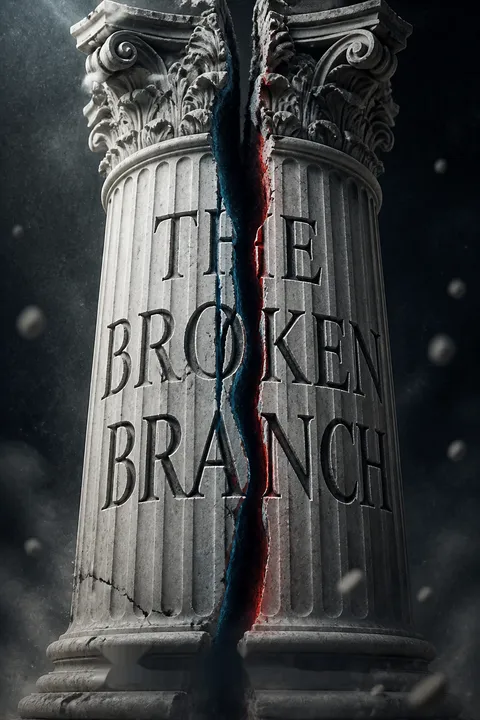

Key Takeaways
1. Congress: The First Branch, Now Broken
Sadly, today it is down—very much the broken branch of government.
Framers' Intent. The U.S. Constitution places Congress as the "First Branch" of government, dedicating its longest article to establishing it as a powerful, independent, and deliberative body. The framers envisioned Congress as the primary representative of the people, tasked with debating important policy questions and serving as a crucial check on the executive and judicial branches. This design underscored its preeminence among the three branches.
Current Reality. However, the contemporary Congress, particularly in recent years, has strayed significantly from this foundational vision. It is now characterized as a "broken branch," damaged by intense partisan bickering, internal rancor, and a perceived subordination to the executive. This decline is not merely stylistic but fundamentally impacts its ability to fulfill its constitutional duties, leading to a less effective and less respected legislative body.
Qualitative Shift. While Congress has always experienced periods of strength and weakness, the current state represents a qualitative departure from its predecessors. The authors, with decades of observation, contend that the institution's current maladies are more profound and pervasive than in earlier eras, demanding urgent attention to restore its proper role in the American constitutional system.
2. Partisan Polarization: The Root of Dysfunction
This ideological sorting by party has now extended to voters, activists, and elected officials throughout the country, creating two rival teams whose internal unity and ideological polarization are deeply embedded in the body politic.
Ideological Divide. A central cause of Congress's dysfunction is the profound ideological polarization that has gripped both major parties. This shift has transformed Congress into an arena of "tribal politics," where internal party unity is paramount, and compromise across the aisle is increasingly rare. The parties have become more homogeneous ideologically, shedding their moderate wings and moving towards their respective extremes.
Contributing Factors. Several dynamics have fueled this polarization:
- Southern Realignment: The long-term shift of conservative Southern Democrats to the Republican Party.
- Rise of Conservative Republicans: The development of a distinctly conservative Republican agenda.
- Geographical Segregation: Voters increasingly reside in areas dominated by one party, reducing competitive districts.
- Incumbent-Friendly Redistricting: Gerrymandering further entrenches partisan majorities in many districts.
- Media Environment: A "Crossfire all the time" media landscape amplifies ideological clashes and coarsens public discourse.
Consequences of Polarization. This intense partisanship has led to a decline in accountability, as members prioritize party loyalty over institutional health or broader public interest. The focus shifts from constructive debate to political maneuvering designed to embarrass the opposition, making effective governance a formidable challenge.
3. Erosion of Regular Order and Deliberation
But the lack of interest in the admittedly arduous process of going through multiple levels and channels of discussion, debate, negotiation, and compromise that make up a robust deliberative process has been a symptom of the broader malady in the contemporary Congress—the belief, especially in the House, that deliberation, fairness, bipartisanship, and debate are impediments to the larger goal of achieving political and policy success.
Procedural Abuses. The House, in particular, has seen a dramatic erosion of "regular order"—the established rules, precedents, and norms that ensure genuine debate and deliberation. The majority leadership increasingly employs restrictive procedural tactics to advance its agenda, often at the expense of minority participation and thorough legislative review. This includes:
- Closed Rules: Limiting or banning amendments on the House floor.
- Self-Executing Rules: Automatically altering bills without separate votes.
- Suspension of Rules: Bypassing normal procedures for quick passage.
Marginalization of Committees. The traditional role of committees as centers of informed deliberation has diminished. Major legislation, once subject to weeks of hearings and detailed markups, is now often crafted behind closed doors by a small group of party leaders, staff, administration officials, and lobbyists. This bypasses the expertise and scrutiny of standing committees, leading to less vetted and potentially flawed legislation.
Consequences for Lawmaking. This abandonment of deliberation results in "stealth legislation" embedded in huge omnibus bills and conference reports, often passed in all-night sessions with minimal member review. Such practices undermine transparency, accountability, and the quality of policy outcomes, as evidenced by the Medicare prescription drug bill, which was passed with little understanding of its full implications.
4. Executive Dominance and Congressional Abdication
The institutional rivalry designed by the framers gave way to a relationship in which Congress assumed a position subordinate to the executive.
Shift in Power Balance. The framers intended a healthy rivalry between the legislative and executive branches, with Congress holding a preeminent position. However, in recent decades, particularly under unified Republican government, Congress has become a "supine, reactive body," more eager to submit to presidential directives than to assert its own constitutional prerogatives. This represents a fundamental departure from the intended checks and balances.
Assertive Executive. The Bush-Cheney administration, in particular, held a strong executive-centered view of American government, aggressively asserting presidential power and showing little patience for congressional constraints. Vice President Cheney, drawing on Hamiltonian principles, championed inherent presidential powers, especially in foreign affairs and national security, leading to a demand for loyalty from the legislative branch.
Congressional Deference. The Republican majority in Congress largely embraced this subordinate role, with leaders like Speaker Hastert openly stating their primary responsibility was to pass the president's legislative program. This "party trumped institution" mindset led to a significant decline in congressional oversight of the executive, even on critical issues like the Iraq War and homeland security, as criticism of the administration was avoided.
5. Scandal and Ethics: A Weaponized Process
Impeachment was just another weapon in the partisan wars, a further escalation of the criminalization of political differences.
Ethics as a Political Tool. The post-Watergate era saw an increased focus on ethics in Washington, leading to the creation of ethics codes and committees in Congress. However, this concern for ethical conduct gradually morphed into a partisan weapon, used to attack political adversaries rather than to uphold institutional integrity. The Abscam scandal in 1980 provided a potent example of how ethics charges could be leveraged for political gain.
Speaker Wright's Downfall. Newt Gingrich, then a rising Republican, masterminded a sustained assault on Speaker Jim Wright's ethics, relying on press investigations and formal complaints. These attacks, combined with public outrage over congressional pay raises, ultimately forced Wright's resignation in 1989, demonstrating the power of weaponized ethics.
Clinton Impeachment. The impeachment of President Bill Clinton further solidified ethics as a partisan battleground. Despite the bipartisan precedents set during the Nixon impeachment, the Clinton proceedings were driven by purely partisan lines, particularly by Majority Whip Tom DeLay. This highly divisive process, which ignored public sentiment against removal, was seen as an "escalation of the criminalization of political differences," leaving lingering bitterness and diminishing the presidency and Congress.
6. Decline in Institutional Identity and Pride
The pride that members of both houses had in their institutions gave way to a skepticism.
Loss of Institutional Patriotism. A significant shift in Congress has been the erosion of "institutional patriotism"—the deep loyalty and pride members once felt for the legislative branch. This sentiment, once palpable among both Democrats and Republicans, has been replaced by a growing skepticism and even disdain for Washington and its political class. Members increasingly prioritize their partisan or ideological identity over their role as guardians of the First Branch.
New Member Mindset. Newer generations of lawmakers often view their service in Congress not as a fulfilling career but as an "unpleasant duty" to be endured. Many run on platforms of term limits, reflecting a desire to avoid "Potomac Fever" and distance themselves from perceived congressional careerism. This mindset discourages long-term investment in the institution's health and traditions.
Leadership Indifference. This decline is reinforced by the indifference of committee and party leaders to the history and independent role of their own institutions. The decade-long vacancy of the House Historian position under Republican leadership, for instance, symbolized a lack of interest in preserving and understanding the House's heritage. This widespread acceptance that "the ends justify the means" further undermines institutional well-being and maintenance.
7. The Rise of Machine Politics and Earmarks
The K Street Project is innocuously described on the website of Norquist's Americans for Tax Reform as 'a non-partisan research of the political affiliation, employment background, and political donations of members in Washington's premier lobbying firms, trade associations and industries.'
Money and Elections. Congressional leaders have increasingly centralized their control through campaign finance. They actively raise and redistribute "hard money" through leadership PACs and encourage "soft money" contributions, blurring the lines between legitimate fundraising and influence peddling. This financial leverage fuels party polarization and creates a system where aspiring leaders must raise substantial funds to secure positions.
The K Street Project. Tom DeLay, as House Majority Leader, pioneered the "K Street Project," a formidable political machine designed to ensure party loyalty among Washington lobbyists. This initiative aimed to:
- Place Republican loyalists in key lobbying positions.
- Steer lobbying resources towards the Republican party's agenda and candidates.
- Punish firms that hired Democrats or opposed the GOP agenda.
This strategy, while effective in consolidating power, led to ethical admonishments and later, indictments for DeLay and his associates, highlighting a culture of "greed and arrogance."
Explosion of Earmarks. The use of earmarks—specific projects legislated for particular districts or states—has exploded, particularly in appropriations bills. Historically avoided by appropriators, earmarks are now widely used as tools to:
- Reward compliant members.
- Buy votes on unrelated legislation.
- Protect incumbents in marginal districts.
This practice, exemplified by the "bridge to nowhere," has led to serious misallocation of scarce funds and further undermined fiscal discipline and deliberative policy-making.
8. Continuity of Government: A Neglected Imperative
It is simply not practical to have the possibility exist of Congress being unable to operate because of massive deaths and incapacitations, or operating for many months with a skeleton crew that is highly skewed in regional or partisan composition.
Post-9/11 Vulnerability. The events of September 11, 2001, and subsequent anthrax attacks on Capitol Hill, starkly revealed Congress's vulnerability to catastrophic events. The constitutional requirement of a quorum (a majority of members) to conduct business meant that widespread deaths or incapacitations could render the legislative branch inoperative for months or even years, potentially leading to a form of martial law.
Congressional Inaction. Despite the clear and present danger, congressional leaders showed a striking lack of urgency or interest in addressing continuity of government. Efforts by individual members like Rep. Brian Baird and external commissions were met with:
- Leadership Indifference: Speaker Hastert's reluctance to act without member demand.
- Judiciary Committee Obstruction: Chairman Sensenbrenner's visceral opposition to any form of emergency interim appointments.
- Flawed Solutions: The House passed an "expedited elections" bill that was widely criticized as unworkable and unconstitutional, mandating elections within an impossible timeframe after a catastrophe.
Consequences of Neglect. The House's eventual "solution" was a poorly designed bill that preempted state election laws and redefined the quorum in a potentially unconstitutional manner, all without genuine bipartisan deliberation. The Senate, despite some efforts, ultimately took no significant action on a constitutional amendment. This negligence leaves Congress dangerously exposed, sacrificing democratic substance for symbolic gestures and failing to protect the integrity of the constitutional system.
9. The Costs of Dysfunction: Bad Policy and Governance
Bad process leads to bad policy—and often can lead to bad behavior, including ethical lapses.
Policy Failures. The dysfunctional processes within Congress have directly resulted in "shoddy and questionable policy" across various domains. Examples include:
- Medicare Prescription Drug Bill: Enacted with "shamefully deceptive cost accounting" and special interest payoffs, leading to staggering long-term costs and structural flaws.
- Energy Bill (2005): Distributed generous subsidies to producers without seriously addressing fossil fuel consumption or alternative energy sources.
- Highway Bill (2005): Riddled with outrageous earmarks, including the infamous "bridge to nowhere," and passed through "chicanery and legerdemain" to meet cost limits.
Fiscal Irresponsibility. The 2001 tax cuts, enacted with "recklessly dishonest" accounting gimmicks like sunset provisions and delayed phase-ins, transformed a projected $3.5 trillion surplus into a deficit of equivalent size. This fiscal irresponsibility, combined with increased spending and the lapse of "pay-as-you-go" rules, has accelerated the nation's fiscal imbalance, posing severe challenges for future generations.
War in Iraq Oversight. Congress's role in the Iraq War is characterized as a "failure of omission." Despite concerns about the adequacy of information and the imminence of the threat, congressional leaders discouraged systematic hearings and oversight. This abdication of responsibility meant critical questions about force size, post-invasion planning, and costs were largely ignored, potentially contributing to the disastrous consequences that followed the fall of Saddam's regime.
10. Path to Renewal: External and Internal Reforms
But politicians are not merely waifs amid forces. They make choices about how to organize and run their institution and how to conduct themselves personally, albeit choices constrained by the external environment and the incentives it creates.
External Drivers for Change. While Congress is influenced by its political and social environment, politicians retain agency to make choices that can reverse disturbing trends. Major electoral setbacks for the dominant party, shifts in public opinion, and new presidential leadership styles (e.g., a more inclusive, less partisan approach) could create incentives for change. The turbulent political waters of the mid-2000s, with an unpopular war and declining presidential approval, hinted at such possibilities.
Electoral System Reforms. To foster a less polarized and more deliberative Congress, broad changes to the electoral system are crucial:
- Gerrymandering Reform: Transferring redistricting authority to independent commissions with explicit standards for competition and partisan fairness.
- Campaign Finance Reform: Implementing free airtime, incentives for small donors, subsidized voter brochures, and banning leadership PACs to reduce the influence of money and "shakedowns."
Internal Institutional Reforms. Congress must also undertake significant internal reforms to restore its integrity and effectiveness:
- Schedule Changes: Adopting a full, five-day workweek in Washington to encourage cross-party interaction and provide adequate time for legislating and oversight.
- Enforcing Regular Order: Mandating sufficient time for bill review, limiting vote durations, ensuring transparency in conference committees, and curtailing pervasive earmarks.
- Ethics Enforcement: Establishing an independent, outside body (e.g., an Office of Public Integrity or an independent commission) to screen complaints, conduct investigations, and audit lobbyist disclosures, ensuring accountability insulated from partisan influence.
People Also Read


Download PDF
Download EPUB
.epub digital book format is ideal for reading ebooks on phones, tablets, and e-readers.








































